

In the quiet college town of Ithaca, New York, a painful and complicated story has resurfaced, one that forces a community to sit with a deeply uncomfortable question: what happens when behavior is universally condemned as monstrous, yet still falls outside the reach of the criminal law? For more than two years, the case of a young woman identified only as Jane Doe has simmered beneath the surface—a story of a night at a fraternity house, of seven young men from Cornell University, and of accusations so horrifying they made headlines around the world. Now, the local prosecutor is taking a second look, and his explanation for why charges were never filed has reopened old wounds. Tompkins County District Attorney Matthew Van Houten recently defended his office’s original decision, insisting that while the conduct alleged was “disgusting, despicable and clearly wrong morally,” it did not, in his view, amount to a crime under New York’s penal law. That distinction—between moral outrage and legal proof—lies at the heart of the entire ordeal, and it is one that leaves many people feeling unsatisfied, angry, and confused.
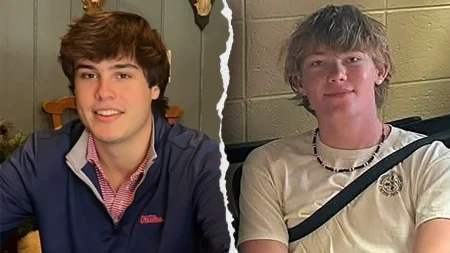
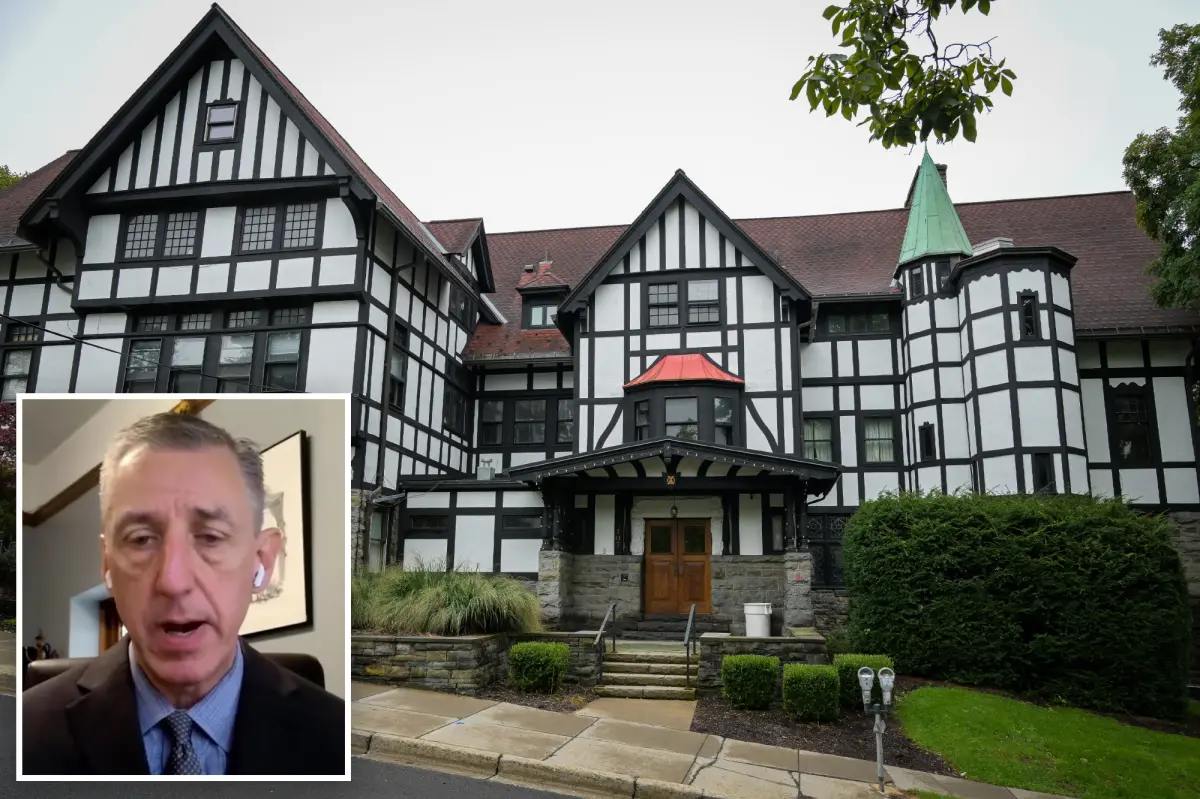
The story began with a detailed, six-page, single-spaced written statement that Jane Doe provided to prosecutors in November 2024. Van Houten described that document as thorough, comprehensive, and candid, noting that it included twenty handwritten corrections that gave his office confidence they were receiving her full account of what happened inside the Chi Phi fraternity house. Her testimony was horrific: she claimed she had been drugged and gang-raped by seven fraternity brothers—Matthew Ingalls, Johnathan Newell, Winston Lee, Gillio Lopes, Diego Sarabia, Scott Norris, and Scott Kretzschmar. Reading her words, Van Houten admitted, was sickening. The men’s behavior, he said, was the kind of thing that makes your blood run cold. And yet, after careful review, his office reached a conclusion that might seem counterintuitive to anyone who read the same account: the facts she described, even if taken as completely true, did not legally add up to rape or sexual assault under the penal code. There was, he said, no probable cause to charge the seven men with crimes. That decision was met with disbelief by many, and it has haunted the case ever since.
Perhaps the most controversial part of Van Houten’s reasoning involves the accusation that Jane Doe was drugged. In her lawsuit, she alleged that she was “plied by the fraternity brothers to take drugs,” painting a picture of manipulation and coercion. But the prosecutor drew a sharp legal line. According to Jane Doe’s own original statement, she agreed to take ketamine. “That’s not coerced. That is not forced. She took them voluntarily. And her statement specifically says she agreed to take the ketamine,” Van Houten said. He acknowledged that this admission creates a tragic and complex reality: a person can make a choice that is unwise, dangerous, or influenced by social pressure and peer dynamics, and still not have that choice meet the legal standard of being forced. In the eyes of the law, voluntary intoxication is different from being surreptitiously drugged. Even if those around her encouraged the drug use, even if they celebrated it, even if they planned for it to lower her defenses, the fact that she knowingly ingested the ketamine made it nearly impossible for prosecutors to prove the element of coercion or incapacitation beyond a reasonable doubt.
Then there is the infamous Snapchat message, which has become a symbol of the cruelty and dehumanization at the center of this case. One of the accused fraternity brothers allegedly sent a message to the others promising they could get “free p—y” with the drugged accuser. To most people, that message is damning. It reveals a predatory mindset, a grotesque sense of entitlement, and a chilling disregard for Jane Doe’s humanity. It suggests that she was viewed not as a person but as a prize to be shared. But Van Houten stressed that the message is “not relevant to the issue of whether Jane Doe consented to what was happening.” He called it “disgusting” and “morally despicable,” but he also explained that, under the law, consent is evaluated based on the circumstances of the sexual act itself—whether it was given freely, whether one person was incapacitated, whether force or threats were used. A private message between men, no matter how vile, does not automatically prove that the woman did not consent. This is a hard truth for many people to accept, because it feels like the Snapchat is a smoking gun. But the law, with its clinical definitions and burdens of proof, does not always align with our instinct for justice.
Now, after more than two years of silence, Jane Doe has stepped back into the light. On September 14, she filed a lawsuit against Cornell University, alleging that the school failed to take serious action when she complained about the assault. Instead of expelling the seven fraternity brothers or referring them for criminal prosecution, the university, she claimed, simply made them write essays about the incident. The lawsuit is both a legal claim and a cry of frustration—a young woman saying, over and over again, that she was let down by every institution that was supposed to protect her. The lawsuit also included the Snapchat screenshot and reiterated her claim that she was drugged, which is what prompted the district attorney to reopen the case. Van Houten confirmed that his office is reinvestigating, but he was careful to manage expectations. He said he has not yet seen anything criminal, and that charges would only be brought if the new investigation unearths “new evidence that we don’t know about.” He noted that he hasn’t heard from Jane Doe directly in two years, but that she has clearly “gained insight and has learned things and has processed things that may be new evidence.” In the interest of justice, he wants to put the case before a grand jury so that all the evidence—both what was known in 2024 and anything new—can be considered.
The reaction from the other side has been immediate and fierce. The lawyer for Scott Kretzschmar, one of the seven men named in the lawsuit, slammed the civil complaint as “not only intentionally dishonest but morally repugnant.” He said he welcomes any further investigation by the district attorney, expressing confidence that the outcome will remain the same and that no charges will be filed. Attorney information for the other six men was not immediately available, but the tone of Kretzschmar’s defense reflects a larger pattern in this case: two very different versions of the same night, two very different claims about what happened, and two very different sets of truths competing in the court of public opinion and, eventually, the court of law. Cornell University, for its part, has strongly denied the allegation that it merely made the students write essays, and both the university and its police department declined to comment when contacted. For every new piece of evidence, there is a counter-narrative; for every accusation, there is a denial. And in the middle of it all is Jane Doe, a woman whose trauma has been dissected, debated, and publicly scrutinized in the most painful ways imaginable.
What makes this story so difficult to resolve is that it is not a simple tale of good versus evil, even though it often seems that way. The law operates on evidence, on probabilities, on definitions that were written long before any of us could imagine the nuanced horrors of a night like Jane Doe’s. Prosecutors are bound by a high standard—they must believe they can prove a case beyond a reasonable doubt, and they must do so within the rigid structure of a criminal code that does not always account for the psychological and social realities of sexual assault. That leaves victims like Jane Doe in a terrible limbo: they are believed by some, disbelieved by others, and told by the legal system that the justice they seek may not exist. The district attorney’s decision to bring the case before a grand jury is, in many ways, an admission that the law and morality are not always the same thing. It is also an opportunity—a chance for all the evidence to be examined, for witnesses to speak, for Jane Doe to finally be heard in a setting that might lead to accountability, even if that accountability is limited. Whether that will happen remains uncertain. But the pain behind this case is real, and it will not go away no matter how many legal analyses are offered. For every person who reads about the “free p—y” Snapchat, there is a profound outrage. For every person who hears the prosecutor’s careful explanation, there is a frustration with the limits of justice. And for Jane Doe, there is the knowledge that her story is no longer fully hers—it has become a case file, a news cycle, and a flashpoint in the broader national conversation about sexual violence, privilege, and the failures of institutions to protect the vulnerable. As the grand jury prepares to consider the evidence, the hope is not just that justice will be served, but that the truth—as messy and complicated as it may be—will finally come to light. And perhaps, in that light, a young woman can begin to heal, and a community can begin to learn that some wounds cannot be healed by a verdict alone.