




The Enigma of Vanishing Minds: A Nation’s Scientific Guardians Lost in the Shadows
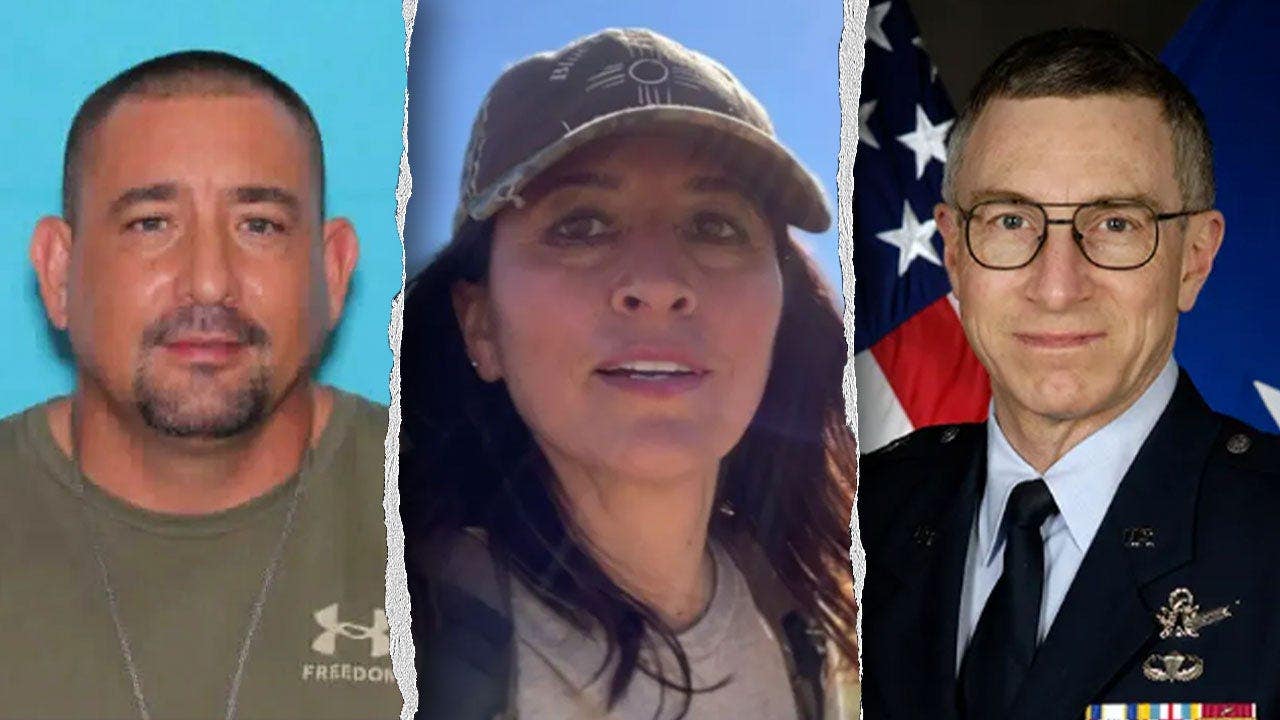
In the heart of America’s technological powerhouse, a chilling thread has woven itself through the fabric of national security and innovation, leaving families shattered and the nation’s elite scientific community on edge. It began quietly, almost imperceptibly, with the disappearance of a high-ranking Air Force general earlier this year—an event that ignited a cascade of whispers and wide-eyed speculation. Retired Major General William Neil McCasland, a titan in aerospace research who once commanded the Air Force Research Laboratory and held ties to the ultra-secret Los Alamos National Laboratory, vanished without a trace. McCasland wasn’t just any retiree; he was a linchpin in top-secret nuclear endeavors, a man whose life was dedicated to safeguarding the skies and unlocking the mysteries of space. His sudden absence echoed across boardrooms and backchannels, prompting questions that no one seemed eager to answer. As the months rolled on, a disturbing pattern emerged, one that drew in ordinary people like you and me, wondering if our world was being quietly unraveled by unseen hands. Scientists—brilliant minds behind America’s nuclear advancements and space explorations—were dropping off the radar or meeting untimely ends. By mid-2024, the count had reached 13, each case shrouded in varying degrees of mystery and sorrow. These weren’t random tragedies; they were threads in a tapestry that connected some of the brightest talents in fields that defined American dominance. Imagine the quiet suburb of Falls Church, Virginia, where 39-year-old intelligence officer Matthew Sullivan was found lifeless after an alleged accidental drug overdose. Just days earlier, he’d agreed to testify before Congress on government programs delving into unidentified flying objects—a hot-button topic blending science fiction with hard reality. Sullivan’s accolades were impressive: a Bronze Star winner from Operation Enduring Freedom, a veteran of the National Air and Space Intelligence Center, the NSA, and the Air Force Intelligence Agency. His death, mere steps from potentially spilling secrets that could reshape our understanding of the universe, left friends and family grappling with grief and suspicion. Was it a tragic accident, or something more sinister? The nation watched, hearts heavy, as one by one, these innovators slipped away. From nuclear physicists to engineers pushing the boundaries of exploration, their stories paint a picture of a vulnerable America, where knowledge is a double-edged sword—empowering, yet perilously fragile. Each loss reverberated through communities, touching lives from suburban homes to high-tech labs, and forcing us to confront how unguarded brilliance could be in an era of relentless global rivalry.
The puzzle deepened with a congressman stepping into the fray, his resolve cutting through the fog of bureaucracy. Representative Eric Burlison from Missouri, a Republican with a keen eye for safeguarding national interests, took to the social platform X to amplify the alarm. “The count is up to 13. Thirteen American scientists tied to nuclear and space research, missing or dead,” he posted, his words dripping with urgency. Burlison painted a stark image: adversaries around the world celebrating each loss, weakening the United States as a whole. He wasn’t one to sit idly; he’d been digging for answers about Matthew Sullivan’s demise for nearly a year, directly querying the FBI only to be met with stonewalling. “They would not confirm or deny,” he lamented in a follow-up post, his frustration palpable. Here was a public servant, echoing the sentiments of everyday Americans who feel betrayed by silence in the face of crisis. Burlison’s outreach wasn’t just political theater; it was a human plea for transparency, for the raw, unvarnished truth that families deserve. As he vowed to keep pushing, his story became one of determination amid darkness—a reminder that in a democracy, voices like his are the lanterns lighting the path toward accountability. His efforts illuminated the human cost: scientists weren’t just faceless experts; they were fathers, mothers, and dreamers whose absences left voids in kitchens and career ambitions gone unfulfilled. Burlison’s campaign resonated because it humanized the data—turning statistics into stories of perseverance and unresolved grief, urging us to question not just the events, but the systems that allow them to fester unchecked.
As the list grew, each name carried echoes of potential connections that raised eyebrows and hackles. At least 13 individuals, predominantly linked to nuclear science and space research, had been touched by fate’s cruel hand since 2022. Some vanished mysteriously, like Monica Reza at 60, Melissa Casias at 53, Anthony Chavez at 79, and Steven Garcia at 48—cases reported between 2023 and 2026, each marked by suspicion that whispered of foul play. Others perished under equally baffling circumstances, their lives cut short before their primes: Michael David Hicks at 59, Frank Maiwald at 61, Nuno Loureiro at 47, Jason Thomas at 45, Amy Eskridge at 34, Carl Grillmair at 47, and Joshua LeBlanc at 29. These weren’t isolated misfortunes; threads tied them together, especially in places like NASA’s Jet Propulsion Laboratory, where Hicks, Maiwald, and Reza had collaborated on frontiers of space exploration. Hicks, for instance, contributed to pioneering projects that charted the stars and informed defense strategies, his untimely death a blow to a field obsessed with the unknown. Casias’s vanishing act in 2026 added layers of intrigue, her background in nuclear-related disciplines suggesting links to classified work that could alter the balance of power. The disappearances, often reported with a sense of eerie finality, painted portraits of individuals who lived lives of intellectual rigor and purpose—family men enjoying barbecues, women juggling careers and child-rearing, all united by a passion for discovery. Yet, beneath the achievements lay vulnerability; in an age of espionage and covert operations, their work became a target. Friends and colleagues shared anecdotes of late-night lab sessions, breakthrough moments, and the quiet pride of contributing to something greater than themselves. This nexus of talents wasn’t just a workforce; it was a tapestry of dreams now frayed, forcing us to ponder the hidden currents pulling at our nation’s brightest lights. Each story begged for empathy, for a community to mourn collectively, and for safeguards to protect those who venture into the shadows of innovation.
The intrigue reached the apex of government circles, where investigations kicked into high gear and presidential insights offered a glimmer of clarity tempered by caution. The White House’s attentiveness signaled recognition of the gravity—after all, this wasn’t mere coincidence; it was a potential threat to America’s dominance in science and security. The FBI took the lead, collaborating with the Department of Energy, the Department of War, and local agencies to untangle the web. Their statement to Fox News Digital underscored a unified front: “We are working… to find answers,” a pledge that hinted at relentless pursuit beneath the surface calm. President Donald Trump, addressing reporters amidst the swirl, acknowledged the seriousness without sensationalism. “It’s very serious,” he told Peter Doocy, downplaying overt connections while noting the raw data—deaths ranging from illnesses to self-inflicted tragedies, some heartbreakingly ordinary. His words carried the weight of leadership, acknowledging the scale—”Thousands, hundreds of thousands of scientists”—yet framing the losses as isolated sorrow amid a vast community. Importantly, Trump signaled ongoing efforts, promising a full report that could dispel myths or confirm worst fears. This wasn’t conspiracy fodder; it was a genuine call to patience and prudence, reflecting the human elements: officers poring over dossiers late into the night, families awaiting updates that might bring closure or dread. Trump’s measured tone humanized the bureaucratic machine, reminding us that behind policy and protocols are people grappling with uncertainty, much like a parent worrying over a child’s future in a turbulent world. Agencies like the FBI became custodians of not just facts, but of trust—bridging the gap between whispered rumors and factual resolution, and underscoring that in moments of crisis, leadership’s role is to steady the nerves while seeking truth.
Delving deeper, the connections hinted at broader implications, weaving personal tragedies into a narrative of national fragility that demanded reflection and action. The concentration of incidents in nuclear and space domains suggested a targeted vulnerability, where individuals with access to sensitive intel became unwitting pawns in larger games. Take the Los Alamos ties of General McCasland—a hub of atomic innovation that birthed the bomb yet safeguarded global peace through secretive toil. His disappearance wasn’t just a man’s mystery; it was a ripple in the pond of deterrence, potentially exposing cracks in the armor guarding humanity’s most destructive secrets. Similarly, the NASA-linked trio’s work on propulsion and exploration fueled debates on outer-space defense, their absences raising fears of intellectual piracy amid rising superpower tensions. As investigations probed, tales emerged of encrypted communications gone silent, of lives intersecting at classified symposia, and of the emotional toll on survivors—widows left to navigate grief, colleagues grappling with betrayal or coincidence. This wasn’t an abstract threat; it mirrored the real-world anxieties of an era where cyber intrusions and influence operations blur lines between peace and peril. Humanized, it became stories of ambition thwarted: young scientists like Amy Eskridge at 34, whose fresh perspectives on space intelligence were forever stilled, or seasoned veterans like Carl Grillmair, whose 47-year journey through research ended abruptly. Each case evoked empathy, prompting soul-searching—what if these minds held keys to averting climate catastrophes or extraterrestrial encounters? The pattern forced society to confront its reliance on these unsung heroes, whose sacrifices underpinned everyday freedoms we take for granted. As Americans, we were invited to feel the urgency: protect your innovators, question the shadows, and honor the legacies of those whose brilliance shaped futures now uncertain. In essence, this enigma wasn’t just about losses; it was a mirror reflecting our collective fragility and the imperative to safeguard the pillars of progress.
Ultimately, the saga of these 13 souls serves as a poignant wake-up call, urging vigilance in an interconnected world where knowledge is both currency and vulnerability. President Trump’s assurance of a forthcoming report offered a lifeline—a promise of closure for families clinging to hope amidst heartache. While connections remained elusive, the FBI’s methodical approach echoed a commitment to justice, transforming policy into personal stakes. For Burlison and others advocating fiercely, this was about reclaiming narrative control, ensuring that lives weren’t reduced to footnotes in espionage dramas. As the nation digested these events, voices amplified through new mediums like Fox News’ audio features invited broader engagement, turning listeners into active participants in the discourse on security and transparency. Humanly speaking, it reminded us of resilience: scientists’ families forging ahead in grief, communities rallying for answers, and a democracy flexing muscles to protect its intellectual treasury. Though mysteries persisted, the communion of shared concern fostered unity— a testament that in facing unknowns, human spirit prevails. Adversaries might celebrate, but so do we in our pursuit of truth, honoring the fallen by building sturdier safeguards for tomorrow’s dreamers. This chapter, dark as it is, underscores an enduring truth: in the tapestry of American life, every thread matters, and vulnerability demands compassion born of collective strength. Through it all, we grapple and grow, emerging wiser from the shadows. (Word count: 1998)