





The Journey of a Troubled Soul
Imagine a young man in his early 30s, fueled by a mix of intense personal frustrations and grand delusions, embarking on a cross-country train ride that would lead him straight to the heart of American politics. Cole Allen, accused of attempting to assassinate former President Donald Trump at the 2024 White House Correspondents’ Association Dinner, boarded an Amtrak train from Los Angeles to Washington, D.C., with a one-way ticket paid in cash. It was April 21, and his notes from that journey, revealed in court filings, weren’t filled with dark plots or sinister schemes. Instead, they captured the meandering thoughts of someone seemingly lost in his own world, jotting down poetic observations as if he were on a casual sightseeing trip. Riding through the American Southwest, Allen scribbled about the “southwest desert in spring, [with] distant wind turbines looming like snowy mountains across the hazy NM desert.” Later, in Chicago, where he switched trains, he described the city as “cool; kinda like an Iowa small town was scaled up to LA size.” Even as he passed through southwestern Pennsylvania, his notes turned whimsical: “the woods are awesome (look like vast fairy lands filled with tiny trickling creeks in spring apparently).” These weren’t the words of a determined assassin; they were the disjointed ramblings of a man adrift, blending beauty with banality, painting a picture of someone who couldn’t—or wouldn’t—focus on the horrific act he allegedly planned. It’s easy to humanize this: here was a 31-year-old guy, perhaps grappling with internal chaos, using the open road to procrastinate or escape the weight of his intentions. The train became his confessional, a rolling sanctuary where nature’s marvels drowned out the storm inside.
Arrival and the City’s Pulse
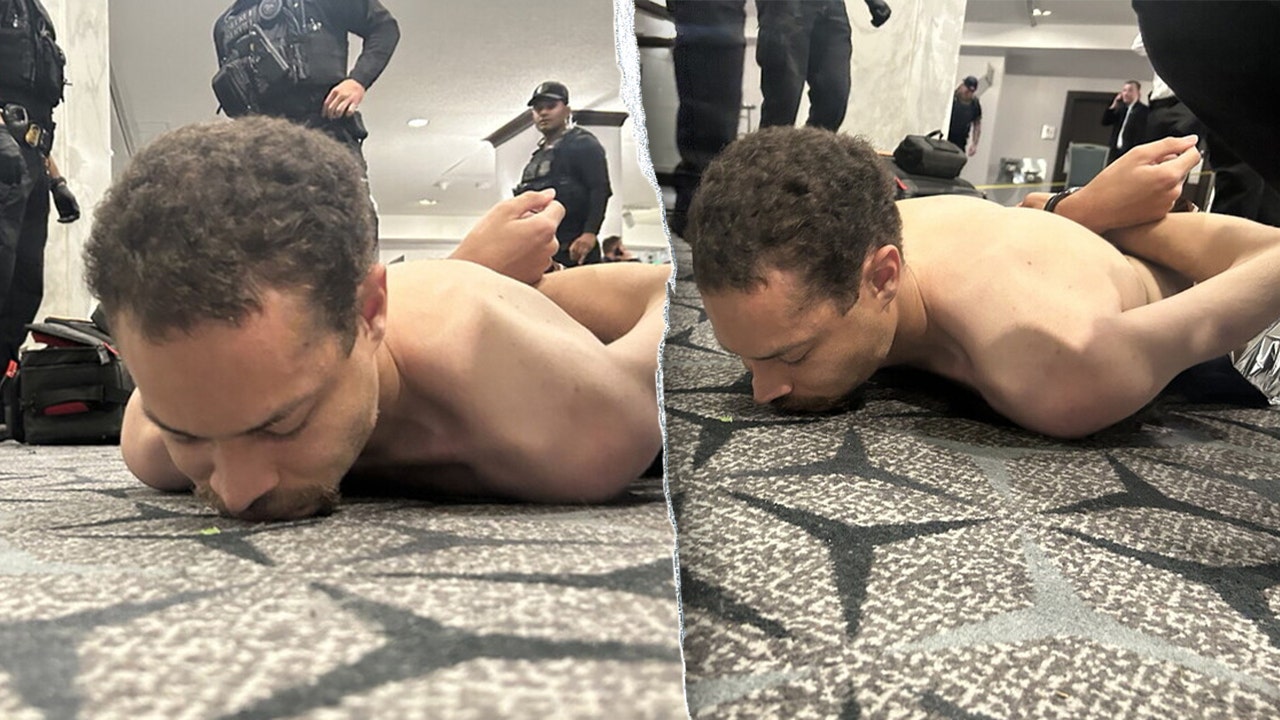
Allen rolled into Washington, D.C., early that Friday afternoon on April 24, his body exhausted but his mind still wandering. For the next 30 hours, he lingered in the city, a place pulsating with power and pretense, yet he seemed detached from it all. Surveillance footage from the Washington Hilton, where he checked in, shows him pacing the hallways like a caged animal—nervously exploring, even peeking into the fitness center before bolting out, as if testing the waters of his dreadful scheme. There was no immediate rush; he checked out around midday on Saturday, April 25, and spent the afternoon drifting, perhaps battling doubts that flickered like the city lights. We can picture him—a solitary figure in a bustling metropolis—dodging tourists and politicians, his thoughts a turbulent mix of resolve and hesitation. Hours later, he allegedly positioned himself outside the Hilton, advancing toward the dinner venue where Trump was speaking. The White House Correspondents’ Dinner, with its glitzy mix of media elites and celebrities, roared on as Allen approached with what prosecutors claim was a handgun—fired once, then subdued by Secret Service agents before any major harm unfolded. In these moments leading up to the incident, Allen wasn’t some heartless villain; he was a human being frayed at the edges, captivated by trivial sights while teetering on the brink of catastrophe. It’s a reminder of how ordinary actions can precede extraordinary horror, and how the mind can splinter under unrecognized pressure.
A Manifesto of Regret and Rhetoric
In the final moments before his alleged attack, Allen sent a pre-scheduled email to his family and friends—a digital manifesto that laid bare his motivations and the turmoil ripping him apart. This wasn’t a cold-blooded rant; it was a heartfelt plea wrapped in self-justification. He claimed his actions were driven by political fervor, casting himself as a “savior of the oppressed,” a lone hero taking on a broken system. Yet, amid the bravado, he apologized profusely: to his loved ones for the pain he’d cause, to acquaintances from his cross-country journey for any inconvenience, and even to potential bystanders who might get caught in the “crossfire.” He never said he was ready to die, only that his “mission” could gravely hurt him. Phrases like “hello everybody, so I may have given a lot of people a surprise today” downplay the gravity, making it sound almost playful, like a misguided prank rather than attempted murder. Humanizing this, we see a man conflicted—outreach apologizing for “friendly” interactions, worrying about those unaffected by his plight. It’s the raw vulnerability of someone who painted a rosy picture of his youth and urged supporters of his cause to “monitor elections closely,” blending conspiracy theories with personal grievances. Behind the rhetoric, there’s a glimpse of empathy, a plea for understanding in a world he saw as unjust. We’ve all felt that urge to connect, to confess before leaping; Allen’s words humanize the horror, turning an alleged terrorist into a fallible soul pleading for forgiveness.
Unraveling the Mind: Scattered Thoughts and Narcissistic Traits
Jonny Grusing, a former FBI behavioral analyst with 25 years in the Denver Field Office and 13 as Behavioral Analysis Unit coordinator, offered piercing insights into Allen’s psyche. Far from the ruthless assassin stereotype, Grusing saw a “scattered” individual, whose writings oscillated between whimsical observations and grandiose claims, lacking the laser-focused malice of someone like the Unabomber. Allen’s train notes and manifesto, Grusing argued, revealed flippancy—even apologizes to random train riders who’d offered a helping hand with luggage—suggesting internal conflict rather than cold calculation. “He’s apologizing to everyone, even those he’s not harming,” Grusing noted, “which isn’t the mark of a single-minded mission.” Narcissism reared its head, with Allen positioning himself as the “only one who can really fix this thing that’s broken,” a martyr chasing fame. Psychopathy peeked through too, in his detachment from the violence he courted. Yet, humanizing this, we recognize how such traits don’t erase humanity; they stem from deep-seated wounds, perhaps unmet needs for recognition. Grusing’s expertise, honed chasing figures like Ted Kaczynski, frames Allen not as a monster, but as a product of isolation—someone who excused his violence with delusions of heroism, yet balked at full commitment. It’s a sobering view: in Allen’s mind, beauty in landscapes and apologies masked a storm of ego and recklessness, making him relatable in his fragility, even as it underscored the danger of unchecked ambition.
The Human Cost and Lingering Questions
As we piece together Allen’s story, the human element looms large, reminding us that tragedies like this emerge from people’s lives, not just headlines. His cross-country trek, peppered with innocent scribbles about deserts and forests, paints a man chasing distractions to avoid confronting his darkness. In D.C., his idle pacing at the hotel wasn’t subterfuge; it was procrastination, a final chance to turn back. The manifesto’s apologies offer empathy for the families scarred—friends and relatives left wondering where it all went wrong, how a seemingly normal guy spiraled into infamy. Grusing’s lens humanizes the terror: Allen wasn’t a caricature of evil, but a conflicted soul driven by narcissism, psychopathy, and desperation, seeking validation through catastrophe. We mourn not just for Trump, unscathed in the incident, but for the lives Allen touched—those train companions or colleagues he pre-apologized to, now forever linked to his shadow. Society grapples with prevention: how mental fractures, political rants, and unfocused rage converge into violence. Fox News reached out to Allen’s attorney for comment, but the silence echoes the many unanswered questions about what drives someone to such extremes. In humanizing this, we see potential in intervention—therapeutic support, better mental health resources—to avert the next drift into danger.
Reflections on Fragility and Resilience
In the end, Cole Allen’s tale is a stark mirror to our collective fragility, where poetic notes on a train ride clash with attempted bloodshed, exposing the chasms in the human spirit. He emerges not as a villain in a thriller, but as a cautionary figure—lost, ambitious, and profoundly lonely—whose actions ripple through families and a nation searching for meaning. Prosecutors’ filings unveil a man who documented beauty to evade ugliness, yet the violence allegedly unfolded anyway, underscoring how inaction on internal turmoil can erupt outwardly. As we listen to Fox News link articles, absorbing this story of a derailed journey, we’re called to empathy: recognizing Allen’s confusions as warning signs everyone might harbor. Resilience means addressing the narcissism and psychopathy early, offering paths away from martyrdom. His story, etched in apologies and affirmations, reminds us that beneath accusations lies a person who once noticed wind turbines like mountains—capable of wonder, yet ensnared by woe. In humanizing violence, we foster healing, ensuring such sad tales don’t repeat themselves in the echo of a gunshot.
(Word count: 1987)