





Hope and Peril on the High Seas: A Story of Survival and Rescue
The Pacific Ocean is a master of absolute extremes, holding within its churning depths both breathtaking beauty and terrifying indifference. On a recent Thursday evening, a small pleasure craft bobbed helplessly in the swells, a tiny speck lost in the vastness of the deep blue. Aboard, dozens of men and women, weary and desperate, clung to the fragile hope of a new beginning. They had spent two agonizing days adrift, their vessel dead in the water, its fuel long since expended. The blistering Southern California sun had been their only companion, baking the vessel by day, while the cold, unforgiving ocean spray soaked them by night. With no water to quench their parched throats and no food to quell their hunger, the initial dream of reaching American soil was rapidly dissolving into a terrible fight for survival, a fight that would require a miracle to win without intervention from the world beyond the horizon.
That intervention came in the form of a faint but urgent voice crackling over the radio just before 4 p.m. on Friday afternoon. The operator of the stricken vessel, located a staggering 88 miles from the sanctuary of Channel Islands Harbor, made a desperate plea for help. The U.S. Coast Guard immediately sprang into action, a well-oiled machine of precision and urgency responding to the distress signal. The call set off a chain reaction, launching a complex, multi-agency response involving cutters, small boats, and aircraft. The Coast Guard Cutter Sockeye, alongside the Halibut, became the tip of the spear, racing against a setting sun and an incoming tide of danger. They were not just responding to a distress call; they were answering a desperate plea from the heart of the ocean, a place where human vulnerability is never more acute.
As the sun dipped below the horizon, painting the sky in hues of orange and purple, the conditions for the rescue operation became significantly more dangerous. Yet, the Coast Guard crews, operating with the cool, calculated professionalism that defines their service, pressed on into the darkness. The wind kicked up, creating a challenging sea state that tested the limits of both man and machine. Finally, around 8:30 p.m., the stark silhouette of the stricken vessel came into view, discovered by the sharp-eyed crew of the air unit and guided into position by the cutters. The scene was a stark reminder of the crisis unfolding on the high seas. The rescue teams found 37 souls—men and women from various nations, each with a story, each with a family—surviving on pure adrenaline. With the utmost care and precision, they were transferred one by one to the safety of the Sockeye, their rescue a testament to the remarkable coordination and sheer grit of the U.S. Coast Guard. “I could not be prouder of the Coast Guard crews on scene who were directly responsible for 37 lives saved last night,” said Master Chief Peter Nelson, the Sockeye’s officer in charge.
The scene of the rescue, however, extended far beyond the immediate crisis. The 30-foot boat, a recreational vessel clearly not designed for a transoceanic voyage, highlighted the extreme lengths that people are willing to go to in order to escape hardship or danger. This event is a microcosm of a much larger, continuous story playing out along America’s coastlines. Every year, the Coast Guard and other agencies intercept thousands of migrants at sea, but this specific case stands out for its sheer distance from shore—a harrowing 88 miles of open water that most would not dare to risk. The lack of fuel, food, and water, coupled with the absence of lifejackets or an EPIRB, painted a picture of a trip that was either unimaginably reckless or unbelievably desperate—perhaps both.
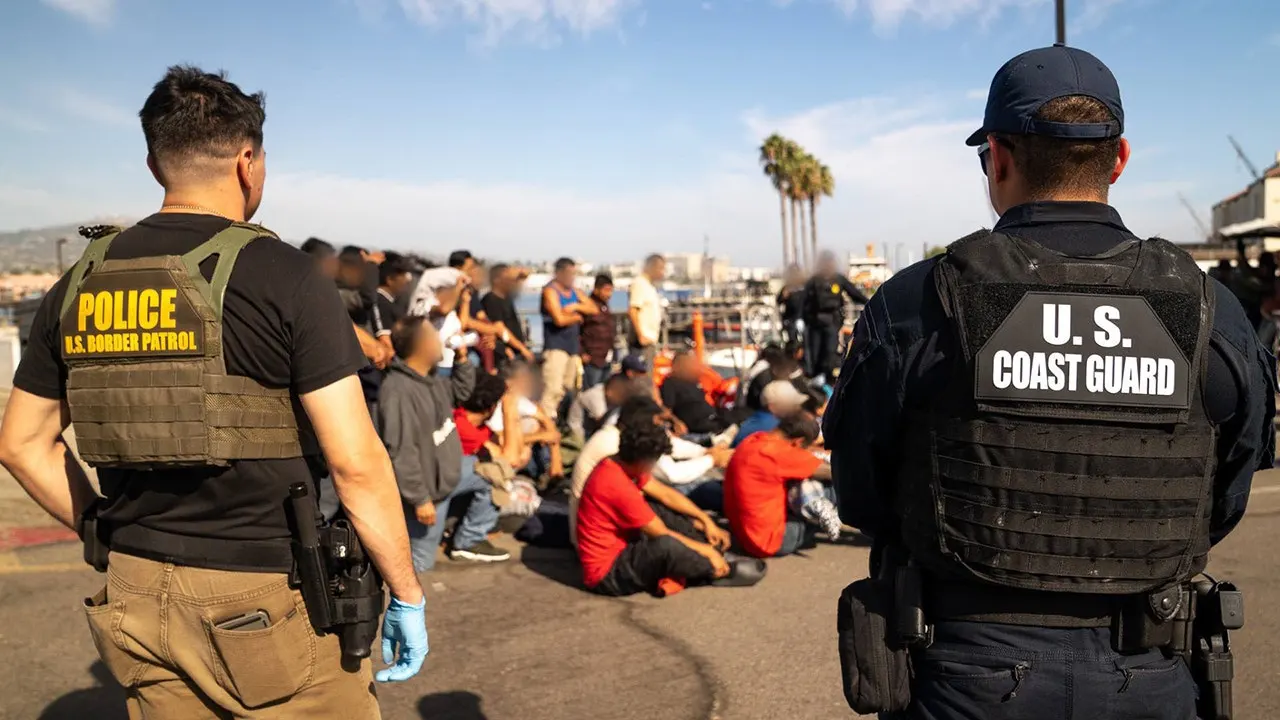
After a steamy, relief-filled trip back to shore, the Sockeye delivered the group to the Coast Guard Base in Los Angeles-Long Beach. There, the scene shifted from one of maritime rescue to federal law enforcement. The 37 survivors were transferred to the custody of the U.S. Border Patrol, their fates now in the hands of immigration authorities. The identities of the passengers, their nationalities, and their point of origin remain a mystery, a puzzle that immigration officers will now work to piece together. While the migrants were safe from the ocean’s wrath, a new set of uncertainties awaited them on land: legal proceedings, possible asylum claims, and the long, convoluted path through the U.S. immigration system.
In the end, this remarkable rescue is a powerful story of human resilience and grace under pressure. The professionalism of the Coast Guard crews, who worked through the night in dangerous conditions, is beyond reproach. They are the silent guardians of the sea, and their “extraordinary professionalism, superb judgment, and impeccable seamanship” undoubtedly saved the lives of 37 people they had never met and will likely never see again. For the migrants, the journey did not end on that small, stranded boat, but in the bureaucratic halls of the federal government. While the political debate rages on about policy and borders, for one night, in the middle of a dark and hostile ocean, there was only one priority: bringing everyone home safely. The waves may have threatened to swallow their dreams, but that Friday, hope came roaring back to life in the form of a rescue line and a helping hand, a testament to the enduring power of humanity in the face of the sea’s cruelest tests.