

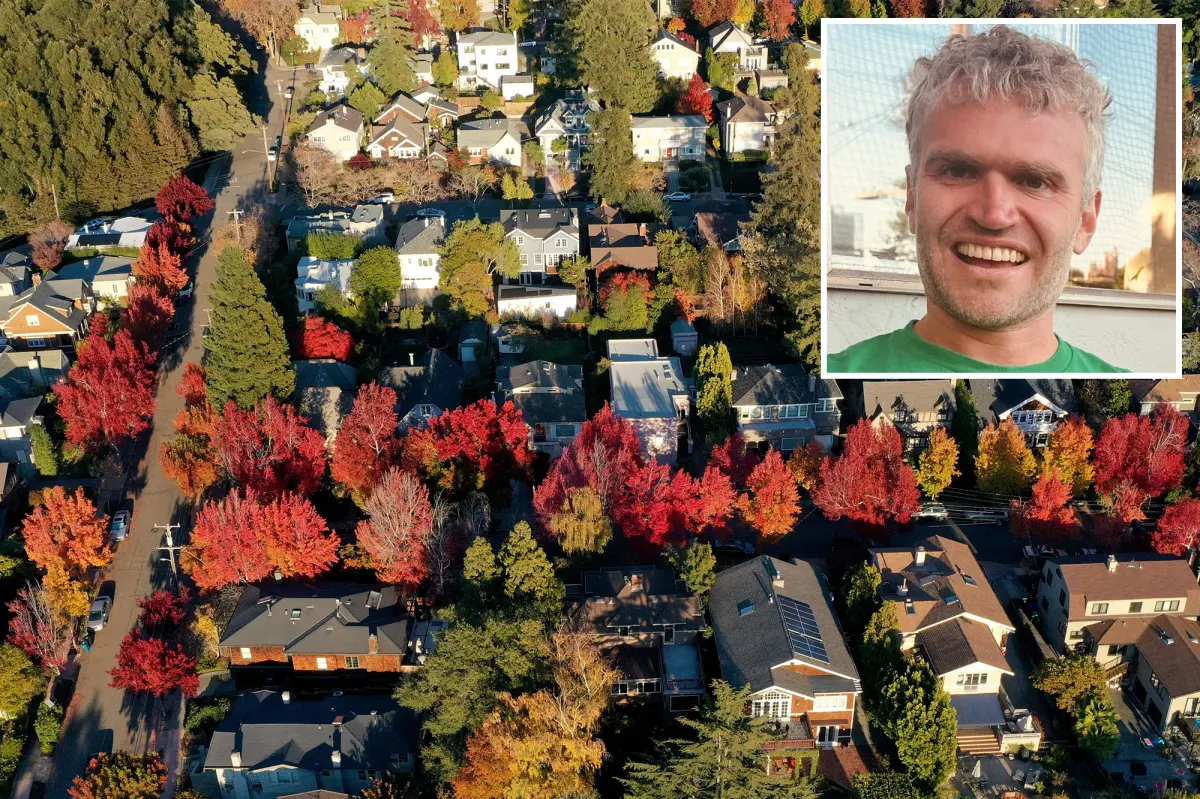
In the heart of Northern California’s bustling East Bay, an invisible yet impenetrable border separates two entirely different human realities. On one side lies Oakland, a sprawling, culturally rich, and fiercely resilient metropolis defined by its diverse working-class neighborhoods, radical history of social activism, and ongoing economic struggles. On the other side, completely enveloped by Oakland’s boundaries like an island of immense wealth, sits Piedmont—a manicured, quiet enclave of roughly 11,000 residents spanning just 1.7 square miles. For decades, this geographic anomaly existed in a tense but quiet coexistence, until Jesse Rosemoore, a 44-year-old transit planner and Oakland resident, decided to disrupt the silence. Frustrated by the stark contrast between his community and the affluent sanctuary next door, Rosemoore launched a provocative campaign aimed at “canceling” Piedmont. What started as a simple, eye-catching sticker and a line of ten-dollar T-shirts has quickly erupted into a fierce regional debate about race, class, and the moral boundaries of community. To Rosemoore, the very existence of an independent, wealthy enclave inside a struggling city is a historical and social absurdity that demands public reckoning. By placing the words “CANCEL PIEDMONT” on public display, he hoped to force a conversation that many in the Bay Area had long ignored: how a single property line can determine a child’s education, a family’s safety, and a household’s lifetime wealth.
The divide between these two communities is not merely academic; it is written into the physical landscape and the daily lives of the people who walk these streets. In certain neighborhoods, a single crosswalk is all that separates an Oakland home from a Piedmont property, yet crossing that asphalt line changes everything. A resident on the Piedmont side enjoys access to a highly funded, exclusive school district, a dedicated municipal police force, pristine public parks, and a tax base shielded from the complex social burdens of the larger city surrounding it. Meanwhile, the median home price in Piedmont hovers around a staggering $2.6 million—more than three and a half times that of neighboring Oakland. This financial barrier translates directly into a profound demographic divide: census data reveals that Piedmont remains roughly seventy percent white and only about one percent Black, whereas approximately one in five Oakland residents is Black. For Rosemoore and his supporters, these statistics represent a modern, polite form of segregation. The campaign argues that the historical legacy of exclusionary redlining and class-based zoning has been effectively preserved in amber, allowing Piedmont to operate as a private club funded by public sovereignty. To those looking in from the outside, the enclave represents a refusal to share the communal burdens of the region, creating a system where the wealthy can retreat into their own private sanctuary while leaving their neighbors to navigate systemic underfunding and urban crisis.
Within Piedmont’s leafy borders, however, the “Cancel Piedmont” campaign has been met with a mixture of defensiveness, hurt, and exhaustion. Residents and local leaders argue that their community is being unfairly caricatured as a villainous monolith of privilege, ignoring the actual human beings who live there and the earnest efforts being made to address historical inequities. Jean Chen Takazawa, the Director of Diversity, Equity, Inclusion, and Belonging for the Piedmont Unified School District, expressed the frustration of many educators and civic workers who feel their daily labor is being dismissed. Takazawa points out that the school district and city have engaged in substantial work to address implicit bias, hire consulting firms, and organize community-wide discussions centered on racial equity. For these administrators, the constant external judgment feels like an unproductive distraction from the slow, difficult process of cultural change. Mayor Betsy Smegal Andersen has also defended her town, noting that Piedmont is far from the only wealthy, exclusionary community in the San Francisco Bay Area. Enclaves like Atherton and Hillsborough grapple with similar housing mandates and racial disparities, yet Piedmont seems to be the only municipality facing an active campaign for its symbolic dissolution. To the defenders of the town, the campaign feels less like a constructive push for social justice and more like a hostile attack on a community of families who simply want good schools and safe neighborhoods for their children.
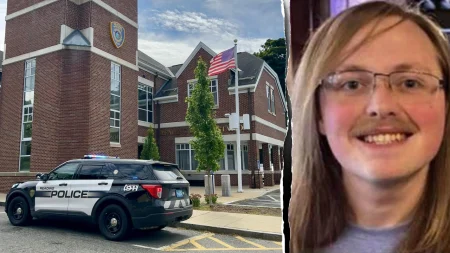
Yet, the scrutiny Piedmont faces is fueled by a series of high-profile racial controversies that have repeatedly thrust the enclave into the national spotlight, revealing the deep-seated tensions bubbling beneath its polished exterior. In 2017, the city was rocked when then-Mayor Jeffrey Wieler was forced to resign after his personal social media posts surfaced, containing derogatory remarks about the Black Lives Matter movement and transgender individuals. The wound was reopened four years later when the school district sent out an email inviting students to join a “White Student Support Group” to process the emotional aftermath of the Derek Chauvin verdict in the murder of George Floyd—a well-intentioned but deeply clumsy initiative that drew widespread ridicule and outrage across the country. In 2022, in an effort to both combat declining enrollment and foster a more diverse student body, the school district attempted to recruit two hundred transfer students from Oakland. While some saw this as a step toward integration, critics viewed it as a superficial band-aid that failed to address the root causes of the town’s exclusivity. These incidents have painted a picture of a community struggling to navigate its own privilege, often stumbling in its attempts to appear inclusive while maintaining the very structural boundaries that keep outsiders at bay.
For Rosemoore and other housing activists, the core issue is not a lack of diversity workshops or sensitivity training, but rather the hard, physical reality of housing and land use. They argue that Piedmont’s attempts to foster inclusion are fundamentally hollow as long as the town’s zoning laws and high property values prevent low- and middle-income families from actually living there. In a region suffering from an acute housing affordability crisis, the preservation of low-density, single-family zoning in ultra-wealthy areas functions as an invisible wall. Rosemoore, drawing on his professional background in transit planning, emphasizes that true diversity and social equity cannot exist without the physical infrastructure to support them. You cannot build a genuinely inclusive community if the working-class people who keep the city running—the teachers, the service workers, the bus drivers—cannot afford to live within its borders. From this perspective, Piedmont’s wealth-shielding municipal boundary is a form of hoarding that deprives the broader East Bay of valuable tax revenue and land that could be used to address regional housing needs. The “Cancel Piedmont” campaign, therefore, is not merely a personal vendetta against individual residents, but a structural critique of how local government boundaries can be used to perpetuate economic segregation under the guise of local control.
Ultimately, both sides of this bitter debate acknowledge that Oakland is highly unlikely to ever formally annex Piedmont, as such a political merger would require the approval of Piedmont’s own voters—a prospect that remains a mathematical and political impossibility. Yet, the true power of the “Cancel Piedmont” movement lies not in its legislative feasibility, but in its ability to strip away the polite illusions of suburban isolation. By forcing residents on both sides of the border to look closely at the property lines that divide them, the campaign has laid bare the complex, uncomfortable truths about wealth distribution, systemic racism, and civic responsibility in modern America. For the people of Piedmont, the challenge is to move beyond superficial public relations gestures and confront the structural realities of their exclusive enclave. For the residents of Oakland, the campaign serves as a rallying cry against the quiet normalization of extreme economic disparity. As the T-shirts and stickers continue to circulate through the streets of the East Bay, they remain a persistent, colorful reminder that in a truly interconnected society, the walls we build to protect our own comfort will always cast a long, cold shadow over our neighbors.