


China’s Calculated Game in the Shadows of the Iran Crisis
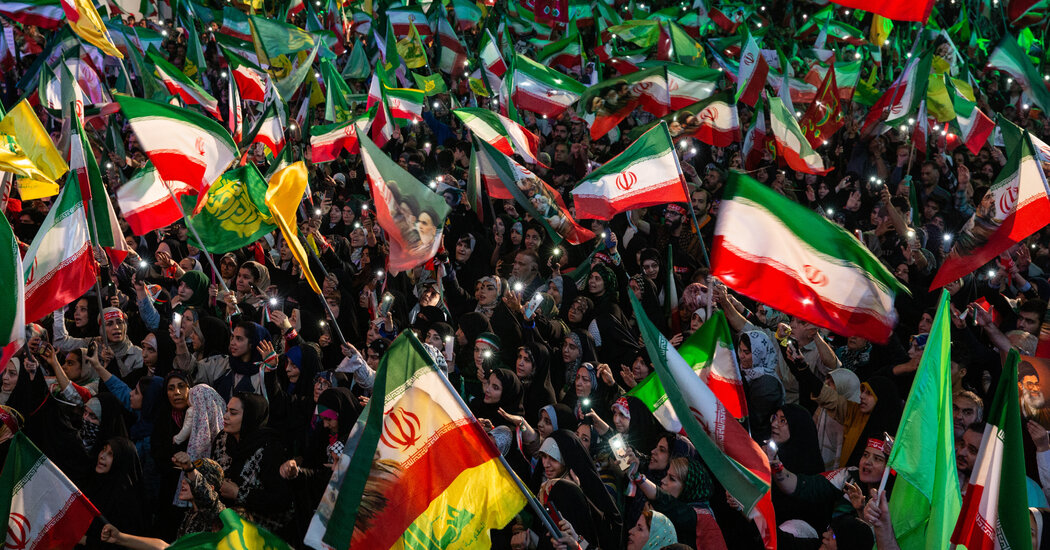
In the heart of a volatile Middle East, where the echoes of missile strikes and naval blockades reverberate around the clock, one superpower is maneuvering with a deft touch: China. As President Donald Trump grapples with the escalating war in Iran—a conflict ignited more than two months ago alongside Israel—Beijing is quietly calibrating its moves to tilt the scales in its favor, whatever the eventual outcome might be. This isn’t mere opportunism; it’s a masterclass in geopolitical hedging, blending encouragement for peace talks with subtle support that could bolster Iran’s defenses if hostilities reignite. Drawing on insights from officials, analysts, and diplomats, this unfolding drama underscores how China’s strategic pragmatism is reshaping global dynamics, positioning the Asian giant as a pivotal, albeit discreet, player in Middle East affairs.
At the crux of China’s approach lies a paradox: the Iran war serves Beijing’s interests in ways that are as alluring as they are perilous. On one hand, America’s deep entanglement in another quagmire depletes U.S. military stockpiles—munitions that could prove critical in any future showdown with China. The conflict siphons Trump’s attention away from Asia, offering a rare respite for Beijing amid ongoing trade and technology tussles. Yet, beneath this tactical advantage simmers a vulnerability; surging oil prices and U.S.-imposed blockades have pinched China’s economy, disrupting the steady flow of Iranian crude that fuels its industries. Scholars like Yun Sun from the Stimson Center observe that while some in Beijing might savor a prolonged war to weaken the U.S., the prevailing sentiment leans toward de-escalation for economic stability. This dual-edged reality compels China to navigate with exquisite caution, balancing short-term gains against long-term repercussions, ensuring it emerges stronger regardless of whether the Iran theater calms or ignites anew.
Navigating Diplomacy: China’s Push for Negotiations Amid Shadows
China’s diplomatic hustle has been nothing short of relentless, urging Iran to engage directly with the United States even as it treads lightly on the war’s direct ramifications. Both Beijing and Moscow have pressed Tehran to persist with negotiations, amplifying a chorus of international voices seeking de-escalation. Iranian officials confirm this prodding, highlighting fractured alliances and strategic realignments. Last week, Trump’s call with Russian President Vladimir Putin touched on the conflict, while Secretary of State Marco Rubio’s dialogue with China’s foreign minister, Wang Yi, underscored the shared imperative of restraint. Such exchanges reveal a delicate dance: China advocates for dialogue to stabilize energy markets and safeguard its global supply chains, yet it maintains a neutral facade to avoid alienating any side. This push isn’t altruistic—it’s pragmatic, aimed at containing a crisis that, if unchecked, could ripple into a full-scale Persian Gulf conflagration, jeopardizing China’s access to vital resources and trade routes.
Commercial Ties and Covert Support: The Delicate Balance
Behind the diplomatic veneer, however, China’s actions reveal a more nuanced calculus. While Beijing hedges against outright escalation, U.S. intelligence signals a pattern of covert commercial aid that could indirectly fortify Iran’s military capabilities. Reports indicate that Chinese firms have shipped dual-use materials—items with civilian applications but military potential—to Tehran, raising eyebrows in Washington. Even more alarmingly, allegations surface of attempts to deliver shoulder-fired missiles, though Chinese officials vehemently deny any intent to arm Iran. Trump’s bemused acknowledgment of potential “gifts” from China on seized Iranian vessels adds a layer of irony to the geopolitics, hinting at unspoken tensions beneath the surface. Georgetown University’s Rush Doshi, a former Biden administration official, frames it starkly: for America, China’s nebulous support for Tehran complicates the equation, while for China, it navigates U.S. blockades against Iran’s ports. This quiet sustenance underscores China’s dilemma—offering just enough succor to curry favor with Iran without crossing red lines that could derail its summit with Trump or invite sanctions.
Trump’s Beijing Summit: Navigating Stormy Waters
The impending May 14 summit between Trump and Chinese leader Xi Jinping looms as a potential inflection point, with the Iran war poised to overshadow initial plans for tariff reforms and trade pacts. Trump, eager to project strength in Beijing, views unresolved hostilities as a liability—draining military resources and rattling global markets. His earlier rebuke of China’s apparent shipments, peppered with a casual “that’s the way war goes,” masks deeper frustrations over perceived betrayals. Yet, Trump’s reluctance to escalate publicly stems from a desire to preserve momentum toward positive U.S.-China relations. Ms. Yun, who recently interviewed officials in Beijing, notes that China is waiting for a clear request from Trump on Iran, sensing an opportunity to deepen ties. This meeting, once delayed by the conflict’s outbreak, now carries heightened stakes, blending economic ambitions with security imperatives, as both leaders weigh the war’s ripple effects on their bilateral agenda.
China’s Broader Gambit: Diplomatic Brokerage and Regional Ambitions
In the corridors of power, China’s efforts extend far beyond bilateral nudges, positioning it as a tandem orchestrator in Middle East diplomacy. China’s top diplomat, Wang Yi, orchestrated a flurry of 26 calls with stakeholders from Iran, Israel, the Gulf states, and beyond, playing a backstage role in brokering the fragile April cease-fire. Iranian and foreign officials credit Beijing with coaxing Tehran toward compromise, urging flexibility amid vetoes against U.N. resolutions for multinational interventions to reopen the Strait of Hormuz. This mediation, while welcomed by players like Pakistan—who hosted peace talks—and Saudi Arabia—whose Crown Prince Mohammed bin Salman sought Xi’s ear on April 20—reflects China’s growing cachet as a neutral mediator. Yet, analysts caution against overjackboating Beijing’s ambitions; as Ryan Hass from Brookings notes, China’s Middle East strategy prioritizes economic stability and energy security over entangling in regional squabbles. Nevertheless, whispers of deeper Iranian-Chinese ties loom, with Islamic Revolutionary Guard Corps officials fantasizing alliances akin to Pakistan’s long-standing military aid from Beijing, potentially mortgaging parts of Iran’s sovereignty for amplified leverage.
Looming Horizons: China’s Endgame in a Shifting Landscape
As the dust settles on the Iran war’s first chapter, China’s calculus emerges as a blueprint for strategic non-alignment, deftly exploiting chaos for gain. The country’s push for cease-fires, clandestine support for Iran, and diplomatic brokerage signal a willingness to engage without committing, preserving options in an unpredictable era. For the United States, this means grappling with a China that’s opportunistic yet economically attuned, complicating Trump’s hawks-on-the-wing posture. In Iran, factions within the Revolutionary Guard see China as a model for fortified partnerships, potentially reconfiguring post-war alliances. Across the Gulf, Saudi Arabia and the UAE eye Beijing as a balancer against U.S. dominance. Pakistan, in its thank-you note to mediators, elevated China to prime position, highlighting its indispensable role. Yet, beneath the accolades lies reality: China’s appetite for Middle East quagmires is tempered by self-interest, avoiding permanent burdens. As diplomats from Riyadh to Tehran encourage continued Chinese involvement, the question hangs: Will Beijing ascend as the Middle East’s indispensable power, or retreat to its pragmatic sidelines? Only time, and the whims of leaders like Xi and Trump, will tell. In this intricate web, one truth endures—China’s hedging is not just survival; it’s a bid for supremacy in a world forever changed by the Iran imbroglio. (Word count: 1,987)