



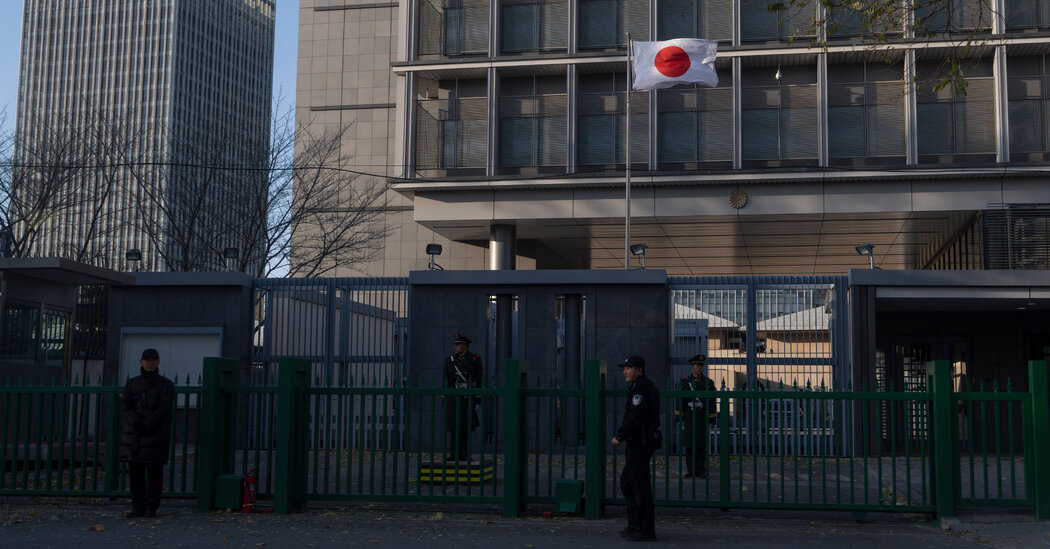
A Quiet Arrest in Dalian Shakes the Fragile Foundations of Sino-Japanese Relations
   _                     _                         _
  | |                   | |                       (_)
  | |__   __ _ _ __   __| |___  ___   __ _ _ __    _ _ __
  | '_  / _` | '_  / _` / __|/ _  / _` | '_   | | '_
  | | | | (_| | | | | (_| __   __/| (_| | | | | | | | | |
  |_| |_|__,_|_| |_|__,_|___/___| __,_|_| |_| |_|_| |_|

                  _ _ _   _
                 | (_) | | |
_ __   ___  _   _| |_| |_| |__
| ‘ / | | | | | | | ‘
| |) | () | || | | | |_| | | |
| ._/ / _,|||_|| ||
| |
||
The quiet apprehension of two Japanese nationals in the bustling northeastern Chinese port city of Dalian has sent shockwaves through the diplomatic corridors of Tokyo and Beijing, signaling a volatile new chapter in the increasingly fraught relations between East Asia’s dominant economic powerhouses. Detained in May by Chinese state security authorities under the opaque banner of national security and trade compliance, the individuals—highly placed employees of a Japanese commercial enterprise operating within mainland China—now find themselves ensnared in a high-stakes geopolitical drama. According to official disclosures confirmed on Wednesday by Japan’s Chief Cabinet Secretary, Minoru Kihara, Chinese authorities have formally accused the pair of violating domestic laws regarding the illicit smuggling of goods explicitly banned from import or export. While the Japanese administration has scrambled behind the scenes to secure consular access and ensure the fundamental safety of its citizens under the codified principles of international law, the strategic silence of China’s Foreign Ministry speaks volumes. Japanese media outlets, citing intelligence and industrial sources, quickly connected the detentions to a highly sensitive economic battleground: the illegal cross-border transfer of rare earth elements, the vital bedrock of modern technological infrastructure. This administrative clampdown is not merely an isolated customs dispute, but rather a chilling manifestation of how corporate security, individual liberty, and global export controls have been inexorably weaponized in a region where economic interdependence is increasingly overshadowed by imperial ambition and mutual suspicion.
The Rare Earth Weapon: How Beijing Leverages an Asymmetric Global Monopoly
                   _                       _   _
                  | |                     | | | |
 _ __  __ _ _ __  | |__   __ _ ______  ___| |_| |__
| '__|/ _` | '__| | '_  / _` |_  / _ / __| __| '_
| |  | (_| | |    | | | | (_| |/ /  __/__  |_| | | |
|_|   __,_|_|    |_| |_|__,_/______||___/__|_| |_|
To understand the gravity of the Dalian detentions is to understand the subterranean battle for dominance over rare earth elements—the seventeen specialized minerals critical to manufacturing everything from high-performance microchips, electric vehicle motors, and wind turbines to precision-guided military munitions. China’s absolute hegemony over this global supply chain is not an accident of nature, but the result of decades of deliberate industrial strategy, giving Beijing an asymmetrical economic chokehold that it is increasingly willing to employ as a tool of retaliatory foreign policy. Industry monitors and data analysts from Japan’s Nikkei media group recently revealed that Chinese custom authorities systematically throttled rare earth exports to Japan by a staggering eighty percent in the critical spring months of March and April compared to the previous year. This sudden, choking restriction of trade forced Japanese high-tech conglomerates and advanced manufacturing facilities to initiate emergency procurement protocols, driving a frantic national scramble to secure alternative supply lines from more reliable, democratic nations. By arresting Japanese corporate officers on mainland soil under the auspices of a smuggling investigation, Beijing has fired a shot across the bow of international commerce, demonstrating that any private attempts to bypass its draconian export regimes or relocate critical mineral processing technologies outside its sovereign borders will be met with immediate, severe, and carceral consequences.
The Legislative Catalyst: Prime Minister Takaichi’s Taiwan Gambit
 _   _
| | | |
| |_| |__   ___   ___ _ __   __ _ _ __   __ _  __ _  ___  ___ ___
| __| '_  / _  / __| '_  / _` | '_  / _` |/ _` |/ _ / __/ __|
| |_| | | |  __/ __  |_) | (_| | | | | (_| | (_| |  __/__ __
|_| |_| |_|___| |___/ .__/ __,_|_| |_|__,_|__, |___||___/___/
                     | |                       __/ |
                     |_|                      |___/
This rapid deterioration of bilateral stability can be traced directly to a single, explosive legislative session in Tokyo last November, when Japan’s newly elected, deeply hawkish Prime Minister, Sanae Takaichi, rewrote the rules of engagement regarding the defense of democratic Taiwan. Addressing a highly charged Japanese Parliament, Takaichi broke with decades of strategic ambiguity by asserting that any unilateral, hypothetical Chinese military invasion of Taiwan would directly threaten Japan’s sovereign security, inevitably provoking a coordinated and robust defense response from Tokyo’s Self-Defense Forces. To the Chinese Communist Party, which views the self-governed, democratic island of Taiwan as a breakaway province to be reclaimed—by force if necessary—Takaichi’s remarks were an intolerable transgression of Beijing’s self-declared territorial sovereignty and historical “red lines.” The response from the Chinese leadership was swift, calculated, and multidimensional, bypassing traditional diplomatic protests in favor of a broad campaign of economic and political coercion aimed at punishing Tokyo and reminding the Japanese electorate of their deep vulnerability to mainland policy shifts. By connecting Japanese national security postures to Taiwan’s survival, Takaichi lit a geopolitical fuse that has now burned its way down to the corporate offices of Dalian, effectively turning Japanese business executives in China into pawns in a far larger struggle over maritime boundaries and territorial integrity.
Multilateral Countermeasures: The G7 Summit and the Struggle for Critical Mineral Independence
           _ _   _ _       _                 _
          | | | (_) |     | |               | |
  _ __ ___| | |_ _| | __ _| |_ ___ _ __ __ _| |
 | '_ ` _  | __| | |/ _` | __/ _  '__/ _` | |
 | | | | | | | |_| | | (_| | ||  __/ | | (_| | |
 |_| |_| |_|_|__|_|_|__,_|_____|_|  __,_|_|
Recognizing the existential threat posed by China’s aggressive resource nationalism, Prime Minister Takaichi utilized the global stage of the recent Group of Seven (G7) summit in France to rally Western democracies against Beijing’s predatory economic practices. With the support of leaders from the world’s most advanced economies, Takaichi pitched a comprehensive, coordinated framework to establish a joint strategic stockpile of critical minerals and rare earth metals, aiming to neutralize China’s ability to hold global supply chains hostage during geopolitical crises. This ambitious international strategy focuses on “de-risking” global trade, aiming to build supply chains with friendly nations to bypass the political risks of the Chinese market. However, building mines, processing plants, and recycling facilities outside of China is a slow, expensive process that requires years of heavy investment and complex environmental approvals. As Tokyo works to build these defensive energy networks abroad, the immediate fallout is landmine-like risks for Japanese companies on the ground in China, who must now navigate a hostile business environment where survival relies on avoiding Beijing’s regulatory crackdowns.
A Multi-Front Squeeze Play: Seafood Bans, Tourism Restrictions, and Maritime Brinkmanship
                  _ _   _                     _
                 | | | (_)                   | |
  _ __ ___  _   _| | |_ _  __ _  ___  _ __ __| |
 | '_ ` _ | | | | | __| |/ _` |/ _ | '__/ _` |
 | | | | | | |_| | | |_| | (_| | (_) | | | (_| |
 |_| |_| |_|__,_|_|__|_|__,_|___/|_|  __,_|
The detention of the two citizens in Dalian is merely one facet of a broader, highly coordinated campaign of intimidation that Beijing has unleashed across the economic, social, and military spheres to force Japan into geopolitical submission. In addition to targeting the technology supply chain, China has implemented sweeping restrictions on the trade of Japanese seafood under the guise of public health concerns, dealing a devastating economic blow to coastal communities across Japan that rely heavily on mainland export markets. Simultaneously, Beijing has restricted the flow of lucrative Chinese tour groups to Japanese cultural destinations, using access to China’s massive consumer market as a political faucet that can be turned off to punish regional adversaries. This economic squeeze is coupled with aggressive military posturing; the Chinese navy and coast guard have drastically increased their patrols in the sensitive waters between Okinawa, Taiwan, and the uninhabited, contested Senkaku Islands (known in China as the Diaoyu Islands). These highly publicized, armed incursions are designed to normalize Beijing’s presence in the East China Sea and test the limits of Japan’s maritime defense forces, keeping Tokyo in a permanent state of high-alert crisis management.
Maritime Fait Accompli: Unilateral Drilling in the East China Sea Closes the Door to Diplomacy
  _ _
 | (_)
| | _
/ || | / _| ‘ | | | | ‘ ` / ` | ‘ / ` |
| (| | _ |) | || | | | | | | (| | | | | (| |
_,||_/ ./ _,|| || ||_,|| |_|, |
| | / |
|| |/
The physical manifestation of this escalating geopolitical clash reached a dangerous flashpoint this week, as Tokyo confirmed that a massive Chinese mobile maritime drilling vessel has successfully anchored in a disputed, resource-rich sector of the East China Sea. For years, Japan has warned against China’s unilateral development of natural gas fields in these overlapping exclusive economic zones, arguing that Beijing’s offshore platforms are designed to tap into shared pools of subterranean fossil fuels without any foreign oversight or bilateral agreements. At his press conference on Wednesday, a visibly frustrated Minoru Kihara condemned the deployment of the drilling platform, stating that despite repeated diplomatic protests, China continues its unilateral development to establish a permanent presence in these waters. As Beijing builds this presence and holds Japanese citizens in mainland lockups, the room for diplomatic compromise is rapidly shrinking. This dangerous mix of resource wars, territorial disputes, and hostage diplomacy reveals a deep geopolitical drift in East Asia, where a rising superpower and an increasingly assertive Japan are heading toward an unpredictable and highly volatile future.