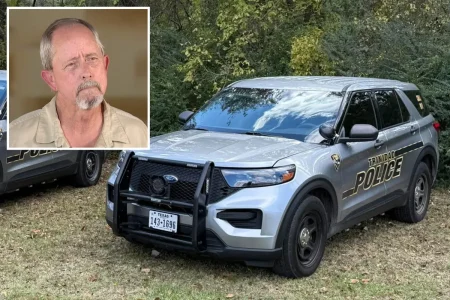



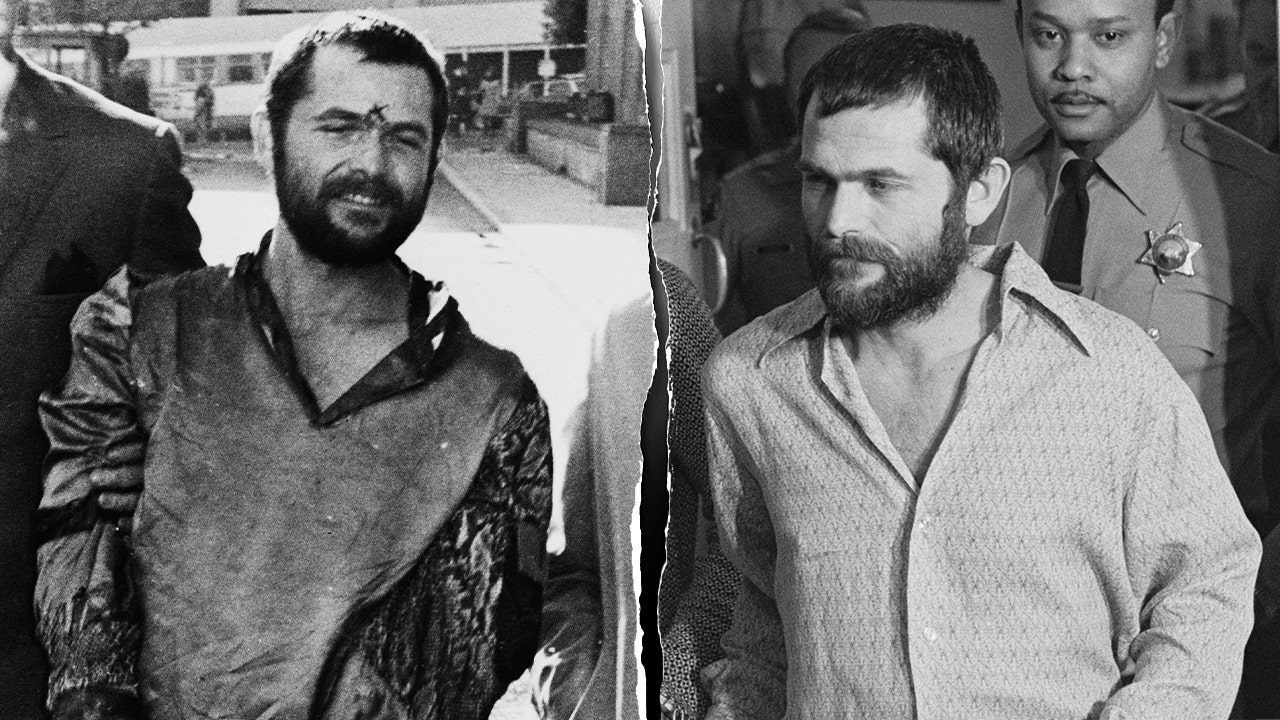
Bruce Davis, one of the last remaining members of the Manson family to be held behind bars for the violent crimes that terrorized California in the summer of 1969, has died at the age of 83. According to officials, Davis passed away on the evening of September 11 at the California Medical Facility in Vacaville, a state prison hospital in Solano County. A spokeswoman for the Solano County Coroner’s Office confirmed the death to Fox News Digital, though no additional details were immediately released. The news marks yet another quiet closing of a dark chapter in American crime history—a chapter that has fascinated, horrified, and haunted the public imagination for more than five decades. While names like Charles Manson, Sharon Tate, and the Manson family itself evoke chilling images of cult devotion and brutality, Davis was always something of a lesser-known figure in that constellation, a man whose own criminal journey intersected with one of the most infamous episodes of the twentieth century. He was not the dominant face of the Manson family, but his life became forever defined by his association with itaine and by the two deaths in which he was implicated. For more than half a century, Davis remained in prison, long after many of his fellow cult members had died or, in a few rare cases, won release. His death at a state medical facility, surrounded not by headlines but by the institutional quiet of a prison hospital, brings a certain finality to a story that has been retold in books, documentaries, and films—yet it also leaves unresolved questions about culpability, punishment, redemption, and the human capacity for change.
The crimes for which Davis was convicted took place in July and August of 1969, a summer that has become synonymous with the Manson family’s murderous rampage. Davis was implicated in the killings of Gary Hinman, a 34-year-old musician who had befriended several members of the Manson family, and Donald “Shorty” Shea, a 35-year-old Hollywood stuntman who worked at the Spahn Ranch, the dilapidated movie ranch that served as the cult’s base of operations. Charles Manson suspected that Hinman had come into an inheritance and sent several of his followers, including Davis, to confront him. The encounter turned violent, and Hinman was ultimately stabbed and left to die, his blood used to write a message on the wall in an attempt to frame the Black Panther Party. Davis was not the direct killer in either case, but he was present for the violence and played a role in the aftermath. In the case of Shea, Manson was angered by what he saw as Shea’s divided loyalties and feared that he might betray the group. Shea was taken to a remote area and killed; his body was not discovered for years. Davis was also present during that killing and later participated in efforts to dispose of Shea’s remains. Importantly, Davis was never accused of involvement in the murders of actress Sharon Tate, who was eight and a half months pregnant at the time, and four others—Jay Sebring, Wojciech Frykowski, Abigail Folger, and Steven Parent—who were killed in a brutal home invasion in the Hollywood Hills on the night of August 8, 1969. That crime was carried out by other members of the Manson family, acting under Manson’s direction<|begin▁of▁file|>. The distinction mattered: it meant Davis was not seen as one of the principal monsters of the Manson saga, but it did not spare him from a life sentence. In 1972, he was convicted of the two murders and sentenced to life in prison, beginning what would become an extraordinarily long stretch of incarceration. For many observers, Davis’s case raised troubling questions about the extent of a person’s responsibility when they are part of a group, under the sway of a charismatic and manipulative leader, and yet still present for acts of violence. Was he merely a follower, or was he complicit in something far darker? The judicial system ultimately decided that his presence and participation were enough to warrant a life behind bars, and that judgment would dog him for the rest of his existence.
Over the decades, Davis became one of the oldest and longest-serving inmates in the California prison system, and his parole hearings became a recurring reminder of his past. He was recommended for parole numerous times—a sign, perhaps, that prison officials and some evaluating boards saw him as having undergone a genuine transformation since his participation in the crimes of 1969. Yet time and again, those recommendations were reversed by governors who refused to take the risk of releasing him. In 2017, Governor Jerry Brown rejected his parole, and in 2021, Governor Gavin Newsom followed suit. Newsom’s decision was notable for its clarity: he found that Davis “currently poses an unreasonable danger to society if released from prison at this time,” despite Davis’s age and the decades that had passed since his crimes. The language suggested that no matter how old Davis became, or how long he remained incarcerated, the shadow of his association with Manson would never fully lift. To many, this was a matter of simple justice: these were brutal murders, and no amount of time can restore lost lives or mend shattered families. To others, it raised a deeper moral question—what purpose is served by keeping a man in prison until he dies, particularly when he was not the architect of the violence and had spent more than fifty years paying for his role? There were no easy answersable, and Newsom’s decision reflected a deep institutional caution about granting freedom to anyone connected with the Manson family, a caution that had been reinforced by the release of other former cult members who had gone on to live quiet, anonymous lives. Davis’s case became, in many ways, a proxy for broader societal ambivalence about redemption, forgiveness, and the limits of punishment.
In the final years of his life, Davis’s path took another unexpected turn when he found himself in the media spotlight again, this time through a true crime podcast. His parole hearing was delayed in 2024 after he appeared in episodes of “The Lighter Side of True Crime,” a program hosted by Keith Rovere, a former prison chaplain. In two separate phone interviews, conducted in February 2023 and April 2023, Davis spoke at length about his Christian faith while incarcerated and about a book he was working on behind bars. The interviews were somewhat unusual—true crime podcasts often feature detectives, journalists, and victims’ family members, but rarely do we hear directly from a convicted Manson family member reflecting on their own spiritual journey. Davis told Fox News Digital in an email at the time: “I’ve yet to hear the podcast.” He also offered a pointed question: “Does it sound as if I’m glorifying Manson or my crimes?” The question hung over everything he said. At the heart of it was a plea to be judged by the man he had become, not merely the deeds he had done. Davis’s Christianity was a major part of his identity in prison, and he reportedly served as a mentor and chaplain’s helper for other inmates, teaching Bible studies and offering counseling. His supporters pointed to these activities as evidence of genuine remorse and rehabilitation. But his critics saw the podcast appearances as a final, self-serving attempt to rewrite his own history, to cast himself as a redeemed figure rather than a willing participant in murder. The truth probably lies somewhere in between—a man who did terrible things in his youth, who spent decades confronting the consequences, and who eventually found meaning behind bars in religion, reading, and writing. Whether that meaning was authentic or calculated is impossible to know, but his words and actions in those interviews offered a rare glimpse of an aging man trying to make sense of a life that had been defined by violence.
The story of Bruce Davis inevitably invites comparison with other members of the Manson family who took different paths. Steve Grogan, for instance, was also convicted in the killing of Shorty Shea, and for years he was considered a low-level member of the group. Yet everything changed in the early 1980s when Grogan cooperated with authorities, leading them to the location of Shea’s remains, which had been hidden in the desert for more than a decade. That cooperation was seen as a demonstration of genuine accountability, a willingness to give the victim’s family some measure of closure. Grogan was granted parole in 1985hol and released, making him the first Manson family member to walk free after a murder conviction. He has since lived out of the public eye, a fact often cited by those who believe that even the most notorious offenders can be safely reintegrated into society given time, maturity, and true remorse. Davis, however, never got that chance. He too had sought release, but without the sort of dramatic, tangible act of contrition that Grogan had shown, and with the weight of five decades of parole reversals, he remained behind bars. The contrast between the two men is instructive. It suggests that the justice system, while firm in its stance toward Davis, was not entirely unyielding—but that redemption must be accompanied by concrete acts of making amends, not merely inner changes. In Davis’s case, those acts may have been less visible to the public and to the governors who reviewed his parole bids. He maintained his innocence of direct killing, but he never fully escaped the wider moral responsibility for the cult’s actions. In that sense, his life sentence became not only a punishment for specific crimes but also a symbol of the challenges of untangling the threads of complicity, influence, and personal choice within a group dynamic as fearsome as the Manson family.
Now, with Davis’s death, another chapter has closed forever. The Manson family itself has largely faded from the world—many of its members have died in prison, and its name now serves less as a living danger than as a historical curiosity, a reminder of what can happen when charisma, hatred, and violence converge. Davis is survived by his crimes and by the questions they raise, but he is not survived by the chance to explain himself any further. His death, like his life, will be interpreted in different ways. To the families of Gary Hinman and Donald Shea, it may bring a painful sense of finality—the knowledge that the man who helped end their loved ones’ lives has exited the world without ever truly making amends. To students of crime and the legal system, it may provoke reflection on the nature of punishment and the limits of rehabilitation. And to those who followed the Manson story as a cultural phenomenon, it is another headline in a long series of endings, a sign that the generation of people who lived through that dark summer is slowly passing away. Yet even as Davis is laid to rest, the story of what happened in 1969 remains, carved into the memory of America. The names of the victims—especially Sharon Tate and the others who lost their lives in such savage fashion—continue to resonate, and they deserve to be remembered above all. Davis was not the architect of their deaths, but he was part of a movement that glorified chaos and destruction, and he spent his final decades confined within the walls of the very system he had helped defy. In the end, perhaps the most human response is to recognize that our lives are shaped by the choices we make, that repentance is possible but never guaranteed, and that the cost of violence ripples outward in ways that far outlast the lives of those who committed it. Bruce Davis died in a prison hospital, a man both forgotten and infamous, and with him goes one of the last direct witnesses to a crime that changed the way we think about evil.