






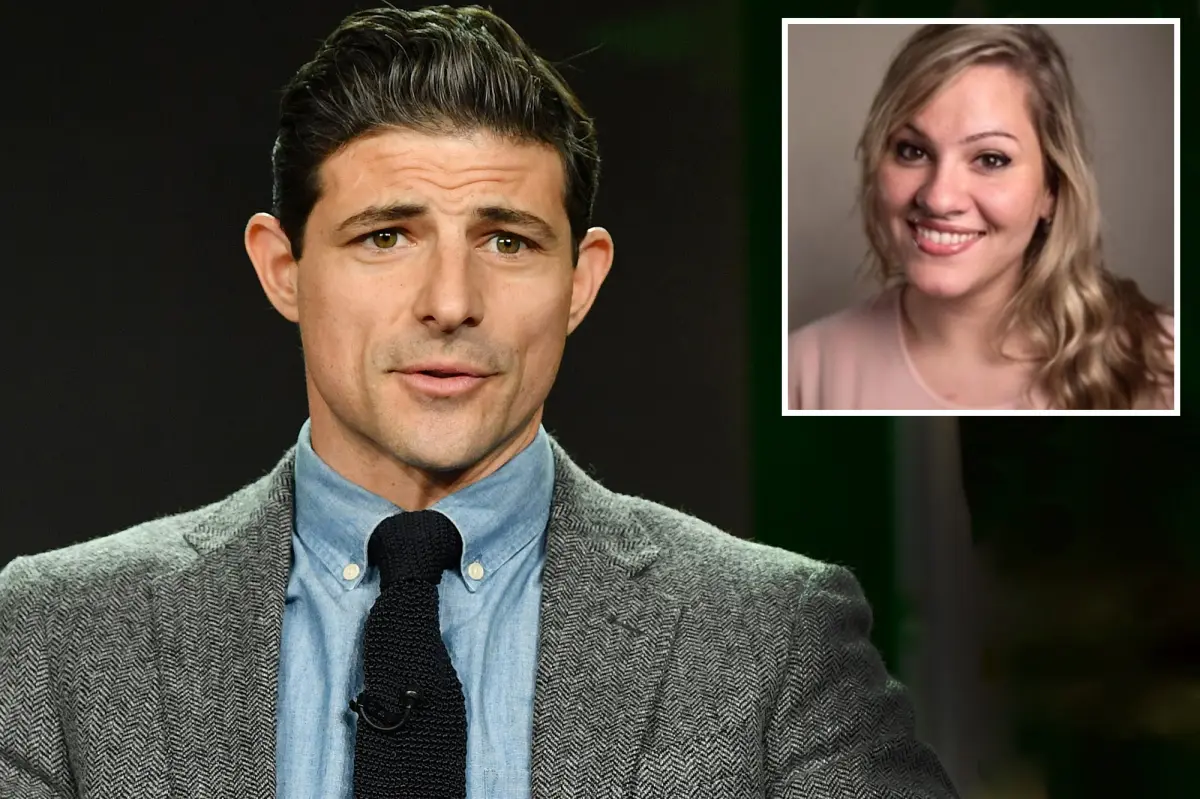
Paragraph 1: The Cruel Paradox of Success and Scandal
There is a particular kind of irony that hangs over the modern media landscape, where the very machinery built to chase ratings and fleeting public attention often becomes the stage for the most devastating personal reckonings. Matt Gutman, the embattled 48-year-old correspondent who has been crisscrossing the globe for decades, is currently living through this dizzying contradiction. Just as he stepped into the hallowed anchor chair at CBS Evening News, filling in for the vacationing Tony Dokoupil, he experienced the intoxicating rush of a career rebound. The network, which has been struggling in the ratings wars against its rivals, suddenly found a jolt of life under his temporary stewardship. For the week of July 27, CBS Evening News averaged a massive 4.1 million viewers, marking its best weekly audience in seventeen weeks and the first time it had broken the four-million mark since late March. For a man who had been hired to revitalize a storied yet flagging institution, this was the professional equivalent of a victory lap—a validation that his gamble to leave a comfortable seventeen-year tenure at ABC News for an uncertain future at CBS was paying off. But the intoxicating rush of that achievement is now forever stained and overshadowed by the legal thunderclap that landed on that very same Friday. As Gutman basked in the glow of a resurgent broadcast, he was confronted with a lawsuit that threatens not just his career, but his reputation, legacy, and personal equilibrium. It is the kind of whiplash that defines a high-stakes existence, where a carefully constructed public persona can be dismantled in a single filing. The juxtaposition of those glowing Nielsen numbers and the cold pages of a legal complaint serve as a stark reminder that success in the public eye is often built on a fragile scaffolding, vulnerable to the winds of past misdeeds and unresolved grievances.
Paragraph 2: The Specifics of the Harassment Allegations
At the core of this legal storm are allegations brought forth by Samira Said, a former field producer for ABC News, who has had the courage to step forward and detail a toxic culture that allegedly thrived during her assignments alongside Gutman. The lawsuit, filed in Los Angeles Superior Court, names Gutman, ABC News, and its corporate parent, The Walt Disney Company, as defendants, painting a picture of a workplace where professional boundaries were routinely crossed. The most damning accusations detail two separate incidents that occurred several years ago while the pair were working together. In the first, during a routine assignment, the two found themselves waiting in a public line, a mundane moment that would take a deeply demeaning turn. In this casual, exposed setting, Gutman allegedly initiated a highly inappropriate conversation, focusing on the physical attributes of a female correspondent. The suit alleges that he began rating her appearance, reducing a professional colleague to a numerical score based on her physical attractiveness rather than her journalistic acumen. This objectification, which is staggeringly common but no less toxic in newsrooms, was reportedly met with complicity from other male crew members, who joined in on the lewd ranking exercise, applying immense social pressure on Said to participate. Her refusal and her subsequent verbal objection to the degrading discussion highlight the isolating position she found herself in—a lone voice of professionalism in a crowd of misconduct. The second incident allegedly occurred during a press event for a movie release, further blurring the line between glamorous industry functions and the daily grind of a working producer. When Said voiced a professional disagreement with Gutman regarding their work schedule, his response was not rooted in journalistic rationale but in a crude, sexualized insinuation. In front of several colleagues, Gutman allegedly suggested that Said’s desire to leave the event was due to a sexual liaison waiting for her in the city hold. This comment, dripping with condescension and chauvinism, was designed to publicly embarrass herament and delegitimize her professional judgment, reducing her to the stereotype of a woman who prioritizes her romantic life over her work. The lawsuit frames these incidents as a systemic pattern of objectification, one that made the workplace hostile and fundamentally compromised the dignity of a hardworking professional.
Paragraph 3: The Hidden Scars of Uvalde and the Corporate Betrayal
However, to view this case solely through the lens of a single harassment claim would be to miss the profound human tragedy that underpins the broader lawsuit. The allegations against Gutman are merely the initial, explosive allegation within a larger, deeply painful narrative concerning Said’s wrongful termination and the appalling failure of ABC News to protect the mental health of its own employees. Said’s journey to that breaking point was paved with the kind of trauma that most people cannot imagine enduring. She was assigned to cover the aftermath of the Robb Elementary School shooting in Uvalde, Texas, in 2022—a story that stands as one of the most harrowing tragedies in modern American history. As a field producer, she was not a passive observer; she was on the ground, tasked with the grim and psychologically devastating duty of interviewing young children who had just witnessed their classmates and teachers being slaughtered. The emotional carnage of that assignment was profound. She lived with the trauma, the screams, the vacant eyes of survivors, and the weight of that grief began to crush her mental health. Upon returning, she bravely approached her supervisor, explaining that she was in acute crisis and desperately needed a short leave to attend to her deteriorating psychological state. Instead of receiving compassion, the corporate machinery of ABC turned its back on her. Her request for accommodation under the California Fair Employment and Housing Act was denied, forcing her to rely on a psychiatrist to eventually approve medical leave—a bureaucratic hurdle that only added insult to injury.
Paragraph 3: The Broader Systematic Collapse of Care
The allegations against Gutman do not exist in a vacuum; they are woven into a much larger, heartbreaking narrative of systemic neglect and burnout that forms the core of Said’s wrongful termination suit. Her story is not merely that of a victim of casual sexism, but of an employee crushed by the brutal demands of an industry that feasts on tragedy while offering its workers no safety net. Said was assigned to cover the horrific aftermath of the 2022 Robb Elementary School shooting in Uvalde, Texas. This is not a standard assignment; it is a descent into the very heart of human darkness. She was tasked with interviewing elementary school children who had witnessed their classmates being slaughtered in their classrooms—interviews that required professional detachment but inevitably pierced the soul. The psychological weight of collecting the testimony of traumatized children, of staring into the vacant eyes of grief and raw terror, proved catastrophic for Said’s mental health. Recognizing her own deteriorating state, she reached out to her supervisor and requested a brief leave to seek professional help, a basic and humane accommodation that any responsible employer should grant. However, according to the lawsuit, this request was flatly denied. It was only after a psychiatrist intervened and formally approved a medical leave that ABC reluctantly allowed her to step away. But the relief was short-lived; the corporate machinery of ABC News, allegedly overseen by then-Los Angeles bureau chief David Herndon, seemed determined to push her to her breaking point.
Paragraph 3: The Systemic Failure of a Corporate Safety Net
Instead of providing the supportive recovery environment that a worker grappling with post-traumatic stress desperately needed, the lawsuit paints a picture of an employer hell-bent on disregarding her medical constraints holistically. Shortly after her approved medical leave began, Herndon was reportedly still inundating her with assignment requests, showing a gross insensitivity to her diagnosis and a complete failure to respect the boundaries of her treatment. This relentless pressure culminated in her assignment to cover the devastating Los Angeles wildfires in January 2025. This was not a desk job; it involved dangerous conditions, chaotic logistics, and the constant visual and olfactory assault of destruction. For someone still nursing a fragile mental state, this was a profound betrayal. Just three weeks into that grueling assignment, a supervisor finally noticed that Said was physically and emotionally breaking down, visibly deteriorating under the extreme conditions. She was sent home, yet the systemic neglect did not end there. Later in the year, while covering a weather-related story in the region, Said suffered a physical injury to her foot. She dutifully reported the injury, expecting the standard protocol of medical evaluation and care. Instead, she was subjected to an assessment by a company-appointed doctor, who inexplicably denied her medical leave request severe enough to warrant time off. This denial forced her to continue working in significant physical pain, compounding her psychological distress with a physical burden. The lawsuit argues that these actions constitute a clear violation of California’s Fair Employment and Housing Act (FEHA), which mandates that employers reasonably accommodate employees with medical conditions and mental health disabilities. The emotional arc of Said’s story is not one of a single catastrophic event, but rather a slow, grinding attrition—a series of workplace aggressions, denied accommodations, and systemic dismissals that accumulated until she could no longer function. She was ultimately fired in 2025, a termination that she claims was a direct result of the network’s hostility toward her medical needs rather than a performance issue. The lawsuit alleges that her injury while covering a weather-related story, coupled with the denial of medical leave for that injury, was the final nail in the coffin, a cold corporate procedure that prioritized billable hours over human well-being.
Paragraph 4: The Human Face of a David vs. Goliath Battle
The allegations against Gutman, while undeniably serious and deeply intertwined with this broader narrative of workplace toxicity, represent only one facet of a deeply fractured employment relationship. For Said, the decision to file this lawsuit is not merely a legal maneuver; it is an act of immense personal courage. She is taking on a media behemoth—an entity with unlimited legal resources and a formidable public relations machine—while simultaneously reliving the trauma of Uvaldeais as well as the humiliation of being objectified in front of her peers. The lawsuit seeks compensatory and punitive damages, as well as attorneys’ fees, but the true currency of this battle is accountability. By intertwining Gutman’s specific alleged actions with the systemic failures of ABC News to accommodate her mental health, Said is attempting to establish a pattern of behavior that suggests a culture of impunity. She is arguing that the same corporate environment that allowed a senior correspondent to make lewd remarks with impunity is the same environment that failed to provide a safety net for a producer drowning in secondary trauma. The fact that she had to endure a grueling assignment covering the aftermath of a mass shooting of children—an event so horrific that it indelibly scars every journalist who witnesses it—only to be denied basic mental health accommodations, highlights a profound ethical failure at the heart of the news industry. Her physical injuries, sustained while dutifully covering yet another weather catastrophe, became just another data point in a bureaucratic denial process visa-a-vis the company doctor. Her story is a testament to the invisible casualties of the 24-hour news cycle: the producers, editors, and field staff who absorb the terrors of the world and are expected to simply move on to the next story without ever acknowledging the scars they carry.
Paragraph 5: The Ratings Goldmine and the Specter of the Past
This legal maelstrom lands at a particularly awkward and painful juncture for Gutman, whose professional star had recently been on the ascent. After a distinguished 17-year career at ABC, where he established himself as a celebrated foreign correspondent, he made the high-profile jump to CBS News. He was one of the first major talents recruited by Bari Weiss, the newly installed editor-in-chief of CBS News, who took the helm in October 2025 with a mandate to revitalize the network’s evening news product. For Weiss, bringing on Gutman was a statement of intent—a signal that she was serious about shaking up the status quo with seasoned, aggressive journalism. The gamble seemed to pay off spectacularly. During a week in late July 2027, with Gutman temporarily anchoring the CBS Evening News in place of vacationing regular Tony Dokoupil, the broadcast averaged 4.1 million viewers. It was the network’s best weekly audience in months, a clear indication that Gutman had a certain on-screen magnetism that resonated with the viewing public. Yet, in a tragic twist of fate, those impressive Nielsen numbers now serve as a dark backdrop to the allegations. The very success that Gutman helped deliver to the network is now threatened by the specter of a lawsuit that revives the #MeToo era anxieties that have repeatedly rocked the industry. Adding another layer of tragic poignancy to this narrative is the fact that Gutman recently spoke openly about his own vulnerability, recounting a harrowing experience with a sophisticated phone scam that almost cost him his savings. This admission of personal gullibility and fear painted him in a seemingly sympathetic light, portraying him as a relatable figure susceptible to modern anxieties. Yet, the allegations in the lawsuit paint a starkly different picture of a man who, when granted power and proximity on a story, allegedly wielded that power to demean his female colleagues. The contrast between the trembling victim of a phone scam and the boorish bully described in the complaint creates a dizzying cognitive dissonance for the viewer.
Paragraph 6: The Fractured Mirror of Modern Newsroom Culture
Ultimately, this story is far more than a tabloid scandal about a famous anchor; it is a profound indictment of the culture that allows such behavior to flourish unchecked at the highest levels of prestige journalism. Gutman’s recent hiring by CBS News, under the leadership of Bari Weiss, was hailed as a coup for the network, a signal of aggressive, high-profile talent acquisition. His presence on the anchor desk during a critical July week successfully drove CBS Evening News to its highest ratings in seventeen months, a testament to his on-air appeal and the draw of his reporting. Yet, this very success throws the tragedy of the current situation into sharp relief. As the ratings ticked upward, the shadows of his past conduct were quietly collecting in a legal filing. Even more surreal is the anecdote Gutman recently shared publicly about nearly falling for an elaborate phone scam. In a video, he recounted how a convincing caller posing as a fraud protection agent almost tricked him into emptying his bank account, catching himself only when the scammer instructed him to keep bank employees ignorant. This personal anecdote, revealing a moment of vulnerability and near-ruin, now serves as a bizarre prelude to the very public professional ruin he now faces. It humanizes him in a way that the harassment allegations obscure, reminding us that he too is a flawed individual navigating a world of distorted realities—yet it does little to excuse the alleged degradation of his colleagues.
Paragraph 6: The Broader Cost of High-Stakes Journalism
As the legal battle looms, the fallout from this lawsuit extends far beyond the careers of Matt Gutman and Samira Said, casting a long shadow over the entire news industry. It forces a deeply uncomfortable reckoning with the culture of journalism, a profession that prides itself on holding power to account but often fails to police its own internal power dynamics. If the allegations are substantiated, they expose a clear disconnect between the supposed meritocracy of a newsroom and the deeply entrenched boys’ club mentality that persists in certain corners of the industry. The CBS Evening News has just seen its best weekly ratings in 17 months, buoyed by Gutman’s temporary tenure, yet this uptick in viewership is now indelibly stained by the specter of litigation. For the network executives at CBS, and specifically for Bari Weiss—who handpicked Gutman as one of her first major hires during a period of intense transformation for the news division—this lawsuit presents a public relations nightmare that they must navigate with extreme caution belongings to a highly visible talent. The questions swirling around this case are uncomfortable and universal: How does an employer balance the desire to rehabilitate a talented journalist against the moral obligation to create a safe work environment for women? How do we reconcile the public persona of a national anchor with the private complaints of a subordinate who claims to have been demeaned? And most poignantly, what does it say about an industry that sends its workers into the heart of unimaginable tragedy—like the sandy hallways of a school where children died—only to deny them the basic psychological safety net upon their return? The story of Said’s termination, intertwined with Gutman’s alleged misconduct, signals a profound disconnect between the corporate quest for content and the human beings who generate it. As the lawsuit winds its way through the courts, it exposes the fragile architecture of modern media, where a single news cycle can catapult a network to its best ratings in months while simultaneously revealing the deep, rotting fissures beneath the polished surface. We are forced to ask whether the industry is truly dedicated to truth and justice, or merely to the bottom line, and whether the true cost of a headline is the shattered dignity and mental health of those who risk everything to bring it to us. In the end, this is not just a story about sexual harassment or wrongful termination; it is a story about the crushing weight of an industry that consumes its own, and the hollow victory of a ratings boost bought at the expense of human decency.