





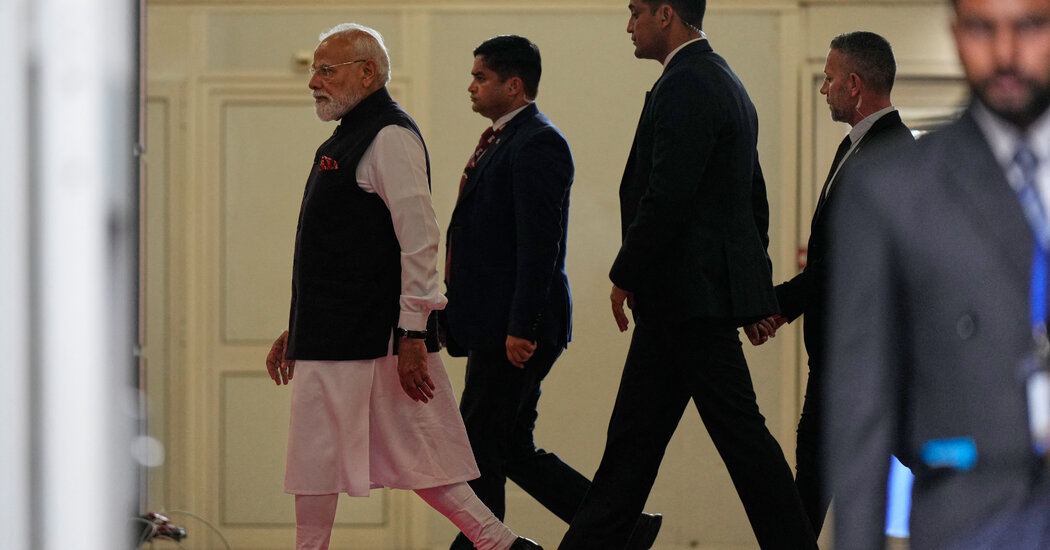
As Prime Minister Narendra Modi of India prepares to meet President Donald Trump at the upcoming Group of 7 summit, the diplomatic atmosphere is charged with a heavy, deeply felt tension that goes far beyond normal statecraft. Just a week prior to this anticipated encounter, the cold realities of international conflict struck a devastating blow to the Indian public when U.S. military strikes on commercial tankers in the Gulf of Oman claimed the lives of three Indian merchant sailors. This tragic loss has cast a long, somber shadow over a relationship that both leaders have spent years trying to frame as a warm, personal partnership. For Modi, the pilgrimage to the summit is not merely a routine diplomatic trip but a delicate and agonizing mission to stabilize ties with a superpower. He finds himself in the unenviable position of representing a nation currently bearing the heavy collateral damage of a conflict it did not start. The challenge ahead is profoundly asymmetrical: any grievances Modi brings to the table will be delivered by a country economically strained by U.S.-led blockades to an administration that has shown a marked indifference to how its aggressive foreign policy moves ripple through the lives of everyday citizens in partner nations like India.
The human cost of this geopolitical friction has sparked intense emotional and political turmoil back home in India, transforming abstract trade wars into a deeply personal national tragedy. The deaths of the three seafarers, who were caught in the crossfire of America’s strict naval blockade of Iran, have ignited widespread public anger across a country that prides itself on the global reach and safety of its workforce. While U.S. forces defended the missile strikes as a necessary enforcement of sanctions against blockaded Iranian oil, the view from New Delhi is one of grief, betrayal, and domestic vulnerability. The Indian government’s formal diplomatic protest to the U.S. Embassy has done little to satisfy a grieving public or quiet an aggressive political opposition. In the halls of Parliament, opposition leader Rahul Gandhi has seized on Modi’s relative public silence regarding the incident, cuttingly labeling the Prime Minister as an obedient servant to Trump’s whims. This domestic political pressure leaves Modi with almost no room for error; he must somehow demonstrate strength and demand accountability for the lost lives of his citizens, while simultaneously avoiding a permanent rupture with India’s most critical global partner.
Compounding this emotional tragedy is a mounting economic crisis that threatens the daily lives of hundreds of millions of Indian citizens who rely on stable, affordable energy. India, a massive energy-importing nation, has been pushed to the very brink of a severe domestic fuel crisis. This crisis was set in motion when the Trump administration slathered punitive tariffs on India for continuing to purchase heavily discounted Russian crude oil, and it has since been compounded by the virtual shutdown of supply routes through the Persian Gulf. As gas stations face shortages and energy prices climb, the economic burden falls squarely on the shoulders of the Indian working class, transforming geopolitical chess moves into kitchen-table financial anxieties. A sweeping bilateral trade agreement that was supposed to alleviate some of these systemic pressures remains frustratingly out of reach, frozen by months of stubborn negotiating tactics on both sides. While recent collaborative breakthroughs—such as a critical minerals agreement negotiated recently with Secretary of State Marco Rubio—provide a glimmer of hope that cooperative avenues still exist, they currently feel like small band-aids on a gaping economic wound.
The widening rift between Washington and New Delhi represents a stark departure from the optimistic, high-energy camaraderie that characterized the early relationship between the two leaders. It has been sixteen months since Modi traveled to Washington in February 2025 to enthusiastically congratulate Trump on his second term, a visit characterized by warm embraces, declarations of eternal partnership, and joint rallies that celebrated their shared brand of nationalist populism. Since then, however, India has watched its security and economic calculations systematically upended by a highly volatile, transaction-oriented U.S. administration. From sudden visa restrictions and immigration clampdowns that directly threaten the dreams of Indian families, students, and tech professionals, to unexpected tariffs that target core Indian exports, the United States has consistently prioritized its “America First” agenda at India’s expense. Adding a layer of personal friction to this complex mix is Trump’s public insistence that he single-handedly mediated a cease-fire between India and Pakistan during their intense military flare-up in May 2025—a claim that Modi’s government has consistently refused to validate, rejecting Trump’s repeated bids for a Nobel Peace Prize nomination and bruising the American president’s famously sensitive ego.
Foreign policy analysts and business leaders warn that the strategic core of the relationship is at risk of sliding from a long period of quiet drift into a state of permanent and highly damaging divergence. Atul Keshap, president of the U.S.-India Business Council, has publicly urged both administrations to stop haggling endlessly over minor trade concessions and instead focus their energies on high-tech collaboration, digital economies, and joint nuclear energy ventures that represent their true shared future. Yet, experts like Aparna Pande of the Hudson Institute point out that India must ultimately approach this relationship with a high degree of pragmatic realism. Because India does not yet possess the immense financial and military leverage of a superpower like China, it may have no choice but to swallow its national pride and adopt a more flexible posture. The painful truth for New Delhi’s policymakers is that despite the insults, tariffs, and tragic loss of life, the relationship with the United States remains the most vital strategic anchor India possesses as it attempts to navigate an increasingly unstable global economy.
As Wednesday morning approaches, the stage is set for a dramatic exercise in political theater, where the superficial warmth of public diplomacy will collide head-on with cold, back-end geopolitical realities. While Trump recently took to Truth Social to praise Modi as India’s longest-serving and “great” Prime Minister, the actual working relationships between their diplomatic teams remain incredibly tense, characterized by missed calls, canceled visits, and deep mutual suspicion. Although senior administration officials have confirmed that the long-elusive trade deal will be part of the morning conversation, they have also quietly signaled that no formal breakthrough should be expected during this brief G7 encounter. What the world will witness in Canada is a masterclass in performative strongman politics: two powerful leaders smiling for the cameras, exchanging handshakes, and projecting an image of unified strength to their respective domestic audiences, even as they harbor deep grievances. For Modi, the true test of this meeting will not be the polite press releases or social media praise, but whether he can salvage a vital global partnership without sacrificing his nation’s dignity, security, and the sacred value of Indian lives.