



Every single vote cast in an election is much more than a mere mark on a piece of paper; it represents a quiet, deeply personal act of hope and a physical extension of a citizen’s agency within a vast democratic system. Yet, in recent years, a creeping sense of existential anxiety has settled over the American electorate, fueled by a relentless cycle of institutional skepticism, high-profile investigations, and public disputes over the very mechanics of how our votes are handled, processed, and secured. Recognizing this fragile psychological landscape, California Governor Gavin Newsom stepped forward just six days before the state’s high-stakes primary election to sign a swift and sweeping piece of emergency legislation aimed at shielding the voting process from external interference. Taking effect immediately to bypass the usual legislative waiting periods, this new law serves as a direct, protective barrier designed to quell what Newsom identified as a very real, very deep-seated anxiety gripping voters who fear that their ballots might be seized, manipulated, or discarded before ever being counted. Newsom’s actions come at a time when his own national profile has risen significantly, largely due to his willingness to serve as a fierce, vocal defender of democratic norms against the political maneuvers of former President Donald Trump and his political allies. By framing this law as an essential safeguard for the ordinary citizen’s peace of mind, Newsom has positioned California at the forefront of a larger national struggle, turning a complex administrative adjustment into a deeply human campaign to restore basic trust, quiet the public’s mounting fears, and reestablish the sanctity of the ballot box as an untouchable civic space.
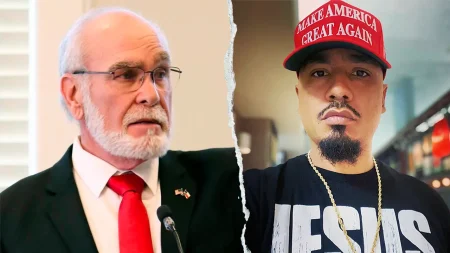
The impulse to draft and pass this law did not emerge from a vacuum; it was forged in direct response to a series of highly public, deeply unsettling events that have made local election workers feel more like targets than community volunteers. Across the country, the spaces where ballots are stored and counted—traditionally quiet municipal offices run by neighbors and civil servants—have suddenly been transformed into legal and political battlegrounds, exemplified by a controversial Federal Bureau of Investigation raid on an election office in Fulton County, Georgia. Closer to home for Californians, the tension materialized in a stark and alarming way when Chad Bianco, the conservative Sheriff of Riverside County and an aspiring gubernatorial candidate, used his official authority to seize more than 650,000 ballots cast by citizens during a previous election cycle. For the average voter, the image of a local sheriff taking physical custody of over half a million ballots is deeply jarring, blurring the thin, crucial line between legitimate public safety and partisan intimidation. Sitting in his Sacramento office after signing the bill, Governor Newsom spoke directly to the profound unease caused by these events, emphasizing that these threats to democratic integrity are not theoretical worries of the future, but active, daily challenges occurring right now. By pointing out these aggressive actions by law enforcement and national figures, Newsom highlighted a disturbing trend where the trusted custodians of the law are perceived as weaponizing their power to disrupt the delicate, transparent processes that keep our society free.
To counter these alarming precedents, the newly signed law establishes a robust set of statutory boundaries designed to reclaim the quiet security of the election office and protect the hard-working people who run them. The legislation acts as a legal fortress by meticulously detailing exactly who is permitted to handle ballots, access voter registration software, and enter the high-security areas where votes are processed and counted. It severely limits the ability of law enforcement officials to intervene in elections or bring undue pressure to bear on local clerks, ensuring that no badge can be used to bypass established procedures or confiscate ballots without a thoroughly vetted, legally sound judicial warrant. In addition to keeping external forces at bay, the law addresses internal vulnerabilities by prohibiting local election administrators from granting unauthorized third parties access to sensitive voter rolls, a practice that has previously sparked privacy concerns and conspiracy theories across the nation. Crucially, the law also targets the subtle ways in which ordinary voters can be disenfranchised, such as banning partisan election observers from challenging individual ballots based on subjective, non-expert assessments of envelope signatures. By removing the fear that a slightly altered signature—perhaps caused by age, library counter writing, or temporary illness—could be exploited by a political operative to throw out a vote, the law ensures that the voting process remains accessible, dignified, and securely focused on the rights of the individual.
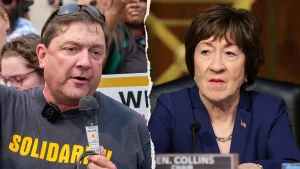
Despite the protective intentions of the bill’s sponsors, the legislation has immediately ignited a fierce constitutional debate that exposes the deep, enduring friction between state sovereignty and federal authority. Critics of the bill, led by conservative lawmakers like Republican State Senator Tony Strickland of Southern California, argue that the law is a well-meaning but legally flawed overreach that is virtually guaranteed to be struck down by the federal courts. During a passionate debate on the state Senate floor, Strickland contended that by attempting to regulate how federal law enforcement officers interact with local election officials, California is directly violating the Supremacy Clause of the United States Constitution, which dictates that federal law reigns supreme over conflicting state statutes. To bolster his argument, Strickland reminded his colleagues of a similar legal clash last year, when Newsom signed a law attempting to ban federal agents from wearing protective masks while on duty in California—a measure that was ultimately ruled unconstitutional by the Ninth Circuit Court of Appeals. This ongoing legal battle highlights a profound human dilemma at the heart of the American experiment: the delicate, sometimes painful struggle to balance a state’s passionate desire to protect its own citizens’ democratic processes with the constitutional requirement to maintain a unified national legal framework. For opponents, the bill represents an unnecessary and expensive piece of political theater that sets California up for another high-stakes loss in court, distracting from the practical, cooperative efforts needed to secure elections.
In stark contrast to the legal skepticism of the opposition, the bill’s author, Democratic State Senator Sabrina Cervantes, champions the measure as an essential act of faith in the democratic process and a vital reassurance to the people of California. For Cervantes, the legislation is much more than a collection of dry administrative rules; it is a profound declaration that every citizen’s voice is sacred and that their participation in the electoral process will be fiercely defended against any form of intimidation. She emphasizes that in an era characterized by highly polarized rhetoric and widespread misinformation, the psychological health of our democracy depends entirely on the confidence that voters feel when they cast their ballots. When people begin to doubt whether their votes will be safely delivered, accurately counted, and free from the interference of powerful political figures, they lose the incentive to participate, leading to a dangerous cycle of civic apathy and cynicism. By writing clear, protective guardrails into state law, Cervantes hopes to restore that fragile public trust, giving voters the peace of mind to know that their democratic choices are backed by the full power and protection of the state of California. This human-centered approach views the preservation of election integrity not just as a matter of technical security, but as a moral obligation to protect the shared collective agreement that allows a diverse society to govern itself peacefully.
The true scale of the political warfare surrounding this issue became even more vivid during the bill’s signing ceremony, as the focus abruptly shifted from local ballot counting to a massive, multi-billion-dollar national financial conflict. When asked about a controversial new initiative by the Trump administration—a massive $1.8 billion fund designed to distribute financial compensation to individuals who claim they were unfairly targeted by the federal Department of Justice under President Biden—Newsom responded with a striking, highly aggressive counter-strategy. The governor revealed that California is already developing plans to impose a historic 100 percent state tax on any funds received by California residents from this federal pool, effectively neutralizing what he and his allies view as a politically motivated retaliatory payout scheme. This extraordinary fiscal threat illustrates the hyper-partisan environment that modern American voters must navigate, where routine election procedures are deeply entangled with massive financial power plays and high-stakes national political rivalries. As Californians prepare to head to the polling booths for the upcoming primary, the signing of this new law represents just one defensive maneuver in a much larger, ongoing struggle for the future of democratic governance. For the ordinary citizens caught in the middle of these political titans, the hope remains that amidst the complex legal battles, fiscal threats, and fierce rhetorical clashes, the simple, quiet act of dropping a ballot into a box will remain a safe, powerful, and respected exercise of their sovereign will.