




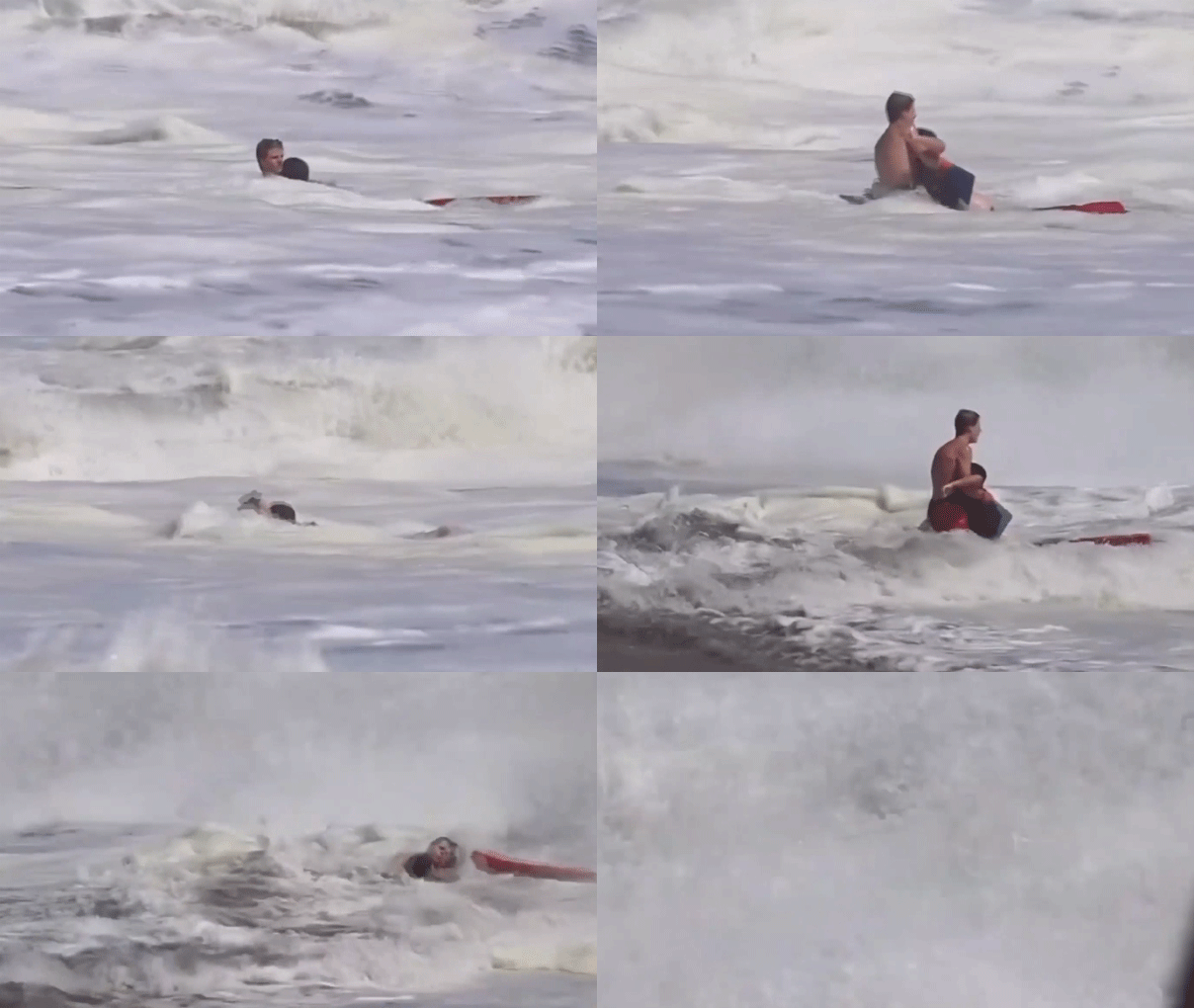
On any given sunny Saturday, the coastlines of California beckon thousands of eager beachgoers, but beneath the sparkling facade of the Pacific Ocean lies a powerful, untamable force that requires constant vigilance. For sixteen-year-old Ryder Williams, a young lifeguard employed by California State Parks, the picturesque shores of Santa Cruz Beach were not a place for leisurely relaxation, but a demanding workplace where a single moment of distraction could mean the difference between life and death. Armed with rigorous training and a deep-seated love for the ocean, Ryder stood as a silent sentinel watching over families who had come to bask in the warm sunshine and escape the pressures of daily life. Among those seeking a joyful weekend getaway was ten-year-old Nathaniel, a young boy who, like so many others, sought the simple thrill of splashing in the cooling waves alongside his family. The beach was alive with the ambient sounds of laughter, crashing waves, and the calling of seagulls, masking the sudden, silent transition from playful recreation to a terrifying life-or-death emergency. In an instant, the gentle, ankle-deep water which seemed so harmless to beachgoers betrayed young Nathaniel, dragging him toward the volatile surf. It was in this exact, heart-stopping moment that Ryder’s keen observational skills and split-second instincts were put to the ultimate test, transforming an ordinary shift into a legendary display of human courage. The juxtaposition of a teenager carrying the immense weight of human lives on his shoulders captures the essence of the lifeguarding spirit—a quiet, brave dedication that ensures the safety of strangers. As Ryder stood near his designated tower, the routine of beach safety quickly dissolved into a visceral race against the ticking clock of an unfolding tragedy, setting the stage for a rescue that would soon capture the hearts of the entire nation.
The crisis began without warning near Tower 2, where Ryder was actively engaged in a routine safety contact just fifteen yards downcoast. Glancing up through the bright afternoon glare, his sharp eyes locked onto a chilling sight: a young boy, barely twenty yards up from the tower, suddenly lost his footing in what appeared to be harmless, ankle-deep water. Instinct, honed by countless hours of grueling professional training, instantly overrode any hesitation as Ryder recognized the silent, deceptive grip of an undertow pulling the child outward into deeper, violent water. Acting with remarkable poise, the sixteen-year-old immediately radioed in the unfolding emergency to dispatch, discarded his communication device and sunglasses onto the dry sand at the very base of his tower, and began a desperate, full-speed sprint toward the crashing shoreline. As his bare feet pounded the hot sand, his mind quickly calculated the physics of the rescue; he slid his swim fins onto his wrists, popped his rescue buoy, and plunged headfirst into the cold, tumultuous waters of the Pacific Ocean. The coastal water was incredibly volatile that afternoon, throwing up massive, churning walls of whitewater that made it utterly impossible for Ryder to secure the child in the standard rescue tube. When he finally swam through the breaking surf and reached the boy, he realized with a sharp jolt of adrenaline that Nathaniel was completely limp, having already succumbed to the overpowering force of the waves. The sheer weight of the ocean currents, paired with the dead weight of an unconscious child, made the initial attempt to pull him back to shore an agonizingly slow and physically exhausting battle. With every consecutive surge, the waves threatened to rip the helpless child from Ryder’s grip, forcing the brave teenager to dig deep into his physical reserves, holding onto the boy with a fierce, unwavering determination that defied his young age and limited life experience.
As the unrelenting sea continued to batter the pair, Ryder found himself locked in a punishing duel with nature, enduring two to three massive, crushing waves that repeatedly submerged them and pushed them back out into the rip current. The situation grew increasingly perilous as well-meaning but untrained bystanders, driven by sheer panic and a desperate desire to assist, began wading into the treacherous surf zone. Exhibiting a level of calm authority and presence of mind far beyond his sixteen years, Ryder shouted over the deafening roar of the crashing ocean, commanding the onlookers to immediately return to the safety of the dry shore to prevent further casualties. Fortunately, vital backup arrived in the form of seasoned lifeguard Aaron Bohnen, who plunged into the chaotic, swirling waters to assist the exhausted teenager in navigating the shorebreak. Together, the two lifeguards coordinated their movements, fighting against the heavy pull of the undertow to slowly but surely guide the unconscious boy through the breaking surf and onto the damp sand. Once they finally crossed the high-water mark, Ryder did not stop to catch his breath or celebrate; he was immediately instructed to retrieve the critical medical bag from Bohnen’s patrol unit, transitioning seamlessly from a water rescuer to a first responder. Kneeling on the wet sand, they carefully assessed the young victim, administering vital care as the boy’s family watched in paralyzed, hopeful suspense. It was a masterclass in teamwork and operational execution, demonstrating how the seamless integration of youthful energy and experienced guidance can pull a young soul back from the very brink of disaster. The relief was palpable as the boy began to show signs of life under their expert supervision, showcasing the power of quick medical intervention on the shoreline.
The profound emotional gravity of the rescue was perhaps most poignantly articulated by Nathaniel’s father, Sumit Rai, who watched the terrifying ordeal unfold from the shore in absolute horror, feeling completely helpless against the vastness of the sea. Speaking later about the event, Rai expressed an overwhelming, tearful gratitude for the young lifeguard who had quite literally snatched his son from the jaws of a tragic fate. Rai described the rescue as a truly remarkable and superhuman effort, emphasizing that the ocean is an unforgiving adversary and that Ryder had literally “fought the sea” with everything he had in him. The father pointed out the dry, terrifying reality of the situation: his ten-year-old son, weighing approximately one hundred pounds, was completely unconscious, rendering him an entirely limp deadweight in the water. In the chaotic, swirling currents of Santa Cruz, holding onto one hundred pounds of unresponsive weight while navigating towering waves is an almost impossible physical feat even for an adult. Rai noted that it would have been tragically easy for Ryder to simply lose his grip for a split second, a minor lapse that would have allowed the currents to sweep Nathaniel away into the vast, open ocean where search and rescue would have turned into a somber recovery mission. Because Ryder refused to let go, choosing to endure the physical torment of the waves rather than abandon the boy, Nathaniel was ultimately given a second chance at life. This heart-wrenching perspective humanizes the incident, reminding us that behind every statistic of a successful rescue is a family saved from the devastating, lifelong agony of losing a cherished child, cementing Ryder’s status as an absolute hero in the eyes of a deeply grateful father.
Remarkably, once the immediate panic subsided and Nathaniel was safely placed in the care of emergency medical personnel, Ryder did not seek praise, attention, or even a moment to recover from his grueling ordeal. Instead, showing a level of humility and professional work ethic that stunned onlookers, the teenager quietly retrieved his sand-covered gear, climbed back up into his lifeguard tower, and returned to scanning the horizon for the remainder of his scheduled shift. To Ryder, this heroic act was simply the execution of his duty, a sentiment he humbly shared in a statement where he expressed his gratitude for the opportunity to reunite the child with his family. He emphasized that he loves what he does and is deeply thankful for his fellow lifeguards who perform similar life-saving miracles every single day without seeking any form of public praise. This rescue was not an isolated incident but rather a striking highlight of an incredibly demanding weekend for California State Parks, during which lifeguards in the Santa Cruz district performed a staggering thirty-four rescues. The state agency revealed that all towers were fully staffed, utilizing six active units, a specialized rescue watercraft team, permanent rescue units, and a dedicated supervisor working diligently in the Pajaro Coast region to manage the dangerously volatile ocean conditions. Ryder’s willingness to immediately return to his post underscores the unique, brave mindset of first responders, who view extraordinary acts of bravery as mere routine requirements of a day’s work. It highlights a culture of quiet dedication where teenagers and professionals alike stand ready to risk their lives at a moment’s notice, possessing the physical and mental stamina to absorb trauma and immediately resume their protective vigil over the vast and unpredictable California shoreline.
While Ryder may have sought to slip back into the quiet routine of his regular duties, his incredible heroism quickly transcended the local community, capturing the attention and admiration of the entire country. As the dramatic story went viral across various social media platforms, heartfelt praise poured in from all corners of the nation, culminating in an extraordinary invitation from the highest office in the United States. The White House, in a public post online written by President Donald Trump, expressed an eager desire to bring the young teenager, his family, and perhaps even young Nathaniel, to Washington, D.C., to award him with a High Civilian Honor, noting that the young man was incredibly brave and truly deserved it. This national recognition serves as a powerful, unifying reminder of how a single act of courage can inspire an entire country, shining a bright light on the selfless potential of the younger generation. It stands as a testament to the fact that true heroes walk among us, often disguised as ordinary teenagers wearing red trunks and carrying a rescue buoy on a sunny beach afternoon, ready to risk everything for a stranger. For the Rai family, Ryder will forever be the guardian angel who stood between their young son and the deep, silent depths of the Pacific Ocean, a human embodiment of hope, training, and resilience in the face of a terrifying disaster. Ultimately, the story of Ryder Williams and young Nathaniel is far more than just a successful water rescue on a busy California weekend; it is a profound celebration of human connection, the sanctity of life, the power of decisive action, and the enduring spirit of selflessness that continues to define the very best of humanity, demonstrating that even the youngest among us can rise to achieve absolute greatness when put to the ultimate test.