


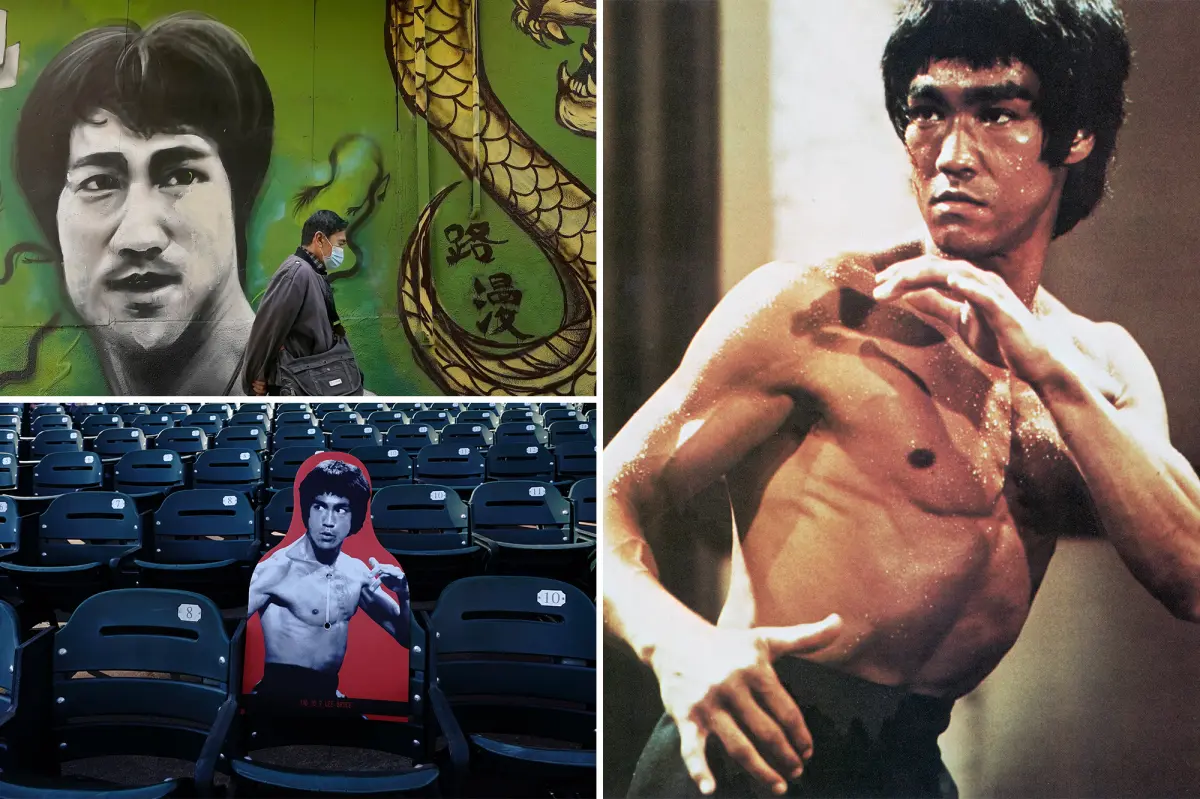
On a crisp spring morning, May 17, 1959, an eighteen-year-old young man stepped off a passenger ship onto the bustling docks of San Francisco. He possessed little more than a pocketful of dreams, a fiercely disciplined mind, and a birth certificate proving he had entered this world in the very same city nearly two decades prior. That young man was Bruce Lee, returning to the land of his birth to forge a destiny that would rewrite the global cultural landscape. Decades after his untimely departure from this earth, California has officially recognized the profound significance of that fateful spring day. In a historic move, Governor Gavin Newsom signed into law a bill designating May 17 as “Bruce Lee Day,” making the martial arts icon the first Chinese American in the state’s history to receive an annual namesake day. Championed by San Francisco State Assemblymember Matt Haney, this legislative milestone is far more than a ceremonial nod; it is a profound, official reclamation of a hometown hero who spent his life dismantling barriers and redefining what it meant to be Asian in America. For a state that has often struggled with its own complex history regarding Asian-American representation and civil rights, this designation represents a monumental step toward celebrating the rich, diverse tapestry of its citizens. By anchoring this holiday to the day Bruce Lee returned to California as a teenager, the law honors not just the finished masterpiece of a global superstar, but the raw, hopeful journey of a young immigrant searching for his place in a country that had yet to fully realize his worth.
The journey that led Bruce Lee to that San Francisco dock was a winding narrative of geographic and cultural displacement, defined by a constant search for identity. Born in 1940 at Jackson Street Hospital in San Francisco’s Chinatown to parents who were touring with the Cantonese Opera, his destiny was intertwined with the performative arts from his very first breath. Armed with birthright citizenship, he returned to Hong Kong as an infant, growing up under the neon lights of the British colony where he worked as a prolific child actor and deeply immersed himself in the ancient art of wing chun kung fu. When he returned to the United States in 1959, he was a young man straddling two worlds, possessing a rare depth of ancient tradition and a burning desire for modern self-expression. He settled briefly in Seattle, enrolling at the University of Washington to study philosophy, but the pull of the physical and spiritual arts proved too powerful to contain within the walls of a traditional classroom. Dropping out of university, he dedicated his life to teaching and refining martial arts, viewing combat not as a tool of violence, but as a profound medium for personal liberation, self-knowledge, and emotional expression. In a society that often demanded conformity, Bruce Lee chose to carve out a unique space where his Chinese heritage and his American identity did not clash, but rather harmonized to create something entirely revolutionary.
As Lee sought to bring his vision to the silver screen during the 1960s, he ran headfirst into the rigid, institutionalized prejudice of mid-century Hollywood. At a time when media portrayals of Asian men were limited to malicious villains, buffoonish caricatures, or subservient houseboys, Lee’s magnetic presence and fierce dignity threatened the established order. Even when he secured the role of Kato in the television series The Green Hornet, he was hidden behind a mask, given minimal dialogue, and subjected to systemic pay inequality that saw him earning significantly less than his white counterparts. Studio executives, blind to his obvious star quality and universal appeal, repeatedly deemed American audiences “unready” for an Asian leading man, attempting to box him into the very racist stereotypes he fought so hard to dismantle. Rather than bowing to these dehumanizing industry standards, Lee made the deeply courageous decision to walk away from Hollywood’s scraps and return to Hong Kong to create his own path. This pivot was not a retreat, but a strategic reclamation of his agency and artistic vision. In Hong Kong, he took full control of his career, unleashing a string of cinematic masterpieces like The Big Boss and Fist of Fury that shattered box-office records, revolutionized action cinema, and sent shockwaves through the global entertainment industry. Through these raw, explosive performances, he proved that an Asian man could be a powerful, handsome, and deeply complex protagonist on the world stage.
At the heart of the movement to preserve Bruce Lee’s legacy is his family, most notably his daughter, Shannon Lee, who serves as the CEO of the Bruce Lee Foundation. Shannon has dedicated her life to ensuring her father is remembered not merely as an action star who could throw a lightning-fast kick, but as a profound philosopher whose teachings continue to offer solace and direction to millions of seekers worldwide. In responding to the California declaration, Shannon beautifully articulated that this state honor serves as a testament to her father’s enduring legacy as an active bridge between seemingly disparate cultures. Her words highlight a universal truth: Bruce Lee’s influence transcends the boundaries of time, race, and geography. To the young person struggling with self-doubt, his philosophy of self-actualization provides a roadmap to inner confidence; to families who spent decades searching for their reflections on screen, his presence offered a mirror of strength and dignity; and to elite athletes worldwide, his teachings on discipline, adaptability, and mental fortitude remain the gold standard of peak performance. By humanizing her father through the work of the foundation, Shannon ensures that his message—often summarized by his famous advice to “be water,” representing fluid adaptability coupled with undeniable strength—remains a living, breathing guide for anyone striving to navigate the turbulent currents of the modern human experience.
The world was shocked and deeply impoverished when Bruce Lee passed away suddenly in 1973 at the tender age of thirty-two, a victim of an allergic reaction to pain medication. He left behind a grief-stricken family, an unfinished masterpiece in Enter the Dragon, and an infinite well of unfulfilled potential that still leaves his admirers wondering what else he might have accomplished had he been granted more time. Yet, in the fifty years since his death, the flame of his influence has only grown brighter, proving that some spirits are simply too large to be contained by a single lifetime. His physical absence has done nothing to diminish his cultural footprint, as fans of all ages and backgrounds still gather annually to celebrate his birthday, keeping his memory vibrantly alive. Unused treatments and creative concepts he penned decades ago, such as the conceptual outline that inspired the critically acclaimed television series Warrior, continue to find their way to modern screens, serving as a testament to his forward-thinking creative genius. This enduring relevance proves that Bruce Lee was not merely a product of his era, but a visionary who was constantly looking toward the future, laying the groundwork for a more inclusive, diverse, and dynamic artistic world that we are only now beginning to fully realize.
As California prepares to observe the very first official Bruce Lee Day on May 17, the scope of this celebration extends far beyond the borders of San Francisco or the halls of the state capitol. The Bruce Lee Foundation, alongside a diverse coalition of Asian-American community organizations, envisions this day as a vibrant, annual opportunity for education, cultural pride, and community connection. Through voluntary activities such as local cultural exhibits, dynamic public events, and engaging classroom lessons, the holiday aims to spark a new generation of conversations around resilience, representation, and the pursuit of dreams against all odds. Assemblymember Matt Haney’s assertion that Bruce Lee represents “the epitome of the best of California” rings profoundly true in this context. At its core, the spirit of California is built on pioneering courage, the breaking of barriers, and the belief that individual expression can change the world. By celebrating Bruce Lee, the state not only honors a singular man who fought tirelessly for his dignity but also sends a powerful message of validation to millions of Asian Americans who continue to walk the paths he paved. Bruce Lee Day is a reminder that while the journey of a pioneer is often fraught with isolation and struggle, the legacy they leave behind can illuminate the world forever.