



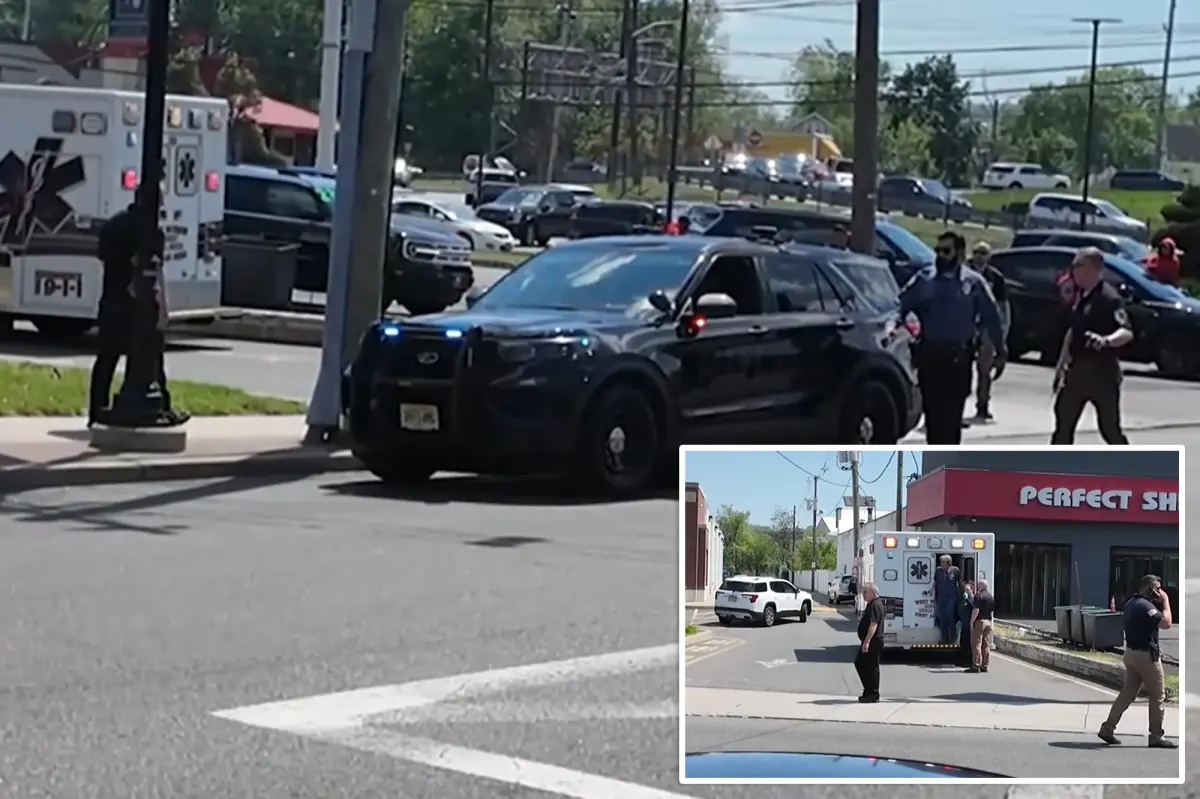
The Heartbreaking Incident in Woodland Park
In the quiet, tree-lined streets of Woodland Park, New Jersey, where the rhythms of suburban life blend seamlessly with the hustle of daily routines, a quiet hero named Jean Schultz, an 80-year-old crossing guard, embodied the unwavering spirit of community care. On a crisp autumn afternoon, just after 3:30 p.m. on Monday, Schultz was diligently performing her cherished duty—standing at the crosswalk, signaling with her orange flags and a warm smile to ensure the safety of the children from the local school district. Two young siblings, a student and their brother, were in the middle of crossing the busy road under her watchful eye. Suddenly, without warning, a vehicle approached at an alarming speed, its driver potentially distracted or unseen hazards making it veer dangerously close. Eyewitnesses later recounted the chaos: the screeching tires, the panicked shouts, and Schultz’s instinctive reaction. In a selfless act that would define her life and legacy, Schultz lunged forward, using her frail but determined body to shove the two children out of the path of the oncoming car. The impact was brutal; she absorbed the full force of the collision, crumpling to the ground as the vehicle struck her directly. Paramedics arrived swiftly, but despite their valiant efforts at the scene, Schulz was rushed to the hospital where doctors pronounced her dead shortly after arrival. The children, though shaken and bruised, were spared the worst—taken to the hospital in stable condition, their lives forever altered by the woman who had just saved them. Local authorities from the Passaic County Prosecutors’ Office confirmed the tragic event, stating that Schultz had been hit moments after shepherding the kids to safety. The driver of the car, who remained at the scene, cooperated with investigators, but details remained murky as the probe into the cause continued. Residents who witnessed it described a moment frozen in time: Schultz’s eyes wide with resolution, her arms outstretched like a guardian angel, prioritizing the innocence of youth over her own well-being. As news spread through the tight-knit community, grief mingled with admiration, turning a routine street into a somber memorial. People paused in their daily errands, reflecting on how one person’s dedication could ripple through so many lives. Schultz wasn’t just doing a job; she was a living example of empathy in action, her presence a constant reassurance in a world full of unpredictability. This incident, investigators noted, was not isolated in its potential causes—perhaps a faulty brake, a hidden road debris, or momentary inattention—but the human element shone through Schultz’s courage. Her story began to unfold like a poignant chapter in a larger narrative of community bonds, where acts of bravery remind us of the fragility of life and the depth of human connection. As flowers and notes piled up at the crosswalk site, strangers and neighbors alike pondered their own roles in protecting those around them, inspired by a woman who, in her final moments, chose heroism over self-preservation.
A Life of Service with a Smile
Jean Schultz’s story wasn’t born in drama but in the quiet dedication to her community, a place where she had dedicated decades to nurturing the young and supporting the vulnerable. Born and raised in New Jersey, Schultz, approaching her ninth decade, had spent countless hours at various crosswalks in Woodland Park, becoming an iconic figure for generations of families. The Woodland Park School District, in a heartfelt statement, painted her as a “dedicated” guardian, an “integral role” in the fabric of student safety. She wasn’t just a traffic coordinator; she was a beacon of warmth, always donning her reflective vest with a smile that lit up even the grayest days. Parents trusted her implicitly, knowing their kids were in capable, caring hands as she guided them across the bustling streets, her whistle a signal of protection rather than just procedure. Colleagues and residents spoke of her endless energy, despite her age, rising early each morning to don her gear and stand in the elements—rain, snow, or shine—ensuring no child was left behind. One former coworker recalled how Schultz would chat with kids about their days, sharing candies or stickers to brighten their walks to school, turning a mundane task into moments of joy. Her own family life was one of quiet devotion; widowed years ago, she poured her love into her duties, finding purpose in her community rather than lineage. The school district emphasized that her “smile” was legendary, a genuine expression that masked any personal aches and made her approachable to all. Mayor Tracy Kallert echoed this sentiment, describing Schultz as a “bright and reassuring presence for generations,” someone who bridged gaps between strangers through simple kindness. In a town where everyone knew everyone, Schultz was the glue—organizing neighborhood events, volunteering for fundraisers, and always offering a listening ear to those in need. Her commitment wasn’t born from obligation but from a deep-seated love, a soulful care that radiated outward. Now, as her passing reverberated, memories flooded back: the wave of her hand to acknowledge familiar faces, the twinkle in her eye when a child returned her greeting, the unyielding dedication that made her more than a worker—she was a beloved friend to the community. This loss felt personal, a void in the hearts of those who relied on her steady presence, highlighting how one person’s kindness could weave through the tapestry of daily life, inspiring others to emulate her warmth.
Witnesses Recall a Moment of Heroism
Eyewitness accounts painted a vivid picture of Jean Schultz’s final act, transforming a horrific accident into a testament to human bravery that would inspire countless others. Marino Florio, a longtime resident who lived nearby, shared his perspective with WABC, tears in his eyes as he described the scene: “She literally put herself in harm’s way to protect the kids.” Florio, who had observed Schultz for years at the crosswalk, witnessed the chaos unfold from his porch. He saw her poised, flags in hand, then the sudden panic as the car loomed. Without hesitation, Schultz thrust her body toward the two children— a school-aged student and their sibling—pushing them with surprising strength toward the safety of the sidewalk. The impact tossed her like a ragdoll, her small frame absorbing the brunt of the collision. Florio rushed over, heart pounding, as the children sobbed but remained unharmed physically, though emotionally scarred. Other onlookers corroborated this, including a mother who was walking her own children home. “I saw the whole thing,” she recalled, “She didn’t think twice—she was like a mom to everyone.” The driver, a local individual believed to be familiar with the area, exited the vehicle shaken, apologizing profusely, but Schultz’s actions had already averted tragedy for the young ones. Investigations were underway, reviewing surveillance footage and interviewing those present, but preliminary reports suggested no deliberate malice—just a fateful lapse that underscored the risks of vigilant work. Schultz’s heroism resonated deeply, reminding the community of the unspoken heroes in their midst—those who shield the vulnerable without fanfare. Her story gained traction beyond Woodland Park, shared on social media as a reminder of selfless acts in an often self-absorbed world. As tributes poured in, people reflected on how Schultz embodied grace under pressure, her instinctive courage a lesson for all. Even in death, she became a symbol of protective love, prompting discussions in schools and homes about safety and sacrifice. Babies named after her, strangers sending condolences—Schultz’s legacy grew, not just from what she did that day, but from the enduring imprint of her character on those who knew her best.
The Community’s Beloved Figure of Kindness
Beyond her role as a crossing guard, Jean Schultz was woven into the social fabric of Woodland Park, known affectionately as the person who showed up when others needed it most. Residents like Dave Holster, an 85-year-old neighbor, opened up about their deep friendship, his voice breaking during an interview with WABC: “She was my best friend in the world.” Holster, who had lost much of his independence with age, spoke of their mutual support—Schultz bringing him home-cooked meals on tough days, while he mowed her lawn and cleared leaves despite his own ailments. Every Thursday morning, they’d share breakfast at a local diner, swapping stories over coffee and toast, laughing about life’s ironies and comforting each other through losses. Holster admitted the pain of her passing hit him especially hard; he confessed, “I’m 85, and I don’t wanna even be alive anymore,” yet praised her boundless generosity. Schultz wasn’t just a helper; she was a friend who listened, advised, and uplifted without expecting anything in return. Neighbors recalled her organizing bake sales for community causes, donating blood drives, and comforting families during illnesses. One woman, whose child had once been bullied, remembered Schultz intercepting the taunts with a gentle reprimand and words of encouragement, turning a bad day into a lesson in empathy. Mayor Kallert’s statement captured this essence: “Her compassion, warmth, and genuine love for the children of Woodland Park left a lasting impact that will never be forgotten.” Schultz’s home, a modest bungalow filled with mementos from grateful kids’ drawings, became a hub for visitors offering support. Her death sparked a wave of collective mourning, with vigils and fundraisers honoring her memory. People shared anecdotes online—how she’d remember birthdays with handmade cards or offer rides to the elderly. This ripple effect highlighted how endless giving by one person can inspire neighborly bonds, fostering a sense of unity in times of sorrow. As the community grieved, they celebrated her legacy, transforming tragedy into a commitment to carry her spirit forward through acts of kindness that echoed her own.
The Impact on the Children and Families
The two children Schultz saved—a student from the Woodland Park School District and their younger sibling—emerged from the accident with physical wounds that healed, but emotional scars that lingered like shadows over their young lives. Rushed to the hospital in stable condition, they were treated for minor injuries—bruises, scrapes, and shock—but the true toll was evident in their wide-eyed silence afterward. Their parents, overwhelmed with gratitude and grief, struggled to explain the inexplicable: how a stranger’s sacrifice had preserved their family unit. The school district arranged counseling, recognizing that witnessing such horror could plant seeds of trauma in impressionable minds. Teachers and counselors spoke with the siblings, who began to articulate their fear turned awe—a woman they thought invincible had shielded them at her own expense. The elder child’s account, shared in a family session, painted Schultz as a “magic lady” who pushed them away just in time, her smile the last thing they saw before the chaos. Funerals and memorials brought children from neighboring schools, many confessing that Schultz had been their first real hero, teaching them road safety through stories and games. Families feared lasting effects, like anxiety around crossings or nightmares of sirens, yet also found healing in honoring her. Donations poured into a fund for the children’s education, anonymous gestures inspired by Schultz’s selflessness. Psychologists noted that such experiences could foster resilience, turning vulnerability into strength. The community rallied, hosting playdates and support groups to help the kids process their loss. In their innocence, the siblings became unintentional ambassadors of Schultz’s message, reminding adults of the profound ripple when one person’s love intersects another’s life. As time passed, their stories evolved into lessons, shared in classrooms to underscore the value of vigilance and care. Schultz’s spirit lived on through them, a silent promise that her sacrifice had not been in vain, shaping a new generation in her image of protective tenderness.
Legacy and Ongoing Reflections
The investigation into Jean Schultz’s death remains active, with authorities promising a thorough review to prevent future tragedies, but the community’s focus has shifted to honoring her enduring legacy amid the raw grief. Passaic County officials released updates, emphasizing that the driver, who stayed to aid Schultz, faced no immediate charges, as early findings pointed to an unfortunate accident rather than negligence. Yet, the incident sparked discussions on pedestrian safety, prompting Woodland Park to consider enhanced crosswalk measures—brighter lights, speed bumps, and training for guards. Residents, still reeling, held candlelight vigils at the site, where Schultz had stood for years, transforming it into a spontaneous shrine with notes, flowers, and photographs. The school district announced a scholarship in her name, ensuring her commitment to education endured. Mayor Kallert’s words reverberated in memorial services: “She was more than a crossing guard—she was a bright and reassuring presence for generations.” Families relayed stories at gatherings, echoing the district’s sentiment that the loss was “deeply felt” across the board. Strangers wrote letters, vowing to embody her warmth in their own lives, fostering a wave of altruism. Social media tributes numbered in the thousands, from locals to those far away, celebrating her 80 years of quiet heroism. Investigations delved deeper, but justice felt secondary to remembrance—videos of her smiling at events went viral, symbolizing joy amidst sorrow. As days turned to weeks, Woodland Park began healing, with community initiatives reflecting Schultz’s values. Annual awards in her honor, mentoring programs, and safety grants kept her spirit alive. Her tale became folklore, a reminder that ordinary people can perform extraordinary deeds. In the end, Schultz’s legacy was her humanity—caring deeply, smiling through hardships, and sacrificing all to protect the young. Her passing wasn’t just an end; it was a call to action, inspiring a community to cherish and emulate the gentle guardians among them. As flowers wilted and life resumed, her warmth lingered, a testament to lives well-lived in service to others, forever etched in the heart of Woodland Park.