






A Father’s Dreadful Delivery: The Case of Athena’s Silence
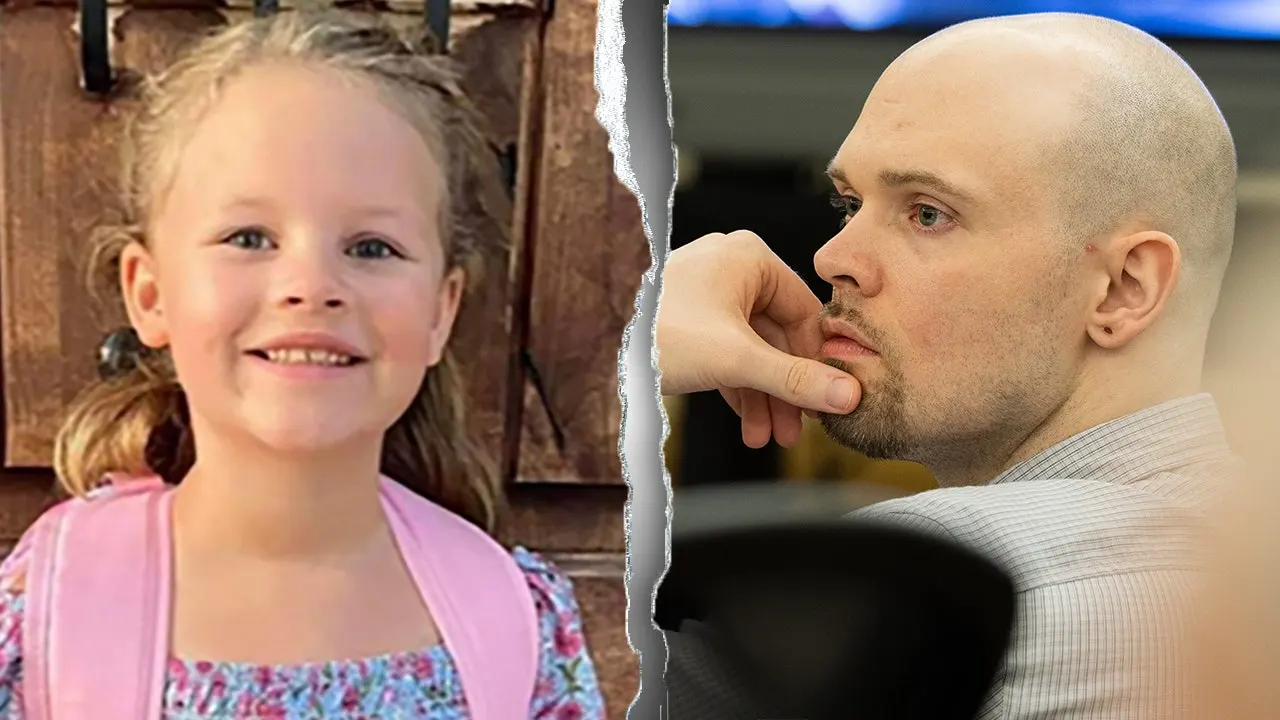
In the hushed courtroom of Wise County, Texas, where walls seemed to echo with unspoken grief, the trial of Tanner Horner unfolded as a stark reminder of shattered innocence. Horner, a 34-year-old former FedEx driver with a seemingly ordinary life disrupted by what prosecutors called a descent into madness, stood accused of kidnapping and murdering 7-year-old Athena Strand. Just moments before the proceedings officially began, he pleaded guilty to capital murder, shifting the trial’s focus from guilt to punishment: life in prison without parole or the death penalty. Jurors, faces etched with the weight of their duty, would now grapple with the fate of a man who confessed to a crime that rocked a quiet Paradise community in December 2022. Athlea’s father, working late that fateful evening, had anxiously awaited a package—a bright Barbie doll intended for his daughter—as a token of Christmas cheer. Little did he know, the delivery would end in unimaginable horror. Horner, in a twisted act, abducted the little girl in pink, her favorite color, whisking her away in his van and later strangling her as she cried out in terror. Her body was discovered two days later in a wooded area, cold and alone under a canopy of indifferent trees. This was no fleeting nightmare; it was a family’s lifetime of pain, a community’s loss that resonated far beyond headlines.
As the second week of the trial dawned, the air thick with emotion, jurors leaned forward to hear from Maitlyn Gandy, Athena’s mother—a woman whose heart had been carved out since that December night. Dressed in pink to honor her daughter’s vibrancy, Gandy took the stand, her voice steady yet laced with fractures of sorrow. The prosecutor gently asked about Athena’s final moments, a question that hung like a fog in the room: “Do you remember the last thing you said to Athena?” Gandy’s response pierced the silence, echoing the warmth of a mother’s love amidst the chill of impending doom. “I told her that I loved her and that I would see her on Friday,” she recalled, her words a bittersweet goodbye that now carried the weight of eternity. They had been in a rush; her father was planning to take the girls to see the twinkling Christmas lights, a simple family tradition now forever tainted. Gandy described dropping them off quickly, perhaps stealing a kiss on Athena’s forehead or a wave through the window—those ordinary gestures that parents cherish, now etched into her memory like precious relics. That night, as the stars blinked coldly above, Gandy drove them to their destination, unaware that darkness stalked her child. And when the call came—all parents’ deepest fear realized—she dropped everything and raced back from Oklahoma, her home state. The miles stretched out like endless torment, her foot heavy on the gas pedal, tears blurring the highway ahead.
The journey back was a visceral ordeal, Gandy testified, her body and soul rebelling against the unthinkable. “It felt like I was dying,” she confessed to the courtroom, her words raw and unfiltered, pulling at the heartstrings of everyone listening. She couldn’t breathe, her chest tightening as if clenched by invisible fists, and for a harrowing moment, she feared a heart attack, her hands nearly tapping the brakes to pull over. But survival instincts kicked in, the primal urge to fight for her child propelling her forward. “I knew I had to keep going. I told myself that if I kept going, it would be OK, and I would find her,” she explained, her voice breaking into sobs that mirrored the sobs she held in during those frantic hours. The road trip became a metaphor for her grief: endless, unforgiving, yet driven by hope flickering like a dying candle. Upon arriving, the reality crashed down, but Gandy’s strength shone through, a testament to maternal resilience. It wasn’t just physical agony; it was the erosion of hope, the slow unraveling of dreams for dance recitals, school plays, and endless cuddles with her bright-eyed girl. Scenes from Athena’s short life flashed in her mind—giggling over ice cream, picking out pink outfits, dreaming of princesses—now forever out of reach, leaving Gandy questioning how the world could keep turning.
Yet the trial demanded more from Gandy, including recounting the excruciating task of breaking the news to Athena’s 3-year-old sister, a tender soul who remained oblivious in the recesses of innocence. Gandy’s face crumpled as she described the delicate lie she wove to shield the little one from shattering truths. For months, she dodged questions, fabricating stories that Athena was staying longer with Daddy or busy at school or fast asleep. Each evasion gnawed at her conscience, a protective shield that delayed the inevitable flood of sorrow. “I didn’t know how to tell her, and I didn’t think I was strong enough,” Gandy admitted, her empathy for both children palpable. Only about a year ago did the full truth emerge, unraveling the sister’s world in gentle waves, guided by counselors and time’s slow healing. This part of her testimony humanized the tragedy, showing how grief ripples outward, affecting siblings who idolized their big sister, playing dress-up and sharing secrets under blankets fortresses. Gandy’s endurance wasn’t just survival; it was a fierce guardianship, ensuring the youngest’s childhood retained flickers of joy amidst the darkness. Watching her on the stand, one could almost feel the invisible weight, the nights spent pacing, wondering if she was failing as a mother by protecting through deception.
Adding to the emotional crescendo, Gandy addressed the courtroom’s grim necessity: viewing footage of Horner’s crime. Asked if she had seen the video of her daughter being strangled, her response was a heart-wrenching apology. Only able to bear a few agonizing minutes, she turned away, tears streaming as the room filled with the echoes of a child’s silenced pleas. “Not anyone in this room besides Tanner Horner asked for what’s on that video, and Athena definitely did not,” she declared, her voice a mix of rage and sorrow. This moment shone a light on the inhumanity inflicted—not just on Athena, whose small hands left bruise marks on her neck, but on her family forced to relive it. The defense attorney, Steven Goble, chose compassion over confrontation, offering condolences instead of cross-examination: “I am very sorry for your loss.” Such a human gesture amidst adversarial proceedings reminded everyone that beneath the legal armor lies shared humanity. Herein lay the story’s core: a driver’s moment of fractured psyche intersecting with a family’s unraveling, leaving viewers to ponder how one act could steal a child’s voice forever.
Horner’s own account painted a chilling picture, one that blended panic with premeditation. He admitted abducting Athena during that mundane package delivery, initially claiming it began as an accident—he’d struck her accidentally, then panicked and shoved her in his van. Yet, forensic details unfolded brutally: Dr. Jessica Dwyer, the medical examiner, testified that Athena died from blunt force injuries, smothering, and strangulation, likely suffering terribly in her final moments. This revelation stripped away Horner’s narrative of mere mishap, revealing intent nurtured in his mind. In a letter penned post-murder, Horner expressed a semblance of remorse, admitting sleepless nights haunted by the “breakdown” that destroyed families—Athena’s and his own. “I wanted to start by saying how sorry I am about Athena,” he wrote, prayers for them all mingling with self-pity. It was a document rife with contradictions, an attempt to grapple with irreparable damage, yet it humanized him too: a man wrestling internal demons, perhaps a split personality as some experts suggested, far removed from the “madness” defense he floated. Reading aloud in court, it forced jurors to see him not as a monster, but as flawed humanity capable of monstrous deeds.
As Gandy concluded her testimony, she rose like a phoenix, channeling Athena’s silenced spirit in words that would resonate beyond the courtroom. Questioned about her daily presence in the gallery, she spoke with fiery conviction: “There were handprint bruises around my daughter’s neck, and because she no longer has a voice… She was loved. She is loved. And she is missed. And she was real. And she had a life, and she wanted to live. And no one can take that from her.” Gandy vowed to be Athena’s face and voice, ensuring the world never forgets the vibrant little girl with dreams of Christmas lights and pink dresses. Her declaration transcended grief, becoming a call for remembrance, a rebuke to those who might reduce such tragedies to statistics. In this moment, the trial wasn’t just about justice for Horner; it was about affirming Athena’s indelible mark on the world. Ripples of empathy spread, as families clung tighter to their own, reminded that loss like this binds us in our shared vulnerability. Five months after her death, Athena’s spirit lived on through her mother’s words, a testament to enduring love. As jurors deliberated Horner’s sentence, the echoes of pink-clad trials lingered, prompting reflection on how such events shape souls and societies alike.