



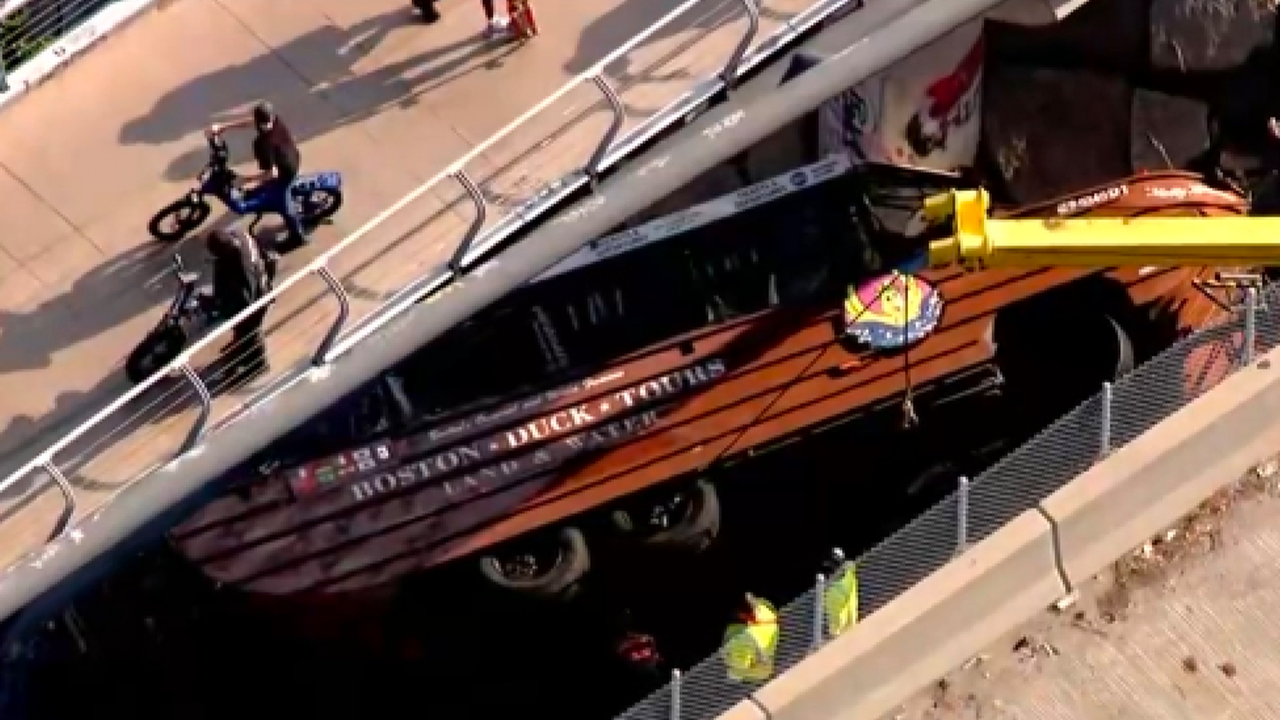
The historic, winding waterways of Boston and Cambridge, typically characterized by the rhythmic, peaceful rowing of collegiate crew teams, the gentle gliding of sailboats, and the joyful laughter of sightseers, became the unexpected stage for a sudden and deeply alarming emergency on a recent weekend afternoon. On what began as a picturesque, routine Saturday excursion under the New England sky, an iconic replica World War II amphibious “duck boat” operated by the renowned Boston Duck Tours abruptly tipped onto its side near a Cambridge boat ramp close to the entrance of the Charles River. For the dozens of passengers on board, the highly anticipated transition from a lighthearted, historical driving tour of Boston’s colonial, cobblestone streets to an exciting aquatic cruise was instantly shattered by a sudden mechanical failure. In a split second, the towering, brightly painted metal vessel lost its center of gravity and listed heavily to one side, violently throwing passengers against the inner hull and triggering an immediate wave of panic and confusion inside the cabin. Onlookers standing along the grassy banks of the river, who are thoroughly accustomed to hearing the cheerful duck-call whistles of passing tourists, watched in absolute disbelief as the massive vehicle rolled over, prompting a rapid and massive multi-agency emergency rescue operation. Sirens soon pierced the afternoon air as emergency vehicles from the Cambridge Police Department, local fire departments, and the Massachusetts State Police Marine Unit raced to the scene, transforming a tranquil, sunlit weekend into a high-stakes rescue mission.
While the dramatic sight of the overturned amphibious vehicle on the riverbank was visually shocking and sparked immediate fears of a major disaster, a profound wave of relief washed over emergency responders as they quickly established that none of the passengers had actually been plunged into the deep, chilly waters of the Charles River. Despite avoiding what could have been a catastrophic immersion scenario, the physical and emotional toll suffered by those inside the vessel was immediate, painful, and deeply distressing, resulting in injuries to at least six people. Paramedics and firefighters worked frantically on the scene to assess the victims, treating several shaken passengers for minor lacerations, bumps, and bruises, while prioritizing two individuals whose injuries were classified by the Cambridge Police Department as “more serious,” requiring urgent ambulance transport to nearby trauma centers. For these tourists and families, who had boarded the vehicle expecting to create cherished memories of their visit to one of America’s most historic cities, the day ended instead in the sterile, anxious environment of a hospital emergency room. The psychological trauma of being trapped inside a heavy, metal contraption as it helplessly tilts over on a steep concrete ramp, suspended on the precipice of a river, is an experience that leaves deep emotional scars long after physical wounds have healed, reminding survivors of just how quickly a joyous afternoon can derail.
In the immediate aftermath of the terrifying incident, seasoned investigators from multiple state and federal agencies began the meticulous and urgent process of piecing together the mechanical chain of events that led to the rollover, focusing heavily on the critical moments when the vehicle was negotiating the transition from land to water along the Cambridge boat ramp. According to official statements released by representatives of Boston Duck Tours and subsequently confirmed by the Massachusetts State Police, the massive amphibious craft was in the process of being safely towed up or down the ramp when the heavyweight tow-rope suddenly snapped under the immense, shifting weight of the vehicle and its passengers. Without the vital stabilizing tension of the tow-rope, the heavy, top-heavy historical replica quickly lost its footing on the steep, wet incline of the concrete boat ramp, tipping precariously to one side before rolling directly onto its edge. Acknowledging the extreme gravity of the mishap and prioritizing human life over commercial operations, Boston Duck Tours acted swiftly and responsibly by suspending all remaining tour operations for the rest of the day, prioritizing the safety of their patrons and staff. The official task of conducting a thorough and rigorous forensic investigation has now been assumed by the Massachusetts State Police, who are leading the inquiry due to the accident’s location at the entrance of the Charles River, in close collaboration with the United States Coast Guard to determine whether equipment fatigue, material failure, environmental factors, or procedural errors played a role in the near-disaster. The involvement of the Coast Guard highlights the dual nature of these vehicles; because they function as both commercial motor vehicles on land and certified passenger vessels on water, they are subject to a complex, overlapping web of maritime and highway regulations designed to prevent mechanical failures of this exact nature.
To fully comprehend the profound shockwave that this unexpected accident sent through the local community, one must appreciate the deeply ingrained cultural footprint and historical legacy that Boston Duck Tours holds within the fabric of the metropolitan area. For over three decades, the company has served as an indispensable fixture of Boston’s tourism industry, offering millions of visitors a unique, dual-perspective journey that effortlessly bridges the city’s overland historical landmarks with its celebrated marine heritage. The fleet consists of carefully modified replica World War II DUKW landing craft, marvels of mid-century military engineering originally designed to transport troops and heavy supplies across both rugged land and open water during critical allied invasions. In the hands of Boston Duck Tours, these rugged, olive-drab military relics were transformed into vibrant symbols of civic hospitality, guided by colorful, theatrical captains who narrate the history of the American Revolution, the Boston Tea Party, and Paul Revere’s ride before dramatically splashing into the Charles River. The signature sound of a modern Boston summer is the loud, echoing chorus of plastic “Wacky Quackers” blown by delighted children and adults aboard the passing boats, making this sudden safety scare a deeply unsettling event for a city that has long viewed these vehicles with pride and affection. For many locals, the sight of a duck boat is as synonymous with Boston as Fenway Park or clam chowder, representing a beloved rite of passage for families visiting from around the world.
Beyond their daily role in welcoming tourists from across the globe, these iconic amphibious vehicles occupy an almost sacred place in the hearts of New England sports fans, serving as the traditional chariots of triumph for a golden era of championship victory parades. For the past twenty years, the sight of Boston’s athletic heroes waving from the open-air decks of duck boats has been synonymous with the city’s unparalleled sports legacy, carrying the New England Patriots through cheering crowds six times, the Boston Red Sox four times, the Boston Celtics twice, and the Boston Bruins during their historic 2011 Stanley Cup celebration. To see one of these beloved symbols of civic triumph lying crippled and overturned on a concrete boat ramp is a highly jarring, surreal image that contrasts sharply with the memories of confetti-filled streets and millions of adoring fans. Furthermore, this incident inevitably reactivates a highly sensitive national conversation surrounding the inherent safety risks of operating vintage and replica amphibious passenger vessels, which have been involved in several fatal accidents in other parts of the United States, such as the tragic Branson, Missouri duck boat sinking in 2018. While Boston’s local fleet has maintained an exceptionally stellar safety record over its thirty years of continuous operation, this weekend’s rollover serves as a stark, sobering reminder that constant vigilance, rigorous maintenance, and uncompromising safety standards are required to protect this cherished local tradition from tragedy.
As the sun began to set over the Charles River and the damaged duck boat was slowly and carefully uprighted and removed from the Cambridge ramp, the communities of Boston and Cambridge began the quiet process of parsing the day’s dramatic events. The temporary silence along the riverfront, devoid of the familiar splashing and quacking of the tour fleet, served as a poignant reminder of how deeply woven these amphibious excursions are into the daily life and atmosphere of the city. While the joint investigation by the Massachusetts State Police and the United States Coast Guard will eventually yield technical answers, safety mandates, and potentially new towing protocols, the immediate focus of the community remains firmly on the recovery and well-being of the six injured passengers. This frightening episode ultimately stands as a powerful testament to the bravery, skill, and rapid coordination of the local emergency medical services, police officers, and firefighters, whose swift intervention prevented a highly volatile situation from turning into a devastating loss of life. In the coming weeks, the iconic vessels will undoubtedly return to the streets and waters of Boston, but they will do so under a renewed spotlight, carrying with them a collective community reminder of the delicate balance between preserving historical heritage and ensuring the absolute safety of those who come to experience it.