






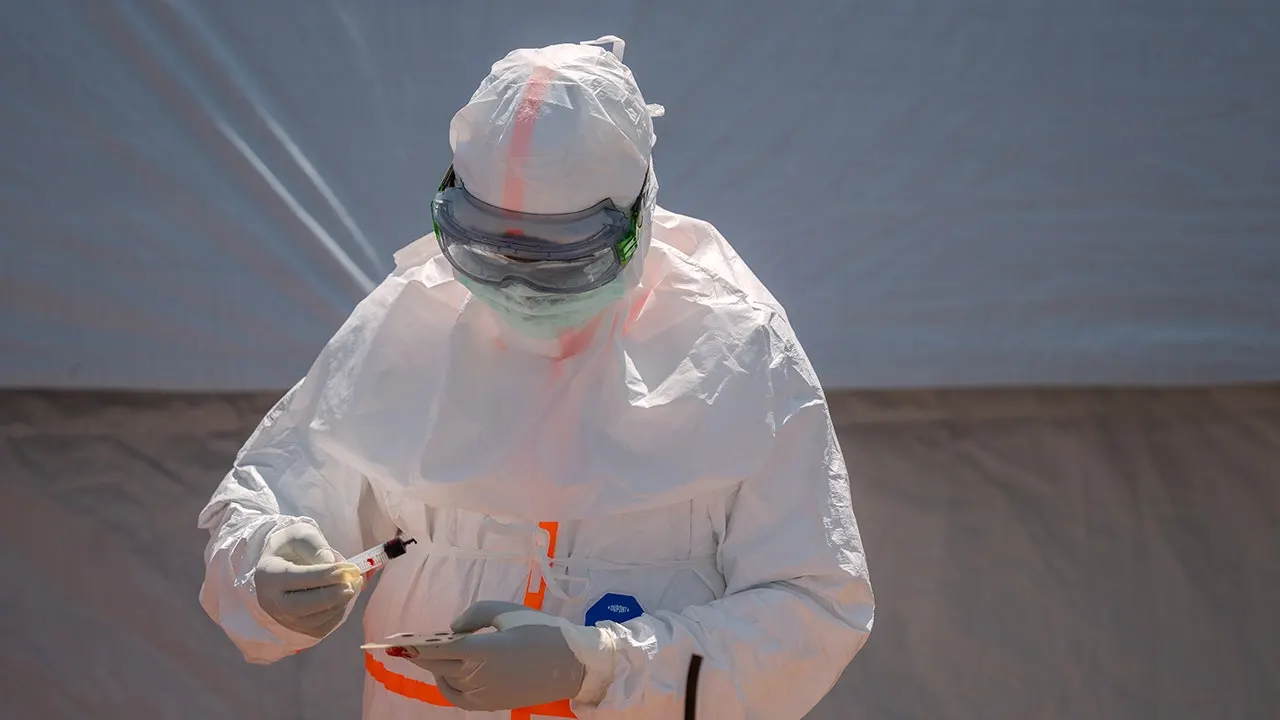
Behind the clinical headlines of global health crises are deeply human stories of sacrifice, survival, and solidarity. This reality was brought to the forefront recently when a second American citizen, working as a selfless humanitarian aid provider in the Democratic Republic of the Congo (DRC), tested positive for the devastating Ebola virus. This dedicated individual, whose identity has been kept private to protect their medical history, represents the thousands of brave first responders who willingly walk into danger zones to alleviate human suffering. The diagnosis was confirmed by the U.S. Centers for Disease Control and Prevention (CDC), highlighting the ongoing gravity of an outbreak that continues to threaten lives across Central Africa.
This latest case marks the second time a U.S. citizen has contracted the virus during the current wave of infections in the Congo. Earlier in the outbreak, Dr. Peter Stafford, another American medical worker, contracted the virus but luckily survived. Dr. Stafford was emergency evacuated to Germany during the very first week of the outbreak in May, where receive world-class care and eventually made a full recovery. Now back home in the United States after testing negative, Stafford shared his immense gratitude for his survival, thanking God, the global community of people who prayed for him, and the incredible medical staff who saved his life. Safely reunited with his wife Rebekah and their children, Stafford’s heart remains with the people of the Congo, asking for continued prayers for those still fighting the devastating epidemic on the ground.
In a formal statement addressing this second case, the CDC confirmed that the infected aid worker had contracted the Bundibugyo virus, a specific strain of Ebola. Recognizing the urgency of the situation, the agency immediately mobilized to prevent the virus from spreading further. The CDC is actively collaborating with the patient’s employer, various U.S. federal agencies, and Congolese public health authorities to carry out thorough contact tracing and conduct precise risk assessments. By identifying individuals who had high-risk contact with the patient, health officials hope to quickly isolate any potential new cases and halt the chain of transmission before it can devastate more families.
The emotional weight of this crisis is underscored by its sheer scale, as this has quickly become the fastest-growing Ebola outbreak ever recorded in Africa. According to heartbreaking data from the Africa Centers for Disease Control and Prevention, the Congo has seen 1,830 confirmed cases, which has tragically resulted in 648 deaths. The virus has even begun to cross borders, with cases being reported in neighboring Uganda. The situation is made even more precarious by the fact that, unlike other strains of Ebola, there is currently no approved vaccine or treatment specifically designed for the Bundibugyo virus, leaving healthcare workers and patients to rely on supportive therapy and hope.
Despite the terrifying nature of the disease, international health officials are urging calm and emphasizing that the risk of a widespread global outbreak remains very low. The World Health Organization (WHO) pointed out that Ebola is not an airborne illness; rather, it requires direct contact with infected bodily fluids to spread, making a rapid global pandemic highly unlikely. This reassurance is supported by the fact that when a French doctor tested positive after returning from the region to Paris last month, swift containment measures prevented any secondary transmission. To date, no active cases of Ebola have been detected on United States soil.
Since Congolese authorities officially declared the outbreak on May 15, governments around the world have taken proactive measures to protect their populations while continuing to support the containment efforts in Africa. The United States has significantly bolstered its security and health precautions in response to the declaration. Returning American citizens who have spent time in the affected regions are now subject to enhanced, rigorous health screenings, while entry restrictions have been put in place for non-U.S. citizens traveling from the outbreak zones. Through a combination of vigilant domestic screening and brave humanitarian work on the front lines, the global community is fighting to bring an end to this tragic chapter.