






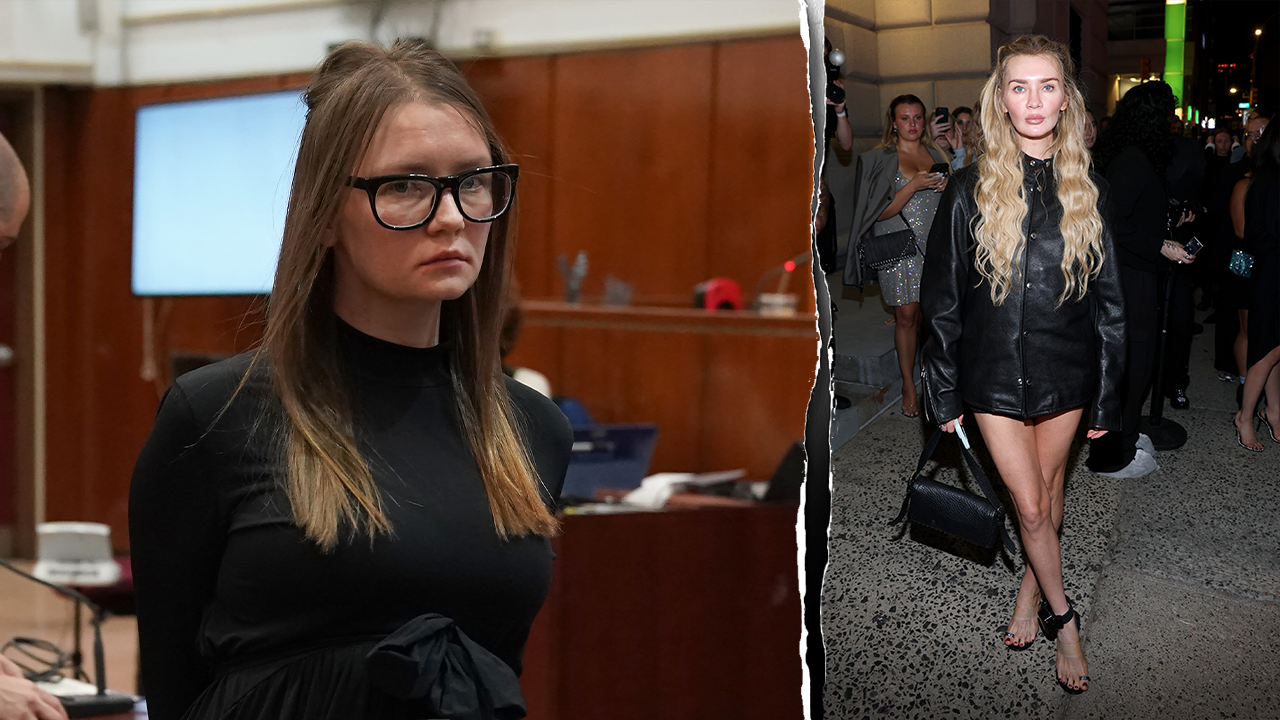
New York City has always been a metropolis that thrives on reinvention, a glittering stage where the ambitious can shed their pasts like old winter coats and emerge as whoever they dream to be. For Anna Sorokin, known to the world by her glittering pseudonym Anna Delvey, the city was not just a backdrop but an accomplice to her grandest illusions. Today, the skyline she once attempted to conquer remains visible to her only through the windows of her East Village apartment, where she currently resides under strict house arrest, her every movement tracked by a heavy, black GPS ankle monitor. Over a recent holiday weekend, she posted a hazy, fog-veiled photograph of the Manhattan skyline on social media, captioned with an affectionate nod to “the best city in the world.” Yet, beneath this veneer of ongoing metropolitan romance lies a harsh, impending reality: the Department of Homeland Security is actively working to dismantle her American dream once and for all. After years of legal maneuvering, high-profile trials, and a prison sentence that only seemed to burnish her celebrity, the German-Russian national who successfully convinced Manhattan’s elite that she was a wealthy heiress is facing the very real threat of permanent deportation. For a woman who spent her youth climbing the steep social ladders of New York’s cultural aristocracy, the prospect of being forcibly returned to Europe represents the ultimate fall from grace. This is no longer just a story of a young woman who played a dangerous game of high-society make-believe; it is a complex narrative about the boundaries of American law, the cultural obsession with charismatic grifters, and the desperate struggle of an outsider trying to hold onto the only home she feels she has ever truly known. She has spent years dancing on the razor’s edge of fame and infamy, and now she remains trapped in a state of luxurious limbo, balancing her desire to remain a New York social fixture with the looming finality of her current foreign expulsion.
The federal government’s patience with Sorokin has worn remarkably thin, as evidenced by the sharp, uncompromising rhetoric coming from immigration officials who view her continued presence in the United States as an affront to the integrity of the nation’s legal and federal frameworks. A spokesperson for the Department of Homeland Security recently made this deep frustration public, accusing her of making a complete mockery of both the American judicial system and its immigration laws, while expressing an eager, unconcealed anticipation for her imminent removal from the country. Sorokin’s legal saga began in earnest with her 2019 conviction on multiple felony charges, including grand larceny and theft of services, after she swindled banks, hotels, and acquaintances out of hundreds of thousands of dollars to fund a lifestyle of unparalleled luxury. Despite serving her prison term and being released early for good behavior, her freedom was short-lived as she was quickly detained by Immigration and Customs Enforcement (ICE) for overstaying her tourist visa. What followed was a lengthy period inside a federal detention facility, which eventually culminated in her release to home confinement under the condition that she wear an ankle monitor and remain within her residence while she appeals her deportation order. To her detractors and the federal prosecutors who pursued her, she remains an unrepentant criminal who exploited the systemic blind spots of the wealthy to secure a life of unearned privilege. To the immigration authorities, her continued residency in New York on an ankle monitor is not a display of justice served, but a lingering loophole that they are determined to close as soon as her legal appeals run their natural course, ensuring she faces the heavy consequences of her visa overstay. This ongoing stand-off highlights the deep friction between federal enforcement and a cultural system that often rewards notoriety with prolonged stays in the spotlight. As both sides dig in, her case serves as a defining test of how the American administrative state handles the unique pressures of modern, internet-age digital celebrity.
Yet, if one looks past the prosecutorial indignation and the sensational headlines, there is a deeply human element to Sorokin’s insistence on staying in New York, a city that has become the vital center of her identity and the only place where she feels she truly belongs. Speaking candidly about her predicament, she has previously lamented the prospect of being permanently banned from the United States, pointing out that she spent the entirety of her formative adult years in New York and has built her entire emotional support network and friendships within its borders. To Sorokin, the insistence on her exile seems disproportionately harsh when compared to the treatment of other non-citizens, arguing that violent offenders are regularly released by immigration authorities while she, a non-violent white-collar offender, remains a primary target for high-profile deportation. This perspective, though self-serving, highlights the profound existential dread of a woman who fears losing the community she painstakingly built, even if that community was initially forged under false pretenses. Her reluctance to return to Europe is not merely a rejection of her humble origins as the daughter of Russian immigrants who migrated to Germany; it is a desperate defense of the persona she created. To be deported would mean the death of “Anna Delvey” and the forced resurrection of Anna Sorokin, a fate she has spent her entire adult life running away from, choosing instead to endure the confines of house arrest and the constant shadow of federal surveillance just to remain on Manhattan soil. She views herself as an organic product of New York’s relentless culture of ambition, making her impending removal feel less like a legal necessity and more like an exile from her spiritual home, leaving her isolated in her high-rise sanctuary. Ultimately, her battle to stay is less about resisting the physical repatriation to her German home and more about fighting to preserve the fragile, painstakingly and carefully engineered fantasy life that she spent her whole youth sacrificing everything to build in the public eye.
What makes Sorokin’s story uniquely modern is her unprecedented ability to transform her criminal infamy into a lucrative and highly visible media empire, effectively converting her house arrest into a glamorous, prolonged media campaign. Instead of fading into quiet obscurity after her release from prison, she became the subject of the cultural phenomenon “Inventing Anna,” a hit Netflix drama series produced by Shonda Rhimes that earned her a staggering $320,000 licensing fee, which she reportedly used to pay off her state-mandated restitution and legal debts. Her cultural footprint expanded even further when she was cast as a contestant on the reality television sensation “Dancing With the Stars,” performing with her glittering, rhinestone-encrusted ankle monitor on national television. Although her time on the show was brief and highly controversial, she did not exit quietly; instead, she publicly criticized the production, labeling it as “predatory” and accusing the producers of using her criminal past solely to boost ratings while offering her little genuine support. This public spat highlighted her refusal to be cast merely as a passive victim of her own notoriety, demonstrating her sharp, calculating understanding of the media landscape. She understands that in the attention economy, notoriety is a currency just as valuable as old money, and she has proven masterful at keeping herself at the center of the cultural conversation, turning her legal restrictions into performance art and challenging the public to decide whether they should condemn her or applaud her audacity. By turning her criminal record into a marketable brand, she has defied the traditional trajectory of post-conviction recovery, demonstrating that in the digital age, a well-managed scandal can be far more profitable than a clean record, challenging the very ethics of modern entertainment. She has essentially rewritten the rulebook of rehabilitation, proving that when the world is looking at you, it does not matter if they look with disapproval as long as they pay for the privilege of watching your highly choreographed life unfold on their digital and television entertainment screens.
The manifestation of this performance art is daily curated on her social media platforms, where she boasts over a million followers who eagerly consume her stylized content, blurring the lines between criminal rehabilitation and high-fashion influencer culture. On her Instagram account, she frequently shares a mix of high-end editorial photoshoots and tongue-in-cheek videos, such as a highly publicized clip demonstrating her method for styling chic tights over her bulky, government-issued ankle monitor. This lighthearted, aesthetic treatment of her federal confinement is emblematic of her refusal to let the authorities define her reality, turning a symbol of state-enforced punishment into a quirky fashion accessory. Adding layers to this surreal display of modern celebrity is her frequent alignment with other controversial public figures who have captured the national imagination, most notably the expelled former New York Congressman George Santos. The two self-styled outcasts, free of traditional shame, have frequently been seen together on her feeds, smiling for selfies that capture a unique, modern subculture of public figures defined by their spectacular, highly televised falls from grace. Like Santos, Sorokin has tapped into a contemporary fascination with people who challenge societal expectations of truth and decorum, constructing a digital sanctuary where her legal transgressions are treated not as moral failures, but as edgy, counter-cultural traits that make her all the more compelling to a generation obsessed with authenticity, even when that authenticity is completely manufactured. Through these bizarre associations and highly polished digital interactions, she successfully maintains her status as a relevant, trending cultural icon, ensuring that her life remains an endless source of fascination and debate, while daring the public to look away from her ongoing story. In doing so, she has created a narrative where her criminal behavior is almost secondary to her charismatic brand, suggesting that in the twenty-first century, the ultimate sin is not committing a crime, but being boring, a fate that Anna Delvey is determined to avoid at all costs as she continues her highly lucrative digital social media dominance.
At its core, however, the story of Anna Delvey remains a cautionary tale about the seductive power of the American Dream and the devastating consequences when that dream is pursued through deception. Years ago, she arrived in New York armed with nothing but an unwavering confidence and a fictional biography, claiming to be the pampered daughter of a German diplomat or an oil baron with a mythical $67 million trust fund waiting for her back in Europe. While she funded her luxurious lifestyle by leaving a trail of unpaid debts, bouncing checks, and defrauding major financial institutions, she also exposed the profound gullibility of a high-society world that values wealth and status above all else, proving that in Manhattan, the appearance of money is often just as powerful as money itself. Now, as the Department of Homeland Security prepares to bring down the final curtain on her American residency, the grand illusion she spent a decade crafting faces its absolute limit. Whether she is ultimately deported to Germany or manages to secure a miraculous legal reprieve to remain in the city she loves, Anna Sorokin has already left an indelible mark on the cultural landscape, proving that the line between a visionary entrepreneur and a convicted felon is often razor-thin. Ultimately, her fate will not just be decided by immigration judges or federal authorities, but by a public that continues to be endlessly fascinated by her audacity, cementing her legacy as one of the most polarizing, resilient, and fascinating figures of the modern digital age. Her journey serves as a mirror to modern society’s complicated values, leaving us to wonder if she is a villain, a hero, or a warning of things to come as she awaits the final decision on her American fate. Underneath the glamorous façade lies a reminder that our modern world is increasingly defined not by who we are, but by who we successfully pretend to be in front of a highly receptive, global and willing social media audience.