





The Return of the ‘King of the North’: Andy Burnham’s Westminster Resurgence
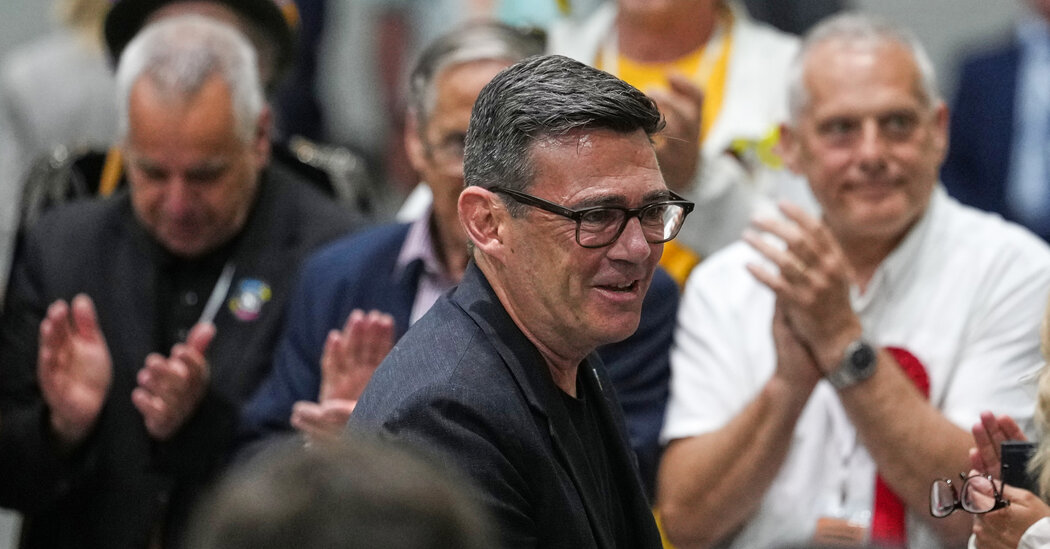
Andy Burnham, who has twice campaigned unsuccessfully for the leadership of Britain’s governing Labour Party, has staged a dramatic parliamentary comeback that may well alter the course of modern British politics. His decisive victory in a recent special parliamentary election has not only returned him to the green benches of the House of Commons but has catapulted him back into the national conversation as a formidable contender for the highest office in the country. Standing as the newly elected Member of Parliament for Makerfield, a constituency in the industrial heartlands of northwest England, Burnham now finds himself within striking distance of the Labour Party leadership and, ultimately, the threshold of 10 Downing Street. Yet, the road to the premiership is paved with steep institutional hurdles; to mount a formal challenge against the current prime minister, Keir Starmer, Burnham must first secure the nominations of at least 80 of his parliamentary colleagues. This mechanical requirement is no small feat in a party currently dominated by Starmer’s loyalists, but the political winds in Westminster are shifting under the weight of widespread public disillusionment. As the British electorate grows increasingly weary of the government’s economic struggles, Burnham is increasingly viewed by his allies as a unique political antidote. Proponents view him as the charismatic savior capable of steering the working-class electorate away from the populist clutches of Nigel Farage’s right-wing Reform UK party. Conversely, his critics dismiss him as a highly polished political chameleon whose performance on the national stage would ultimately be throttled by the exact same macroeconomic crises and impatient public demands that have beleaguered Starmer’s premiership. Regardless of which narrative prevails, Burnham represents a striking departure from the current administration, offering an optimistic, plain-spoken, and structurally decentralized vision of Britain that directly challenges the traditional, centralized, and often sterile nature of Westminster politics.
From Merseyside to the Corridors of Power: The Roots of a Modern Populist
To understand Burnham’s enduring appeal is to understand the cultural and geographical landscape that shaped his political identity. Born in Liverpool in 1970 to a telephone engineer father and a doctor’s receptionist mother, Burnham was raised in the village of Culcheth in Cheshire, a region deeply imbued with the industrial heritage and tight-knit community values of the English North. His upbringing was grounded in the working-class traditions of his Irish Catholic heritage, attending state-funded Roman Catholic schools—a background that left an indelible mark on his worldview and communicative style. Burnham has often spoken candidly about the comforting, gravitational pull of his faith, colorfully comparing his relationship with Catholicism to his lifelong, unwavering devotion to the Everton Football Club. In his view, even if one stops attending Sunday Mass, the spiritual and cultural identity remains a fundamental, inescapable part of who they are, much like an inactive football supporter who remains a fan at heart. This natural ability to translate complex personal convictions into accessible, relatable analogies helped him stand out when he eventually left the North to study English at the University of Cambridge. Upon graduating, Burnham chose a career path familiar to many ambitious political figures of his generation: working behind the scenes in London as a researcher for the prominent Labour MP Tessa Jowell, before rising to serve as a policy adviser to Chris Smith, the then-Culture Secretary. It was during his formative years in Cambridge and London that he met his Dutch-born wife, Marie-France Van Heel, with whom he would raise three children. His early ascent was marked by a relentless drive; he married Marie-France in October 2000 while simultaneously navigating a fiercely competitive selection battle to represent his home region in Parliament—a frantic period of his life that culminated in his election as the MP for Leigh in 2001, anchoring his political career firmly in the northern communities he had always called home.
The Crucible of New Labour and the Awakening at Hillsborough
Entering Parliament during the peak of the New Labour era, Burnham quickly ascended the ministerial ladder, proving himself to be a highly capable administrator and a persuasive communicator. Under the premiership of Tony Blair, he served as a junior minister, before being elevated to the Cabinet by Gordon Brown, where he held some of the most demanding offices of state, including Chief Secretary to the Treasury, Culture Secretary, and ultimately, Health Secretary. However, his transition from a standard, highly polished party loyalist to a deeply empathetic champion of regional justice occurred during a watershed moment in 2009. While representing the government at a memorial service marking the 20th anniversary of the Hillsborough disaster—where 97 Liverpool football fans were tragically killed in a stadium crush—Burnham was loudly heckled and jeered by an angry, grieving crowd. The raw emotion of that afternoon profoundly shook him, forcing him to confront the systemic failures of a British establishment that had spent decades gaslighting the victims’ families, falsely blaming working-class fans for the tragedy, and protecting institutional interests. Rather than retreating into defensive political spin, Burnham actively listened to the grief of his home city, leveraging his cabinet position to break through bureaucratic inertia and secure the establishment of the Hillsborough Independent Panel. This crucial intervention eventually paved the way for a second, comprehensive inquest that cleared the victims of any wrongdoing and exposed a massive police cover-up. This experience radically altered Burnham’s political trajectory; it dislodged him from the standard Westminster playbook, instilling in him a deep-seated suspicion of the Whitehall establishment and a lifelong commitment to giving voice to marginalized regional communities who felt repeatedly ignored by London-centric power structures.
Out of the Ashes of Westminster: Building a Fiefdom in Greater Manchester
The decline of the national Labour Party after its general election defeat in 2010 forced Burnham through a period of intense reflection, marked by unsuccessful bids for the party leadership in both 2010 and 2015. His fourth-place finish in 2010 and his subsequent, unexpected defeat in 2015 to the veteran left-winger Jeremy Corbyn made it clear that his conventional path to the top of Westminster politics had stalled. Recognizing that the traditional parliamentary route was failing to address the deepening geographical inequalities within the United Kingdom, Burnham made the unconventional decision in 2017 to resign his seat in Parliament and run for the newly created position of Mayor of Greater Manchester. It was in this executive role that Burnham truly rebuilt his political brand, transforming what could have been a dry, low-profile bureaucratic post into a powerful platform for regional advocacy. Over his nine-year tenure, he presided over an economic and cultural renaissance in Manchester, demonstrating a keen talent for storytelling and transforming complex policy initiatives into high-vibrancy, relatable campaigns. His most notable administrative achievement—securing public control and regulation over the metropolitan bus network—was framed not as a dry transport reform, but as a heroic, “David versus Goliath” battle against powerful, profit-driven private transport conglomerates. This ability to capture the public imagination stood in sharp contrast to the often sterile, technocratic approach of modern Westminster politics. Furthermore, during the COVID-19 pandemic, Burnham achieved national prominence by publicly confronting the Conservative government over its regional lockdown policies, which he argued disproportionately penalized northern workers without providing adequate financial compensation. This defiant stance earned him the popular moniker “King of the North,” cementing his reputation as a leader willing to fight for his constituents against an indifferent capital.
The Ideological Chameleon: Charismatic Visionary or Political Pragmatist?
Despite his immense popularity in the North, Burnham’s career has long been shadowed by persistent criticisms regarding his ideological consistency and political mutability. Having served in high-ranking positions under three vastly different Labour leaders—the centrist Blair, the traditional social-democratic Brown, and the democratic socialist Corbyn—detractors have frequently depicted him as a political chameleon who shifts his principles to match the prevailing winds of his party. This perception of political fluidity was famously mocked by Keir Starmer himself at a media event in 2022, where he jokingly teased Burnham about his tendency to claim connection to every winning side, likening his political adaptability to a football fan claiming allegiance to Argentina, France, Morocco, and Croatia simultaneously. Other critics express concern that Burnham’s brand of regional populism, while highly effective in Manchester, would quickly buckle under the immense, complex macroeconomic pressures that govern national politics. For instance, his public comments suggesting that the Labour Party should free itself from being “in hock to the bond markets” sparked considerable anxiety among treasury moderates, forcing him to later clarify that his remarks had been misinterpreted. Additionally, occasional slips in interviews regarding complex national economic policies have fueled the narrative that while he is an excellent emotional communicator, he may lack the rigorous, disciplined policy execution required for national management. Nevertheless, political strategists like John McTernan argue that Burnham’s fundamental desire to connect with and please voters is a major asset in an era of deep public cynicism, suggesting that a leader who genuinely enjoys the art of politics and cares about public approval is a welcome alternative to the detached, unpopular figures who have recently occupied Downing Street.
Sailing Into the Storm: The Treacherous Path to Downing Street
As Andy Burnham takes his seat once again in the House of Commons, the central question hanging over Westminster is whether his regional executive success can be successfully translated into national leadership. The transition from the relative autonomy of a regional metro-mayorship to the brutal, multi-front landscape of national government is famously difficult. While a mayor has the luxury of choosing their battles and focuses on local growth, a British Prime Minister must navigate an unrelenting onslaught of global crises, legislative battles, and complex economic trade-offs every single day. Analysts point out that in the pressure cooker of Downing Street, there is very little time to think, and even less control over which crises dominate the agenda. Yet, the current state of national politics may play directly into Burnham’s hands; the widespread sentiment that Britain’s centralized political model has been failing for decades aligns perfectly with his long-held message of economic rebalancing and local empowerment. If Keir Starmer’s administration continues to struggle to captivate a restless and demanding electorate, the demand for a charismatic, communicative leader who can offer a message of hope and regional pride will only grow louder. Whether Burnham can secure the necessary support from his parliamentary colleagues to launch a successful leadership challenge remains to be seen. However, what is undeniable is that his return to Parliament has introduced a dynamic, highly experienced, and deeply ambitious alternative to the current status quo, ensuring that the “King of the North” will remain a central figure in shaping the future of the United Kingdom.