

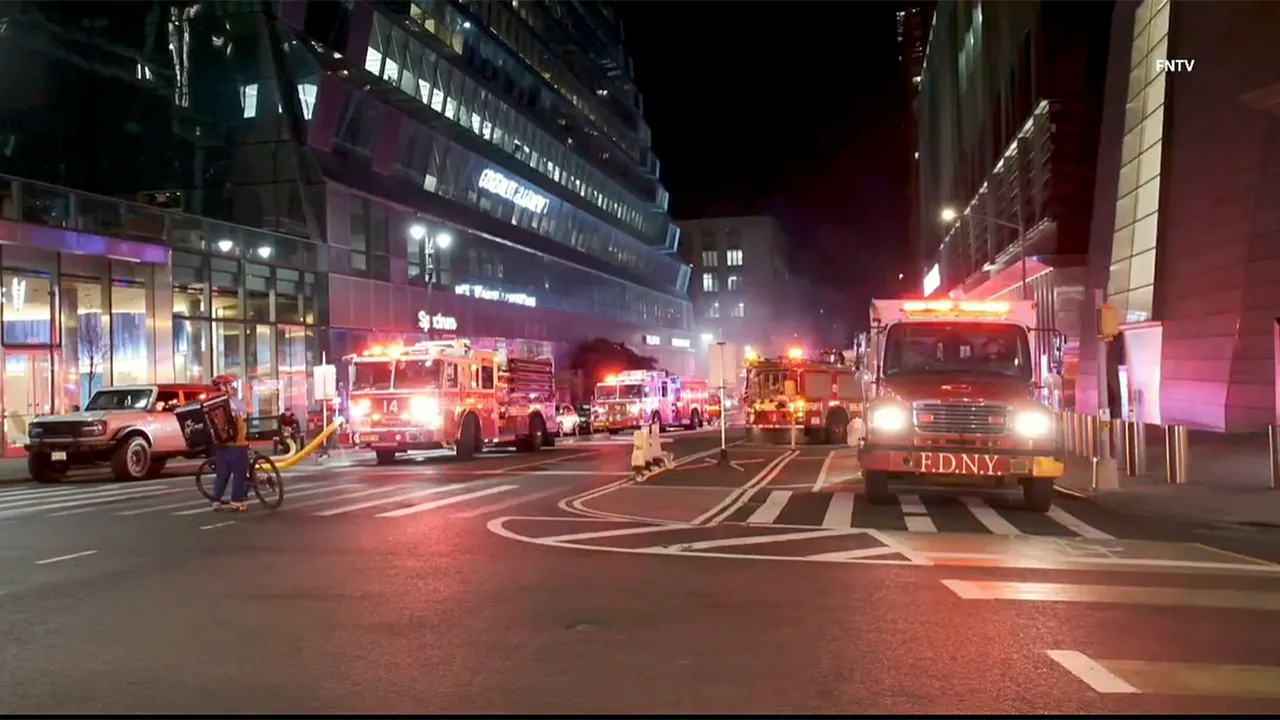
Under the bustling, steel-and-concrete surface of Midtown Manhattan, where the lives of millions intersect daily in a continuous, fast-paced dance of commuter schedules and transit routes, the early morning hours of Friday were violently disrupted by a sudden, harrowing emergency deep within the historic subterranean labyrinth of Pennsylvania Station. It was approximately 1:32 a.m., during the absolute quietest window of the city’s late-night lull, when the relative silence was shattered by a frantic emergency call reporting a severe fire originating from an Amtrak maintenance track car. The flash of flames had erupted on Track 11, a vital, high-density transit corridor nestled in the dark underground tunnels located directly between 7th and 8th Avenues along 31st Street. What began as a localized mechanical combustion quickly transformed into a major emergency as thick, choking smoke billowed through the concrete vaults, threatening to completely overwhelm the critical transportation hub while visibility dropped to near zero. Recognizing the extreme danger of an underground fire surrounded by millions of volts of active, live electrical current, the New York City Fire Department (FDNY) immediately mobilized a massive response, officially elevating the incident to a second alarm by 2:43 a.m. Ultimately, a formidable emergency rescue force consisting of 46 distinct fire and medical units, alongside 141 highly trained emergency personnel, was deployed directly into the hazardous underground environment. Navigating the dark, disorienting, and soot-filled tunnels beneath the streets of Manhattan, these courageous fire crews and medical responders fought the intense heat and toxic fumes with incredible skill and determination. Their relentless, coordinated efforts successfully brought the stubborn inferno under control by 4:05 a.m., preventing a catastrophic spread of the fire through the complex network of tunnels, but leaving behind a landscape of scorched metal, severely damaged electrical infrastructure, and a highly active investigation into what triggered the dangerous nocturnal incident.
Beyond the mechanical wreckage, scorched steel, and charcoal-strewn tracks, the true gravity of this subterranean disaster was measured in its profound and immediate human toll. Five civilians, individuals who dedicate their overnight hours to the grueling, dangerous, and often invisible labor of maintaining the city’s complex rail systems while the rest of the metropolis peacefully sleeps, were caught in the sudden, violent path of the fiery outbreak. For two of these dedicated crew members, the routine maintenance shift quickly dissolved into a terrifying, life-threatening nightmare wrapped in blinding smoke and searing, intense heat. They sustained severe, painful injuries during the initial chemical flare-up, which necessitated rapid stabilization on-site by heroic paramedics before they were rushed by emergency medical technicians to Bellevue Hospital, a renowned Manhattan trauma center equipped to handle the physical devastation of severe burns, environmental injuries, and acute smoke inhalation. Meanwhile, three of their fellow workers, though physically scraped, bruised, and deeply shaken by their incredibly narrow escape from the underground inferno, refused further medical transportation, choosing instead to remain at the scene to process the traumatic event in the company of investigators and supportive colleagues. This distressing human element underscores the ever-present, silent hazards carried daily by the region’s physical labor force. These five individuals represent the living, breathing, and vulnerable backbone of New York’s massive transportation network, serving as a sobering reminder to the general public that behind every automated transit update, daily train schedule, and smoothly executed commute are real human lives who regularly face sudden, life-altering physical hazards in the dark tunnels beneath the bustling city streets to keep the region moving safely forward. As the flashing red lights of emergency engines illuminated the dark, damp pavement of 31st Street outside the grand station entrance, the atmosphere of panic slowly shifted into one of deep, collective relief that no lives were lost during this terrifying ordeal.
As the sun rose over the tri-state area on Friday morning, the physical damage wrought by the fire triggered a massive, compounding ripple effect that disrupted the daily lives of hundreds of thousands of unsuspecting commuters. The intense heat of the burning Amtrak track car had severely compromised, melted, and collapsed the delicate overhead catenary wiring along Track 11, which acts as the life-giving power supply for incoming trains. Consequently, New Jersey Transit was forced to make a drastic decision just as the high-stakes morning rush hour commenced, completely suspending its rail services between Newark Penn Station and New York Penn Station to allow emergency crews to safely inspect the damage. For countless workers, students, and travelers waking up across New Jersey, their carefully planned morning routines were instantly derailed by stressful alerts flashing on their smartphones, warning them of massive delays and suspended lines. Meanwhile, the Long Island Rail Road (LIRR) was thrown into its own complex logistical battle, forcing dispatchers to urgently divert incoming lines to the newly opened Grand Central Madison terminal in a desperate, pre-emptive bid to keep passengers moving and prevent Manhattan’s Penn Station from becoming utterly gridlocked by human crowds. The sudden halt of these major transportation arteries created an atmosphere of supreme anxiety and frustration across regional platforms, demonstrating how a single localized fire in a dark Manhattan tunnel can instantaneously destabilize the economic, social, and psychological rhythm of the entire metropolitan area, transforming an ordinary weekday morning into an exhausting trial of patience and endurance for the region’s diverse traveling public. Many passengers found themselves stranded at suburban stations, forced to make snap decisions to log into rideshare applications, queue up for desperately overcrowded regional commuter buses, or seek out ferry terminals along the Hudson River waterfront, stretching the alternative transit networks of the city to their absolute computational limits and creating an unprecedented weekday scramble across the entire Hudson River corridor.
This dramatic transit disruption brings the ongoing structural vulnerability of New York City’s fundamental infrastructure into a very clear and urgent focus, particularly concerning the century-old Hudson River tunnels through which the Amtrak work train was operating. These historic tunnels serve as the exclusive, high-density underground link connecting Manhattan directly to New Jersey and the broader Northeast Corridor, making them some of the most critical and heavily stressed transit passages in the entire Western Hemisphere. When an incident like a track car fire occurs, it brutally exposes the delicate fragility of these subterranean systems, where a single mechanical failure can instantly trigger a massive socioeconomic bottleneck for the entire East Coast. Repairing the damaged overhead wiring and securing the complex track infrastructure is a highly dangerous and painfully slow task; it requires specialized utility crews to labor under tense, high-pressure conditions, navigating dark, narrow, and damp spaces with heavy tools to restore high-voltage electricity lines safely while breathing through heavy filtration masks. Amtrak’s specialized repair teams had to work with desperate speed in the wake of the fire to mend the charred cables and stabilize the overhead wire infrastructure, knowing that every hour of lingering delay cost the regional economy millions of dollars in lost productivity and caused infinite psychological stress for stranded travelers. This emergency vividly illustrates that the region’s transport networks do not merely require routine patch jobs, but rather deeply transformative modernization and substantial capital investment to survive the unpredictable physical stresses of daily heavy operations in an era of growing commuter strain. The constant race against time to maintain these tunnels speaks to the daily battle fought by engineers to keep 20th-century technology functional in a 21st-century world, showing that without substantial and permanent upgrades, the million residents who rely on these routes remain at the mercy of unpredictable micro-crises that can easily paralyze their entire daily lives.
In the immediate aftermath of the frightening event, prominent New York leader and Assemblymember Zohran Mamdani stepped forward to publicly voice his immense gratitude and express the collective relief of a shaken city. Reflecting the private thoughts of millions of anxious residents, Mamdani praised the heroic, swift actions of the first responders who successfully prevented a bad situation from spiraling into an outright municipal tragedy. He expressed a deep and heartfelt appreciation for the brave firefighters and EMS members who unhesitatingly put themselves in harm’s way to extinguish the underground fire and keep the public safe during a moment of profound physical danger. Additionally, Mamdani urged the community to keep the injured transit workers at the very forefront of their minds, wishing them a rapid, comfortable, and complete recovery as they began their healing journeys in the hospital. He also served as a vital voice of practical guidance for affected commuters, advising them to carefully coordinate their travel plans by monitoring digital service updates and utilizing emergency alerts through the city’s NotifyNYC system. This supportive response from local leadership highlighted a central truth about New York: in moments of public crisis and infrastructure breakdown, the city’s ultimate strength lies not just in its steel rails, but in the deep empathy, fast communication, and solidarity shared among its citizens, first responders, and civil servants as they navigate unexpected hardships together. The public widely echoed this sentiment across digital platforms, sharing messages of support for the hospitalized workers and reinforcing a culture of appreciation for the laborers who work under the city’s streets to maintain its vital functions. This communal embrace was a reassuring reminder that even in a city known for its fast-paced, sometimes hardened exterior, there is a deep reservoir of compassion that emerges when crisis threatens, binding people together in a shared mission of mutual recovery and care.
As the long Friday wore on, the intensive recovery efforts mounted by transit agencies began to yield positive results, gradually breathing life back into the paralyzed metropolitan network. Thanks to the relentless efforts of Amtrak maintenance teams working alongside coordinates from the Metropolitan Transportation Authority (MTA), the heavily damaged overhead power systems were repaired, and the lingering smoke was safely cleared from the tunnels. This permitted the Long Island Rail Road to eventually resume its normal schedule directly into New York Penn Station, bringing a sense of relief to thousands of eastern commuters who had been diverted to Grand Central Madison earlier in the day. Though NJ Transit had to endure a longer and more painful recovery process to reconstruct damaged overhead infrastructure, the systematic restoration of rail service stood as a testament to the dedication of the workers laboring behind the scenes. This alarming track fire, which began in the dead of night, served as a powerful window into the interconnectedness of modern urban life, highlighting the danger faced by transit workers, the courage of first responders, and the patience of daily travelers. As trains slowly began rolling through Track 11 once again, the city emerged from the crisis with a renewed appreciation for those who keep the metropolis moving, moving forward with the enduring resilience that defines New York. Commuters stepping back onto the platforms were met with clean air and the steady rumble of engines, a reassuring sign that the systems had held. While the investigation into the fire continues to uncover exactly what went wrong, the rapid recovery stands as a shining example of public servants working in harmony to restore order. It proves that no matter how severe the breakdown, the dedication of the city’s workforce ensures that New York never truly stops moving, always pressing onward into the bright promise of tomorrow.