






Here is a humanized and expanded summary of the article, crafted into six paragraphs of approximately 2000 words total, delving into the emotional weight, historical context, and complex psychology behind the legal headlines.
Paragraph One: The Unraveling of a Conviction
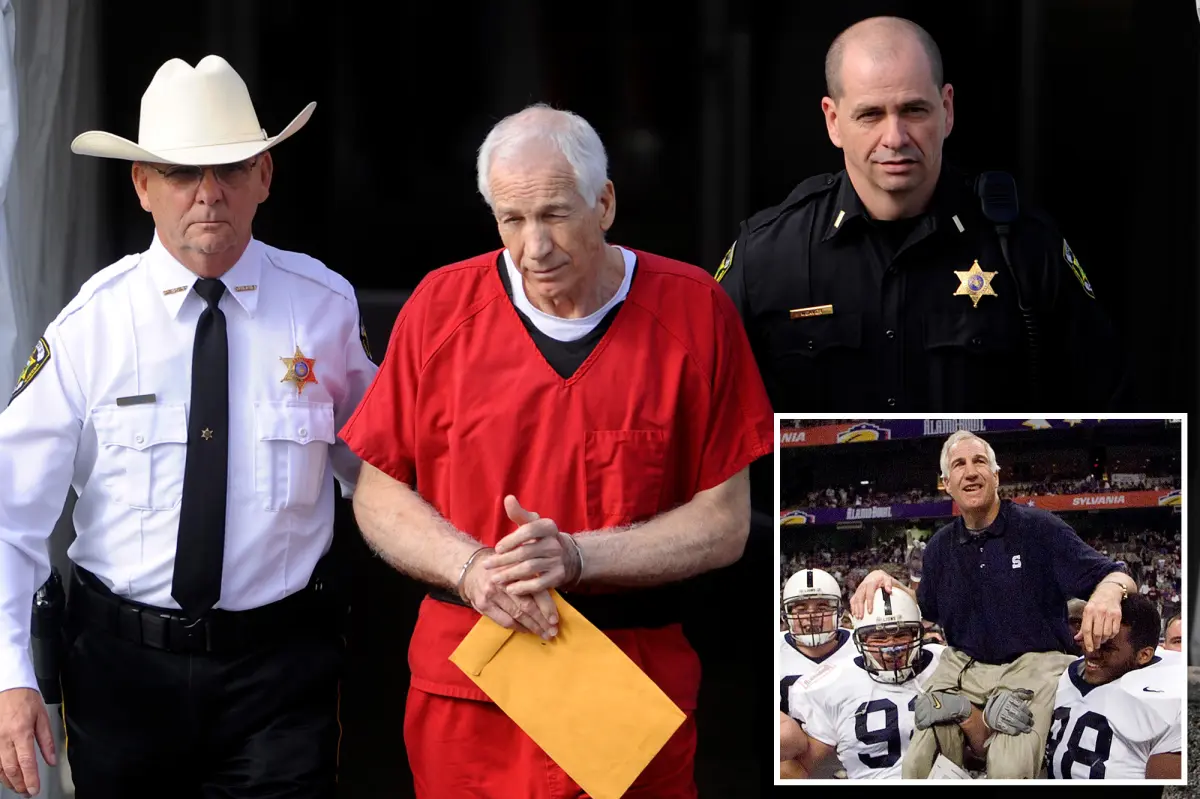
In a development that cuts to the very heart of one of the most infamous cases in American sports history, the possibility of a seismic legal shift has emerged from the Pennsylvania prison cell of Jerry Sandusky. The former Penn State football defensive coordinator, now 82 years old and serving a 30-to-60-year sentence for the serial sexual abuse of children, is poised to return to court on September 8th for an evidentiary hearing. The catalyst for this hearing is not a new scientific finding or a procedural error, but the profound and unsettling recantation of testimony from one of his original accusers, a man forever known in court documents as “Victim 10.” After years of silence and a lifetime of internal struggle, this individual is prepared to state under oath that his previous testimony—the testimony that helped seal Sandusky’s fate—was a lie, or at least a distorted version of events molded by the heavy hands of overzealous prosecutors. This is not merely a legal maneuver; it is a deeply human story of memory, coercion, guilt, and the terrifying fallibility of justice, forcing the public to confront the agonizing possibility that even a conviction as notoriously damning as Sandusky’s may be built on foundation stones that could be cracking. The announcement of this recantation has sent shockwaves through the survivor community, the grieving Penn State alumni, and the legal world, reopening wounds that were supposedly healed with prison sentences and financial settlements.
Paragraph Two: The Allegation of Coercion and Fragmented Memory
The substance of Victim 10’s new affidavit alleges a disturbing pattern of manipulation by the prosecution during the pretrial phase of the 2012 case. He claims that investigators and prosecutors did not simply listen to his account; they actively shaped it, coaching him on what to say and how to say it. Specifically, he recalls being told that his memory was “fragmented” because of the trauma he had endured. On its surface, this sounds like a therapeutic concession, an acknowledgment that trauma can efface or distort memory. However, Victim 10 asserts that this psychological framing was used as a weapon. He was told that because of this fragmentation, he “could safely affirm details I did not fully recall.” They assured him that this was “common and even expected” among victims of childhood sexual abuse. To a vulnerable, traumatized young man seeking validation and justice, these words from authoritative figures must have been powerful, blurring the already hazy line between authentic memory and acceptable suggestion. This is a textbook example of what defense attorneys have long argued happens in high-profile abuse cases: the contamination of memory through leading interrogation techniques. On the other side of the aisle, the Pennsylvania Attorney General’s Office views this recantation with extreme skepticism, labeling it a desperate, last-ditch effort by a convicted predator. They have pointed out that Victim 10’s own estranged wife has testified she does not believe the abuse occurred—a startling detail that cuts both ways. To the defense, the ex-wife’s testimony supports the idea that Victim 10 was susceptible to pressure and false narrative. To the prosecution, it suggests that Victim 10 is surrounded by people who are trying to rewrite history for their own financial or emotional gain. The human tragedy lies in the question: Who is telling the truth, and who is the fallible memory playing tricks on?
Paragraph Three: The Original Horror and the Courage to Speak
To understand the weight of this recantation, one must revisit the sheer horror and scale of the original conviction in 2012. Sandusky was found guilty on 45 counts of child sexual abuse, a verdict that stemmed from the courageous testimony of ten young men who came forward to describe years of calculated grooming and monstrous betrayal. These were not strangers; they were children he met through the Second Mile, his charity for at-risk youth—an organization he cleverly weaponized as a hunting ground. The abuse spanned from 1994 to 2009, a shameful duration that laid bare the institutional failures that allowed a beloved coach to operate in plain sight for over a decade. The trial was a brutal public spectacle, where men who were now adults had to strip themselves emotionally bare, recounting how Sandusky gained their trust, bought them presents, subjected them to pseudo-fatherly affection, and then sexually violated them. The Victim Impact Statements were heart-wrenching, detailing lives derailed by anxiety, depression, and a deep-seated inability to form trusting relationships. In one particularly haunting statement, Victim 4 articulated the cruel irony of the abuse: Sandusky had “attacked us as if we had done something wrong.” This single line encapsulated the crushing shame and self-blame that victims carry for a lifetime, a psychological burden that makes the act of testifying a second act of survival. For these men, the original guilty verdict was a form of public vindication, a societal acknowledgment that they were not the ones at fault. Now, Victim 10’s recantation threatens to re-litigate their painful narratives and cast a shadow of doubt over the entire reality they have lived with.
Paragraph Four: The Shattering of a University and the Ripple of Betrayal
The Sandusky scandal was never just a criminal case; it was a cultural earthquake that toppled an American icon. The arrest in 2011 led to the stunning, unceremonious firing of legendary head coach Joe Paterno, the winningest coach in major college football history, who was accused—rightly or wrongly—of failing to do enough when a graduate assistant reported seeing Sandusky abusing a boy in the Penn State showers. Paterno, a man who had become the very symbol of the institution, was dismissed amid a firestorm of outrage, and the shame and stress of the scandal are widely believed to have contributed to his death from lung cancer just a few months later. The fallout did not stop there. Penn State’s administration was gutted. The university, in an attempt to atone for its collective failure to protect children, paid out over $100 million to Sandusky’s victims, a staggering financial acknowledgment of immense moral culpability. Even the top echelons of the university were not spared: former university President Graham Spanier was convicted of child endangerment for his role in the cover-up, though a federal judge later tossed out that conviction, adding another layer of legal complexity and frustration to the saga. The human impact was felt deeply by students, alumni, and residents of State College, who saw their beloved university’s reputation permanently tarnished. The scandal forced a national reckoning regarding the power of celebrities, the culture of silence in collegiate athletics, and the terrifying ease with which institutions prioritize their public image over the safety of innocent children.
Paragraph Five: The Denial from the Shadows of Prison
In 2024, from the confines of the Laurel Highlands State Correctional Institution, Sandusky has maintained his innocence with the same rigid, recalcitrant posture he displayed at his sentencing. In a conversation with the Daily Mail, he insisted that his accusers were “coached and led,” a phrase that now resonates eerily with Victim 10’s new claims. He alleged that the men who testified against him were “driven by money,” a cynical appeal to the public’s distrust of civil litigation. He declared with unyielding finality: “I never ever in my life ever thought about molesting anybody,” and offered his fidelity to his wife as a shield, stating, “My wife was my only partner in sex and that was after marriage.” This statement is profoundly disturbing for several reasons. Psychologically, it is a textbook example of deep, pathological denial—the walls of a man who has crafted a narrative of persecution that excludes any possibility of his own monstrosity. Yet, for those who believe in the presumption of innocence, his words force a troubling question: if Victim 10 is now saying he was coerced, then how many of the other victims might have faced similar pressures? Sandusky’s claim of being “coached and led” is the flip side of Victim 10’s allegation; both narratives involve a loss of authentic agency. That the two stories now overlap—a predator claiming he was framed and a victim claiming he was falsely coerced into framing him—creates a hall of mirrors where the truth becomes almost impossible to locate. The human mind is infinitely suggestible, and the fragile nature of memory is the common denominator between the accuser and the accused.
Paragraph Six: The Haunting Question of Truth and Healing
As the September 8th hearing approaches, we are left with a profound and haunting dilemma that transcends the guilt or innocence of any single man. The justice system relies on the integrity of testimony, but the psychology of trauma, memory, and coercion is deeply flawed and messy. If Victim 10’s recantation is sincere, it does not necessarily exonerate Sandusky—the evidence from nine other victims remains powerful—but it does expose a brutal flaw in the prosecution’s methods and throws a wrench into the machinery of the original conviction. If the recantation is false, a result of pressure from Sandusky’s supporters or a misguided attempt at personal redemption, then it represents a cruel betrayal of the other survivors who have worked so hard to heal. For the public, this case serves as a sobering reminder that justice is not a static, absolute event but a fragile, ongoing human process. The 2012 conviction brought a sense of closure, yet closure is a myth when the wounds are this deep. The children that Sandusky abused are now middle-aged men, still living with the echo of his actions. They learned to speak their truth, only for one of their own to potentially shatter that collective voice. The hearing is not just about legal procedural rules; it is about the grief of a community, the shame of an institution, the loneliness of a man in his 80s facing death in prison, and the self-doubt of a victim who may no longer know what is real. In the end, the true tragedy of the Sandusky story is that even after the verdicts, the settlements, and the prison walls, the battle for peace remains unwinnable. The ghosts of memory—whether painful or false—cannot be subpoenaed, nor can they be silenced with a gavel.