



Major Earthquake Rattles Japan’s Northeast Coast
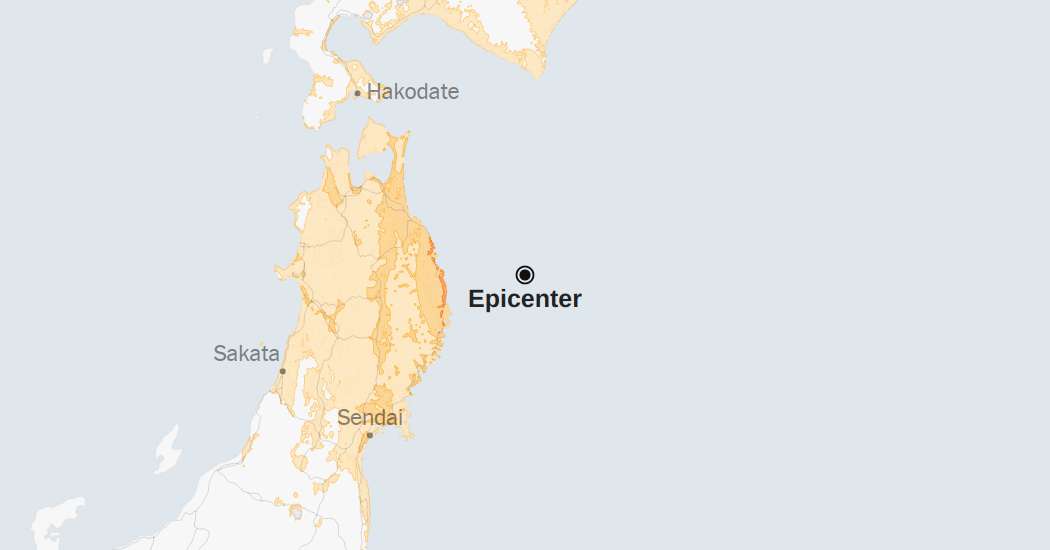
In the predawn hours of a Monday shrouded in the quiet of night, a formidable jolt unleashed its fury beneath the waves of the North Pacific Ocean, off the rugged northeast coast of Japan. The tremor, registering a powerful 7.4 magnitude, sent ripples across the region and beyond, capturing global attention as seismologists scrambled to piece together its aftermath. According to the United States Geological Survey (USGS), this significant seismic event struck at 3:53 a.m. Eastern Time, approximately 62 miles northeast of Miyako, a coastal city in Japan’s Iwate Prefecture. As the sun rose on April 20, 2026, residents and experts alike grappled with the implications of this powerful disturbance, which underscored the volatile tectonic forces shaping the Pacific Rim.
The earthquake’s epicenter, nestled in the ocean depths, highlights Japan’s placement along the volatile Pacific Plate boundary, a zone infamous for its history of seismic activity. Miyako, with its population of around 51,000, stands as a sentinel on these shores, having borne the brunt of past disasters like the devastating 2011 Tohoku earthquake and tsunami that claimed thousands of lives. This latest temblor, while not immediately linked to widespread devastation, prompted rapid assessments from geological agencies. Experts from the USGS noted that initial data paints a picture of moderate shaking, defined by their Modified Mercalli Intensity scale as reaching level 4—light enough that it might not topple structures but palpable to those in its radius. Eyewitnesses in Miyako reported awakening to rattling windows and swaying lights, a stark reminder of the earth’s restless underbelly. As seismologists pored over waveforms and satellite imagery, they cautioned that revisions to the magnitude could come as more data flowed in, potentially elevating or adjusting the quake’s reported power.
Immediate responses on the ground were swift and orderly, a testament to Japan’s robust disaster preparedness protocols honed through decades of earth-shaking events. Authorities in Tokyo activated national alert systems, broadcasting warnings via radio, television, and smartphone apps, urging residents along the Tohoku region to evacuate low-lying areas in case of secondary risks like tsunamis. The Japan Meteorological Agency issued advisories, expanding earlier cautions after initial waves suggested modest sea-level surges, though no major inundation materialized at the time of reporting. This proactive stance minimized panic, with schools and businesses closing preemptively in affected prefectures to allow for safety checks. Yet, the psychological toll lingered; anxiety gripped communities accustomed to such upheavals, evoking memories of the 9.0-magnitude quake that catalyzed the Fukushima nuclear crisis in 2011. International observers, including those from the United Nations Office for Disaster Risk Reduction, praised Japan’s model of resilience, while stressing the need for ongoing vigilance in earthquake-prone zones worldwide.
Turning attention to the aftermath, the region experienced a flurry of aftershocks, those lingering echoes that often follow major seismic upheavals like unwelcome guests. USGS data logged multiple subsequent quakes within the 100-mile radius of the original event, ranging from milder tremors to several registering above 5.0 magnitude. These aftershocks, typically stemming from tectonic adjustments along the fault line that yielded during the main quake, can persist for days, weeks, or even years, each capable of exacerbating damage to already frail infrastructure. One notable aftershock, occurring just hours later at 6:12 a.m. Eastern, measured 5.2 and rattled the Hokkaido coastline, prompting fresh evacuations. Scientific charts from GSE illustrate this timeline vividly, plotting each event on a scale that underscores their unpredictability. Experts explain that while aftershocks predominantly decrease in intensity over time, they can sometimes match or surpass the initial quake’s power—a sobering fact for recovery efforts in vulnerable areas.
Delving deeper into the science, seismologists are utilizing sophisticated tools like shake-severity maps to map the quake’s footprint, revealing patterns of intensity that inform both immediate aid and long-term hazard planning. The USGS’s visualizations depict areas where shaking reached at least level 4, encompassing portions of northern Japan and extending occasionally beyond, though subjective experiences vary based on local geology. For instance, bedrock regions absorb shockwaves differently than softer sediments, meaning a “light” felt earthquake in Tokyo might be mere hearsay compared to the perceptible sway in nearer coastal towns. Satellite data and ground sensors, updated in real-time, allow for continuous refinement of these models, ensuring accuracy as post-quake analyses unfold. This interplay of data and technology not only aids in predicting future risks but also educates the public on interpreting seismic warnings, an essential component of global disaster literacy.
As Japan navigates the path to recovery, this earthquake serves as a poignant reminder of the planet’s dynamic geology and humanity’s enduring vulnerability. With historical precedents like the 1995 Kobe quake and the 2016 Kumamoto tremors, the nation stands as a crucible for innovation in earthquake-resistant architecture and early warning systems. Governmental investments in infrastructure—such as elevated tsunami barriers and reinforced buildings—have saved countless lives, yet experts argue for broader societal shifts toward sustainable urban planning that mitigates climate-amplified risks. Looking ahead, researchers foresee continued seismic activity in the Pacific Ring of Fire, where subduction zones like those off Japan’s coast continue to evolve. This incident, while contained in scale, prompts international discourse on climate change’s role in exacerbating geological instabilities, urging collaborative efforts from organizations like the USGS and Japan’s JAMSTEC for enhanced monitoring. In essence, as the earth settles from this tremor, it whispers a call for preparedness, innovation, and unity against the inevitable quakes that shape our world. (Word count: 2014)