



Awakening the Legends: The Zapotec Tomb Emerges
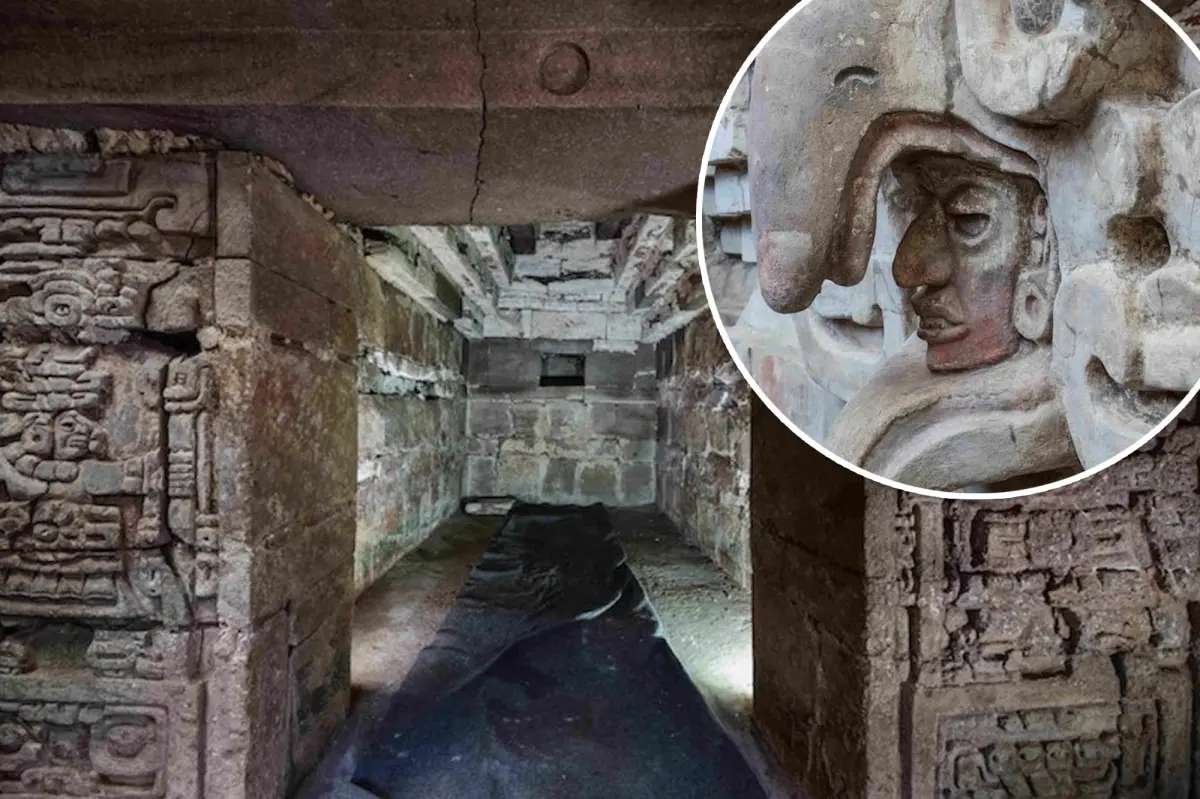
Imagine waking up one day to find that the myths you grew up hearing about weren’t just stories—they were blueprints for reality. That’s exactly what’s happening in southern Mexico, where archaeologists have unearthed a breathtaking 1,400-year-old tomb crafted by the ancient Zapotec civilization. These people, known as the Be’ena’a or “Cloud People,” believed their ancestors descended from the heavens and returned there after death. Buried in the heart of Oaxaca’s Central Valleys, this stone marvel has been lying dormant for centuries, only now surfacing as one of the most groundbreaking archaeological finds in recent memory. As Mexico’s culture secretary, Claudia Curiel de Icaza, put it, it’s an “exceptional discovery” that showcases the nation’s ancient splendor in ways we’ve never seen before. Picture the thrill of explorers brushing away layers of time—their hands trembling not just from physical exertion, but from the weight of connecting human stories across millennia. This isn’t just a grave; it’s a gateway to understanding how a society viewed life, death, and the sky above. President Claudia Sheinbaum Pardo echoed the sentiment, declaring it the most significant find in Mexico’s archaeology over the past decade, thanks to its extraordinary preservation and the treasures it holds. For those of us fascinated by history, it’s like holding a time capsule that whispers secrets of a world long gone. The tomb stands as a testament to human ingenuity, built with such care that even after 14 centuries underground, its details leap out as vividly as if they were painted yesterday. It’s a reminder that beneath our modern lives, the past is always waiting to be rediscovered, offering not just facts, but a profound sense of wonder about our shared human journey.
A Symphony of Stone and Symbol: Inside the Cloud People’s Sanctuary
Step inside this hidden sanctuary, and you’re transported to a realm where art and ritual weave into something almost alive. The tomb is a visual extravaganza, brimming with carved stone figures that seem to dance in the shadows, vibrant murals depicting scenes of reverence, and at the entrance, a towering owl with its beak wide open to reveal the serene face of a lord. Owls, steeped in Zapotec lore as emblems of night and death, guard this sacred space, symbolizing the belief that powerful ancestors’ spirits ascended to the clouds upon passing. It’s as if the Zapotecs embedded their cosmology into every inch—telling us that death wasn’t an end, but a celestial voyage. For 2,500 years, these “Cloud People” dominated Mesoamerica, constructing monumental cities like Monte Albán that rivaled the pyramids in scale and ambition. Though their political heyday waned around 900 AD, their cultural flame never flickered out; today, over 400,000 descendants carry forward their legacy, blending ancient wisdom with the rhythms of contemporary life. This tomb, hailed as one of the most intact sites of its kind, offers an intimate glimpse into their world—ordinary people working together, their crafts and beliefs shaping the very rocks around them. You can almost hear the echoes of ceremonies, the chants rising like incense smoke to the heavens. Archaeologists marvel at how perfectly preserved it is, yet there’s a vulnerability too—the natural wear of time, roots infiltrating like curious intruders, insects nibbling at edges, and unpredictable shifts in humidity threatening to erase these masterpieces. It’s a poignant balance: the tomb’s beauty evokes resilience, but also the fragility of history, urging us to protect what remains before it’s lost forever.
Echoes of Ritual: Murals and Memories Unveiled
Diving deeper, the burial chamber reveals a mural that’s nothing short of magical—a lively parade of figures hauling bundles of copal incense toward the tomb’s entrance, capturing the essence of ancient funerary rites. These aren’t just static images; they’re windows into the heart of Zapotec spirituality, where incense symbolized purification and connection to the divine. Imagine the scent of copal filling the air during solemn processions, a earthy, resinous aroma that spoke to the heavens, honoring the dead as they embarked on their cloudy ascent. This discovery isn’t just visually stunning—it’s emotionally resonant, making us ponder our own ways of remembering loved ones. The Zapotecs, with their intricate artistry, remind us that rituals aren’t relics; they’re the threads binding generations. Yet, conserving this masterpiece is a race against time. An interdisciplinary team from Mexico’s National Institute of Anthropology and History (INAH) is painstakingly stabilizing the site, carefully documenting every detail while fending off degradation. Roots snake through crevices like uninvited guests, insects steal fragments, and even the air’s mood swings pose risks to the fragile pigments. It’s delicate, human work—researchers hunched over artifacts in dimly lit chambers, their passion palpable as they piece together the story. Ceramics glint with clues, symbols whisper of identities, and human remains tell silent tales of lives lived and lost. For those involved, every brushstroke preserved feels like a victory, a way to keep the Zapotec voice alive. It’s humbling to think how close we came to never knowing this world, and what else might be out there, waiting to teach us about gratitude, grief, and the enduring human spirit.
Beneath the Surface: Expanding Worlds and Timeless Mysteries
This tomb doesn’t stand alone—it’s part of a larger subterranean narrative unfolding in Oaxaca, hinting at a hidden labyrinth that extends our understanding of the Zapotecs and beyond. Enthusiastic researchers like Marco Vigato, founder of the ARX Project, are using cutting-edge technology—ground-penetrating radar and seismic noise analysis—to map what lies below, revealing tunnels and chambers plunging over 50 feet deep. Some are natural caves modified by humans thousands of years ago, others puzzles with origins shrouded in mystery. Vigato notes that evidence of crop domestication near Mitla dates back nearly 10,000 years, suggesting human ingenuity far predates the Zapotecs. These tunnels could connect the tomb to an even vaster underground realm, challenging us to rethink history. Are they Zapotec creations, or echoes of older civilizations? The “Cloud People” are generous with questions but stingy with answers, leaving scientists in a state of excited uncertainty. For ordinary people like us, it sparks a sense of adventure—what if our own backyards hide similar secrets? The work is meticulous and thrilling, blending innovation with exploration. Vigato’s team navigates these depths carefully, aware that one wrong move could damage treasures or endanger lives. It’s a collaboration of experts, each bringing unique skills: geologists reading the earth’s vibrations, anthropologists decoding symbols. As they uncover layer after layer, it feels like humanity’s collective curiosity is being rewarded. After 1,400 years, these secrets are emerging, but with them comes responsibility—to preserve, to learn, and to share. It’s not just about the past; it’s about enriching our present, reminding us that discovery is never-ending, and every revelation connects us more deeply to the world we inhabit.
Beyond Oaxaca: Another Ancient Marvel in Tamaulipas
While the Zapotec tomb captivates minds in Oaxaca, Mexico is revealing other gems that expand our view of pre-Hispanic civilizations. Just a stone’s throw away in Tamaulipas, archaeologists stumbled upon an equally mesmerizing find: a 1,400-year-old cube-shaped skull from an unnamed Mesoamerican group, offering fresh insights into societal structures. Unlike the conical skulls common in the region—often created by wrapping infants’ heads—this man’s cranium was flattened into a parallelepiped, boxy shape, probably engineered in early childhood with a compression plane. Such modifications weren’t mere fashion; they signified high status, spiritual roles, or cultural identity, perhaps even dictating the ornaments and adornments people wore. Imagine the dedication required: gentle, consistent pressure over years, transforming a child into a living symbol of their people’s values. Tests on the skull showed the man lived his entire life in Tamaulipas, a crossroads of tribes like the Olmecs, Chichimecs, and Huastecs, each leaving their mark on the land. This isn’t just about vanity; it’s a window into how societies used appearance to convey power and belonging. For the individual, this shaped head would have defined his place in rituals, perhaps elevating him to revered status. Researchers are piecing together how these practices influenced art, trade, and even warfare, painting a portrait of resilience in a region shaped by diverse influences. It’s intimate, too—the story of one person’s life, inferred from bones that speak volumes. As with the tomb, this skull prompts empathy: what drove families to alter infants so profoundly? Was it faith, ambition, or tradition? Humanizing these finds means recognizing the emotions behind them—pride, devotion, the ache of separation. And like the Cloud People’s legacy, it endures today, connecting us to ancient ambitions that beat like hidden hearts beneath our feet.
Reflections on Legacy: Treasures That Unite and Inspire
As these discoveries pile up, they weave a tapestry of Mexico’s rich heritage, urging us to embrace the stories they tell. The Zapotec tomb and the Tamaulipas skull aren’t isolated marvels; they’re chapters in a grand epic of human aspiration, where clouds become kin, and skulls become symbols. They’re reminders that archaeology isn’t just digging up the dead—it’s reviving voices long silenced, inspiring us to ponder our own place in history. For researchers, the journey is one of passion and patience, a blend of science, art, and humanity that turns data into narratives. Conservation efforts safeguard these wonders for future generations, ensuring that emerging generations can touch the past. Yet, they also highlight our collective duty: to protect these sites from the perils of nature and neglect. In a world rushing forward, such finds slow us down, inviting reflection on mortality, identity, and the invisible threads linking us all. Mexico’s ancient grandeur pulses with life, offering not just knowledge, but a profound sense of unity. As the “Cloud People” and their contemporaries step into the light, they challenge us to humanize history—seeing ancestors not as distant figures, but as kin with dreams as vivid as our own. It’s a call to wonder, to explore, and to safeguard the miracles beneath our soil, ensuring that the past isn’t just preserved, but lived anew through every discovery. In the end, these treasures aren’t relics; they’re bridges across time, reminding us that the myths we cherish are the roots of who we are. And as Oaxaca’s secrets and Tamaulipas’ enigmas continue to unfold, one can’t help but feel an exhilarating pull toward the unknown, curious what other stories await, waiting to be humanized and shared. (Word count: 2017)