



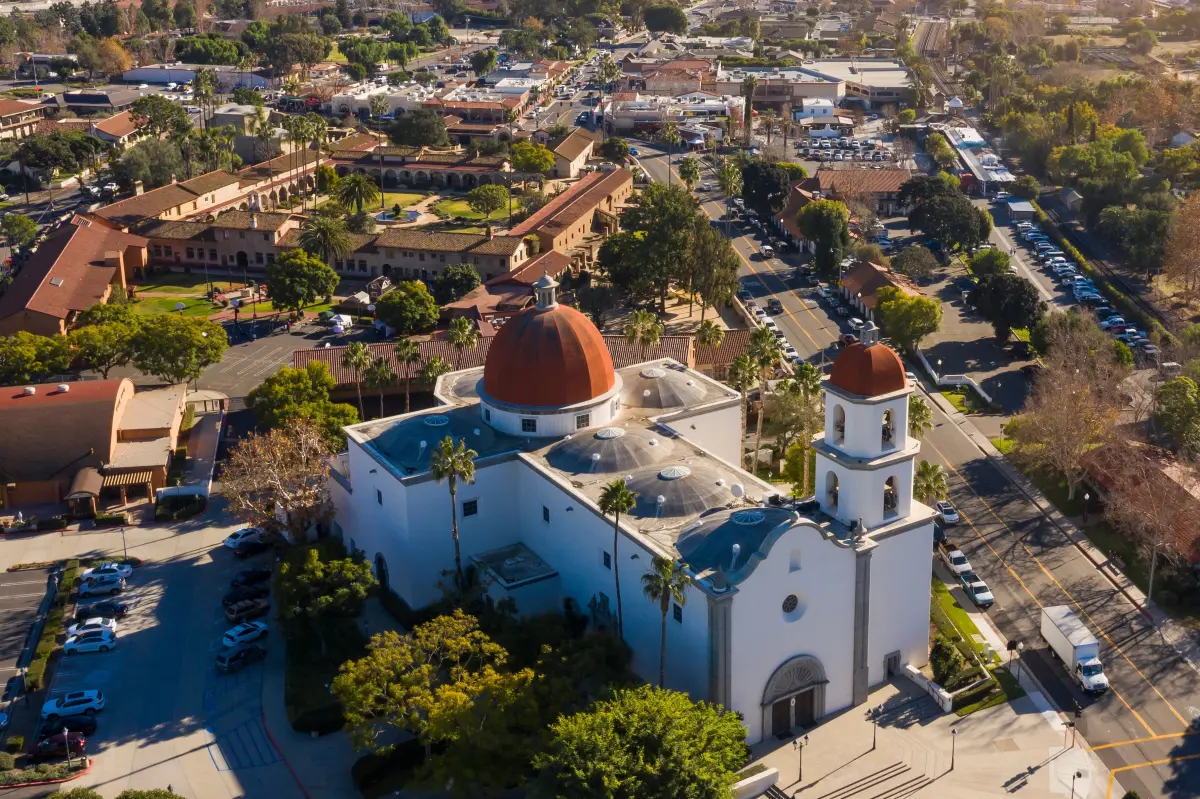
Nestled within the sun-drenched, suburban landscape of modern Orange County, California, lies a rare sanctuary that successfully defies the frantic pace of the twenty-first century: the Los Rios Historic District of San Juan Capistrano. For those seeking a genuine escape from the freeway-dominated, concrete-heavy suburban sprawl that characterizes much of Southern California, stepping into this neighborhood feels less like a casual walk and more like a deliberate, magical step back in time. Visitors arriving via Amtrak’s historic Pacific Surfliner—which snakes along the golden coastline from San Luis Obispo all the way to San Diego—are greeted the moment they alight by the gentle rustle of ancient, towering pepper trees, the earthy scent of coastal sage, and the soft, inviting lines of classic Mission-era architecture. Established by Spanish colonizers in 1776 as the seventh of the historic California missions, the city of San Juan Capistrano is steeped in a rich, complex tapestry of indigenous Acjachemen, Spanish, Mexican, and American history. The Los Rios neighborhood, with its unpaved dirt paths, rustic wooden fences, and lush, overgrown green foliage, stands as a living testament to this diverse heritage. Unlike a sterile museum where history is kept safely behind glass, Los Rios is a vibrant, living community where the past is actively lived, breathed, and celebrated daily, providing a stark and comforting contrast to the cookie-cutter neighborhoods that lie just beyond its quiet borders.
However, this picturesque, welcoming haven was not built overnight, nor has it always enjoyed its current status as a beloved, family-friendly cultural destination. To truly appreciate the beauty of modern Los Rios, one must understand its turbulent past, a history preserved in the personal memories of multi-generational residents like Damian Orozco. Orozco, whose family lovingly operates a charming tea house on the historic Los Rios Street, recalls a time in the 1980s and 1990s when the neighborhood was viewed through a much harsher, more neglected lens. Far from the idyllic, tourist-friendly hotspot of today, the district was once considered a rough, neglected pocket of town—quite literally the “wrong side of the tracks” where peeling paint, overgrown weeds, and lack of municipal investment were the norm. Orozco shares stories of his mother’s youth, when she would ride horses through the surrounding hills and valleys, constantly receiving warnings from worried relatives to avoid passing through Los Rios because of its volatile and unsafe reputation. The spark that ignited the neighborhood’s dramatic turnaround occurred in the mid-1990s with the daring opening of the Ramos House Cafe. By converting a historic, weathered home into an atmospheric, high-quality culinary destination, the café’s founders acted as the brave pioneers of a local renaissance, proving that the district’s neglected structures possessed an irreplaceable soul and value, which ultimately catalyzed a grassroots revitalization effort.
Today, the fruits of this long-term preservation effort are wonderfully evident, offering a rich array of historic treasures and cultural touchstones that capture the imagination of hundreds of thousands of annual visitors. Chief among these architectural marvels is the Pablo Pryer Adobe-Hyde House, constructed in 1790 and widely recognized as the oldest continuously occupied residential wooden-and-adobe home in the state of California, serving as a sturdy, whitewashed bridge connecting the present day directly to the late eighteenth century. A short, pleasant walk through the neighborhood leads to the world-famous Mission San Juan Capistrano, a grand historic landmark that welcomes over 300,000 guests each year to wander through its tranquil, fountain-filled courtyards and admire its preserved stone ruins. For Damian Orozco, the most deeply rewarding aspect of operating a business in this historic enclave is hearing guests express their profound sense of wonder at discovering a place that feels entirely distinct from any other destination in California. To help visitors make sense of this deep history, the San Juan Capistrano Historical Society operates a dedicated museum right in the heart of the district, detailing the area’s remarkable evolution from a quiet, indigenous Acjachemen homeland and a small Catholic parish into a globally recognized West Coast cultural treasure.
Adding to the neighborhood’s allure is a lesser-known, highly colorful chapter of history that connects this quiet enclave to the glitz and glamour of early twentieth-century cinema. Tucked away in the secluded, shaded rear section of the Los Rios District, near the private residences of modern locals, lies a quiet pocket affectionately nicknamed “Little Hollywood.” During the dry, secretive years of the Prohibition era, when the sale and consumption of alcohol were outlawed across the United States, this hidden corner of San Juan Capistrano transformed into a covert sanctuary of indulgence and rebellion. High-society elites, wealthy businessmen, and legendary Hollywood stars of the silent film era would routinely board the southbound train from Los Angeles, traveling to San Juan Capistrano where they could step off the platform and walk just a few short yards into the discreet gambling dens and speakeasies of Little Hollywood. Harrison Taylor, a native of the town and a local developer, delights in sharing these stories of historical mischief, noting how the proximity of the train station allowed the city’s glamorous visitors to escape the strict eyes of metropolitan law enforcement. They could drink, gamble, and socialize in relative peace under the cover of the district’s thick canopy of trees, leaving behind a legacy of vintage romance and rebellion that still whispers through the quiet lanes of the neighborhood today.
As the town continues to grow, its modern developers have made a conscious, dedicated effort to ensure that new projects respect and enhance the historic character of the area rather than overshadowing it. This delicate balance between progress and preservation is beautifully epitomized by the River Street Marketplace, a vibrant communal gathering space that opened its doors to the public in 2024. Designed and brought to life by Harrison Taylor, the marketplace was envisioned as a natural extension of the town’s agrarian heritage, carefully constructed using rustic, farmhouse-style architecture that seamlessly blends with the surrounding historic adobes and cottages. The complex, which features a striking, vintage-style wooden water tower as its centerpiece, houses a curated selection of local businesses, including an artisanal surf shop and a vintage clothing store, creating a lively hub where locals and visitors can gather to eat, shop, and converse. Taylor notes that the community’s enthusiastic reception of the marketplace was a testament to “perfect timing,” reflecting a modern hunger for open-air, socially engaging spaces that feel grounded in local history rather than mass-produced. By focusing on rustic textures, natural materials, and communal spaces, the marketplace successfully honors San Juan Capistrano’s past while providing a vital, modern-day heart for its residents.
This year, as San Juan Capistrano celebrates its landmark 250th anniversary—a profound milestone that mirrors the historic timeline of the United States itself—the community is hosting a diverse array of celebratory events to honor its enduring legacy. This quarter-millennium milestone serves as a powerful opportunity for reflection, highlighting how a small, rural settlement survived centuries of political, social, and economic change to emerge as a cherished beacon of California heritage. Despite the inevitable pressures of urban development and the frantic, fast-paced nature of modern life in Orange County, the Los Rios Historic District stands as an irreplaceable testament to the power of community-led preservation. For dedicated residents like Damian Orozco and Harrison Taylor, the neighborhood is far more than a collection of historic buildings; it is a living sanctuary where human connections are forged, where stories are passed down through generations, and where the soul of a simpler, more connected era remains vibrant and alive. Ultimately, the story of Los Rios is a beautiful reminder that even in a world obsessed with the new and the digital, there is a deep, universal human need for spaces that are authentic, grounded, and rich with the whispers of those who walked the path before us.