







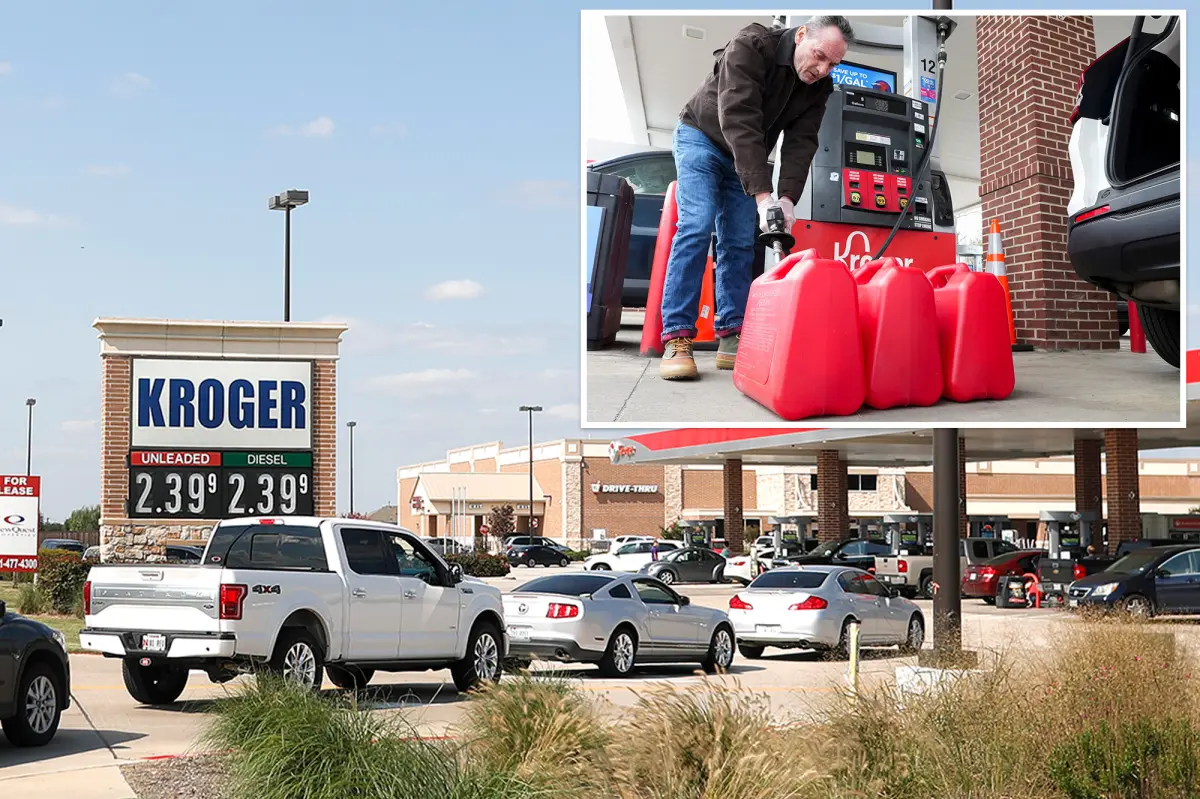
Summer has always held a deeply sentimental place in the collective American consciousness, conjuring up vivid imagery of sun-drenched highways, station wagons packed to the brim with luggage, and the timeless promise of the classic family road trip. Yet, in our quiet, current economic landscape, this cherished dream of carefree seasonal exploration is crashing headfirst into the cold, hard reality of the local gas station pump. For countless households across the nation, rising fuel costs have turned what should be a joyful seasonal rite of passage into a source of compounding financial dread, transforming simple weekend getaways into meticulously calculated budgeting challenges that feel more stressful than relaxing. Highlighting this nationwide anxiety, a recent survey conducted by the American Automobile Association (AAA) revealed that a staggering 75 percent of Americans view a national average of four dollars per gallon as a critical psychological tipping point. Beyond this threshold, more than half of those surveyed admitted they would feel forced to make painful adjustments, altering their daily driving habits, limiting social outings, or fundamentally shifting their broader lifestyles just to absorb the extra cost. Despite these daunting statistics and the fact that several West Coast states have already crossed the punishing five-dollar-per-gallon mark, a stubborn sense of resilience remains, as millions of families desperately want to preserve their summer vacations. It is within this tense arena of stubborn travel optimism and tightening household wallets that major retail brands are stepping in, attempting to position themselves as the ultimate allies of the everyday consumer by linking the high cost of fuel directly to the basic, inescapable necessity of buying the family’s weekly groceries.
Recognizing this widespread financial strain and the urgent desire of families to stretch their household budgets, Kroger, the nation’s largest traditional supermarket operator, has launched a highly publicized summer promotion aimed at offering some relief where it hurts most. Running every Friday through July 24, this warm-weather campaign allows shoppers to earn a massive four times the normal rate of fuel rewards on their weekly grocery purchases. By transforming routine trips down the supermarket aisles into a strategic game of points accumulation, Kroger claims that loyal customers can save up to thirty-five dollars on a single subsequent gas fill-up, effectively turning a mundane chore into a tangible victory for the family checkbook. To put this into perspective, under Kroger’s standard loyalty system, spending a dollar equals one point, with every hundred points accumulated translating to a ten-cent discount per gallon at the pump. By quadrupling this rate on Fridays, a family spending two hundred dollars on their weekly groceries suddenly finds themselves with eight hundred fuel points, unlocking an eighty-cent-per-gallon discount that can dramatically slash the ultimate cost of filling up a large family vehicle. Mary Ellen Adcock, Kroger’s executive vice president and chief merchant and marketing officer, framed the program not merely as a corporate sales driver, but as an essential lifeline for families struggling to navigate an unforgiving economic climate. In her official statement, Adcock emphasized that the grocery giant is hyper-focused on helping customers unlock maximum value out of their everyday spending, enabling them to earn substantial rewards on the routine food items they are already purchasing, hoping that the promise of a double-digit discount will convince shoppers to plan their entire week around a single, highly coordinated shopping excursion.
However, the moment Kroger rolled out the red carpet for this high-stakes promotion, it sparked a wave of comparison and intense debate among industry analysts and consumers, who immediately measured Kroger’s complicated rewards system against the straightforward fuel operations of big-box competitor Costco. On paper, Kroger holds a massive physical advantage over its warehouse rival, operating an extensive network of more than 1,700 fuel stations across the United States compared to Costco’s humbler footprint of 737 pumps. Yet, despite having fewer locations, Costco has built a near-mythic reputation for consistently offering some of the lowest, most reliable fuel prices in any given town, drawing massive lines of drivers willing to wait for cheap gas. The catch is that Costco’s low prices are guarded behind a membership firewall, requiring shoppers to purchase executive or gold tier memberships that have themselves faced price increases, creating an upfront cost that some budget-conscious consumers find difficult to justify. Furthermore, the physical experience of buying gas at Costco introduces its own unique set of stresses; drivers must often navigate chaotic parking lots and endure long, idling queues of vehicles, sometimes spending twenty minutes in line just to reach a pump. This time-consuming ritual represents a hidden cost of its own, as idling engines burn precious fuel while drivers wait to save a few pennies, leading some consumers to question whether the immediate per-gallon discount is truly worth the loss of their valuable time. Conversely, Kroger’s sprawling network of local stations offers a far more distributed, geographically accessible footprint, suggesting that convenience could still win out if shoppers are willing to engage with the system.
While Kroger’s expansive network and lack of a steep membership fee might seem like a winning formula, industry experts warn that the sheer complexity of the grocery chain’s program could ultimately backfire, alienating consumers who are already exhausted by modern life. Dominick Miserandino, the CEO of RTMNexus, argues that Costco’s clean, uncomplicated value proposition is inherently superior because it is entirely frictionless—a customer simply inserts their membership card and instantly enjoys the lowest price in town without another thought. In contrast, Miserandino points out that Kroger’s model forces shoppers into a multi-step digital choreography that requires downloading a smartphone app, actively clipping weekly digital coupons, tracking specific promotional calendar windows like “4X Fridays,” and constantly monitoring fluctuating point balances. Miserandino stresses that in a highly stressed, high-inflation economy, convenience-fatigued consumers will eventually reject this type of complex loyalty gamification, preferring straightforward, transparent savings over an exhausting series of technological hurdles that make a trip to the grocery store feel like an unpaid administrative job. This concept of convenience fatigue highlights a broader, systemic issue in the modern economy: the digital divide that exists within retail loyalty programs, which often penalizes older shoppers, low-income families without smartphones, or those who simply do not have the time or technological literacy to manage multiple complex interfaces. When a supermarket locks its best prices behind digital coupons and app-based points tracking, it effectively creates a tiered system of savings where the tech-savvy are rewarded and the digitally disconnected are left to pay full price, turning what should be a straightforward transaction into a source of daily frustration.
This expert analysis aligns perfectly with the vocal, lived experiences of everyday shoppers who have flocked to social media platforms to express their deep frustration with Kroger’s promotional hoops. On Facebook and other community forums, consumers have criticized the initiative as a high-maintenance hassle, with many writing off the thirty-five-dollar potential savings as not worth the intense mental effort required for digital clipping and point tracking. Furthermore, the practical, in-store reality of these promotions has drawn criticism, especially from shoppers at Kroger-owned regional banners like Fred Meyer, who complain that the high volume of traffic on “4X Fridays” often leaves grocery shelves completely stripped of inventory, making the trip pointless when the items they actually wanted to purchase are out of stock. Skepticism also runs rampant regarding the pricing transparency of Kroger’s stations, with some cynical drivers accusing the retailer of subtly inflating its baseline fuel costs so that the hard-won discounts simply bring the final price back down to what competitor gas stations are charging without any loyalty hoops. Beyond the math, automotive enthusiasts have raised critical questions regarding the actual quality of the fuel itself, pointing out that Costco’s gasoline is verified as “Top Tier”—meaning it contains special deterring additives designed to keep engines clean—while Kroger’s fuel lacks this pedigree. The issue of fuel quality is particularly pressing for owners of modern vehicles, as many current car models are equipped with highly sensitive, direct-injection, turbo-charged engines that require clean-burning, high-quality gasoline to perform efficiently and avoid costly mechanical failures, making some buyers wonder if a temporary grocery discount is worth risking long-term engine damage that could lead to massive mechanic bills.
Ultimately, Kroger’s summer promotion serves as a powerful case study for a much broader, defining shift in the modern retail landscape: the strategic weaponization of the gas pump to rescue sliding supermarket profit margins. As high inflation continues to squeeze household incomes, the boundaries between the grocery aisle and the service station are eroding, with retail giants increasingly leveraging the absolute necessity of personal transportation to ensure consumers keep spending money in their brick-and-mortar checkout lanes. For the millions of cash-strapped Americans trying to navigate a challenging and unpredictable financial climate, every single penny saved at the checkout or the pump represents a hard-fought victory for their family’s well-being. Yet, as major brands increasingly shift the burden of finding savings onto the shoulders of the consumer through complicated, tech-heavy loyalty programs, shoppers are left to ask themselves a difficult question: is the physical and mental effort of jumping through corporate hoops worth the literal price of admission? As we look toward the future, the critical choice facing retail giants is whether they will continue to push customers toward complex, gamified systems or return to a model of radical simplicity and transparent pricing. In an era where trust in major institutions and corporations is at an all-time low, the brands that ultimately earn long-term survival and genuine customer loyalty will likely be those that respect their customers’ time, intelligence, and limited energy, recognizing that the ultimate luxury is not just a cheap tank of gas, but the peace of mind that comes from knowing they are getting a fair, honest deal.