


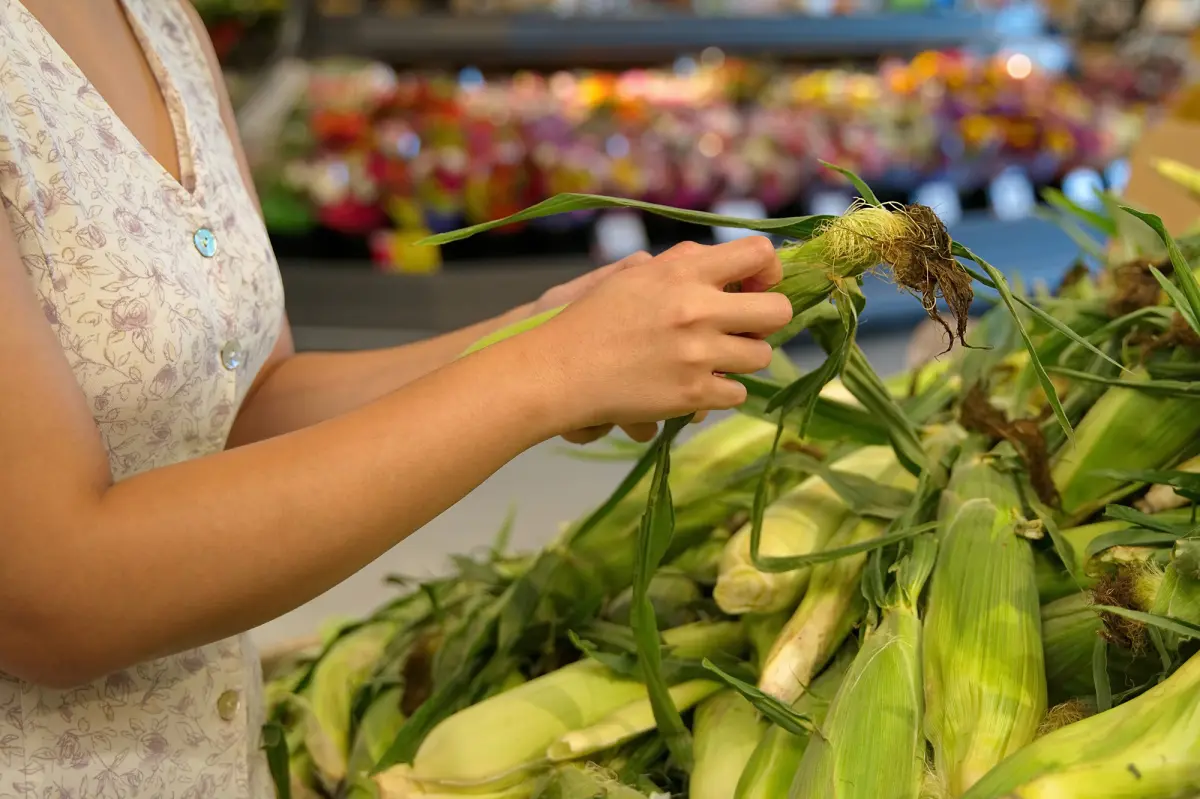
The return of golden summer sunshine brings with it a sensory symphony of outdoor life: the smell of charcoal smoke wafting through neighborhood yards, the rhythmic hum of cicadas in the trees, and the vibrant, overflowing produce displays at local supermarkets and farmers’ markets. Among these seasonal treasures, nothing quite captures the essence of warm-weather dining like a towering mountain of fresh sweet corn, its emerald-green jackets promising a burst of sugary, juicy goodness with every bite. Yet, beneath the rustic charm of this display lies an ongoing, highly polarizing debate that divides shoppers, perplexes store employees, and ignites fierce arguments across social media platforms: should you shuck your corn before buying it? For generations, many shoppers have walked up to these displays, grabbed an ear, and immediately peeled back the thick, fibrous green husks right there in the middle of the store. This public stripping of the corn, designed to inspect the hidden kernels for quality, bugs, or underdevelopment, has become a standard shopping ritual for some, while to others, it represents a shocking breach of supermarket etiquette and a messy public nuisance. This simple act of grocery shopping actually touches on complex themes of consumer trust, agricultural respect, sanitation, and environmental sustainability, transforming a routine errand into a quiet battleground of personal ethics and social responsibility. As families prepare their grills and planning begins for backyard feasts, exploring the nuances of this great corn debate reveals a fascinating intersection between our modern food systems, historical habits, and the unwritten rules of community spaces.
When viewed through the lens of social etiquette and shared public spaces, the decision to peel back corn husks in the grocery store aisle often exposes a friction between individual desire and collective respect. Jacqueline Whitmore, a renowned etiquette expert based in Florida, highlights this delicate balance by pointing out the unwritten social contract of the produce section: if you choose to shuck an ear of corn in the store, you must buy it. To accommodate customers, many supermarkets place large trash bins directly next to the corn tables, an inclusion that many shoppers interpret as an open invitation to strip their produce bare. However, Whitmore cautions that this convenience does not absolve shoppers of responsibility, noting that if you peel open an ear only to find a few bruised kernels or a small worm, throwing it back into the pile or discarding it in the bin creates an unfair burden on the store and future customers. This behavior directly fuels the rampant problem of food waste, as a partially shucked ear left behind quickly dries out, becomes visually unappealing, and is inevitably discarded by store staff who know no one will buy a pre-peeled, exposed ear of corn. Furthermore, in stores where no trash bins are provided, the act of shucking becomes an undeniable mess, leaving sticky, pale-yellow silk threads and tough green husks scattered across the floor, creating slip hazards and a chaotic, uninviting environment for fellow shoppers. It forces underpaid grocery store workers to spend valuable time cleaning up after customers, highlighting a lack of consideration for the physical labor required to keep our food spaces clean and orderly.
Beyond the social friction and the physical mess left in the aisles, there is a powerful, science-backed case for keeping those green husks firmly intact until the very moment you are ready to cook. Nature has engineered the corn husk as a flawless, custom-tailored protective packaging system, specifically designed to safeguard the delicate kernels from the harsh elements of the outside world. From the moment the corn is harvested in the field to its journey on delivery trucks, into storage rooms, and onto grocery shelves, the husk serves as an invaluable sanitary shield, blocking out dirt, airborne bacteria, pest residues, and the countless germs transferred from the hands of dozens of browsing shoppers. When a customer peels back the husk in a store, they instantly strip away this natural defense, exposing the moist, sticky kernels to airborne pathogens and the unsanitary surfaces of shopping carts and checkout conveyor belts. Additionally, the husk plays a critical physiological role in preserving the corn’s moisture, texture, and flavor. Once harvested, corn remains a living organism that undergoes respiration; when the protective husk is removed, exposure to oxygen causes the kernels to dehydrate rapidly, leading to a shriveled, rubbery texture instead of a crisp, juicy pop. More importantly, this oxygen exposure and temperature rise accelerate a rapid chemical process within the corn, where its natural, sweet sugars are quickly converted into bland, dense starches. By stripping the corn early, shoppers are actively sabotaging the quality of their own meal, trading the legendary, sweet flavor of peak-season corn for a dry, starchy disappointment.
This rush to discard the husks and silk at the point of purchase also overlooks an exciting movement toward zero-waste cooking and agricultural stewardship, a philosophy championed by sustainable farmers and innovative chefs alike. Lee Jones, a visionary farmer from the renowned Chef’s Garden in Ohio, points out that the common habit of throwing away the corn’s outer layers is a massive wasted opportunity, as every single part of the plant holds unique culinary and functional value. In traditional cooking cultures around the globe, and increasingly in modern, eco-conscious restaurants, the parts of the corn we dismiss as garbage are celebrated as versatile kitchen ingredients. The tough green husks, rather than cluttering grocery store trash cans, are highly prized as natural, aromatic parchment paper, perfect for wrapping delicate fish, seasoned meats, or traditional tamales before grilling or steaming to lock in moisture and impart a subtle, smoky, grassy aroma. Even the fine, golden corn silk can be dried and brewed into a light, earthy herbal tea that has been cherished in East Asian and Native American traditions for generations due to its gentle sweetness and numerous health benefits. Meanwhile, the dense, sweet-juiced cobs themselves are packed with concentrated corn flavor, making them an incredible base for simmering into rich vegetable broths, creamy chowder stocks, or sweet syrups for desserts. By viewing these components as mere waste to be disposed of as quickly as possible, modern consumers miss out on these creative, thrifty culinary traditions that honor the hard work of farmers and the full life cycle of the earth’s harvest.
While the ecological and botanical arguments against in-store shucking are compelling, it is equally important to empathize with the perspective of the average shopper navigating a challenging economic landscape. A deep dive into popular online communities, such as Reddit, reveals that the urge to “peek” or shuck corn is often born out of financial anxiety and a desire for consumer protection rather than a disregard for manners. With the cost of living and grocery prices reaching unprecedented heights, many shoppers feel they simply cannot afford to gamble their hard-earned money on a closed ear of corn that might turn out to be inedible. As online commenters frequently point out, bringing home a bag of corn only to discover moldy tips, underdeveloped kernels, or a family of corn earworms feels like throwing money straight into the garbage. For these budget-conscious individuals, peeling back the husk is a practical, defensive measure to guarantee they are getting exactly what they pay for. This economic reality creates a fascinating tension between individual household preservation and collective community standards. Many argue that since grocery stores themselves often facilitate the practice by setting out trash cans, the responsibility lies with the retailers rather than the shoppers. This dynamic highlights a deep-seated lack of consumer trust in modern supply chains and quality control, demonstrating how financial pressures can shape our daily habits and override traditional etiquette in the quest to secure fresh, healthy food for our families without wasting a single penny.
Fortunately, you do not have to choose between being a polite shopper and securing high-quality produce, because there are highly reliable, non-destructive ways to judge the freshness of corn without ever touching the husk. To become a master of the “blind buy,” you can rely on a sensory checklist that utilizes your senses of touch, sight, and weight to evaluate each ear. Start by picking up the corn and comparing its weight; a high-quality, freshly harvested ear will feel surprisingly heavy for its size, indicating that the kernels are fully hydrated, plump, and bursting with sweet juice. Run your hand down the length of the ear to feel for firmness, ensuring the cob is fully rounded, plump, and packed with kernels from bottom to tip, with no soft spots, empty gaps, or mushy areas that suggest rot or poor development. Next, inspect the corn silk, or tassels, protruding from the top; fresh, sweet corn will feature golden-brown, slightly damp, or sticky silk, whereas black, dry, or brittle tassels are a clear warning sign of an older, stale ear. Look closely at the husk itself, which should be a vibrant, healthy green and wrap tightly around the ear, feeling damp and supple rather than faded, yellowed, or papery. Finally, scan the outer leaves for tiny, clean-cut pinholes, which are classic telltale signs of insect entry, allowing you to easily avoid pest-damaged ears without peeling them. Once you bring your pristine, fully jacketed bounty home, keep the corn cold in your refrigerator’s crisper drawer to slow down the sugar-to-starch conversion, washing the ears thoroughly under cold water only when you are ready to cook, guaranteeing a spectacularly sweet, perfectly fresh summer feast.