


Paragraph 1: The Silent Giant Wakes Up
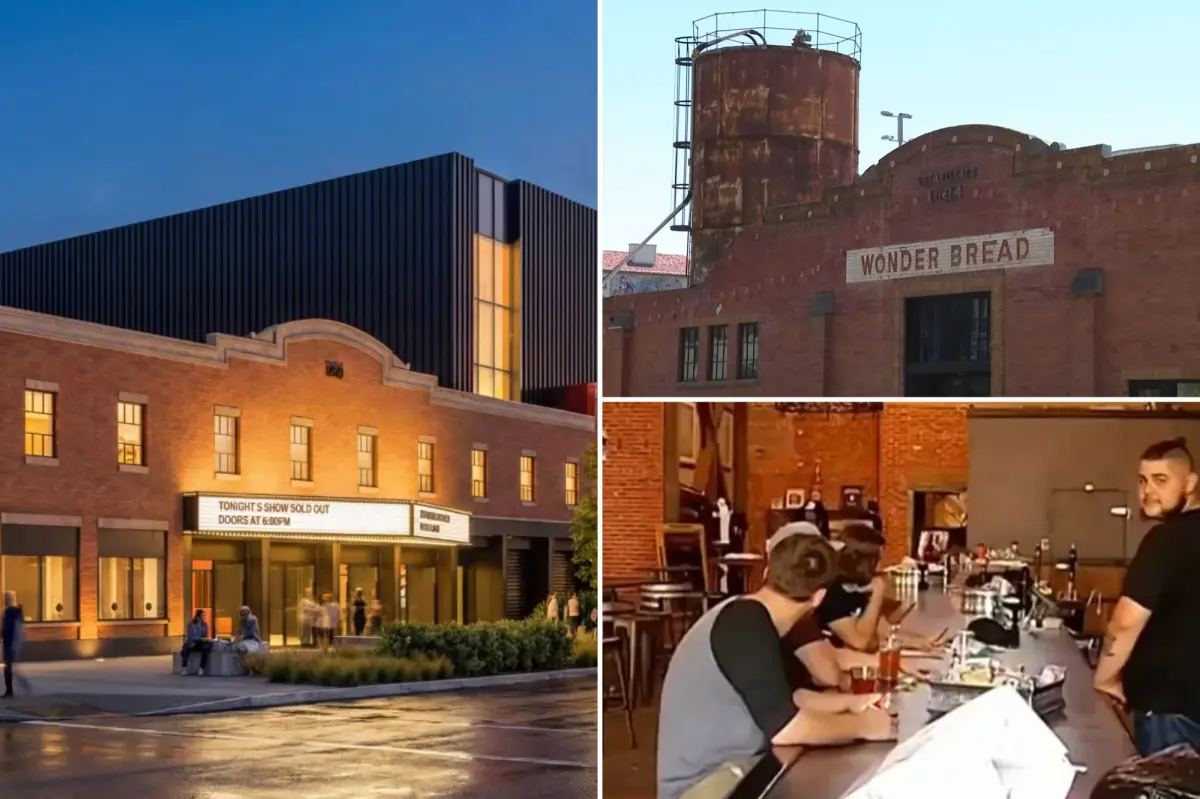
In the heart of downtown San Diego, where the glittering lights of the Gaslamp Quarter bleed into the towering shadows of Petco Park, there stands a silent, hulking relic of a bygone America. For decades, the old Wonder Bread factory has sat like a sleeping titan—its thick, window-pocked walls weathered by over a century of coastal salt and desert sun, its vast interior holding nothing but the ghostly echoes of clattering machinery and the faint, imaginary scent of yeast and warm flour. It is a building built for a different kind of hustle, a monument to the industrial grit that once defined this stretch of the city. But the silence is about to be shattered. Live Nation, the undisputed colossus of the global live entertainment industry, has unveiled an electric new vision for this historic property: a sprawling, 4,000-person capacity music venue designed to bring the house down. Slated to open its doors in 2028, this isn’t merely a business venture; it’s a love letter to a landmark, promising to strip away the layers of neglect and rediscover the architectural soul underneath. The plan is a masterclass in adaptive reuse, aiming to restore the building’s gorgeous, old brick facade—currently hidden beneath a thick, utilitarian coat of concrete—and pair it with cutting-edge acoustics, modern stage rigs, and luxury backstage amenities. For the neighborhood, this means a new source of nighttime energy. For music lovers, it means the arrival of a desperately needed “missing link” in the city’s concert circuit, giving mid-tier touring artists—those too big for a dive bar but too small for an arena—a majestic, intimate cathedral of sound to call their own.
Paragraph 2: Echoes of a Hundred Year Labor
To truly understand the weight of this transformation, one must travel back to the late 1800s, when this plot of land first began to bustle. What started as a modest industrial structure grew organically over the decades, expanding into four interconnected buildings that sprawled across the block like a living organism. For generations, this was a place of blue-collar pride, a daily rhythm of shifts, rolling trucks, and the repetitive, comforting thump of bread dough hitting steel tables. Before it donned the iconic Wonder Bread brand—with its cheerful red, yellow, and blue balloons—the space was a general-purpose factory, morphing with the times as San Diego evolved from a sleepy port town into a major California metropolis. But through it all, the building remained a silent witness. It saw the advent of automobiles, the flicker of early movies, the dark days of war, and the boom of suburban expansion. As the smell of fresh loaves eventually faded and the machinery was hauled away, the factory sat empty, its grand trusses collecting dust, its brick walls bearing witness to the slow creep of urban decay. The concrete that now obscures the facade is a scar of poor modernization, a practical but soulless bandage slapped over a beautiful face. By choosing to dig out that brick and let it breathe again, Live Nation is doing something profoundly respectful: they are honoring the hands that built this city, the thousands of unnamed workers whose sweat and schedules were once dictated by the rise and fall of an oven timer. This building carries the memory of laborers, and soon, it will carry the memory of anthems.
Paragraph 3: The Missing Rung of the Concert Ladder
For years, San Diego’s live music scene has suffered from a frustrating paradox. On one end, you have the tiny clubs—intimate black-box theaters and sweaty bars where you can see a rising star for thirty bucks and get their autograph after the show. On the other end, you have the massive arenas and amphitheaters, cavernous spaces of 15,000 seats or more that are reserved for the global megastars. But what about the vital middle? What about the legacy indie band touring on their tenth record, the up-and-coming R&B singer selling 5,000 tickets a night, or the comedy star who needs a proper stage with professional lighting? Too often, these artists skip San Diego entirely, booking shows in Los Angeles or Anaheim instead, leaving local fans to drive north in grueling traffic to catch a glimpse of their heroes. John Schalk, Vice President of the San Diego market at Live Nation, perfectly articulated this aching void, stating, “We’ve been missing a venue of this size. This project will help attract a broader range of touring artists, bring more shows to the region, and contribute to the continued growth and energy of downtown.” This project is the exact missing rung on the ladder. A 4,000-person capacity space is the “sweet spot” for hundreds of touring acts—big enough to feel like a major production, but small enough to feel genuinely personal. No seat is a bad seat. The energy is palpable. It means a fan can finally see their favorite band without leaving the county line, and it means the city itself becomes a more magnetic destination for culture-seekers, driving hotel stays, restaurant reservations, and late-night socializing.
Paragraph 4: Chiseling the Concrete, Amplifying the Soul
The actual physical transformation is an architectural tightrope walk between preservation and innovation. Live Nation’s in-house creative team, known as Blueprint Studio, has teamed up with the esteemed global architecture firm Gensler to tackle the immense challenge. Their mandate is clear: not a single wall should fall if it can be saved. The first order of business will be a delicate demolition of the thick concrete shell that has smothered the property’s historic brick face for years. It’s a process akin to uncovering a masterpiece painting hidden behind a cheap poster. As the brick is revealed, masons will meticulously clean, repoint, and stabilize the aging masonry, ensuring the structural integrity is sound for the next hundred years. But inside, the building will be reborn with 21st-century technology. The massive, open warehouse floors will be contoured to create perfect sightlines, ensuring that even the person in the back row feels like they’re in the front. Acoustic engineers will install floating sound baffles and specialized wall panels designed to tune the room to concert-grade perfection, preventing the muddled echoes that plague older factories. Advanced HVAC systems will keep 4,000 dancing bodies cool, and the backstage areas—once used to store flour sacks—will be gutted and rebuilt into plush dressing rooms, production offices, and green rooms. The juxtaposition will be breathtaking: rough-hewn historic brick standing proudly alongside sleek, brushed-metal railings and high-definition LED screens. This is not a demolition; it is a chisel-and-mallet appreciation. It preserves the grit of the past while installing the comfort and flair of a modern premium venue.
Paragraph 5: The Financial Pulse and the Local Heartbeat
Of course, dreams need dollars, and this project comes with a significant price tag. Live Nation reportedly shelled out a hefty $16.8 million to secure the property, a clear signal of their confidence in the region. The long-time owners of the building, who have held onto the decaying landmark through its quiet years, said they backed the vision because it offered a path to keep the structure standing while granting it an entirely new life—a far more gratifying outcome than selling to a pile-driving developer who would level the block for a condominium. The economic ripple effects of this decision are staggering. A comprehensive analysis conducted by the independent consulting firm Oxford Economics projects that this new venue could generate roughly $97 million in annual economic impact for the city and county. Let’s humanize those numbers for a moment. That’s not just abstract money; it’s the bartender behind the counter getting a steady stream of new customers on a Tuesday night. It’s the Lyft driver who no longer has to drive three hours to Los Angeles for a fare. It’s the stagehands, the sound engineers, the security guards, the local merch vendors, and the opening acts. The venue is projected to welcome some 316,000 fans through its doors every single year, a tidal wave of humanity that will flood the sidewalks, restaurants, and parking garages of the East Village. Furthermore, this buzzing hub is expected to support roughly 660 full-time equivalent jobs and funnel an estimated $12.6 million annually into state and local tax coffers. That’s money that pays for parks, road repairs, schools, and public services—all rising from the ashes of a forgotten bakery.
Paragraph 6: A New Dawn Raising a Toast of Sound
When the doors finally swing open in 2028, this will be far more than just a concert hall. Live Nation has deliberately designed the space to serve as a versatile community cornerstone, welcoming private, corporate, and community events. Imagine a wedding reception held under cathedral-high ceilings where bread was once baked, or a tech company’s annual gala set against the raw texture of restored brick walls. The venue will be woven into the fabric of the neighborhood, synergizing perfectly with the energy of Petco Park just steps away. A Padres game followed by a sold-out show on a Friday night will turn downtown San Diego into one of the most vibrant entertainment corridors in Southern California. Standing outside on opening night, you’ll see the glow of the marquee bouncing off the old brick. You’ll hear the muffled bass bleeding through the heavy doors. The scent of hot pretzels and beer will mingle with the faint, eternal ghost of Wonder Bread. It’s a poignant, almost poetic passing of the torch—a building that once fed families with daily staples will now feed the soul with nightly anthems. For a city that has long felt overlooked on the touring map, this is a declaration of arrival. It’s not just a real estate development; it’s a promise that San Diego is growing up, that it respects its roots, and that it is ready to rock. The old Wonder Bread factory is officially going to rise again, and this time, the dough will be made on stage.