


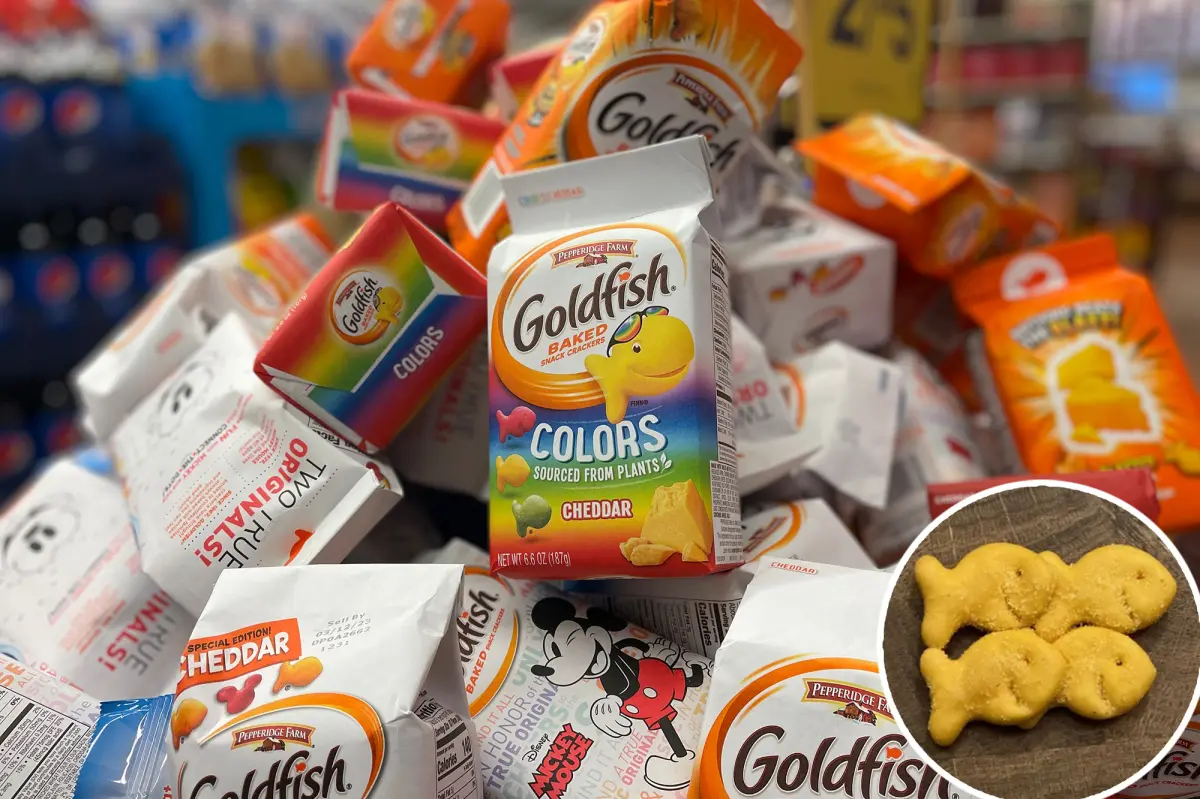
Forget the Powerball drawing, forget the volatility of Bitcoin, and certainly forget the disciplined, long-term strategies of traditional financial advisors. The latest get-rich-quick scheme sweeping the internet doesn’t require a brokerage account, a mining rig, or even a trip to the convenience store with more than a couple of dollars in your pocket. It only requires a sharp eye, an unopened bag of Pepperidge Farm’s finest, and a willingness to embrace the absurd. In the bizarre and often unhinged ecosystem of online commerce, the humble Goldfish cracker has undergone a dramatic metamorphosis, transforming from a salty snack destined for a toddler’s sticky fingers and the floorboards of a family minivan into a speculative asset class with a valuation that would make a blue-chip stock blush. The holy grail of this accidental phenomenon—a miraculous, naturally occurring six-cracker clump, lovingly described as “ultra rare”—is currently listed on eBay for a jaw-dropping, wallet-shattering $25,000. The internet, naturally, has responded with a cocktail of disbelief, mockery, and a very real, very palpable sense of regret for every snack they’ve casually devoured without first checking for a manufacturing defect that might have funded their retirement.
The absurdity of this situation was crystallized in a viral Instagram clip from user @gida.content, who perfectly captured the generational whiplash of seeing the mundane suddenly become monetarily monumental. “25k for something I used to accidentally vacuum off the floor of my minivan,” they quipped, pointing out the stark contrast between the cracker’s previous life as floor litter and its current status as a potential treasure. This sentiment echoes a deeply human reaction to the unpredictable whims of internet culture. A quick search for “Rare Goldfish Cracker” on eBay yields a staggering aquarium of oddities, boasting around 180 active listings. Optimistic and entrepreneurial sellers are angling for buyers eager to collect these deformed treats, listing “schools of fish” in perfectly fused quadruple formations for a cool $1,500, or offering more modest pairs of conjoined crackers for a humble $600. The terminology alone is a masterclass in marketing spin; these are not just defective snacks, but “Rare 4 Goldfish Cheddar Crackers Stuck Together School Of Fish,” or the even more grandiose “Ultra Rare Conjoined School of Goldfish Crackers with Outline Collectors Item.” It’s a linguistic makeover that takes a baking error and elevates it to the status of fine art, complete with provenance and scarcity metrics.
But the market isn’t limited to clusters. The entrepreneurial spirit of these sellers has expanded to encompass a wider range of manufacturing mishaps. Sellers are offering packaging errors, featuring messed-up bags that somehow made it past quality control, alongside “deformed Goldfish” for a hefty $500 a pop. Among the most coveted of these is one listed as an “ultra rare one of a kind purple/red goldfish cracker factory error,” a bizarre discoloration that sounds less like a snack and more like a science experiment gone wrong. This has sparked a feverish debate across social media platforms, pitting the optimists against the skeptics. On one side, there is a wave of opportunistic glee. Comments range from the stunned realization of a missed fortune—”EXCUSE ME… YOU MEAN I’VE BEEN EATING INVESTMENTS??”—to practical get-rich-quick schemes. One teacher, seeing the potential for an economic arbitrage opportunity in the classroom, wrote, “Making note to tell students they can trade in stuck goldfish for a starburst. This could supplement my income.” Others are already planning to manufacture their own supply, joking about heading to the store to buy Goldfish and a hot glue gun for an immediate payout, while a chorus of users lament that the fused ones were always their “favorite ones to eat,” realizing they have likely ingested a small fortune over the years.
However, before you raid your pantry and start listing your stale, clumped-together snacks for a small fortune, a sobering dose of reality is required. The skeptics have pointed out a rather glaring flaw in this get-rich scheme: astronomical listings do not equate to astronomical sales. A deep dive into the eBay sold listings reveals a graveyard of zero completed transactions—not a single one of these aquatic oddities has actually sold. The entire market appears to be built on a foundation of optimistic delusion and attention-seeking. One savvy Instagrammer even claimed he submitted a $1 counteroffer on a $12,000 listing, and it was immediately accepted, revealing the true, hilarious market value of these “rare” crackers to be essentially nothing. “If you check out the sold listings, not a single one has ever sold. I could list my dryer lint for $36,000 on eBay. It doesn’t mean it’s worth that,” another user pointed out with brutal, logical clarity. This has led to a flurry of theories ranging from an elaborate viral marketing scheme orchestrated by Pepperidge Farm—who have remained conspicuously silent on the matter—to a simple, collective cry for attention in an increasingly crowded digital landscape where novelty is the only true currency.
This strange phenomenon, however, is more than just a quirky internet troll; it is a perfect symptom of our contemporary economic anxieties. In an era defined by a tight job market, rising inflation, and the relentless gig-ification of every aspect of life, the idea of monetizing the mundane has a powerful allure. It represents the ultimate side hustle—one that requires zero skill, zero effort, and zero investment beyond the cost of a standard grocery run. The joke about planning to make a living gluing Goldfish together isn’t just a punchline; it’s a reflection of a desperate, almost surreal desire to find financial security in the most unlikely places. This isn’t even the first time snack foods have been treated as cash crops. One commenter highlighted the thriving side hustle for oddly shaped Flamin’ Hot Cheetos, noting that a friend had made hundreds of dollars selling unique, phallic or otherwise misshapen pieces to a surprisingly devoted collector base. As one user succinctly put it, “People will buy anything.” This willingness to pay for the bizarre, the deformed, and the utterly useless speaks to a broader cultural shift where the value of an object is determined not by its utility, but by its novelty and its capacity to generate a story or a viral moment.
Ultimately, the great Goldfish cracker gold rush is less about the crackers themselves and more about the human psyche. It is a communal joke played on a global scale, a shared coping mechanism for the anxieties of modern life. The joy derived from these listings isn’t in the actual exchange of money; it’s in the collective gasp of disbelief, the shared laughter at the sheer audacity of asking $25,000 for a snack that likely fell off a conveyor belt. It taps into our innate desire to find value in the overlooked, to believe that hidden treasure might just be lurking in the most mundane corners of our existence—even if that corner is the dusty floor of a minivan. While the bank accounts of these aspiring cracker tycoons remain depressingly empty, the social capital they have accumulated is immeasurable. They have provided a moment of levity, a shared absurdity that connects a teacher dreaming of a better salary, a former minivan owner mourning their lost treasure, and a skeptic triumphantly pointing out the empty sold history. In a world that often feels chaotic and overwhelming, the image of a six-cracker clump priced like a luxury car serves as a strange, salty reminder that human optimism is unkillable, and that the internet will always find a way to turn a snack into a spectacle. The Goldfish may never sell, but the fantasy of striking it rich on a cheddar-flavored quirk is a treasure in itself, reminding us that sometimes, the best investment we can make is in a good laugh.