






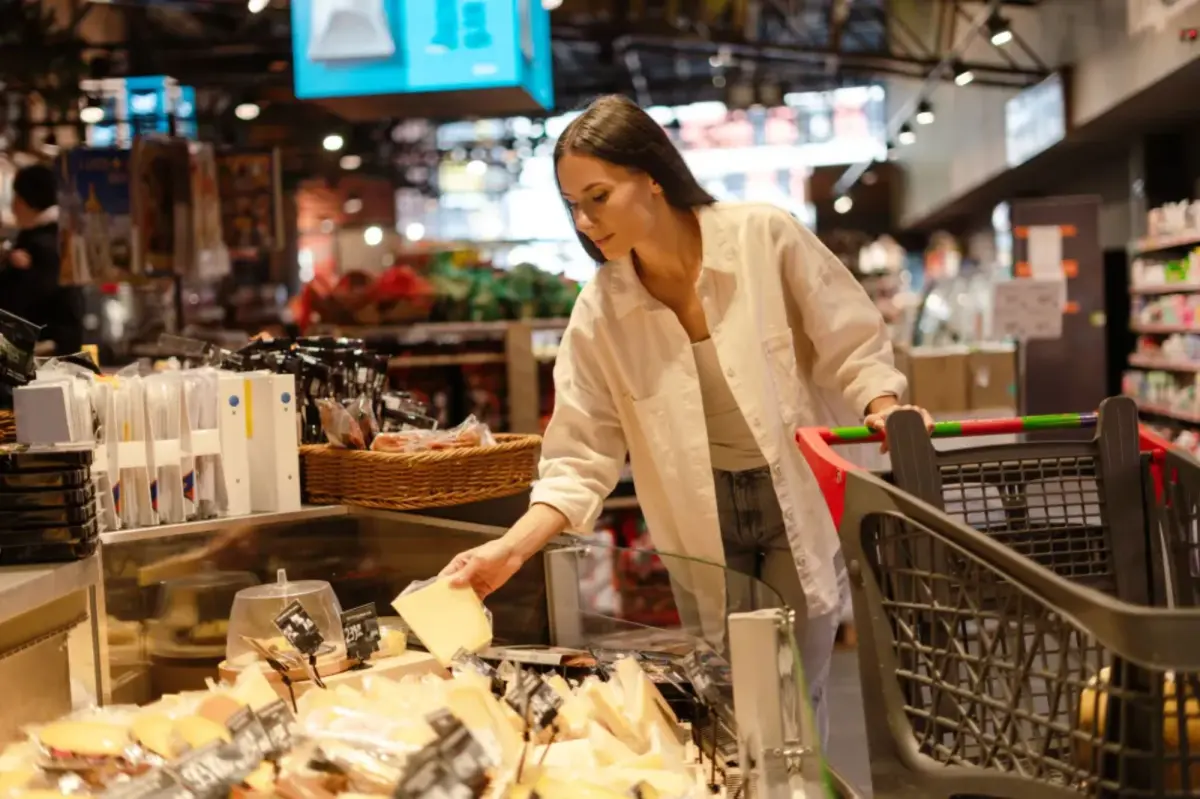
Walk down the quiet, chilly dairy aisle of any neighborhood grocery store, and you will find an environment that represents absolute trust. We rely on the food sitting on these clean shelves to feed our children, satisfy our cravings, and serve as a reliable source of daily nourishment and comfort. Yet, a silent and exceptionally dangerous microscopic threat has completely shattered that sense of quiet security for families throughout the Mid-Atlantic and Northeast regions. What began as a series of routine grocery purchases has rapidly spiraled into a deeply tragic public health emergency, as a multi-state outbreak of Listeria bacteria linked to soft, Hispanic-style cheeses has claimed at least one human life and sent eight other people to local hospitals with severe, life-altering illnesses. Federal public health agencies are sounding an urgent alarm, warning that the official case count is likely only a tiny, visible fraction of the true depth and scope of this unfolding crisis. Because Listeria infections can take weeks to fully manifest and often mimic common, everyday ailments, many individuals may currently be struggling with severe symptoms in the isolation of their own homes, completely unaware that their persistent fatigue, intense muscle aches, or high fevers are directly connected to a contaminated dairy product. For the families of those currently fighting for their lives in hospital rooms, what should have been a series of simple, shared home-cooked meals has suddenly transformed into an anxious, terrifying vigil, forcing us all to reckon with how fragile our reliance on the modern food supply system truly is. The loss of a loved one to a preventable foodborne illness is a profound, unnecessary heartbreak, reminding us that behind every cold statistic released by federal regulators is a human being with a unique story, a family, and a community now mourning an empty seat at the table. Everyday families go about their routines trusting that safety standards protect their purchases, making this kind of lethal outbreak feel like a deep betrayal of that basic societal trust, highlighting the vulnerability we all share when we bring food into our homes to feed those we love.
At the absolute center of this unfolding public health crisis is a specific, delicate variety of soft cheese known as requesón—a traditional, mildly sweet staple that shares a striking similarity to Italian ricotta, long cherished in Hispanic culinary traditions for its wonderfully creamy texture and versatility in family recipes. Investigators with the Food and Drug Administration (FDA) and local health departments have traced the physical source of this deadly contamination back to Clover Hill Dairy, an agricultural facility located in the quiet, rural community of Mechanicsville, Maryland. Between early May and the very end of the month, this dairy distributed its requesón cheese across a wide geographic footprint, sending shipments directly to wholesale distributors, local retail stores, and direct sales points in North Carolina, New York, Virginia, Maryland, New Jersey, and Washington, D.C. However, the travel path from a farm’s production floor to a consumer’s dinner plate is rarely a straightforward line, and the FDA has issued strong warnings that the contaminated cheese has likely traveled far beyond these initial state boundaries. In the highly complex, multi-tiered world of modern food distribution, bulk shipments of requesón are frequently broken down, subdivided, and repackaged under an array of different regional, cultural, or store brand names, making it incredibly difficult for the average, busy shopper to recognize the underlying danger. Familiar, trusted names such as Kesso, Quesos La Ricura, Izalco, De Mi Pueblo, and Rio Lindo may all be carrying the exact same contaminated Clover Hill product, hidden behind colorful, welcoming labels that promise home-cooked comfort. This fragmentation of the distribution system turns a simple check of the refrigerator into an exhausting, stressful detective game for families who must now carefully scan fine-print manufacturer numbers or examine obscure container shapes just to ensure their children’s basic physical safety. A localized issue at a single farm in Maryland can quickly cascade through state lines, transforming what was once a quiet regional operation into the epicenter of a multi-state health emergency, underscoring why tracing is so exceptionally difficult when bulk containers are divided into smaller packages that mask their original source.
To truly understand the fear surrounding this specific outbreak, one must understand the unique, highly resilient, and deeply insidious nature of the pathogen itself: Listeria monocytogenes. Unlike many other common foodborne bacteria like Salmonella or E. coli, which cause brief, thoroughly unpleasant but generally self-limiting bouts of food poisoning, Listeria is a remarkably tough organism that actually thrives in cool, damp environments. This biological endurance allows it to easily survive and actively multiply inside home refrigerators where other household germs would quickly lie dormant or die off. For a young, healthy adult with a robust immune system, consuming food tainted with Listeria might result in nothing more than a passing, mild reaction—perhaps a day or two of manageable fever, temporary digestive upset, or joint soreness. For vulnerable populations, however, this microscopic bacterium behaves like a ruthless, highly invasive attacker that can easily bypass the body’s natural cellular barriers. Pregnant women, newborn babies, adults over the age of sixty-five, and anyone with a severely compromised immune system face an astronomically higher risk of contracting invasive listeriosis, a critical condition where the infection spreads deep into the bloodstream and wraps itself around the central nervous system. For expectant mothers, the danger of this infection is uniquely devastating; while the mother herself may experience only mild, easily dismissed flu-like symptoms, the sneaky bacteria can quietly cross the protective placental barrier, leading to catastrophic complications such as premature delivery, sudden miscarriage, stillbirth, or severe, life-threatening brain infections in her newborn infant. For elderly grandparents or individuals undergoing chemotherapy, whose immune systems are already pushing their absolute limits, the introduction of this aggressive pathogen can quickly overwhelm their fragile health, leading to weeks of intensive hospitalization, high-dose antibiotic therapy, and an incredibly exhausting, painful fight for survival. This biological reality elevates Listeria from a mere stomach bug to a pressing public health concern that demands our highest level of collective protection and proactive vigilance.
One of the most challenging aspects of discovering, tracking, and ultimately managing this outbreak is the incredibly long delay between the moment someone consumes the contaminated cheese and the eventual medical onset of their symptoms. Public health experts note that Listeria has an unusually long and highly unpredictable incubation period, sometimes taking anywhere from a few days up to two full weeks—and in some documented cases, even up to two entire months—before a patient begins to feel noticeably ill. This massive temporal gap creates a significant blind spot for epidemiologists at the Centers for Disease Control and Prevention (CDC), who must carefully reconstruct a sick patient’s detailed dietary history weeks into the past, relying entirely on human memory to pinpoint exactly what brands of cheese or deli meats they consumed. Compounding this epidemiological challenge is the fact that many mild, intestinal cases of listeriosis go entirely undiagnosed and unreported, as individuals choose to rest and recover at home with fluids without ever seeking professional medical care or undergoing formal laboratory testing. Consequently, the nine confirmed cases across Virginia, Maryland, and New York represent only the highly visible peak of a much larger, subterranean iceberg of infection that has been quietly growing and lingering since as early as 2023. The painstakingly slow, methodical process of collecting DNA fingerprints from bacteria samples, conducting patient interviews, and coordinating with state departments of agriculture means that the public is often left waiting for actionable answers weeks after the initial threat has already entered their home kitchens. Scientists must utilize advanced whole-genome sequencing to map the DNA of the bacteria taken from different sick individuals, proving that their illnesses are genetically linked to the exact same strain found at the Clover Hill facility. This scientific detective work is highly precise but takes invaluable time, leaving concerned families in a state of limbo, wondering if their recent physical ailments are isolated incidents or part of a broader, federally tracked emergency.
In rapid response to the mounting physical danger, Clover Hill Dairy has officially initiated a voluntary recall of its affected products, a proactive move mirrored by other regional distributors such as New York-based Nelson & Isa Lacteos, which quickly recalled its own one-pound clamshell containers of requesón. Federal health agencies are now urging consumers to take immediate, decisive action to protect themselves, their families, and their houseguests from potential exposure to the tainted cheese. The primary directive from the FDA is simple, absolute, and uncompromising: do not eat, serve, or sell any of the recalled soft cheese, regardless of whether it looks perfectly fresh, smells completely normal, or tastes delicious. If you currently have soft, ricotta-like cheese in your refrigerator and cannot verify its origin—perhaps because you transferred it to a different glass dish or discarded the plastic packaging—health officials strongly advise throwing it directly into the trash out of an abundance of caution. Furthermore, because Listeria can easily spread through cross-contamination on kitchen surfaces, the burden of safety extends to our daily cooking habits; families, restaurant chefs, and retail deli workers must meticulously clean and sanitize any cutting boards, countertops, refrigerator shelves, or utensils that may have come into direct contact with the recalled cheese. This demand for extreme cleanliness is not merely bureaucratic red tape; it is an act of home defense, a necessary step to ensure that the sanctuary of our kitchens does not harbor an invisible pathogen capable of causing profound physical harm. The FDA highlights that simply throwing the cheese away is not enough, as the bacteria can live on the plastic surfaces of trash cans or transfer to other food containers in the fridge via touch. Consumers are advised to thoroughly wash hands and use sanitizing solutions to break any potential chain of transmission, transforming the routine task of cleaning the kitchen into a critical shield against an invisible adversary.
When we look beyond the immediate headlines of recalls, warnings, and localized cleaning instructions, we are faced with the sobering reality of the long-term, life-altering consequences that listeriosis leaves in its wake. For those who survive the acute, terrifying phase of an invasive infection, the long road to full recovery can be grueling, painful, and permanently life-changing, as the bacteria can cause severe long-term complications like septicemia, meningitis, permanent brain damage, and chronic inflammation of the heart or abdominal organs. In the most tragic situations, survivors—particularly infants who contracted the infection while still in the womb—may face lifelong struggles with developmental delays, partial or total blindness, severe permanent organ damage, and long-lasting paralysis, forever altering the trajectory of their and their families’ lives. With the CDC estimating that roughly one in six people diagnosed with invasive listeriosis will ultimately succumb to the infection, this outbreak serves as a stark, solemn reminder of the immense ethical responsibility borne by those who produce, package, and distribute the food we rely on to survive. As the investigation into Clover Hill Dairy continues and as health officials work tirelessly to identify any additional contaminated products, we are reminded of the essential human element at the core of food safety. True advocacy for public health requires not just sterile regulations and corporate press releases, but a profound commitment to empathy, vigilance, and the collective care of our communities, ensuring that the simple act of feeding our families remains a source of life, health, and joy. Ultimately, the systemic solutions we build today must honor those who have suffered, translating this painful lesson into a safer, more transparent future for everyone who sits down at a dinner table. Restoring that trust requires a collaborative effort between regulatory bodies, agricultural producers, and local distributors to prioritize rigorous testing and transparent communication over profit margins. By keeping our focus on the human lives affected, we can work toward a food system where clean, safe food is an absolute guarantee for all, allowing families to gather, share meals, and nourish their bodies with absolute peace of mind.