



When Ethical Guidance Goes Viral: The Modern Marriage Dilemma
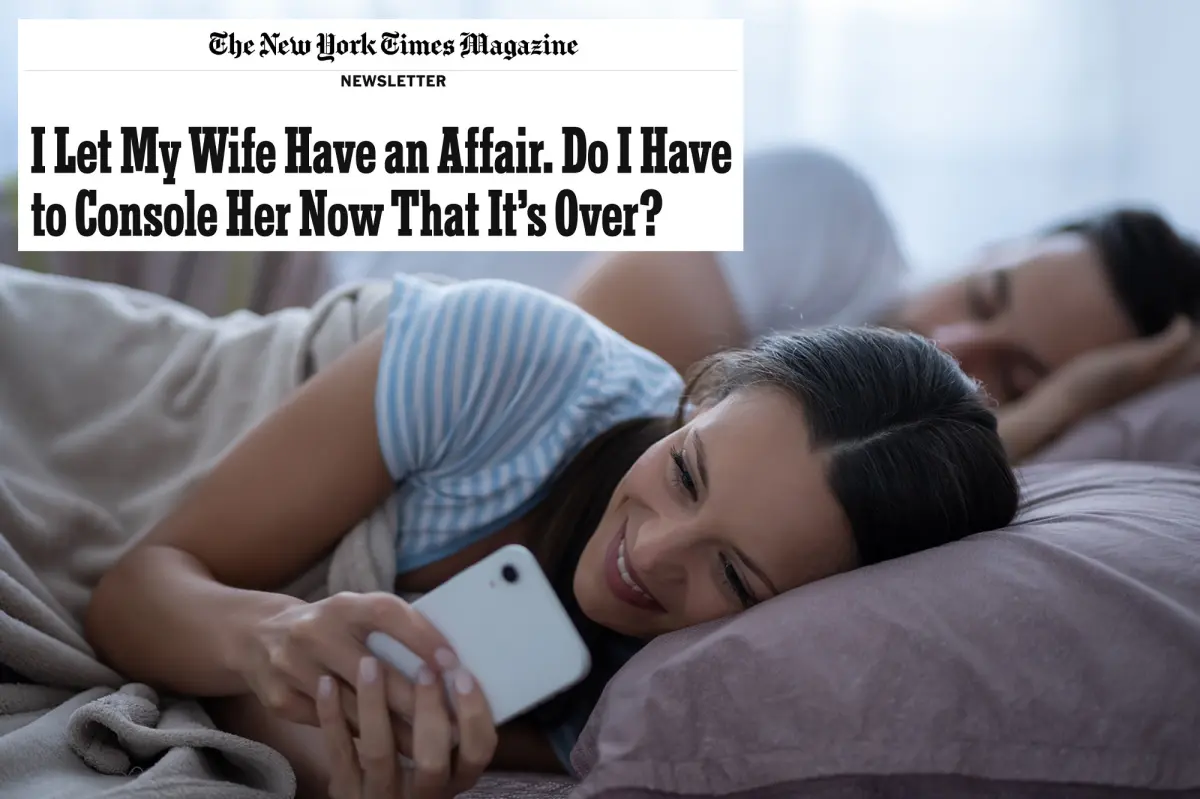
In an age where personal troubles are increasingly aired in public forums, a recent New York Times Magazine “Ethicist” column has sparked widespread debate about the boundaries of marriage, fidelity, and what we choose to share with the world. The column featured a husband seeking advice from philosopher Kwame Anthony Appiah about whether he should console his wife who was grieving the end of her consensual affair. This seemingly private marital dilemma quickly transcended its original context to become a cultural flashpoint, revealing deep societal tensions about modern relationships and the evolving nature of marriage in contemporary society.
The husband’s letter outlined a complex situation: he had reluctantly agreed to his wife’s affair, which she claimed provided her “vitality” and “sexual freedom.” Despite giving his consent, he admitted to suffering emotionally whenever she was with her affair partner. The relationship dynamics shifted when his wife eventually ended the affair because “the overall emotional burden for both of us was too great.” Now finding himself in the uncomfortable position of witnessing her grief over the lost relationship, the husband posed a seemingly straightforward but emotionally complex question to the Ethicist: “Should I feel sorry for my wife?” This question, in its simplicity, masks the deeper issues of emotional obligation, boundaries, and reciprocity that exist within committed relationships, particularly when those relationships extend beyond traditional confines.
The public reaction to this published dilemma was swift and polarized, extending far beyond the thoughtful response the Ethicist column typically aims to provide. Many online commenters questioned not only the husband’s situation but the editorial decision to publish such a personal quandary. Some expressed shock that the New York Times would dedicate space to what they viewed as moral degradation, with one commenter on social media remarking, “Imagine being a New York Times editor earning $300,000 a year and saying, ‘Yes, this is definitely an important topic worth publishing.'” Others took more direct aim at the husband himself, using derogatory terminology to question his masculinity or suggesting that modern society has lost its sense of proper boundaries with comments like “We need to bring back shame” – implying that such private matters should remain behind closed doors rather than becoming fodder for public consumption and debate.
What makes this particular advice column so fascinating is how it operates as a mirror reflecting our collective anxieties about changing relationship norms. While ethical non-monogamy and open relationships have gained increasing visibility in recent years, the vitriolic response to this column suggests that many people still hold deeply traditional views about marriage and exclusivity. The situation presented – a husband giving reluctant consent to his wife’s affair, then witnessing her grief when it ends – challenges conventional wisdom about who typically initiates non-monogamous arrangements and how emotions are supposed to be managed within them. The binary thinking evident in many responses (with commenters suggesting “You just get divorced” rather than navigating the complexities) illustrates how uncomfortable many remain with relationships that exist in gray areas outside traditional structures.
Beyond the specific relationship dynamics, this viral moment raises important questions about the role of public advice columns in the digital age. The Ethicist column, helmed by Appiah for over a decade, was designed as a forum for philosophical exploration of everyday moral dilemmas. Yet when these intimate questions enter the public sphere, particularly in an era of social media amplification, they transform from personal ethical queries into cultural battlegrounds. The husband’s anonymous question, likely submitted in search of thoughtful guidance, instead became a referendum on contemporary marriage, masculinity, and morality. This transformation highlights the evolving function of advice columns, which no longer simply provide private counsel published for general edification but now serve as catalysts for broader cultural conversations – sometimes at the expense of the advice-seeker’s original intent.
Ultimately, what this viral moment reveals is not just the state of one marriage but the state of our collective conversation about intimacy, commitment, and personal boundaries. The passionate responses – from those condemning the husband’s choices to those criticizing the publication itself – demonstrate how deeply invested we remain in defining the parameters of acceptable relationship behavior, even as those parameters continue to shift. Whether we view this story as a cautionary tale about the pitfalls of non-traditional arrangements or as an opportunity to extend compassion to people navigating complex emotional terrain, it serves as a reminder that our personal choices never exist in a vacuum. They are always, to some degree, in conversation with broader social norms and expectations – especially when we choose to share them with an ethicist, and by extension, with the world. As relationships continue to evolve in the modern era, so too will our collective wrestling with what we owe to partners, what boundaries we maintain, and what stories we choose to tell about our most intimate connections.