




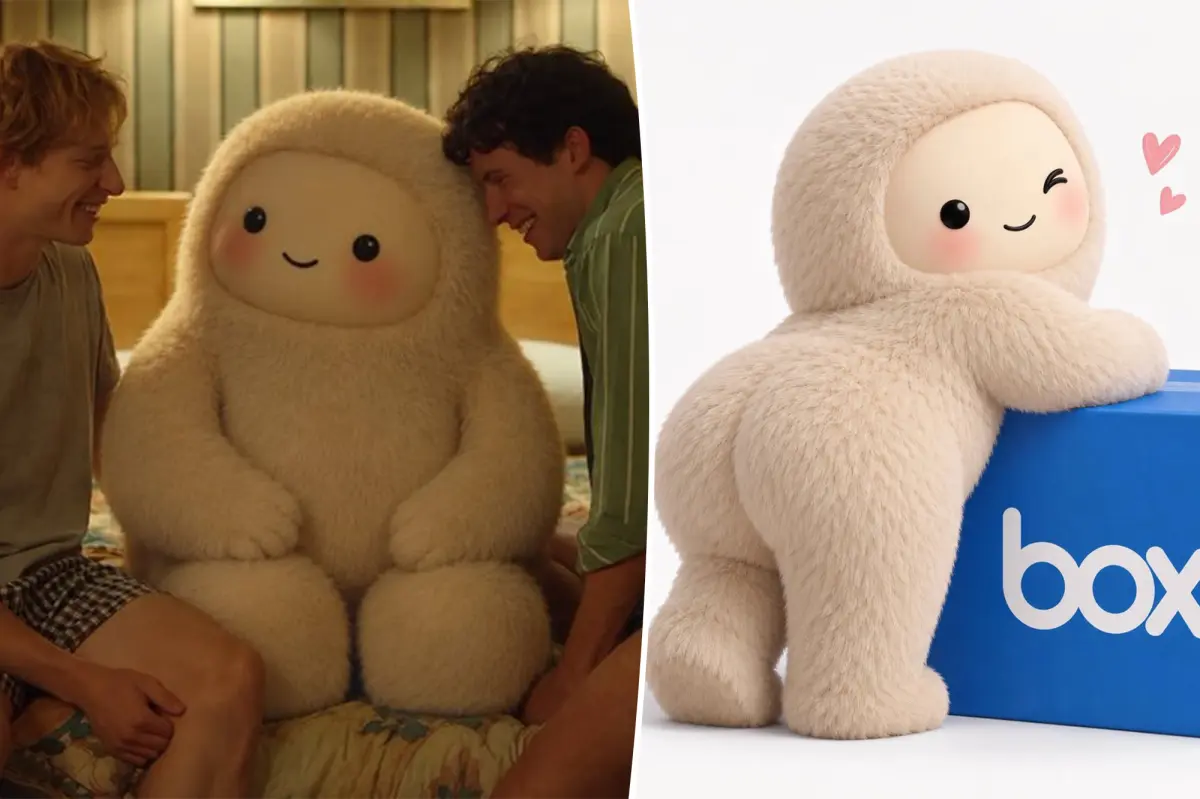
In what might be the most unexpected branding pivot of the year, Meta has stumbled into a horny little problem—and it’s shaped like a squishy, roly-poly cartoon blob with a suspiciously exaggerated backside. Meet Jolly, the default mascot for Meta’s new Muse AI assistant, a digital helper designed to handle everything from drafting emails to booking your next flight. The intention was wholesome enough: give the cold, slightly dystopian concept of an AI agent a warm, huggable face that could go toe-to-toe with the more sterile, corporate-feeling assistants coming out of places like Anthropic. With its plush, dumpling-like body and endearing squish factor—imagine a mashup of a Labubu figurine and one of those squeezable stress-relief toys—Jolly was meant to feel like a friendly companion rather than a piece of intimidating software. Think of it as a high-tech Tamagotchi for the modern age, a pocket-sized pal you could carry around via the Muse Charm and interact with throughout your day. The marketing logic seemed sound: people love cute things, and the tech industry desperately wants us to love AI. What they probably didn’t anticipate was that the internet, being the internet, would immediately take that innocent little mascot and turn it into the thirstiest thing on the timeline.
The catalyst for this bizarre cultural moment is none other than Alexandr Wang, the head of Meta’s Superintelligence Labs. Rather than keeping the marketing safe and family-friendly, Wang decided to have a little fun with the character, rolling out a series of AI-generated memes that gave Jolly a distinctly NSFW makeover. In these images, the once-innocent blob is endowed with what Futurism delicately described as “substantial digital assets”—a curvaceous, bootylicious silhouette that seems wildly out of place on a character whose original design evoked a soft, genderless beanbag. It’s a strange juxtaposition: the corporate, sterile world of AI research colliding with the chaotic energy of a meme page run by a guy who clearly spends too much time on X. Wang’s creative direction transformed Jolly from a cute mascot into something that looks like it belongs on a novelty calendar or in the sidebar of a questionable website. And he did it with the casual confidence of someone who knows exactly what he’s doing, positioning the character as the first AI assistant specifically engineered to cater to the chronically online. It raises an interesting question: when the people in charge of building superintelligent AI are also the ones making thirst-traps out of the company mascot, what does that say about the future of human-machine interaction?
The memes themselves are a masterclass in internet absurdism. In one particularly egregious example, Jolly is depicted winking over its shoulder while proudly presenting its generously proportioned posterior directly at the viewer—a pose that screams “come get it” more than “book my flights.” Another image takes things even further, placing the voluptuous virtual character in bed with two men in a spoof of the iconic three-way kiss scene from the Zendaya-led film “Challengers.” It’s the kind of fan art you’d expect from a dedicated corner of the internet, except it came directly from the desk of a senior executive at one of the world’s largest technology companies. To add insult to injury, Wang also superimposed a cheeky image of the now-über-thicc bot over a screen grab of Adam Levine’s infamous sexts, the ones where he awkwardly wrote “holy f–k” and “that body of yours is absurd.” The juxtaposition is meta-commentary wrapped in a meme wrapped in a PR crisis waiting to happen. Wang captioned the whole debacle with a playful but somewhat disingenuous remark: “Some of y’all way too thirsty for muse”—as if he hadn’t personally lit the match and tossed it into a vat of gasoline. The denial is almost as entertaining as the content itself.
The internet, of course, ate it up. Social media platforms lit up with a mix of unhinged thirst, genuine delight, and bemused horror as users encountered this new, curvaceous version of Jolly. “Muse is a thirst trap,” declared one commentator, while another prophetically warned, “Muse OnlyFans around the corner I fear.” The response was swift, enthusiastic, and utterly devoid of shame. Fans began tracking the posts like they were drops of a new sneaker release, with one gushing, “I’m basically logging into X every day to see the thicc muse posts.” The sheer volume of engagement suggests that Meta accidentally tapped into something primal: the internet’s insatiable desire to sexualize anything with even a hint of a personality, no matter how absurd it looks. It’s the same collective energy that produces rule 34 content for everything from refrigerators to cartoon horses, but this time it was being fed directly by the company itself. Users even started creating their own salacious memes, including a particularly on-the-nose spoof of that classic “man ogling another woman while his girlfriend glares at him” meme, with Jolly playing the role of the tempting other woman. The whole thing has become a participatory spectacle, with Wang playing the role of the chaotic trickster god of Meta’s AI department, watching as his creation spirals further into the realm of the horny.
Underneath all the absurdity, there’s an actual product feature being introduced here. Meta released a new function that allows users to customize their Muse mascot’s appearance and even modify its voice, which opens up a Pandora’s box of possibilities. If people can tweak the character’s look, then you’d better believe a significant portion of the user base is going to attempt to max out its sex appeal. The genie is well and truly out of the bottle; you can’t hand people a tool to customize a character and expect them to keep it PG. The implications are fascinating and perhaps a little concerning. On one hand, this kind of playful engagement humanizes AI and makes it more approachable to the general public. On the other hand, we’re talking about people potentially forming parasocial relationships with an inanimate blob that’s been digitally enhanced to look like a particularly sassy hourglass figure. The line between cute and creepy has been completely obliterated, and Meta’s leadership seems content to let the chaos unfold. It’s a bold strategy, one that positions Meta as the edgy, fun-loving alternative to the more buttoned-up AI companies, but it also risks alienating users who might see this kind of behavior as unserious or unprofessional. Striking the right balance between viral marketing and maintaining a credible brand identity is a tightrope walk, and Wang is currently doing it wearing a blindfold and carrying a torch.
Ultimately, the Jolly thirst-trap saga is a perfect capsule of the current moment in tech. We’re living in an era where AI companies are spending billions of dollars to make software that feels less like a tool and more like a companion, and the people building it are just as weird, horny, and chronically online as the rest of us. The corporate veil has thinned significantly, and we’re seeing the unfiltered personalities of the individuals shaping the future of artificial intelligence. Wang’s decision to troll his own company’s product mascot is a refreshing dose of humanity in a field that often feels sterile and intimidating, even if it’s also a profoundly unprofessional move that would have gotten someone fired a decade ago. It speaks to how much the culture has shifted: authenticity and virality are now prized above all else, even if that means giving your AI assistant a dump truck and winking at the camera. As we move forward into a future where AI plays an increasingly central role in our daily lives, we might look back on this moment as the turning point where the industry stopped taking itself so seriously and embraced the glorious, ridiculous chaos of human desire. Whether that’s a good thing or a terrible one depends entirely on how you feel about a lab-grown dumpling shaking its hips at you from your phone screen. Either way, the future of AI just got a lot more interesting—and a lot more thicc.