

Paragraph 1:
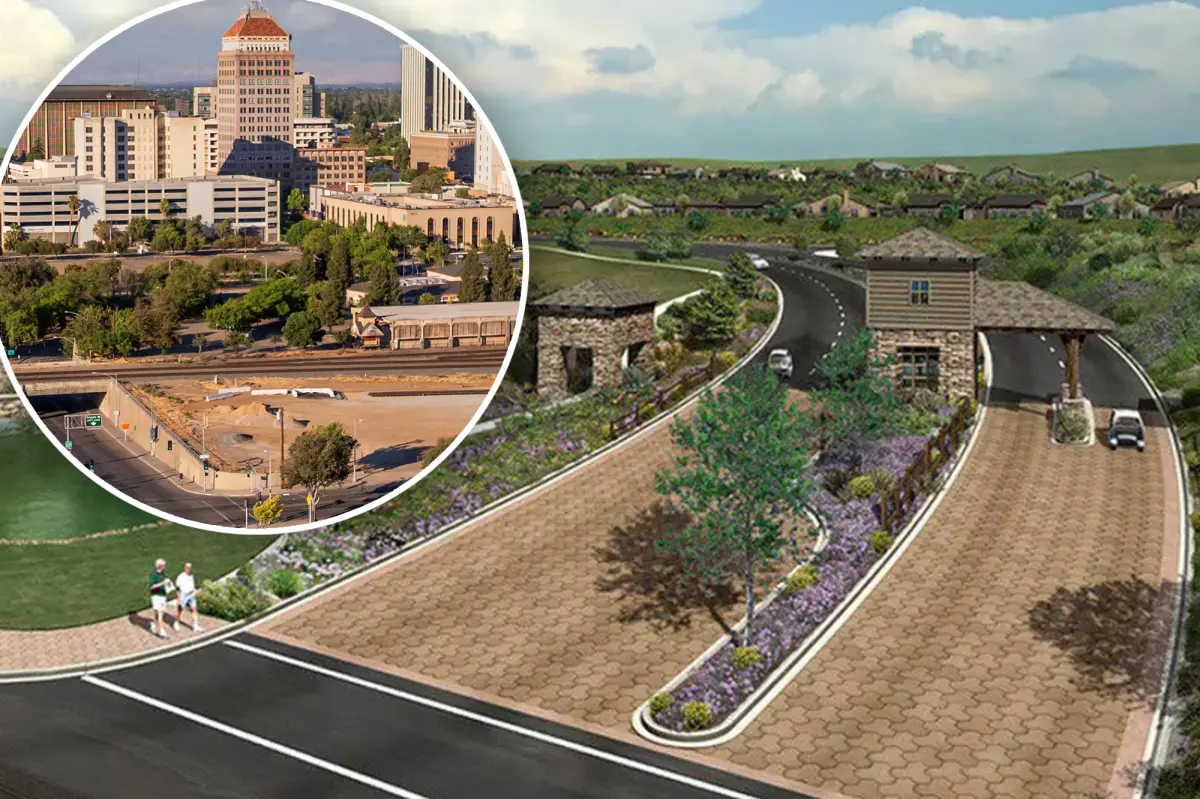
Imagine driving through California’s Central Valley, where the horizon stretches endlessly over golden farmland, orchards, and dusty roads. For decades, this landscape has been defined by agriculture, quiet small towns, and the slow rhythm of rural life. But just north of Fresno, near the tiny town of Friant, a massive transformation is being planned—one that would reshape the region in a way locals never anticipated. A colossal housing development, estimated to cost $1.1 billion, has moved one step closer to reality after the Fresno County Planning Commission unanimously approved the project last month. But this is no ordinary new community. It is being designed exclusively for Californians aged 55 and older, making it one of the largest age-restricted developments in the state. The project, known as Friant Ranch, would span a staggering 1,804 acres of what is currently agricultural land, introducing thousands of homes and commercial spaces to a remote area that has long been defined by its quiet, rural character. The contrast is striking: a place where cattle graze and crops grow could soon become a gated-style senior enclave, complete with recreational trails, shopping, and a carefully curated lifestyle. Yet the vision is not without controversy. While supporters see an opportunity to meet the housing needs of a rapidly aging state, critics question whether such a massive development belongs in the middle of farmland, whether its environmental impact can be justified, and whether a community that shuts out younger residents is the right way forward. The approval is only a preliminary step, but it signals a dramatic shift in how California is thinking about housing, aging, and the future of its rural communities.
Paragraph 2:
The scale of Friant Ranch is difficult to overstate. The development calls for the construction of 2,500 residential units, ranging from single-family homes to perhaps townhomes or villas, all reserved for residents over the age of 55. Alongside the housing, there would be approximately 250,000 square feet of commercial space—enough for shops, restaurants, medical offices, and services that would allow older residents to live, shop, and socialize without venturing far from home. The master plan also includes recreational spaces, walking and biking trails, parks, and communal gathering areas, all designed to encourage an active, resort-like lifestyle. For a town like Friant, which recorded a population of just 446 in the 2020 census, this development represents an extraordinary transformation. A community that has remained small and isolated for generations could suddenly become home to thousands of new residents, albeit all of them in their golden years. The idea of building an age-restricted community in such a remote location may seem odd at first, but the origins of the project go back decades. It was first proposed in 1997 by former state Assemblyman Frank Bigelow, who owned ranch land in the area and envisioned a development that would combine rural living with senior-focused amenities. Bigelow’s personal connection to Friant gave the project a local champion, but it also embedded the proposal in a long and complicated history of land use, politics, and legal disputes. For nearly three decades, the vision has simmered, changing shape as it moved through planning processes, court challenges, and shifting political winds. Now, with the approval of the Fresno County Planning Commission, the dream—or nightmare, depending on one’s perspective—is closer than ever to becoming reality.
Paragraph 3:
The road to this point has been anything but smooth. Fresno County initially approved plans for Friant Ranch back in 2011, but that approval was ultimately invalidated by the California Supreme Court in 2018. The court ruled that the county had failed to adequately address the development’s pollution impacts, a significant legal blow that forced planners back to the drawing board. The project’s environmental review, which dates to 2009, has become a central point of contention. Environmental groups argue that the analysis is far too old to serve as a reliable basis for approval today, especially given changes in air quality science, climate policy, and regional growth patterns. They point to the fact that the Central Valley already struggles with some of the worst air quality in the nation, and adding thousands of residents and hundreds of thousands of square feet of commercial space would only exacerbate the problem. Despite these objections, the Fresno County Planning Commission voted unanimously in September to approve the project again, sending it to the Fresno County Board of Supervisors for final consideration on October 20. If approved, construction could take up to a decade and cost an eye-watering $1.1 billion. That price tag reflects not only the sheer scale of the development but also the extensive infrastructure required to support a new community in a remote area—roads, water systems, sewer lines, utilities, and more. The question is whether the investment will pay off, both for the developers and for the county, and whether the legal challenges that have dogged the project for years will finally be put to rest. For now, the project’s future rests in the hands of the Board of Supervisors, whose decision could set a precedent for how California balances the demand for housing with the need to protect its environment.
Paragraph 4:
Environmental concerns are at the heart of the opposition to Friant Ranch. Critics argue that the project’s environmental impact report, which was originally prepared in 2009, is outdated and does not account for the latest understanding of air pollution, greenhouse gas emissions, and public health impacts. The California Supreme Court’s 2018 ruling was a major victory for environmental groups, as it confirmed that the county had not adequately analyzed how the development would contribute to regional pollution levels. The Central Valley is already a hotspot for poor air quality, with residents suffering from higher rates of asthma and other respiratory illnesses compared to much of the rest of the state. Adding 2,500 homes and 250,000 square feet of commercial space would generate more vehicle traffic, more energy use, and more emissions, potentially undermining efforts to meet state and federal air quality standards. Environmentalists also worry about the loss of agricultural land, which is a finite resource and a vital part of California’s economy and identity. Building a sprawling senior community on 1,804 acres of farmland feels, to many, like a step backward at a time when the state is supposed to be encouraging denser, more sustainable development near existing cities and transit. The fact that the project is age-restricted adds another layer of complexity. Some critics argue that creating a large enclave exclusively for people over 55 fosters segregation by age and fails to create the mixed, intergenerational communities that are essential for social cohesion. They also question whether the infrastructure—especially water supply and emergency services—can handle a sudden influx of older residents in a remote area. Supporters, however, counter that senior communities are popular for good reason: they offer safety, convenience, and a sense of belonging, allowing older adults to age in place with peers who share similar needs and interests. The debate is not just about the environment; it is about what kind of communities Californians want to build for the future.
Paragraph 5:
Underlying the controversy is a demographic reality that California cannot ignore. The state is aging rapidly, and the demand for senior housing is expected to grow dramatically in the coming years. According to the Public Policy Institute of California, the number of Californians aged 65 and older is projected to rise by 59 percent by 2040. That means more than one in five residents of the state will be considered an older adult, a profound shift that will reshape everything from healthcare to housing to transportation. The need for age-appropriate housing is already acute, and it will only intensify as the baby boomer generation continues to retire. Friant Ranch, whatever its flaws, is a direct response to that demand. It offers a vision of retirement that is active, social, and self-contained, with amenities designed to keep residents healthy and connected. In a state where housing costs are notoriously high and many older adults struggle to find affordable, accessible homes, the prospect of a large-scale senior community may seem appealing to many. Developers are betting that there is a robust market for this kind of lifestyle, and they may well be right. California’s older population is diverse, but many older adults have accumulated wealth through homeownership and retirement savings, making them attractive customers for new residential communities. The project’s supporters argue that building more housing, even for a specific demographic, helps alleviate the state’s overall housing shortage by freeing up existing homes that older adults currently occupy. If seniors move into a place like Friant Ranch, the argument goes, their former homes in cities and suburbs become available for younger families, increasing the overall supply of housing. This perspective has gained traction among some policymakers and developers, who see age-restricted communities as a pragmatic solution to a complex problem. Whether that logic holds up in practice is uncertain, but it adds an important dimension to the debate over Friant Ranch.
Paragraph 6:
As the Fresno County Board of Supervisors prepares to make its final decision, the future of Friant Ranch hangs in the balance. The project embodies a larger struggle between progress and preservation, between the needs of an aging population and the imperatives of environmental stewardship, between rural character and suburban expansion. For the residents of Friant, the development would bring unprecedented change—more people, more traffic, more economic activity, but also more strain on local resources and a fundamental alteration of the community’s identity. For older Californians, it could represent a dream come true: a safe, welcoming place to spend their retirement years, surrounded by nature and peers. For environmentalists, it is a cautionary tale about the dangers of unchecked development and the importance of rigorous, up-to-date analysis before irreversible decisions are made. The human dimension of this story is impossible to ignore. Behind the policy debates and legal briefs are real people—farmers who have worked the land for generations, seniors who are searching for a place to belong, activists who worry about the air their children will breathe, and local officials who must balance competing interests with limited resources. The approval process has been long and contentious, and it is not over yet. Even if the Board of Supervisors gives the green light, legal challenges could delay or derail the project for years to come. And even if construction begins, it will take up to a decade to complete, meaning the full impact of Friant Ranch will not be felt until well into the 2030s. By that time, California’s population of older adults will have grown enormously, and the need for housing will be even more urgent. Whether Friant Ranch becomes a model for the future or a cautionary tale, it has already forced Californians to confront difficult questions about who belongs in their communities, how to plan for an aging society, and what kind of landscape they want to leave for future generations. In the end, the story of Friant Ranch is not just about a housing development in a small farming town. It is about the choices we make when growth and tradition collide, and about the kind of world we are building for ourselves—and for those who will come after us.