


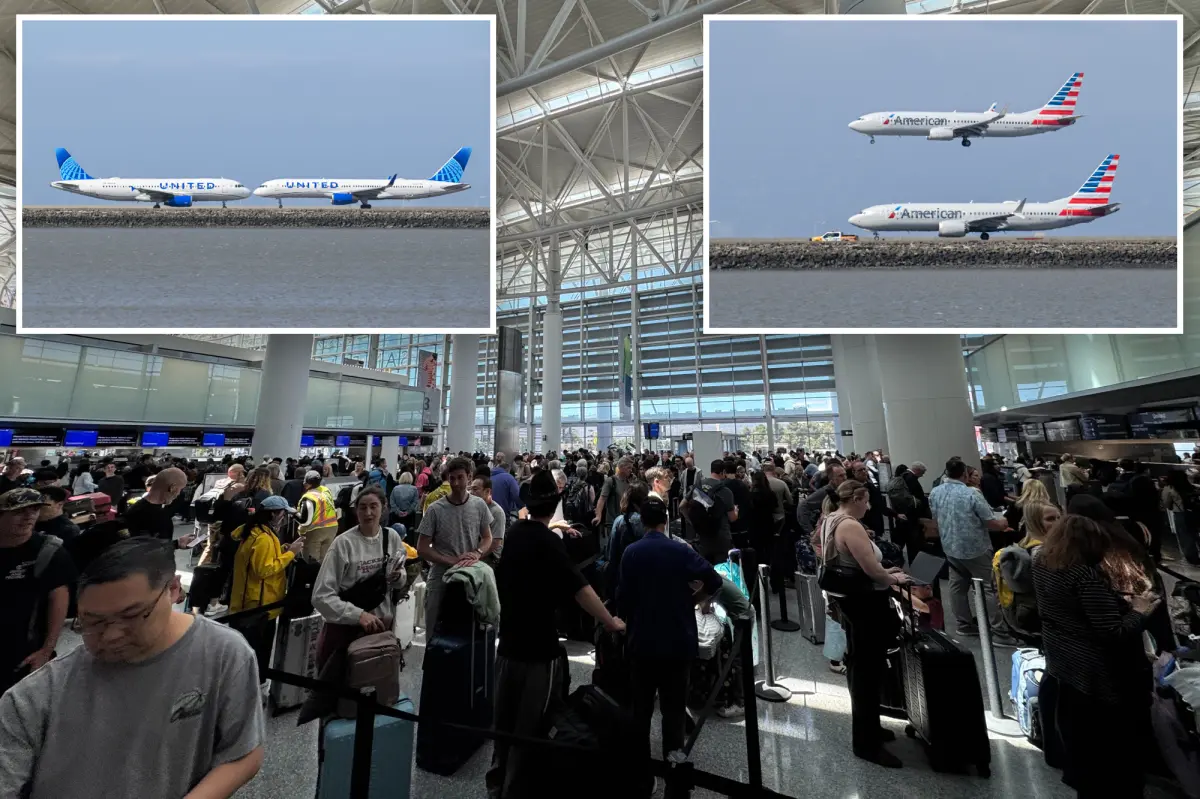
San Francisco International Airport, affectionately known to millions of global travelers simply as SFO, has long held a legendary status in the annals of American aviation. For decades, it was celebrated not merely as a major gateway to the Pacific Rim, but as the glittering crown jewel of seamless, efficient air travel. Landing at SFO was once an experience of sheer aesthetic marvel, famed for the dramatic, synchronized dual-landings where two commercial jets would glide side-by-side over the shimmering waters of the San Francisco Bay, touching down in perfect unison on parallel runways. It was a choreographic masterpiece that airport planners across the globe envied and passengers pressed their faces against cabin windows to witness. However, this golden era of aviation efficiency has come to an abrupt, jarring halt. What was once a symbol of modern progress has rapidly deteriorated into a frustrating bottleneck of endless tarmac delays, sudden cancellations, and mounting dread for frequent flyers. SFO has transitioned from an architectural and logistical triumph into a stressful purgatory for commuters, transforming the joyful anticipation of travel into a grueling test of patience as a new operational reality takes hold.
The catalyst for this sudden nose-dive in efficiency is a sweeping, permanent rule handed down by the Federal Aviation Administration (FAA). Seeking to eliminate any margin of safety risk, the agency has enacted a strict ban on SFO’s signature side-by-side landing maneuvers, citing safety concerns that stem from the airport’s closely spaced parallel runways. Historically, SFO’s unique runway layout allowed air traffic controllers to land aircraft incredibly close to one another, maximizing throughput and keeping the heavy flow of transpacific and domestic traffic moving at a brisk, reliable pace. Under the new federal mandate, however, incoming aircraft must now stagger their approaches, creating a single-file queue that stretches far out over the Pacific and into the northern California skies. Cruelly, this restriction applies even during SFO’s notoriously clear, sunny summer days, meaning the traditional “marine layer” cover is no longer the sole culprit for afternoon delays. By forcing planes to wait their turn in a painfully elongated aerial line, the FAA has effectively dismantled the operational engine that made SFO the high-capacity, high-functioning transit hub that the tech-fueled Bay Area economy relied upon for decades.
Making matters exponentially worse is a perfect storm of timing that has hit the airport’s infrastructure all at once. Just as the FAA’s sweeping parallel landing ban went into effect, SFO embarked on a massive, highly disruptive six-month runway repaving project in March of this year. This intersection of regulatory restriction and heavy construction has created a devastating double whammy for airlines and passengers alike. According to airport data, SFO’s maximum arrival rate has plummeted from an efficient peak of 54 flights per hour down to a meager 36—a staggering 33% reduction in overall capacity. This sharp contraction means that, on any given day, more than a quarter of all arriving flights are virtually guaranteed to face delays of thirty minutes or longer, with cascading effects that throw entire airline networks out of sync. “Approximately one-third of all flights at SFO experienced a delay in April and May,” an SFO spokesperson remarked, highlighting the sheer scale of the disruption while reiterating their ongoing, uphill collaboration with the FAA to balance safety mandates with acceptable transit times.
Behind these sterile, bureaucratic percentages lies a profound human cost, voiced loudly by exhausted travelers who are watching their valuable time slip away in gridlocked terminals and on choked runways. The systemic failure of the airport’s schedule has sparked an unprecedented wave of public outrage, particularly among the Bay Area’s high-profile business commuters who rely on regional flights to keep the wheels of industry turning. Kate Rouch, the Chief Marketing Officer at OpenAI, took to social media to express a sentiment shared by legions of professionals: “SFO is unusable for regional flights since the FAA shut down the parallel runway. Avoid at all costs. I commute weekly. Trust me.” The sentiment is echoed by leisure travelers and business trippers alike, who describe chaotic scenes of counter lines wrapping endlessly around terminals, exacerbated by a severe shortage of airline customer service agents to guide the panicked crowds. Michael Colbruno highlighted this claustrophobic reality with images of the packed United Airlines check-in lobby, capturing a sense of utter disarray that has become the new normal for the once-orderly airport. On forums like Reddit, locals lament the fall of SFO, painting a bleak picture of missed connections, canceled vacations, and a deep-seated loss of trust in an institution that once brought pride to the region.
As passengers clamor for a quick fix, the sobering truth is that this logistical nightmare is unlikely to vanish when the construction dust settles. While the physical runway repaving project is slated to conclude in the fall, the FAA’s ban on side-by-side landings is a permanent, safety-driven decree that will indefinitely keep SFO’s operational capacity at its newly reduced baseline. The federal agency’s response to the growing public outcry has been notably quiet and bureaucratic; in online statements, the FAA has merely noted that it is “exploring ways to safely increase the airport arrival rate,” while remaining tight-lipped and failing to respond directly to formal press inquiries for more concrete, immediate solutions. This leaves both the airport authority and its primary airlines in a difficult holding pattern, forced to permanently adjust their timetables and reduce flight options to prevent total operational collapse. Airlines may have no choice but to cut back on regional routes or migrate their operations to neighboring airports like Oakland or San Jose, forever altering the travel landscape of Northern California and leaving passengers to suffer the long-term consequences of a rigid bureaucratic standoff.
Ultimately, this crisis at SFO serves as a stark reminder of the fragile balance between maximum efficiency and absolute safety in modern aviation infrastructure. For years, the aviation industry pushed the limits of technology and geography to squeeze every drop of productivity from aging runway designs, but the current bottleneck suggests that we have finally hit a hard ceiling. As SFO grapples with its diminished role as a smooth transit hub, travelers are adjusting their expectations, bracing for a future where a simple flight into the Bay Area requires hours of buffer time and a high tolerance for stress. The human toll—measured in missed family dinners, lost business deals, and the ambient anxiety of navigating chaotic terminals—will continue to fuel the debate over whether safety regulations, while undeniably vital, can sometimes be implemented with too little regard for the human systems they disrupt. Until the FAA and SFO’s engineers can find a high-tech compromise that restores some semblance of the old dual-landing efficiency, the crown jewel of California transit will remain a cautionary tale of a world class airport grounded by the heavy weight of its own operational challenges.