

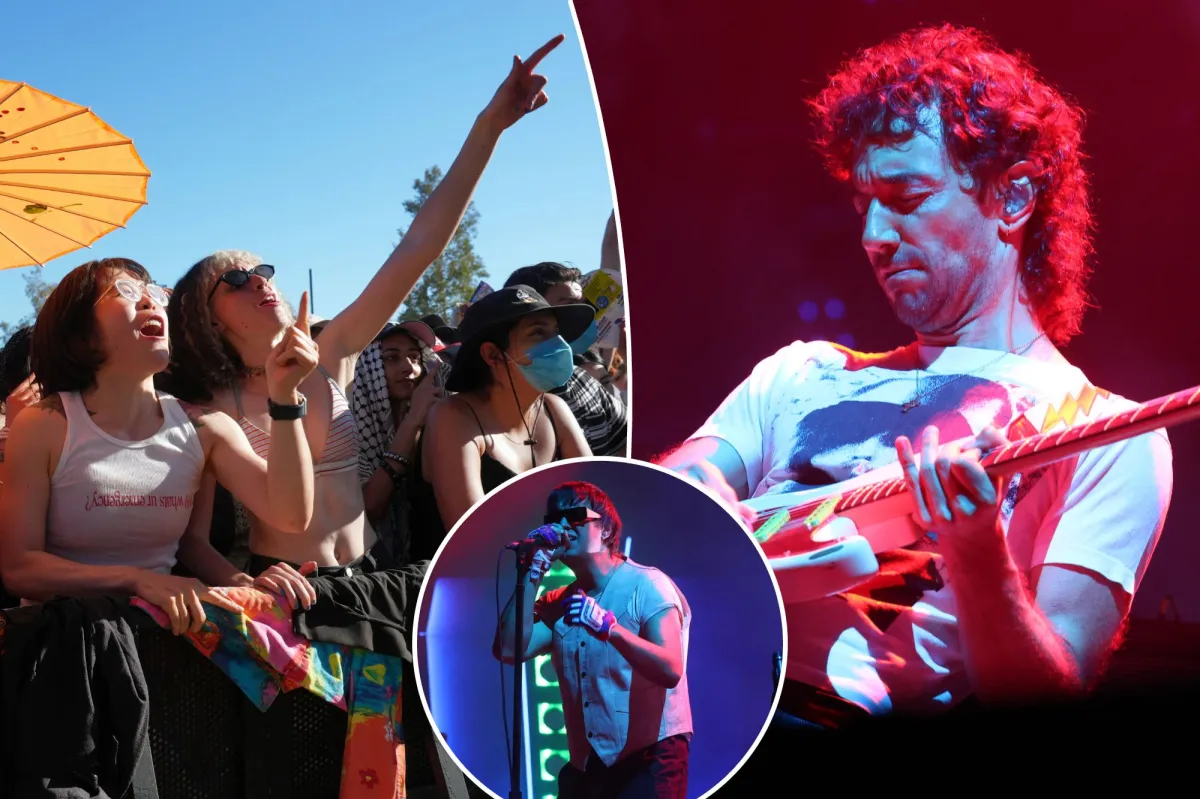
On Saturday, August 22, 2026, the Rose Bowl in Pasadena, California, wasn’t just a stadium—it was a gathering place for thousands of indie rock fans who had been waiting for a moment like this. The festival called Just Like Heaven transformed the iconic venue into something between a massive concert and a family reunion, with the San Gabriel Mountains glowing in the distance and the late-summer heat hanging soft in the air. From the moment the gates opened, there was a feeling that this day would be special. People came from every direction, carrying tote bags, wearing favorite band tees, and exchanging excited looks as they made their way toward the stages. The grass was still green from an unusually mild August, and the smell of sunscreen, warm earth, and festival food mixed with the low hum of amplifiers being tested. It was a scene that felt familiar and brand new at the same time. The lineup was stacked with names that had soundtracked so many lives, but the two biggest draws were The Strokes and LCD Soundsystem, headliners who represented different sides of the same indie rock coin. For every person who wanted to lose themselves in gritty guitar riffs, there was someone else ready to dance through a synth-heavy set that felt like a late-night catharsis. The crowd moved slowly from stage to stage, but no one was in a hurry, because the whole point was to be present, to feel the bass in your chest, and to sing along with strangers who somehow didn’t feel like strangers at all. The twelve photos that came out of the day barely capture the scale of it, but they do hold on to those small, unguarded moments that make live music special.
The Strokes delivered the kind of set that reminded everyone why they became indie rock icons in the first place. Julian Casablancas slouched at the microphone with that trademark cool, his voice rolling over the crowd like the sound of an old friend. The opening chords of songs like “Last Nite” and “Reptilia” sent waves of applause through the Rose Bowl, and even the people near the back could be seen jumping and throwing their arms around each other. There was something timeless about watching them perform under the California sky—the band didn’t need elaborate costumes or dramatic effects. They just stood there, locked into their instruments, and let the songs do the work. For longtime fans, it was a chance to revisit their younger selves, to remember mixtapes and dorm room speakers and late-night drives with the windows down. But there were also younger fans in the crowd, discovering the magic for the first time, and that only made the atmosphere richer. Then came LCD Soundsystem, and the energy shifted from head-nodding nostalgia to full-body movement. James Murphy paced the stage like a man possessed by rhythm, his voice cracking with emotion one moment and shouting with joy the next. Songs like “Dance Yrself Clean” and “All My Friends” turned the stadium into a massive dance floor, with bodies swaying, arms in the air, and the night sky slowly deepening above. The transitions between euphoria and melancholy were so sharp and so real that it was hard not to feel every lyric in your bones. By the end of their set, the crowd was one organism, moving together, singing together, and refusing to let the night end. It was a reminder that indie rock has always been about feeling—about finding a song that says the thing you couldn’t say yourself and then hearing it played loud enough to shake your heart loose.
Between those towering headline performances, the festival unfolded like a slow, beautiful exhale. The Rose Bowl’s grounds became a miniature world, with more than one stage offering something for every kind of listener. There were bands that made you want to close your eyes and drift, bands that made you want to run in circles, and bands that made you stand completely still, struck by how a simple melody could hold so much power. The sound bleed from different stages was a constant hum, but somehow it all felt harmonious, as if every song being played at that moment was part of one long conversation about what it means to be alive. The organizers had clearly thought about the little things too. There were water stations where people refilled bottles and cooled themselves in the late afternoon heat. There were shaded spots where exhausted friends sat with their backs against each other, not saying much, just soaking it in. There was food that tasted impossibly good after hours of standing and dancing and singing. And there were thousands of strangers connected by an invisible thread—the recognition that this music had shaped them, that these songs had carried them through hard times and celebrated the good times. The photo gallery that accompanied the festival coverage captured this beautifully. In one picture, a group of friends laughs mid-sentence, their arms draped over each other’s shoulders. In another, a solo concertgoer stares at the stage with a look of pure wonder, mouth slightly open, eyes reflecting the lights. There are close-ups of hands raised to the sky, of faces lit by a golden sunset, of a guitarist leaping while the rest of the band holds down the groove. The twelve images tell the story of an entire day in miniature—not just the music, but the spaces between the music.
Looking through the twelve photos from Just Like Heaven, you get the sense that the photographers understood the assignment. It would have been easy to focus only on the headliners, to shoot endless pictures of The Strokes and LCD Soundsystem from the photo pit. Instead, the gallery zooms in on the human texture of the festival. There are wide shots of the crowd stretching all the way to the back of the Rose Bowl’s field, faces small but full of energy, hands up, bodies moving with no self-consciousness at all. There are medium shots of couples kissing in the haze of a setting sun, of half-empty cans of sparkling water resting in the grass, of a toddler riding on a parent’s shoulders with tiny ear protection on. These are the moments that rarely make it into the official narrative of a festival—the quiet gaps between songs, the exhausted smiles at the end of the night, the accidental eye contact that turns into a shared laugh. Each image feels candid, almost stolen, as though the photographer was trying not to disturb the magic. You can almost hear the roar of the crowd in the wide shots, and you can almost feel the quiet intimacy in the close-ups. The colors change as the day goes on, starting bright and saturated in the afternoon light, then warming to deep oranges and purples as evening settles over the stadium. By the final photos, the artificial lights from the stage have taken over, painting the scene in blues and whites and the occasional flash of red. It’s a visual arc that mirrors the emotional arc of the day itself—beginning with anticipation, moving through exhilaration, and ending with a bittersweet sense of satisfaction. The twelve images aren’t just documentation; they’re a love letter to live music and to everyone who stood in the heat, waiting for that first chord to hit.
But Just Like Heaven was never just about the bands on stage. It was about the atmosphere that people created for themselves. Walking through the festival felt like wandering through a city that only existed for one day, populated entirely by people who shared a similar musical soul. There were old friends who had traveled from different states to meet up at the same spot, hugging like they were afraid to let go. There were couples who had gotten engaged at previous festivals, returning to celebrate another year together. There were groups of college kids seeing their favorite band for the first time, shouting the lyrics with the kind of abandon that only youth allows. And there were long-time fans, graying at the temples, standing a little further back, arms crossed and smiling, remembering what it was like to see these songs performed in dingy clubs decades earlier. The festival grounds offered all the usual amenities—merch booths with limited-edition posters, food trucks serving everything from tacos to vegan burgers, art installations that blinked and shimmered in the daylight—but the real attraction was the simple act of being together. The name Just Like Heaven, borrowed from The Cure, promised something dreamlike, and it delivered in the most mundane and glorious way: in the warmth of the sun, the ache in tired feet, the late-afternoon breeze, and the sound of thousands of voices soaring in unison. There were moments when the singing from the crowd was louder than the band, and those were the moments that mattered most. It was a reminder that music is not just something you listen to, but something you live inside. The festival created a space where people could be unguarded, where they could cry at a particularly beautiful chorus or laugh at a silly joke shouted between songs, and no one would judge them. That kind of openness is rare, and when it happens, it feels like magic.
As the final notes of the night faded and the lights came up, the Rose Bowl slowly released its people back into the world. The walk back to the parking lots and shuttle stops was a quiet parade of exhausted, radiant faces. Some people hummed the last songs they had heard, while others scrolled through the photos they’d taken on their phones, already trying to hold onto pieces of the day. The air had cooled into a soft California night, and the sky above Pasadena was clear, dotted with stars that seemed to linger just a little longer than usual. Just Like Heaven had rocked the stadium in every sense of the word—it had shaken loose the stress of everyday life and replaced it with something lighter and more hopeful. For twelve hours, the music had acted as a kind of collective therapy, a way of processing joy and sadness and everything in between. The Strokes had proven that rock and roll can still feel dangerous and romantic, even under the bright lights of a massive venue. LCD Soundsystem had sent people home with their hearts full, reminding them that dancing can be just as profound as crying. And the festival itself, with its careful curation and thoughtful details, had shown that indie rock culture is not just about nostalgia—it’s about continuity, about passing the torch from one generation to the next, about creating spaces where people can be fully themselves. As the doors of the stadium closed behind the last fans, the echoes of the day lingered in the air. The photographs from the event will remain, frozen moments of joy and connection, but the feeling of being there—the vibration of the bass, the warmth of the sun, the sound of the crowd—is something that will stay in the hearts of everyone who attended. Just Like Heaven came, it saw, and it rocked. And for one beautiful August day, Pasadena was the center of the indie rock universe.