





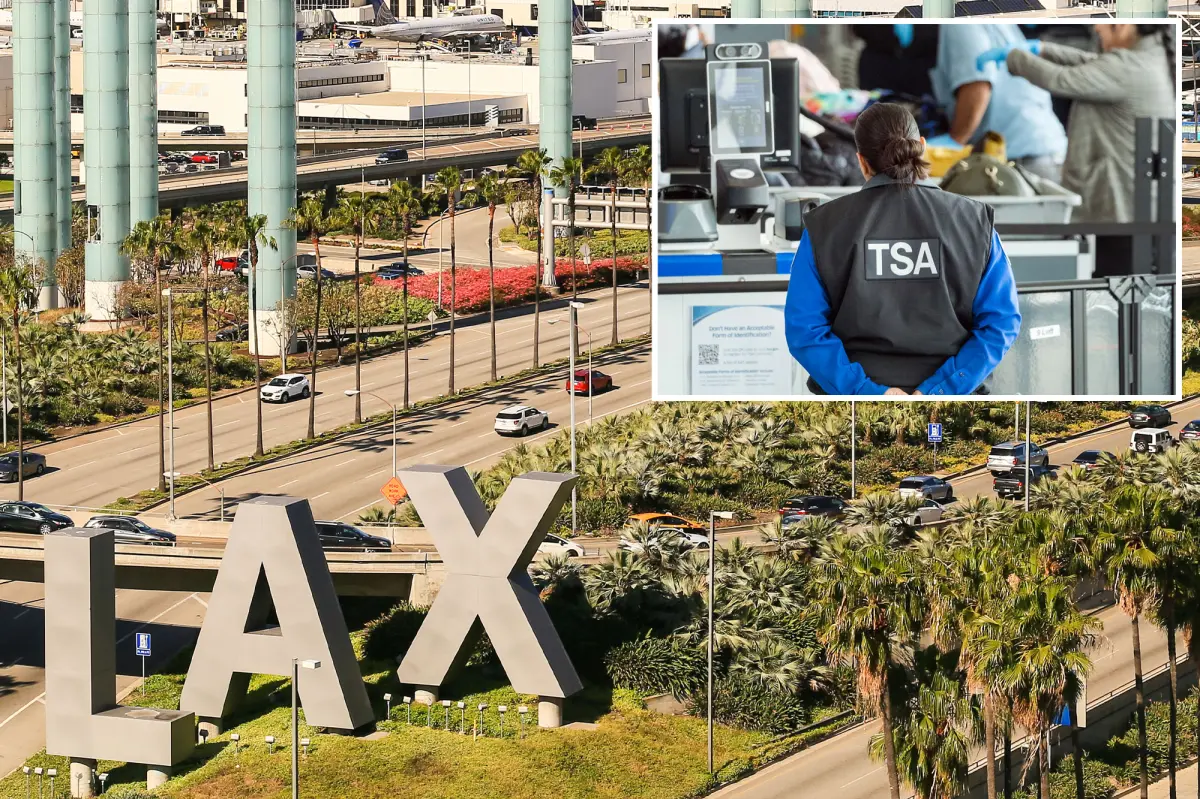
The sensory overload of Los Angeles International Airport (LAX) is a universally shared experience of modern distress. It is a place characterized by the hum of thousands of anxious voices, the rhythmic squeak of sneakers on polished linoleum, the distant roar of jet engines, and the heavy, collective sigh of travelers who have been standing in place for far too long. For decades, navigating the security lines manned by the Transportation Security Administration (TSA) has been regarded as a necessary tax on our collective patience, an exhausting ritual of stripping down our outer layers and systematically disemboweling our carefully packed luggage. It is a moment of high pressure and emotional friction where humanity is reduced to a chaotic assembly line of plastic bins, untied shoelaces, missing boarding passes, and ticking clocks. However, a major technological revolution is quietly taking place beneath the bright fluorescent lights of our nation’s busiest transit hubs, aimed at alleviating this daily misery. The federal government is currently rolling out a massive, highly anticipated $781.2 million fleet of advanced 3D computed tomography (CT) scanners to major transit hubs across the United States. This sweeping technological upgrade, which is currently being deployed at high-volume airports like LAX, promises to radically transform the traditional, dread-inducing gatekeeping process. It represents a massive financial and structural commitment from the TSA to modernize the traveler’s journey, using cutting-edge medical-grade imaging technology to solve one of the most stubborn bottlenecks in modern travel infrastructure. While airport security upgrades in the past have typically meant more restrictions, longer delays, and invasive protocols, this new initiative stands out because it aims to achieve the rare double-victory of tightening safety protocols while simultaneously speeding up the grueling process for millions of tired passengers. By replacing flat, outdated two-dimensional imaging with dynamic, three-dimensional perspectives, the TSA is staging a quiet coup against the traditional checkpoint headache, ushering in a new era where we might finally regain some of our dignity, time, and sanity as we cross the threshold from the terminal to the tarmac.
To appreciate why this transition is such a monumental victory for the average traveler, one must look closely at the sheer, everyday irritation of the traditional unpacking mandate. For years, the golden rule of airport security has been clear, albeit incredibly inconvenient: laptops, tablets, e-readers, and quart-sized plastic bags filled with tiny bottles of liquids must be extracted from the deep recesses of your luggage and laid bare in separate, flimsy gray bins. This requirement has long been a source of immense pre-flight anxiety, forcing travelers to strategically pack their most sensitive items at the very top of their bags, only to frantically shove them back in while being rushed by a queue of annoyed people behind them who are eager to catch their own flights. The new CT scanners eliminate this frustrating and clumsy ritual entirely, making the physical act of passing through security immensely more civilized and streamlined. Utilizing sophisticated computer algorithms and highly detailed 3D imaging, these machines allow operators to peer inside your luggage with unprecedented clarity, rendering the need for manual unpacking obsolete. TSA agents can now spin, tilt, zoom, and analyze a virtual model of your carry-on from virtually every conceivable angle on their high-resolution screens. Because the technology can automatically distinguish between threatening explosive materials and ordinary personal belongings like shampoo, water bottles, or a laptop battery, travelers no longer need to unzip their suitcases, untangle their charging cords, or divorce their toiletries from their bags. You simply place your fully packed suitcase on the conveyor belt and walk through the metal detector. It is a liberating shift that returns a sense of privacy, dignity, and ease to the traveler, allowing us to keep our messy packing secrets hidden from the peering eyes of strangers while we breeze through the checkpoint without the usual frantic scrambling on the conveyor belt, making the onset of your trip feel like less of an ordeal.
The human impact of this technological evolution cannot be overstated, as it targets the precise psychological pain points that make air travel so deeply stressful for millions of people worldwide. When we travel, we are often operating on a deficit of sleep, high levels of adrenaline, and the underlying fear of missing a flight, which magnifies every tiny delay into a monumental catastrophe. The checkpoint conveyor belt has historically functioned as a pressure cooker of social anxiety, where the elderly, families with small children, and busy business travelers are forced into an uneasy, rushed dance of physical synchronization. By removing the need to unpack and repack, the new scanners act as a vital safety valve for this collective tension, allowing travelers to maintain their emotional composure and proceed at a natural pace. The physical flow of the line becomes continuous rather than stop-and-go, preventing the inevitable clumps of idle, frustrated passengers that form when someone struggles to find their electronic devices at the bottom of a duffel bag. This smoother cadence does more than just shave precious minutes off the average wait time; it fundamentally alters the emotional atmospheric pressure of the airport terminal itself, replacing hostility with a palpable sense of shared ease. TSA officers, who are often forced to play the role of stressed hall monitors demanding compliance, can interact with travelers in a more relaxed, human manner. When the operational friction of the security process is systematically stripped away, we are left with a vastly more compassionate, hospitable environment. Shorter queues, fewer frantic movements, and a quieter baggage claim area combine to make the start of a journey feel less like an obstacle course and more like the beginning of an adventure, reminding us that travel can, and should, be an enjoyable experience from the moment we enter the terminal doors.
However, as with any major leap forward in modern convenience, this high-tech upgrade comes with a frustrating catch that will inevitably catch some over-packers completely off guard and potentially cost them a trip back to the ticket counter. While the digital brain nested inside these new 3D scanners is incredibly advanced, the physical body of the machines comes with a rigid design limitation that could derail your travel plans before you even reach your gate: the actual scanning tunnels are slightly smaller and more restrictive than those of the older, flat-image X-ray machines. For generations, savvy flyers have elevated “carry-on tetris” to an art form, intentionally overstuffing expandable suitcases, bulging outer pockets, and forcing oversized bags into overhead compartments to dodge those expensive checked bag fees. The older, accommodating X-ray machines, with their wider canvas entry curtains, often tolerated these slightly illegal dimensions without a peep. The new CT scanners, by contrast, are uncompromisingly rigid and will serve as the ultimate, unforgiving arbiter of luggage dimensions. If your bag is packed to the point of exploding, or if its physical framework exceeds the slightly narrower dimensions of the scanner’s entry opening, it will simply refuse to pass through the machine. There is no negotiating with the sensors; a jammed bag can halt the entire line, forcing TSA agents to reject your luggage on the spot. Should this happen, you will face the ultimate travel nightmare: being turned away at the very threshold of security and forced to make the long, shameful march back to the airline ticket counter to check your bag and pay a hefty fee, potentially missing your flight in the process. This shift means that theater-style carry-ons are a thing of the past, and travelers must now be brutally honest with themselves when packing their bags at home, ensuring that their luggage is compact enough to slide through the scanner with ease.
For a specific niche of travelers, the rollout of these advanced scanners represents an even more critical concern that extends beyond mere physical dimensions and enters the realm of artistic preservation and nostalgia. If you are an analog photography enthusiast, a professional film photographer, or even a casual traveler carrying a disposable camera to capture retro vacation memories, you must exercise extreme caution when approaching these new checkpoints. The powerful, medical-grade radiation used by these sophisticated 3D CT scanners is significantly stronger than the low-energy X-ray beams used by the older generation of equipment. While the old machines were generally safe for lower-speed films, the intense scanning process of the new CT devices will instantly and permanently ruin unprocessed film rolls, fogging the emulsion, destroying colors, introducing wild streaks of light, and wiping out your irreplaceable photographs in a fraction of a second. Simply putting your camera gear through the machine in a protective case is no longer enough to guard against this invisible threat. To preserve your precious artistic work, you must be proactive and vocal, removing your film canisters from your bags before they ever reach the conveyor belt and requesting a manual handcheck from a TSA agent. While agents are trained to accommodate these requests, navigating this process requires a high degree of patience, politeness, and preparation, as well as an understanding that the convenience of modern automation occasionally clashes with the preservation of analog traditions. It is a sobering reminder that as we march forward into an increasingly digital and automated future, those who cherish physical media must remain vigilant to keep their memories safe from the unintended consequences of high-tech progress.
At its core, the implementation of this $781.2 million technology represents a profound tipping point in the way we navigate our increasingly connected world. It is a fascinating compromise between security, speed, and standard operating procedures, proving that while technology can make our lives vastly easier, it always demands a bit of behavioral adaptation in return. For the vast majority of travelers moving through hubs like LAX, the minor sacrifices—such as being slightly more disciplined about our carry-on dimensions and looking out for our analog film rolls—are a remarkably small price to pay for the sheer bliss of keeping our bags closed and our lines moving. We are watching the slow retirement of a deeply despised era of air travel, replaced by a system designed to be smarter, faster, and infinitely more respectful of our finite time and patience. As these futuristic scanners become the standard baseline at airports across the country, they serve as a comforting beacon of a more humanized travel experience, proving that even the most frustrating public spaces can be reinvented for the better. Ultimately, the next time you pack your bags for a flight, remember to pack light, keep your eyes on the physical dimensions of your luggage, leave your laptop tucked safely away, and step into the airport with the quiet confidence that the journey ahead is going to be just a little bit smoother than the last. By embracing these updates with realistic expectations and smart packing habits, we can transform the airport from a place of high anxiety into the simple launchpad for our next destination.