




To anyone who has ever sat trapped in the notorious, bumper-to-bumper gridlock of Southern California, the dream of a walkable, interconnected metropolis can often feel like a distant, utopian fantasy. For decades, the region’s development has been defined by vast expanses of asphalt, towering concrete freeway interchanges, and a distinct isolation of neighborhoods that leaves residents dependent on their cars for even the shortest journeys. Yet, a quietly revolutionary project is underway that promises to soften this concrete landscape and forever transform how residents of Glendale and Los Angeles interact with their natural surroundings. The Glendale City Council recently took a momentous step forward by voting unanimously to approve the comprehensive environmental impact study for the Glendale-Los Angeles Garden River Bridge Project. With an estimated budget of $31 million, this ambitious municipal endeavor has officially transitioned from a theoretical design concept on a bureaucrat’s drafting table to an active public works initiative. By authorizing this crucial planning milestone, civic leaders have given the green light for funding to be allocated and preparatory work to begin on a structure that will span approximately 320 feet across the concrete-lined channel of the Los Angeles River. Positioned near the bustling intersection of Flower Street and Fairmont Avenue, the bridge is designed to knit together two of the region’s most beloved but historically separated recreational areas: the evolving Glendale Narrows Riverwalk and the sprawling, untamed wilderness of Griffith Park. This decision represents a profound shift in local urban planning, demonstrating a modern commitment to reclaiming the paved-over natural footprint of the valley and prioritizing the physical and mental well-being of its human citizens over the unyielding demands of automobile transit.
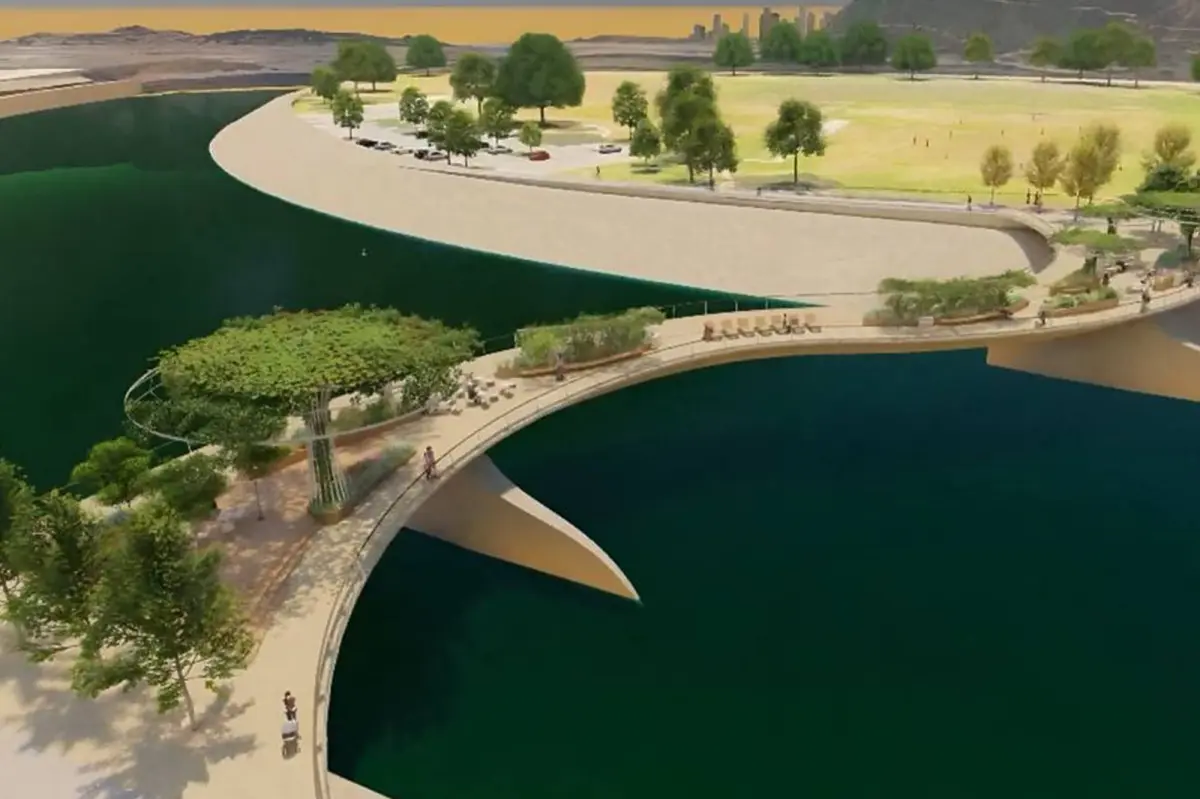
Rather than constructing a utilitarian, uninspiring concrete overpass simply to move pedestrians and cyclists from point A to point B, local planners and designers have envisioned something far more poetic, inviting, and luxurious. Under the creative direction of the internationally renowned landscape architecture firm Olin—the creative minds famous for transforming ordinary public spaces into iconic urban sanctuaries—the Garden River Bridge is being designed as a “floating park” suspended gracefully over the river basin. The bridge will feature a striking, undulating curved design that mimics the natural, forgotten meanders of the historic waterway below, discarding the rigid angles of old-school engineering. Far from a mere sidewalk in the sky, it is destined to become a primary destination in its own right, inviting travelers to slow their pace, catch their breath, and savor the journey. The master plan incorporates generous, shaded canopies designed to shield visitors from the intense midday valley sun, integrated wooden benches that curl along the pathways, and dedicated community gathering spaces where friends can meet or artists can set up their easels. Expansive river overlooks will offer sweeping, unobstructed views of the water corridor, the surrounding mountains, and the distant downtown skyline. To truly humanize the concrete channel, the structure will be blanketed in rich, thoughtfully curated landscaping featuring drought-tolerant California native plants, wild sage, and native trees that will attract local birds and butterflies. Public art installations, designed to celebrate the rich cultural tapestry and ecological history of the area, will be woven seamlessly into the architectural framework. By blending nature, art, and infrastructure, the bridge will offer a sensory haven where the therapeutic rustle of leaves and the gentle breeze off the river can temporarily drown out the distant hum of the nearby freeways.
To truly appreciate the massive significance of this bridge, one must look closely at the long, patient history of the Glendale Narrows Riverwalk. For more than a decade, the City of Glendale has been quietly executing a multi-phase master plan aimed at reclaiming its stretch of the Los Angeles River front. Historically, this portion of the riverbank was viewed as an industrial eyesore, dominated by warehouses, train tracks, and utility corridors that disconnected the community from the water. Phase I and Phase II of the Riverwalk successfully converted these neglected banks into a peaceful recreational oasis, introducing paved hiking and biking trails, native plant gardens, scenic viewing platforms, and specialized equestrian amenities where local horseback riders could enjoy the waterfront. Yet, despite these triumphs, the Riverwalk always felt incomplete, terminating abruptly at the edge of the roaring Interstate 5 and the steep concrete walls of the river channel, which separated Glendale residents from the crown jewel of Los Angeles’ municipal park system: Griffith Park. Encompassing over 4,300 acres of rugged hills, wild oak woodlands, and famous attractions like the Los Angeles Zoo and the Griffith Observatory, the park sat tantalizingly close, just a stone’s throw across the river, yet remained functionally inaccessible to anyone without a car. The new Garden River Bridge represents Phase III of this visionary project, serving as the literal and figurative missing link. Once completed, this elegant connector will seamlessly integrate Glendale’s urban waterfront with Griffith Park’s sprawling trail network, creating a continuous, mile-long trail looping through some of the greenest, most tranquil spaces in the entire metropolitan area.
The response from the local community has been nothing short of ecstatic, illuminating the deep, universal human craving for safe, accessible outdoor spaces in a city that often feels dominated by traffic. When news of the city council’s approval spread across local neighborhood networks and digital community forums like Reddit, the digital landscape lit up with excitement and relief. Fitness enthusiasts, daily runners, and cyclists—who frequently risk their safety navigating the city’s busy streets—hailed the project as a monumental victory for public safety and mental health. “The LA River is great for running, so a path from Glendale to LA would personally make my runs safer and more enjoyable,” shared one local jogger online, emphasizing how a continuous, traffic-free path would make their daily routines infinitely more peaceful. Parents expressed excitement at the prospect of taking their children on long, leisurely weekend walks directly from their Glendale neighborhoods to the zoo without ever having to load a stroller into a car trunk or navigate chaotic, sun-baked parking lots. Others simply cheered the raw convenience of the connection, with one enthusiastic resident summing up the collective mood with a simple, joyful sentiment: “Sick, I’ve been wanting to walk to the zoo.” These simple, heartfelt reactions reveal a profound truth about modern urban survival: that beneath the glitz, glamour, and fast-paced lifestyle of Southern California, what people truly desire are simple, tangible opportunities to touch grass, breathe fresh air, and connect with their neighbors in spaces designed specifically for human scale.
However, as with many grand infrastructure projects in California, this exciting vision of a walkable paradise comes with a heavy dose of bureaucratic reality and logistical patience. Though the approval of the environmental study is a massive hurdle cleared, the actual realization of the Garden River Bridge remains a distant milestone on the horizon. The actual construction phase is projected to take about two and a half years of highly technical, delicate work over an active flood control channel. Yet, due to the complex web of multi-jurisdictional approvals, funding distributions, and meticulously detailed engineering designs required, the bridge is not scheduled to welcome its very first pedestrian, cyclist, or child on a scooter until the year 2031. To some, this decade-long timeline feels incredibly frustrating, highlighting the slow, methodical pace of public works in the golden state, where projects must navigate a labyrinth of environmental regulations, labor agreements, and coordination between two distinct major cities, the county flood control district, and federal agencies. It is a bittersweet reality for local residents who are eager to use the path today, forcing a collective exercise in long-term patience. And yet, there is a quiet beauty in this slow-cooked progress; great cities are not built in a day, and the meticulous planning ensures that when the bridge finally opens, it will be built to the absolute highest standards of safety, environmental sustainability, and architectural longevity, serving as a permanent legacy for generations of future Angelenos.
Ultimately, the Glendale-Los Angeles Garden River Bridge is far more than a local transportation project; it is a vital symbol of a grander, historic effort to revitalize the entire 51 miles of the Los Angeles River. For nearly a century, the river has been treated as a gray, concrete monument to 20th-century flood control engineering, a sterile channel designed strictly to flush stormwaters away from the growing metropolis as quickly as possible. Today, we are witnessing a profound cultural awakening as communities work to dismantle this concrete dividing line and restore the river as a living, breathing green spine to heal the metropolitan area’s social and ecological fractures. When the garden bridge finally spans the water in 2031, it will stand as a physical manifestation of this ecological rebirth and a testament to what is possible when human ingenuity collaborates with the natural world rather than trying to pave over it. Children who are today just taking their first steps will cross this beautiful, leaf-draped span as young adults, enjoying a city that is fundamentally more connected, greener, and more compassionate than the one their parents grew up in. By investing $31 million into this majestic modern crossing, Glendale and Los Angeles are not just building a bridge of steel, wood, and wild sage; they are building a bridge to a better, more human-centric future, reminding us all that even the most sprawling concrete jungles can be coaxed back to life.