






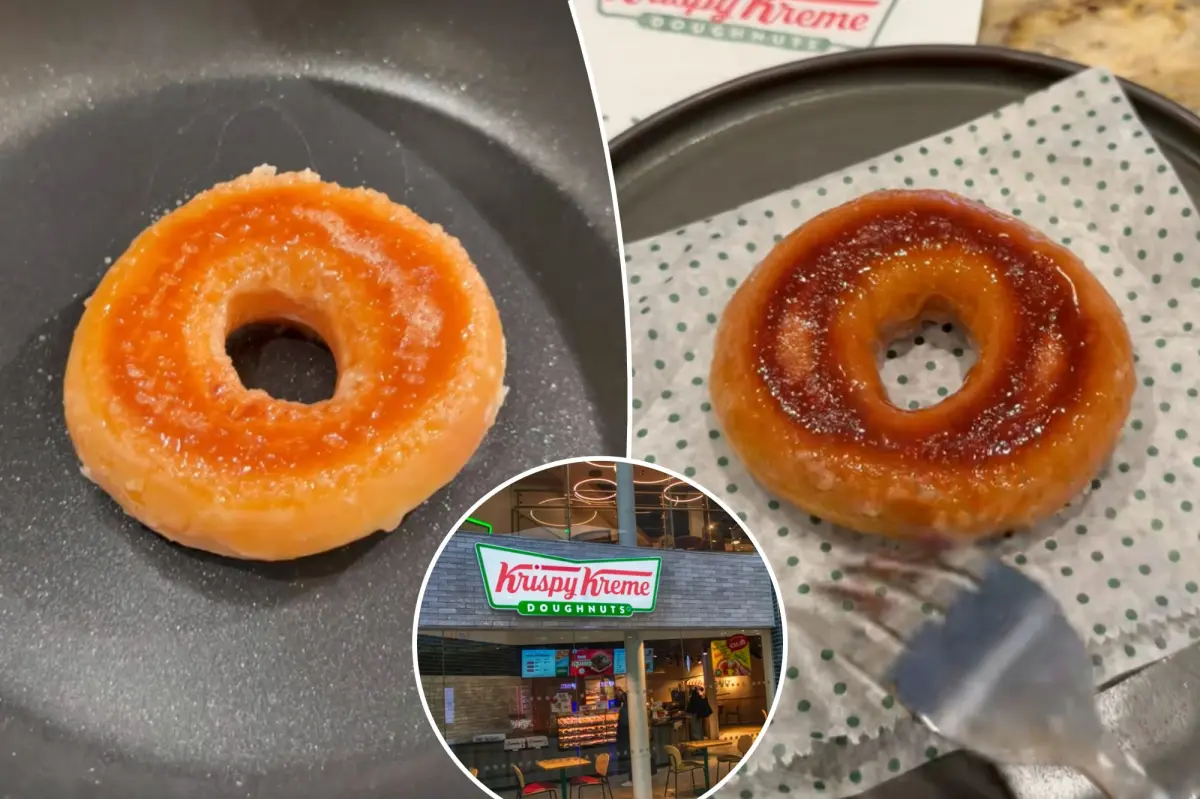
In a digital landscape often dominated by overly complex recipes, hyper-stylized plating, and hard-to-find ingredients, the internet has collectively lost its mind over an incredibly simple, accessible culinary trick: taking a classic, store-bought Krispy Kreme Original Glazed doughnut and throwing it directly into a hot frying pan. Food hacks are a dime a dozen on social media, but every so often, a trend emerges that is so beautifully straightforward and instantly tempting that it captures the imaginations of millions of home cooks overnight. This particular viral sensation owes its origins to the unpredictable, fast-paced world of TikTok, where creator @kellyycha decided to experiment with raw heat and glazed dough. The spark for her kitchen experiment was a popular meme featuring a beloved pop-culture icon, “Seinfeld” actress Annie Korzen, who famously went viral in her own right for passionately asking “was it crispy?” when discussing whether someone had ever truly experienced a Krispy Kreme doughnut. Spurred on by this humorous, persistent quest for the ultimate crunchy texture, the creator set out to transform the traditionally melt-in-your-mouth pastry into something with an loud, satisfying crunch. By placing the soft doughnut into a hot skillet, she managed to spark a global kitchen revolution, igniting a wave of copycat videos from curious foodies eager to find out if this quick trick could actually improve upon a classic which many already considered to be absolute perfection.
The sensory magic behind this hack lies in the volatile chemistry of sugar when introduced to direct, high heat. Standard glazed doughnuts are universally beloved for their pillow-soft, airy dough and their delicate, translucent coating of sweet glaze, which normally dissolves the moment it touches your tongue. However, when you pan-fry that same doughnut, you initiate an beautiful reaction that completely alters its texture and flavor profile. As the doughnut sits in the hot pan, the outer layer of sugary glaze melts, bubbles furiously, and rapidly caramelizes, turning a rich golden-brown. Once removed from the heat source and allowed to cool for just a quick moment, this molten sugar solidifies into a shatteringly crisp, glass-like crust that closely mimics the crust of a French crème brûlée. Inside, the yeast-raised dough remains wonderfully warm, pillowy, and tender, protected from the direct heat of the metal by its newfound candy shell. This creates a brilliant contrast of textures—a loud, crispy crunch giving way to a warm, soft, airy interior. It is a decadent sensory journey that elevates a humble, mass-produced supermarket sweet into a gourmet, artisanal-style dessert, proving that you do not need expensive kitchen gadgets or professional culinary training to create luxury at your kitchen counter.
To determine if this food trend was merely a visual gimmick designed for internet clout or a genuinely delicious revelation, popular food reviewer and digital creator Bayle decided to try the experiment in his own kitchen. Known to his many followers for rigorously testing viral food trends and offering honest, down-to-earth reviews of different meals, Bayle was initially drawn to the hack because of how visually stunning the caramelized crust looked on screen. After trying the pan-seared creation for himself, his verdict was a resounding and enthusiastic thumbs-up, as he happily admitted that he would definitely eat a double-fried doughnut again. He shared that the experience was surprisingly delicious, successfully delivering a delightfully crispy outer layer while maintaining the soft, comforting doughiness in the center that makes the original doughnut so iconic. For Bayle, the experiment was a delightful success, proving that some social media trends are absolutely worth the hype and can introduce genuine, long-term joy to our daily eating habits. His genuine enjoyment highlighted the human appeal of these trends: the simple, child-like pleasure of playing with your food, taking a familiar comfort item, and breathing exciting new life into it with minimal effort.
However, as with any cooking technique involving melted sugar, there are physical laws and practical limitations that home cooks must navigate to achieve caramelized perfection. Bayle was quick to offer some crucial advice for anyone planning to fire up their stoves, warning that you must keep an incredibly watchful, highly attentive eye on the pan throughout the entire process. Because the glaze is made almost entirely of sugar, the margin of error between a beautifully caramelized, amber-colored crust and a bitter, blackened, smoking mess is incredibly thin. According to his firsthand trials, it takes roughly three minutes of cooking per side to achieve the ideal level of golden caramelization, but this timing can vary wildly depending on your stove and cookware. He candidly admitted that he actually burnt a few of his test doughnuts while figuring out the delicate temperature balance, reinforcing that patience is key. For the absolute best results, chefs should keep their stove top set to a gentle medium-to-low heat, allowing the sugar glaze to melt and crisp slowly rather than scorching instantly. Additionally, Bayle noted that this clever technique is not strictly limited to one brand, suggesting that the hack would definitely work with other glazed doughnut brands, offering a fun universe of experimental possibilities for curious bakers everywhere.
While many corporate giants might react defensively to consumers altering their signature products, or ignore the trend altogether, Krispy Kreme has chosen to enthusiastically lean into the viral fun. This warm reception from the brand highlights a refreshing shift in modern marketing, where companies actively embrace the creativity of their community. Aimee Cutajar, the Chief Marketing Officer at Krispy Kreme ANZ, expressed absolute delight at the trend, stating that the company loves seeing the sheer imagination and joy that fans bring to enjoying their products. While she playfully reminded everyone that nothing quite compares to the experience of a fresh, warm, melt-in-your-mouth Original Glazed doughnut straight off the production line, she emphasized that the brand is ultimately about sharing happiness and celebrating creative twists. This positive sentiment was echoed across the digital space, with Krispy Kreme’s global social media accounts chiming in with playful, supportive comments on TikTok, teasing that they might have to try the hack themselves. Even the Krispy Kreme UK account reacted with enthusiasm, declaring the fried creation to be “Krispy Kreme 2.0,” showing a lovely, lighthearted connection between a massive global corporation and the everyday creators playing in their kitchens.
Predictably, the rest of the internet has completely lost its collective mind over the hack, flooding comment sections with a mixture of intense food cravings, humorous self-deprecation, and creative recipe upgrades. Many users expressed sheer awe at the simplicity of the concept, with some jokingly wondering how they had managed to live so long without ever thinking of pan-frying a doughnut themselves. Others went as far as to declare that this crispy, warm state was surely the way the legendary pastries were always intended to be consumed. Almost immediately, the digital community began brainstorming ways to elevate this already decadent dessert to even greater heights. The most popular and universally agreed-upon addition was the suggestion to pair the piping-hot, newly caramelized doughnut with a generous, melting scoop of cold vanilla bean ice cream. This brilliant suggestion creates a classic contrast of hot and cold, crunchy and creamy, transforming the viral hack into an elegant, restaurant-worth dessert. Ultimately, this viral trend is a beautiful reminder of why we love food culture: it brings people together over shared curiosity, celebrates simple culinary creativity, and reminds us that sometimes, the most joyful discoveries in life are found by simply looking at a classic favorite in a completely fresh, exciting new light.