


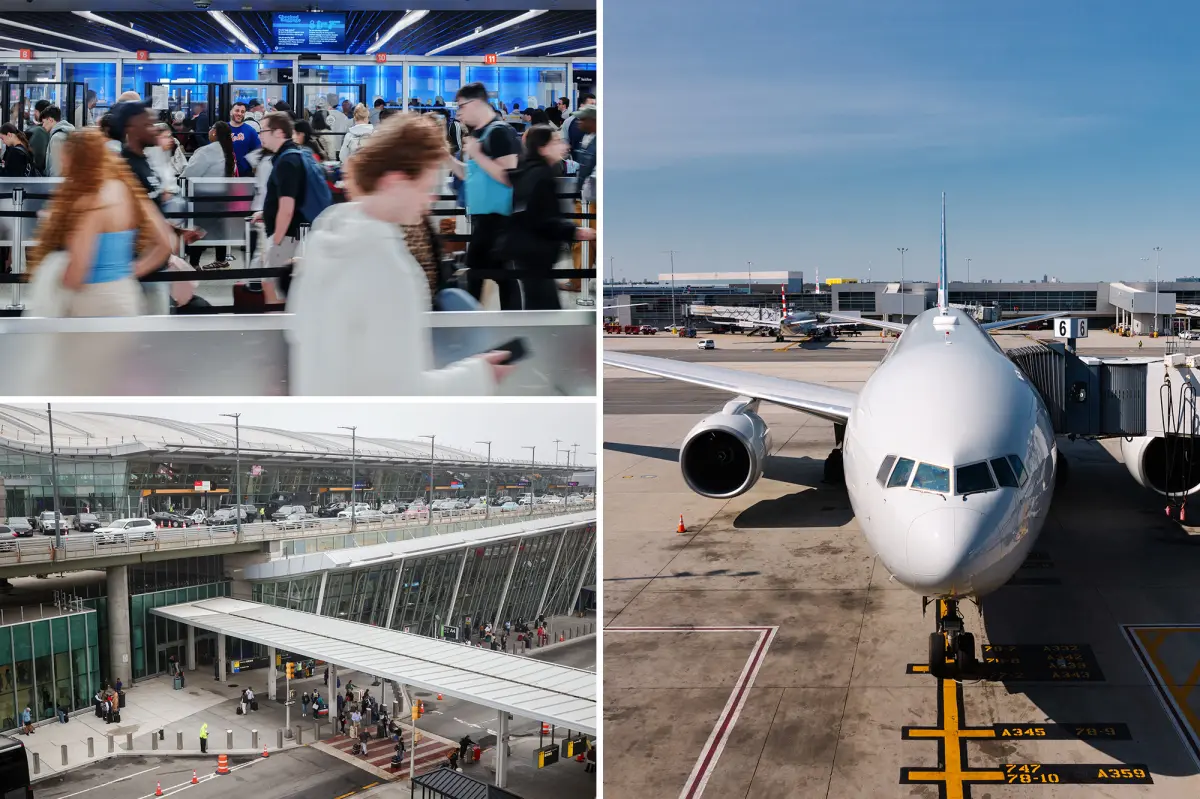
We have all been there: sitting in front of a glowing laptop screen late at night, a cup of lukewarm coffee within arm’s reach, watching the agonizingly slow loading wheel of a travel search engine spin. For a brief moment, we allow ourselves to dream of escape—perhaps a long-overdue family reunion, a romantic getaway, or a simple chance to disconnect from the frantic pace of everyday life. But when the results finally load, that warm sense of anticipation is instantly replaced by a cold knot of financial dread in the pit of the stomach. The price tag on the screen is no longer just a number; it feels like an active barrier, a gatekeeper standing between us and the people or places we love. This disheartening experience has become the default reality for millions of Americans navigating the increasingly hostile landscape of modern air travel. Nowhere is this financial squeeze more acutely felt than in the nation’s major transit hubs, with New York City’s legendary John F. Kennedy International Airport leading the charge into historically expensive territory. A comprehensive new study from the travel publication Local Insider, leveraging data from the federal Bureau of Transportation Statistics alongside a deeply revealing poll of fifteen hundred everyday fliers, has laid bare the stark financial landscape confronting travelers. According to their findings, as of May 2026, the average cost of a single plane ticket departing from JFK reached a staggering $404.59. This eye-wateringly high price point secured the iconic Queens airport the ninth spot on the list of the most expensive travel hubs in the United States. For New Yorkers and the millions of visitors who rely on JFK as their primary gateway to the sky, this milestone is far more than a statistical curiosity; it represents a tangible, heavy burden on their wallets and a severe limitation on their geographic freedom, forcing families to make painful compromises between travel and basic household necessities.
While JFK’s near-top-ten ranking is a sobering reminder of the high cost of living and traveling in the New York metropolitan area, the airport is far from an isolated island of price inflation. In fact, it barely missed the top five most expensive slots by a margin of less than ten dollars, illustrative of a broader national trend where getting off the ground is becoming a luxury reserved only for those with significant disposable income. To understand the true scale of this crisis, one only has to look at the airports that outpaced JFK in draining travelers’ checking accounts. Taking the crown as the absolute most expensive airport in the country was Washington Dulles International, where the average ticket price soared to a breathtaking $439.39. Following closely was Salt Lake City International Airport in Utah, claiming the second spot with a painful $434.16 average. Charlotte Douglas International in North Carolina took third place at $432.16, while California’s bustling San Francisco International secured the fourth spot with a $422.17 average fare. Rounding out the top five was Houston’s George Bush Intercontinental Airport, where travelers had to shell out an average of $413.60 per flight. Even the regional alternatives in the Tri-State area offer little in the way of significant financial relief. Newark Liberty International Airport in New Jersey narrowly missed the top ten, landing at number thirteen with average fares of $397.45. Only New York’s LaGuardia Airport seemed to provide a relative bargain, ranking thirty-ninth on the national list, though its “affordable” average ticket price of $333.25 is still a substantial sum of money for any working-class family attempting to budget for a vacation or an emergent trip. Consequently, travelers in the Northeast find themselves caught in a geographic vice, where choosing between JFK, Newark, or LaGuardia has become less about convenience and more about selecting which financial blow is the most manageable for their monthly budget.
To truly understand why the simple act of booking a flight has devolved into a source of intense financial anxiety, we have to look far beyond the physical airport terminal walls and examine the complex, fragile web of global events. The primary catalyst driving these astronomical airfares is a highly volatile mix of international geopolitics and energy supply chains. At the heart of the current crisis is the ongoing, high-stakes military conflict involving Iran. This devastating war has sent violent shockwaves through global energy markets, causing crude oil prices to skyrocket in an incredibly short span of time. The situation has been drastically worsened by the near-total shutdown of the Strait of Hormuz—the vital maritime transit corridor that serves as a narrow choke point for an immense portion of the world’s daily petroleum supply. For consecutive weeks, this crucial shipping channel has been virtually impassable to commercial oil tankers due to physical security threats and active regional hostilities, severely choking off distribution channels and driving up the cost of refining aviation fuel to historic, unprecedented heights. Because commercial airlines are incredibly sensitive to energy prices, with jet fuel typically representing one of their single largest operating expenses, this severe global supply-chain stranglehold has forced the aviation industry into a tight, economically agonizing corner. The modern globalized economy is so deeply interconnected that a political standoff or military bombardment thousands of miles away in the Middle East directly determines whether a nurse in Queens, a student in Chicago, or an elderly grandparent in Atlanta can realistically afford to purchase a plane ticket. As shipping container blockades persist and alternative transport routes prove insufficient, the raw cost of energy continues to ripple outward, acting as an invisible tax on every single traveler who simply wants to cross a border to visit a loved one.
Faced with these crippling overhead fuel costs, major commercial airlines have wasted absolutely no time in transferring the financial pain directly onto the shoulders of everyday consumers. Industry giants like Delta Air Lines and United Airlines have adopted highly aggressive pricing strategies, rapidly raising basic ticket prices and systematically inflating baggage fees to protect their corporate profit margins from being completely eroded by the global energy crunch. This swift corporate pivot to self-preservation has effectively transformed the process of booking a flight into a highly stressful, exhausting minefield of hidden surcharges and rapidly escalating fees. For the ordinary traveler, this defensive corporate posturing feels less like a necessary economic adaptation and more like a systematic exercise in being nickel-and-dimed at every single juncture of their journey. A family planning a simple domestic vacation is no longer just budgeting for the baseline cost of the flight itself; they are forced to perform exhausting mental gymnastics to calculate the compounding, astronomical costs of checking a standard piece of luggage, selecting adjacent seats so their young children are not left unattended, and avoiding the highly punitive fees now associated with even the most basic, bare-bones tickets. This persistent, aggressive pricing approach has created profound, tangible friction between major airlines and the traveling public, rapidly eroding whatever institutional goodwill remained from the post-pandemic travel revitalization. Instead of feeling like valued passengers embarking on a meaningful journey, flyers are increasingly left with the demoralizing impression that they are merely commercial targets from which every last cent must be extracted to appease corporate shareholders, widening the emotional chasm between executive suite profits and the economic reality of the people sitting in coach. This relentless focus on corporate yields has turned what used to be a standard customer service relationship into an adversarial transaction, where every convenience comes with a steep surcharge that leaves travelers feeling exploited before they even board.
The deep human cost of these exorbitant pricing trends is reflected clearly in the dramatic behavioral shifts of modern travelers, who are responding to the financial squeeze with a painful mixture of defiance, quiet resignation, and profound disappointment. The survey portion of the Local Insider study paints an incredibly vivid, heartbreaking picture of an American public actively being forced to shrink their personal horizons. More than half of all respondents polled—a striking fifty-three percent—confessed that they have already had to postpone, delay, or completely cancel their cherished travel plans, opting to sit anxiously on the sidelines in the desperate, hopeful expectation that market prices might eventually cool down to a reasonable level. Furthermore, an overwhelming sixty-three percent of those surveyed admitted that they fully expect to fly far less frequently this year than they historically would, willingly sacrificing hard-earned leisure time, spontaneous weekend getaways, and vital, comforting face-to-face visits with distant loved ones as a direct concession to economic survival. For those stubborn travelers who absolutely must travel due to life events, the booking experience has evolved into a high-stakes exercise in extreme planning and profound anxiety; forty-seven percent of respondents reported booking their flights weeks or months earlier than they normally would have, participating in a frantic, high-stress game of digital roulette to secure the lowest possible fare before the booking system raises the price yet again. These numbers represent a quiet, collective contraction of the human experience across the country, manifesting as missed milestone weddings, holiday dining tables with empty chairs, canceled summer vacations that children will never get to experience, and important career or business opportunities left unpursued because physical travel has simply become too expensive for an ordinary household budget to bear. The mental energy expended on comparing budget airlines, setting flight alerts, and constantly checking prices has reached an all-time high, introducing a heavy layer of cognitive fatigue into what was once a joyful process of planning an adventure.
As we look toward the horizon, the survey’s most alarming findings point to a deeply unsettling, existential shift in how we perceive the future of global mobility. A staggering sixty-eight percent of those surveyed expressed a profound fear that air travel could soon become completely and permanently unaffordable for them. Even more telling is the near-universal consensus regarding the democratization of flight: an overwhelming ninety-three percent of respondents stated their belief that the average, everyday traveler can simply no longer afford high ticket prices. This collective sentiment marks a tragic regression in modern social progress. For decades, the democratization of aviation was toasted as one of the hallmark achievements of the late twentieth century, transforming what was once a highly exclusive, elitist privilege for the wealthy into an accessible, standard tool for global human connection. Now, we are witnessing the swift, systematic unwriting of that progress, threatening to return society to a time when crossing oceans or continents was a luxury reserved solely for high-society elites. When traveling becomes a privilege of the ultra-wealthy, our world naturally contracts, isolating us within our regional bubbles and fostering division. The ability to fly should not be treated as a luxury item akin to fine art or sports cars; it is a vital catalyst for human empathy, international understanding, and the preservation of our deepest personal relationships. If the current trajectory of skyrocketing fuel costs, unchecked corporate inflation, and global conflict is left unaddressed, we risk entering a fragmented, grounded era where the sky belongs only to those who can afford it, leaving the rest of humankind to watch from the ground, wondering how we let the simple dream of flight slip through our fingers yet again. Ultimately, bridging these vast physical distances is essential to our collective identity, and allowing the skies to become an exclusive playground of the rich strikes a blow to the very heart of human curiosity and connection.