



Sports have always served as a unique, powerful catalyst for global unity and mutual understanding, but it is often the quiet, domestic spaces far outside the roaring echo of the grand stadiums where the most profound and lasting cultural exchanges truly happen. With the highly anticipated World Cup finally returning to American soil for the first time in thirty-two years, a vibrant, diverse tapestry of international tourists has flooded major United States cities, bringing with them their own unique perspectives, social expectations, and deeply ingrained cultural norms. As these eager visitors navigate the sprawling geography, towering urban landscapes, and distinct societal quirks of their host country, they inevitably encounter moments of profound culture shock that challenge their worldviews and spark moments of deep reflection. Amidst the high-stakes soccer matches, patriotic displays, and deafening stadium cheers of this competitive summer, one of the most delightful, humorous, and heartwarming stories of global connection emerged not from a turf pitch, but from the humble vinyl booth of a casual American-Mexican restaurant. It was in this ordinary, everyday setting that a traveler from Japan, sharing his experiences under the online moniker @japan_nobunaga, discovered a fundamental, fascinating difference in how different societies conceptualize hospitality, generosity, and the unwritten social contracts of dining out. His entirely innocent encounter with a standard, almost invisible American restaurant staple quickly exploded across the internet, capturing the hearts of millions of social media users, inducing waves of laughter, and shedding a powerful light on the everyday luxuries that local citizens frequently overlook and take for granted. This foreign traveler’s unexpected journey into the heart of American dining serves as a beautiful, gentle reminder of how food can act as both a mirror of cultural values and a bridge of unexpected human connection, eloquently proving that sometimes, the most memorable souvenirs of international travel are not cheap physical trinkets, but the profound human realizations sparked by a simple, unprompted gesture of goodwill.
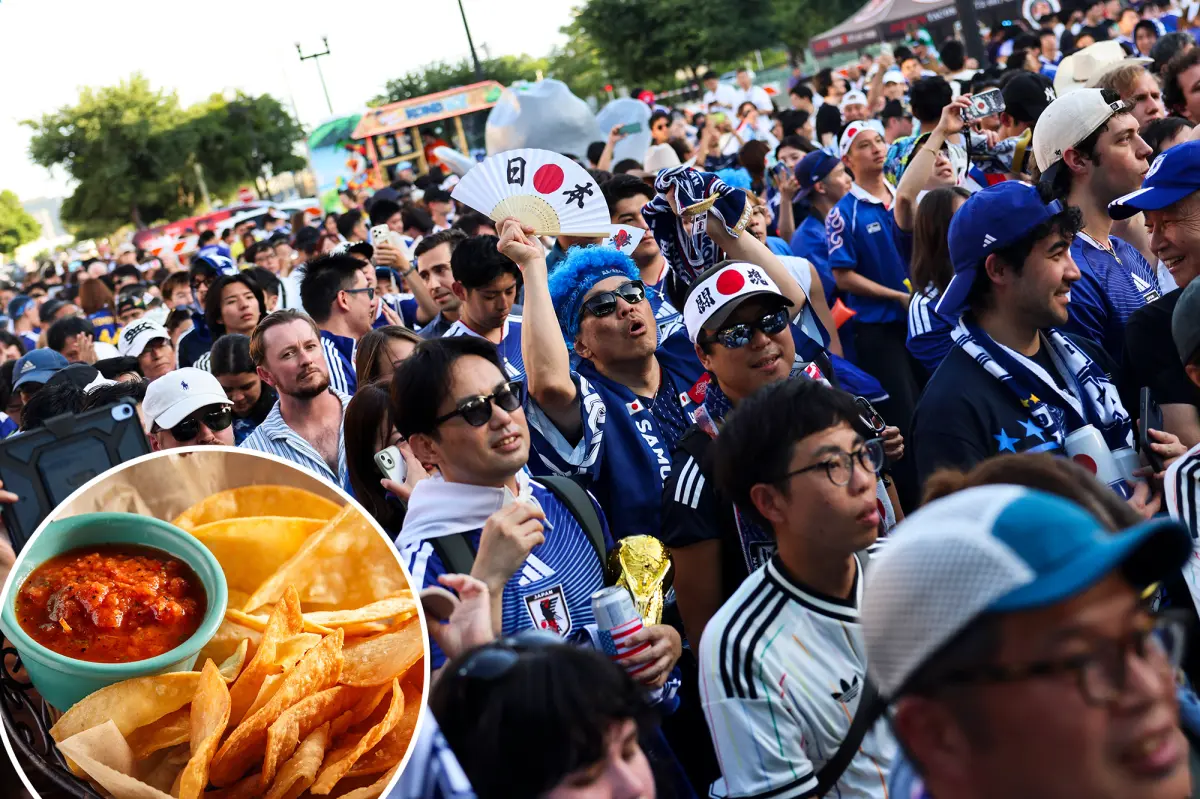
The stage for this gentle, humorous clash of civilizations was set in a typical, bustling Mexican-American eatery, a place where local families routinely gather to unwind after a long day and where the sensory experience is defined by the sharp tang of freshly squeezed lime, the comforting aroma of grilled meats, and the omnipresent, comforting hubbub of friendly chatter and clinking glasses. Shortly after sitting down at his assigned table, before he or his traveling companions had even had a chance to open their glossy menus, browse the appetizer selection, or peruse the drink options, our protagonist was utterly startled by the sudden, unceremonious arrival of a waiter bearing a large, overflowing basket of warm, freshly fried corn tortilla chips accompanied by a bowl of bright, spicy tomato salsa. To any domestic American diner, this immediate offering is a completely standard, almost invisible prelude to a meal—a universally expected right of passage that silently signals that the kitchen is functioning, that hospitality is underway, and that comfort is guaranteed without any effort on the patron’s part. However, to someone raised in a society where transactions are meticulously balanced, gifts are carefully measured, and hospitality is treated with a profound level of intentionality and personal responsibility, this instantaneous offering felt less like a casual appetizer and more like an unearned commitment that required justification. Confused, intrigued, and slightly alarmed by the unsolicited delivery of food, the incredibly polite Japanese visitor felt compelled to stop the busy server mid-stride, earnestly explaining in a display of classic honor that his party had not yet ordered anything from the kitchen, and therefore had not done anything to earn or deserve this food. The waiter, undoubtedly amused and perfectly embodying the relaxed, easygoing, and informal nature of American service culture, simply chuckled, shook his head, and offered a casual, brief response that would soon echo across the digital world: “They just come with the table, man.”
This brief, seemingly minor interaction in a noisy restaurant sparked an extraordinarily deep philosophical and sociological revelation within the traveler’s mind, which he later shared with the world in an incredibly eloquent, poetic post on X (formerly Twitter) that eventually gathered an astounding seventeen million views and counting. In his viral post, he reflected deeply on the vast, invisible gulf that exists between how his homeland of Japan and his host country of the United States perceive the delicate concepts of giving, receiving, and the weight of social interaction, explaining that in Japan, hospitality—known as omotenashi—is closely tethered to a complex, delicate network of mutual obligation and long-term social balance. In his culture, every single gift, no matter how small or seemingly insignificant, is viewed as a debt of honor, a carefully weighed maternal or social gesture that demands a proper, highly thoughtful return in due season, complete with what he beautifully described as an “interest of feeling” to maintain perfect social harmony. This system of reciprocal respect ensures that no one is left feeling unduly indebted, preserving dignity and boundaries between people through structured appreciation and careful exchange. Confronted with the radically different American model, where a generous, unlimited portion of food is laid out before a guest has even proven their basic ability to pay for their dinner, he found himself utterly disarmed by a brand of generosity that felt almost reckless, operating entirely outside the boundaries of transactions, worthiness, or established merit. It was a stark, fascinating contrast: in one culture, hospitality is a sacred, perfectly balanced dance of mutual recognition and measured gift-giving, while in the other, it is a chaotic, overflowing, and completely unprompted baseline of casual abundance that requires no invitation or prior qualification to enjoy. To a mind trained to honor every gift and carefully balance the scales of social debt, the mountain of free salted chips was not just a snack, but a profound ethical dilemma masquerading as an appetizer, turning a casual pre-meal nibble into a deep meditation on grace, obligation, and international friendship.
Despite receiving gentle, well-meaning warnings from his dining companion—who possessed a much more pragmatic, experienced understanding of American portion sizes and advised him not to spoil his appetite before the heavy main courses arrived—our traveler found himself bound by his deeply ingrained cultural values and could not simply ignore the food sitting in front of him. For him, leaving a gift untouched, neglected, or cold on the table was equivalent to an outright insult to the host, an act of supreme disrespect to the invisible forces of hospitality that had graciously placed this warm bounty before him without asking for anything in return. He firmly believed that honor demanded each and every basket of crispy tortilla chips be thoroughly and respectfully finished, a cultural duty that he took so incredibly seriously that he ultimately consumed three entire baskets of chips and salsa before his primary, ordered meal had even left the kitchen area. By the time his actual, paid-for entree finally arrived at the table, the comedic tragedy of his cultural dedication was fully complete; his hunger had been thoroughly and decisively vanquished by starch, his physical comfort was entirely nonexistent, and he sat slumped in his booth, utterly defeated by what he described as a simple courtesy. He wrote with brilliant humor and poetic melancholy that a generosity which arrives before the request cannot be repaid in any traditional, manageable sense—it can only be survived through sheer endurance, leaving him in a hilarious state of quiet, overstuffed ruin. It highlights how a clash of virtues can sometimes lead to the most amusingly uncomfortable physical situations, proving that sometimes, too much of a good thing is a very real, very filling, and entirely honorable hazard of global travel.
The internet’s response to this wonderfully candid, philosophical tale was swift, massive, and overwhelmingly affectionate, prompting millions of Americans to look at their own domestic dining habits through a completely fresh, appreciative lens. Many online commenters were deeply moved by how beautifully and poetically the Japanese traveler had articulated a dynamic that local citizens routinely ignore, take for granted, or, in some unfortunate cases, feel entitled to, with many noting that American diners are often quick to complain or show visible irritation if their empty chip baskets are not refilled fast enough by busy restaurant staff. The viral thread quickly transformed into a joyful, lighthearted forum of cultural sharing, where users gently teased him about the culinary hurdles that still lay ahead of him on his American journey, warning him mockingly that if he ever decided to visit a traditional Italian-American establishment, he would be instantly confronted with free, unlimited warm baguettes, seasoned olive oil, and garlic butter before his order was even written down. Others expressed a profound sense of renewed gratitude and patriotism, realizing that the overwhelming abundance and casual, uncalculated generosity embedded in American dining culture is a rare, beautiful privilege on the global stage that is not shared by all nations. Many commenters eagerly chimed in to express how these simple observations made them reconnect with the humble joys of their own country, while others praised the sheer eloquence of the traveler’s prose, which elevated a basket of fried corn tortillas into a stunning essay on the human condition, making it one of the most delightful and wholesome viral threads in recent memory.
To ease the traveler’s lingering distress and thoughtfully prepare him for his future American culinary adventures, kind-hearted internet users stepped forward to explain one of the most practical, beloved, and uniquely American coping mechanisms available: the concept of the “doggie bag” or taking leftovers home. They explained that in the United States, filling up on the complimentary, pre-dinner offerings is not a social or culinary death sentence, but rather a strategic dining maneuver, as restaurants will gladly provide containers for patrons to pack up their untouched main courses to enjoy at home the following day at no extra charge, essentially turning one restaurant visit into multiple meals and providing a double dose of culinary pleasure. This revelation represented yet another profound cultural shift for many global tourists, highlighting an entire culinary dining system designed around extreme abundance, flexibility, and practical convenience rather than rigid formality, perfect preservation of plates, or immediate consumption. Ultimately, this delightful viral moment during a summer of high-stakes global sports proved that the most meaningful international connections do not always require a massive stadium of roaring fans, a gold medal, or diplomatic summits. Instead, these beautiful bridges of empathy and understanding can be effortlessly forged across a simple restaurant table over a basket of fried corn tortillas and a bowl of spicy tomato salsa, illustrating how a simple, well-intentioned misunderstanding can dissolve cultural borders and leave people on opposite sides of the globe smiling, laughing, and feeling just a little bit closer to one another.