


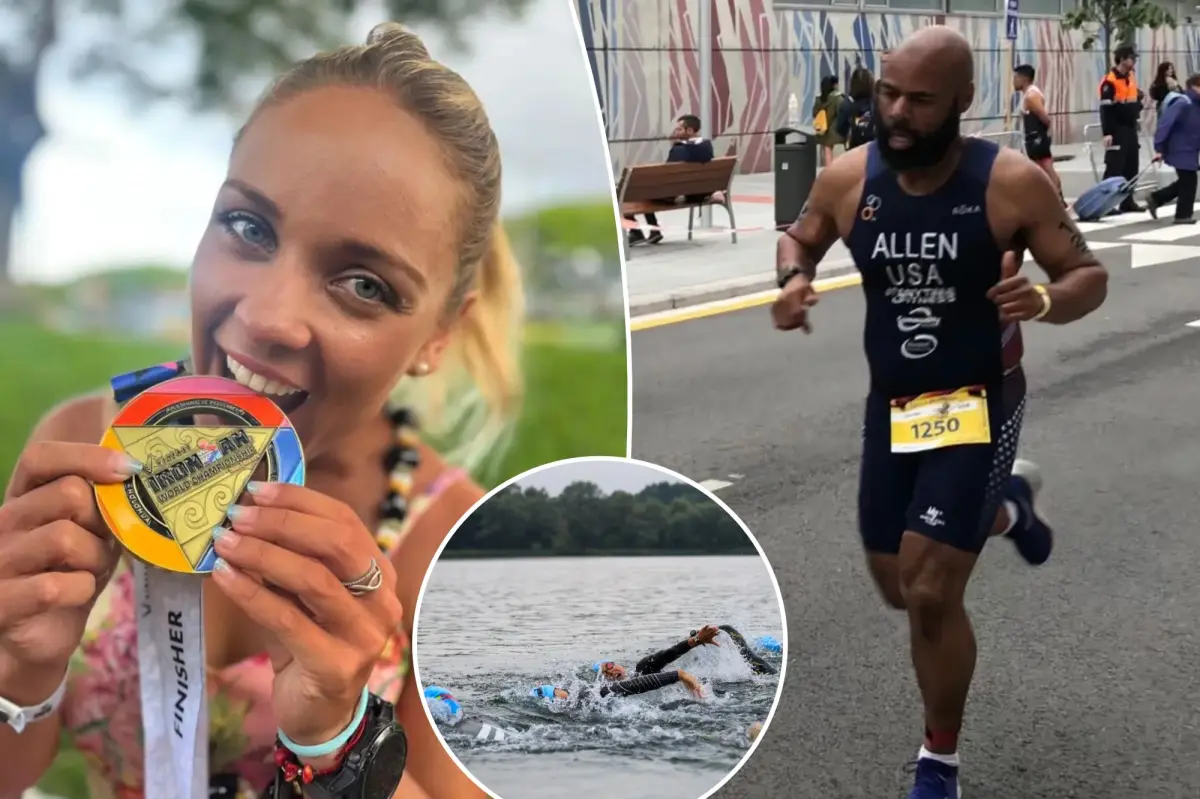
For forty-five grueling minutes, the world was completely black for Mark Allen. In 2014, the then-fifty-year-old financial supervisor from Newark, Delaware, plunged into the open waters of a Georgia lake during the swimming leg of a half-Ironman competition, only for his cardiovascular system to abruptly shut down. He has no memory of the chaotic rescue, the desperate chest compressions, or the panic of the onlookers; his knowledge of his own near-death experience exists only through the second-hand accounts of those who pulled his lifeless body from the water. Yet, despite staring directly into the abyss of his own mortality, Allen harbors no regrets about his participation, even declaring with a chilling, quiet confidence that he would willingly do it all over again. This seemingly irrational, borderline defiant relationship with danger is not an anomaly; rather, it is the defining psychological signature of the modern triathlete. These individuals possess a uniquely relentless Type-A personality, driven by an insatiable urge to conquer challenges that boundaries-bound people would deem madness. It is a psychological makeup characterized by a absolute refusal to yield, an internal wiring where the concept of physical limitation is treated not as a protective biological boundary, but as a personal insult that must be systematically dismantled at any cost.
This extreme mindset is the fuel that powers competitors through the Ironman triathlon, widely considered the most brutal single-day endurance test on the planet. To earn the title of an “Ironman,” an athlete must endure a monstrous 140.6-mile odyssey that begins with a 2.4-mile open-water swim, transitions into a punishing 112-mile bicycle ride, and concludes with a full 26.2-mile marathon run—all of which must be completed within a strict seventeen-hour time limit. Yet, beneath the triumphant finish-line photos and the expensive branded merchandise lies a much darker, devastating reality: the Ironman is also exceptionally lethal. Since 2001, at least eighty-five athletes have lost their lives while participating in these events, translating to an average of more than three tragic fatalities every single year. The cost of this athletic devotion was illustrated recently by the tragic deaths of people like Mara Flávia Souza Araújo, a vibrant thirty-eight-year-old Brazilian influencer who drowned during a race in Texas, and a British competitor who suffered a fatal heart attack in the waters of Spain. The obsession is so deeply ingrained that when an event in France was canceled due to a historic and dangerous heatwave, several competitors refused to let go of their year of training, taking to the open, active roads anyway; tragically, one forty-two-year-old rogue racer was killed instantly in a horrific collision with a motorcycle on a segment that would have otherwise been closed to traffic.
To understand why this sport claims so many lives, one must look at the deceptively serene blue waters of the opening leg, where the vast majority of these tragedies manifest. According to a landmark study by cardiologist Dr. Kevin Harris of the Minneapolis Institute Heart Foundation, a staggering two-thirds of all triathlete deaths occur during the swimming portion of the race. The sudden transition from dry land to cold open water triggers a profound, instictive physiological shock, causing a rapid spike in heart rate and blood pressure that can easily overwhelm an underlying, undetected cardiac condition. Unlike the controlled environment of a swimming pool, the open ocean or lake presents an unpredictable landscape of heavy waves, frigid temperatures, and murky depths. Furthermore, the sheer physical density of the starting line creates a chaotic, terrifying maritime bottleneck where hundreds of competitors swim on top of one another. In this frantic ocean melee, athletes are routinely struck, kicked, and dunked by fellow racers trying to find space near the buoys. For some, like author and competitor Jamie Metzl, this violent, adrenaline-filled chaos is bizarrely half the fun, but for others, the claustrophobic panic of being trampled in deep water becomes a silent catalyst for sudden, fatal cardiac events.
The heartbreaking human cost of this chaotic swimming environment is currently being litigated in courtrooms, where grieving families are demanding accountability from the corporate organizers of these races. Veronique Tremblay is currently suing the Ironman organization for wrongful death and negligence, seeking over one million dollars after her husband, Jean Francois Alain, drowned during a Texas race in 2025. Her lawsuit paints a horrifying picture of a tragedy unfolding in plain sight, alleging that her husband was visibly struggling in the water while the safety infrastructure completely failed to protect him. Tremblay’s complaint argues that the event relied on young, inexperienced, and under-trained lifeguards who lacked the advanced scanning skills required to spot a drowning swimmer amidst a sea of churning limbs and splashing water. This tragic narrative suggests a disturbing gap between the premium, safety-first image marketed by event organizers and the chaotic, volunteer-dependent reality on the water. For families like the Alains, the pursuit of an athletic milestone did not end with a medal, but with an empty home, a lifetime of painful medical bills, and the agonizing realization that the safety nets they trusted to protect their loved ones were dangerously fragile.
This profound sense of preventable loss is echoed across the Atlantic by Samantha Buchan, whose husband Sam died during the swimming leg of an Ironman in Wales. Samantha has publicly expressed her deep, haunting concerns regarding the agonizingly slow emergency response times, revealing that it took anywhere from ten to thirty minutes just to locate Sam, pull him from the ocean, and begin basic life support. This terrifying window of delay highlights a critical vulnerability in the sport, particularly as the demographic profile of the average triathlete shifts older. Out of the eighty-five recorded deaths in the sport, fifty-seven were athletes aged forty or older—a group increasingly vulnerable to silent coronary artery disease. Coach Melissa Mantak observes that many middle-aged individuals turn to extreme triathlons to fill a sudden existential void, searching for dopamine, structural discipline, or a way to prove that they are still vital and capable of extraordinary feats as they age. Unfortunately, this psychological drive to conquer aging can blind competitors to their own physical limitations, causing them to ignore early warning signs of cardiovascular distress in their desperate pursuit of the finish line.
Ultimately, the phenomenon of the Ironman exposes a deep, fascinating division in how humans perceive the value of life, risk, and personal fulfillment. To outsiders, including Mark Allen’s deeply worried girlfriend—who has strictly forbidden him from ever entering another race—the willingness to die for a finisher’s medal seems like a form of collective, self-destructive madness. Yet, for the quarter-million athletes who register for these races worldwide each year, the extreme risk is precisely what gives the endeavor its transformative power. What began in 1978 on the beaches of Hawaii as a casual, beer-fueled bet among fifteen friends has transformed into a global business because it offers an escape from the comfortable sterility of modern existence. As Jamie Metzl reflects, there is inherent risk in simply stepping out into the world, and for a certain breed of human, a life lived entirely inside safe, comfortable boundaries is not a life truly lived at all. The tragic stories of those who never made it back to shore remain a somber reminder of human vulnerability, yet the starting lines remain packed with dreamers ready to risk everything just to touch the sublime.