



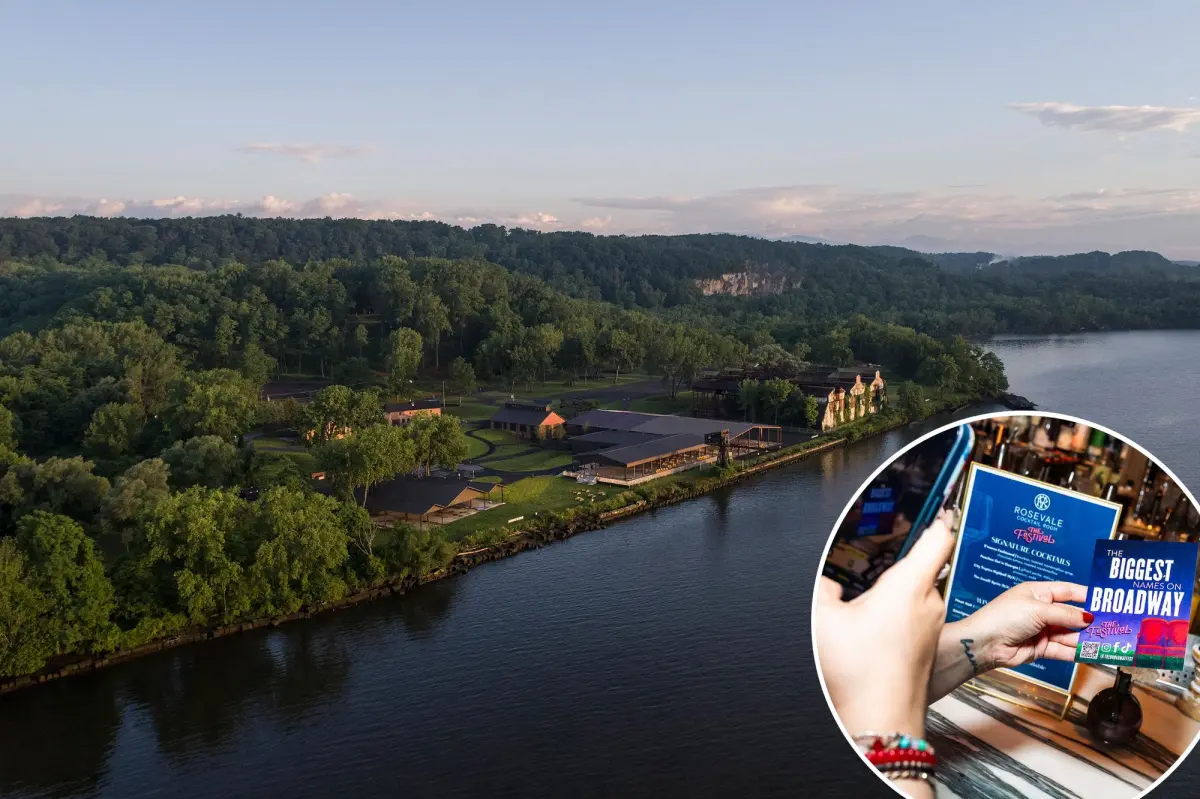
Along the quiet, scenic banks of the Hudson River in Kingston, New York, lies a sprawling 100-acre landscape that once hummed with the gritty, industrial rhythm of the Hutton Company Brick Works. For more than a century, this historic site was the beating heart of American construction, where generations of dedicated laborers mixed, molded, and baked the very clay that would define the skyline of New York City. If you were to peel back the plaster of the Empire State Building, peer into the foundations of Grand Central Terminal, or explore the stone corridors of the Cloisters, you would find millions of red bricks bearing the distinct, proud stamp of the Hutton name. When the kilns finally grew cold in 1980, the yards fell into a decades-long slumber, leaving behind a graveyard of crumbling kiln sheds, rusted machinery, and a towering gantry crane reaching out over the water like a metal monument to a bygone era. Yet, where others saw only derelict ruins, a passionate Broadway enthusiast named Joshua Saltman saw the perfect stage for an unprecedented dream: a theatrical sanctuary, a “Broadway Woodstock,” built directly on a foundation of discarded, historic bricks just a short drive from the birthplace of the original 1969 counterculture festival.
Joshua Saltman is an unlikely mastermind for such a massive, seven-figure undertaking, possessing a warm, self-deprecating humor that allows him to blend seamlessly into the bustling weekend crowds of Manhattan’s Upper West Side. Now 56 years old, his deep-seated love for the theater was forged during a challenging period at Columbia Law School, where the bright lights of Broadway served as a much-needed emotional refuge from the grueling demands of his studies. A watershed moment arrived in the early 1990s with Jerry Zaks’ legendary revival of Guys and Dolls, sparking a lifelong obsession with the timeless compositions of the Great American Songbook. Though his career took him to Los Angeles as an in-house counsel for Disney, Saltman frequently found himself drawn back to the theater community, attending music festivals with friends and embarking on Broadway-themed cruises with his wife, Jill. As he aged, he realized he was losing touch with contemporary pop festivals—humorously noting that he had no desire to wait until midnight to see Ariana Grande, who likely didn’t want him in the crowd anyway—which led him to wonder why there wasn’t an immersive, destination-style festival tailored for theater lovers. He initially pitched the concept of a Disney-themed “Mous-chella,” but when that failed to gain traction, he decided to strike out on his own, spending a decade assembling a world-class production team of festival and theater veterans to bring his grand vision to life.
The resulting event, simply dubbed “The Festival” or “Broadway Fest,” is a star-studded, three-day extravaganza designed to feel like a magical “weekend in the country” where the boundary between artist and audience beautifully dissolves. Saltman and his team have assembled an astonishing roster of theatrical royalty, including legendary voices like Audra McDonald, Kelli O’Hara, Renée Elise Goldsberry, Christopher Jackson, and Brian Stokes Mitchell. Over the course of the weekend, more than forty beloved Broadway personalities will perform across three separate stages constructed amidst the brickyard’s industrial ruins, offering everything from intimate musical previews and late-night piano-bar singalongs to theatrical raves and cozy campfire gatherings. One of the crown jewels of the weekend is a highly anticipated 30th-anniversary reunion of the original Broadway cast of Rent, brought together through a lively text chain kept active by star Adam Pascal, who eagerly requested extra stage time to do justice to the emotional reunion. Under the thoughtful direction of musical supervisor Dan Lipton, the performances are deeply personal and collaborative; audiences will get to witness Kelli O’Hara singing a duet with her daughter, O’Hara and Goldsberry reviving a classic selection from Carousel, and stars like Lauren Patten and Norbert Leo Butz coming together to cover Crosby, Stills & Nash.
Transforming a historic, raw industrial site into a luxury theatrical venue is a logistical nightmare of epic proportions, requiring the construction of an entire temporary city in Kingston—a charming town that briefly served as New York’s very first capital in 1777. Saltman’s team has had to bring in absolutely everything from scratch, including three massive outdoor stages, state-of-the-art sound systems, high-definition video screens, complex rigging, and an astonishing 3,500 chairs to accommodate the expected crowds. To house the 150-person crew of dancers, musicians, stage managers, and technical staff, Saltman has booked local cabins and accommodations across the region, while organizing a complex web of shuttle buses to transport thousands of excited ticket-buyers to and from offsite parking lots. Karl Slovin, the visionary developer who purchased and restored the Hutton Brickyards, expressed immense pride in the event, stating that this level of creative community-building is precisely what the venue was redesigned to facilitate. Yet behind the scenes, Saltman admits to being thoroughly terrified by the sheer scale of the operation, constantly fielding phone calls about transportation logistics, lodging details, and promotional photo-shoot locations while choreographers and directors conduct final rehearsals around him.
Financially, the festival represents an incredibly risky gamble, with Saltman openly acknowledging that he does not expect to recoup his massive personal investment or turn a profit during this inaugural year. With weekend passes ranging from $400 for general admission to $1,500 for exclusive VIP access, the event had already sold nearly 2,000 of its 2,500 projected tickets in the days leading up to the opening night. Even the author of this account, who happens to be married to Saltman’s cousin, found no family discounts available, proving that the producer is keeping his eyes firmly on the bottom line while remaining realistic about the steep learning curve of launching a brand-new festival. Saltman is playing the long game, viewing this initial financial loss as a necessary investment to build invaluable goodwill, trust, and enthusiasm among both the performers and the theater-going public so they will clamor to return in the summers to come. His parents remain playfully skeptical of their son’s grand passion project, with Saltman joking that his father might be calling in complaints to gossip columns, yet his determination to create a meaningful, shared ritual for his community remains entirely unshaken.
When the first musical notes finally rise from the main pavilion stage—set beneath the towering roof of an original brick factory building—they will carry with them the weight of history and the promise of a new artistic tradition. Under the open New York sky, with derelict kiln sheds acting as a dramatic backdrop and the majestic Hudson River flowing steadily beside them, audiences will experience the magic of Broadway entirely divorced from the cramped, concrete realities of Times Square. This bold experiment proves that theater is not merely a collection of physical buildings in Midtown Manhattan, but a portable, living spirit that can breathe vibrant new life into forgotten places. By bridging the gap between the industrial hands that physically built New York and the creative voices that continue to define its cultural soul, Joshua Saltman has constructed a beautiful, temporary home for dreamers. As campfires are lit and voices harmonize in the cool evening air, the old Hutton Brickyards will once again find themselves at the center of the New York story, reminding everyone present that the most enduring structures are always built on a foundation of passion, community, and song.