


To step through the doors of Katz’s Delicatessen at 205 East Houston Street is to immediately submit to a glorious, sensory onslaught that has remained virtually unchanged for over a century. The air inside this legendary Lower East Side institution is thick and intoxicating, heavy with the rich, spiced perfume of slow-cured beef, sharp mustard, and hot rye bread, all punctuated by the rhythmic, percussive clatter of heavy plates and the shouts of master cutters behind the counters. For generations of New Yorkers and travelers from every corner of the globe, this is not merely a place to grab a sandwich; it is a sacred culinary cathedral, a living monument to the immigrant hustle and community spirit that forged the cultural bedrock of Manhattan. Across the decades, as the surrounding neighborhood mutated from a gritty enclave of working-class families into a playground of glass luxury towers and trendy boutiques, Katz’s remained defiantly, beautifully anchored in its own history. Its neon signs glow through the city’s coldest nights like a welcoming lighthouse, promising warmth, connection, and a timeless slice of New York soul. Now, in a spectacular tribute to its own endurance, this historic deli has unlocked a long-lost chapter of its past, inviting the public back into a space that has been hidden in plain sight for nearly eight decades.
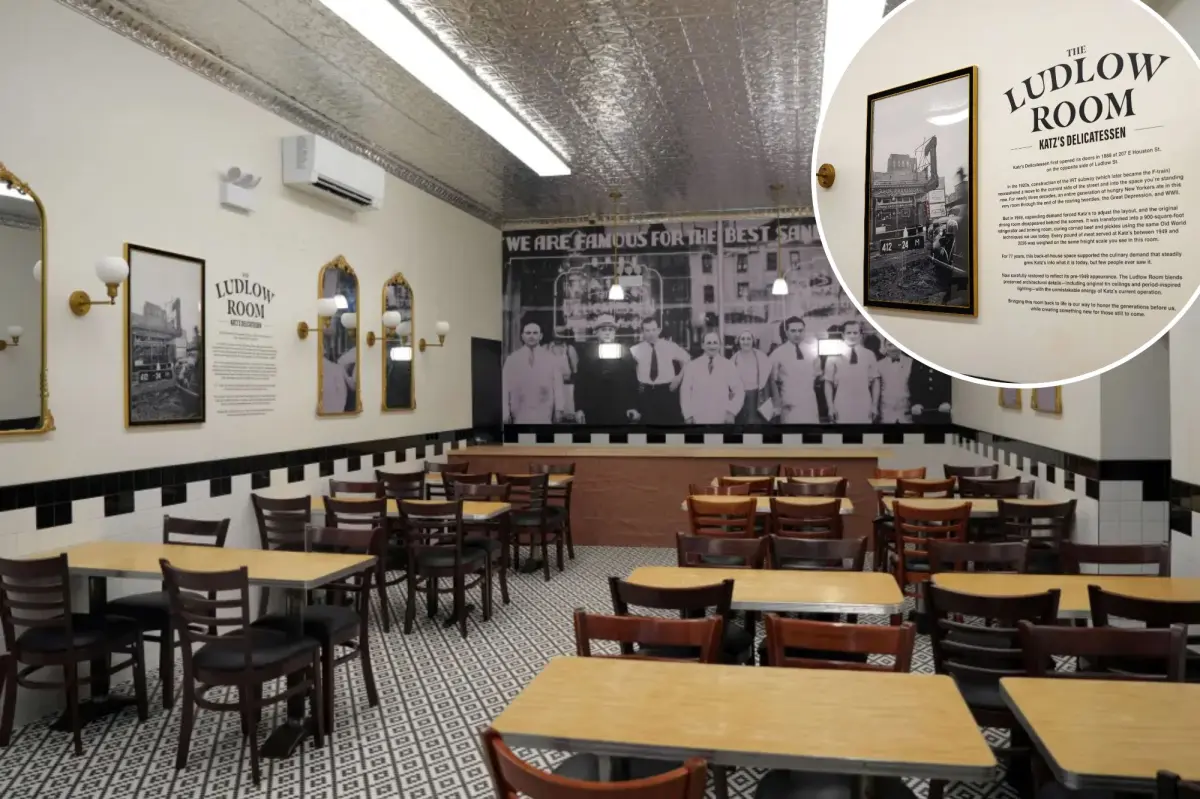
For the first time since the pivotal post-war year of 1949, Katz’s has pulled back the curtain on The Ludlow Room, a beautifully restored, intimate sixty-eight-seat dining room that had lay dormant to the public for seventy-seven years. To comprehend how such a significant piece of downtown real estate could be hidden away for so long is to understand the dizzying, stratospheric rise of the deli’s post-World War II popularity. As the global appetite for Katz’s legendary hand-carved pastrami, corned beef, and brisket reached an unprecedented fever pitch in the late 1940s, the deli’s backward-of-house operations faced an existential logistical crisis. To meet this overwhelming demand, the owners made the pragmatic decision to sacrifice this historic public dining space, converting the Ludlow Room into a massive, fortress-like walk-in refrigerator to store the vast quantities of meat required to feed a hungry city. For almost eighty years, this space, which had once echoed with the vibrant, laughter-filled conversations of early twentieth-century locals, became a silent, frozen vault of industry. It was an essential, icy engine room hidden behind heavy doors, known only to the tireless employees who kept the deli’s lifelines moving, waiting quietly for the day when warmth, hunger, and human celebration would finally return to melt away the frost.
The monumental effort to breathe life back into the Ludlow Room was guided not by a desire to modernize, but by a deep, romantic obligation to honor the layers of history embedded within its walls. The extensive, meticulous renovation was a labor of love designed to preserve the unique, electric energy that has always made Katz’s feel so alive, keeping the passage of time beautifully visible. Designers carefully preserved and restored the room’s original, weathered tin ceilings and installed period-inspired lighting that casts an amber, nostalgic glow, paying a respectful stylistic nod to the space’s early-twentieth-century roots. The most poetic and profound revelation of this restoration process lies in the historical weight of the room itself; between 1949 and 2026, every single slab of meat served at Katz’s was wheeled into this very room to be weighed on a massive, vintage freight scale. Realizing that the foundational ingredient of millions of shared family memories was measured inside these four walls made the revival of the room feel like nothing short of bashert—the Yiddish word for a beautiful, predestined fate. As Jake Dell, the passionate fifth-generation owner of Katz’s Delicatessen, eloquently observed, reopening this room is much more than a business expansion; it is an act of historical reclamation, like uncovering a forgotten, beloved chapter of their own family story.
Today, the reopened Ludlow Room is far from a stagnant museum piece; it is a vibrant, bustling extension of the deli experience, offering an intimate escape from the beautifully chaotic lines that routinely stretch down Houston Street. To ensure that the beloved theater of the Jewish deli is preserved in this newly reclaimed space, the Ludlow Room features its very own dedicated on-site master cutter, standing proudly behind a carving station to hand-slice steaming briskets, corned beef, and pastrami to order for seated guests. This hands-on craft of the cutter lies at the very heart of the Katz’s experience, creating a personal connection where a warm slice of meat is passed over the counter as a delicious gesture of hospitality. But while the room is steeped in the traditions of the past, it is also designed to embrace the dynamic, unpredictable pulse of modern New York culture. This versatility captured the internet’s imagination last year when the room was transformed to host an ultra-exclusive, surprise pop-up rave thrown by the electronic music duo Zeds Dead. This striking collision of old-world culinary craftsmanship and contemporary downtown nightlife proves that the Ludlow Room is a rare, living bridge where different generations of New Yorkers can find a common home.
This delicate dance between preservation and adaptation has defined Katz’s since its very inception in 1888, when it was first established on the Lower East Side by two enterprising immigrant brothers, Morris and Hyman Iceland. Soon joined by their cousin, Willy Katz, the deli relocated to its permanent home on the corner of Houston and Ludlow Streets in the 1920s, cementing itself as the social and emotional anchor of a rapidly growing immigrant community. Over the following century, the deli transcended its neighborhood status to become a global cultural phenomenon, famously immortalized in films and beloved for its iconic “Send a Salami to Your Boy in the Army” slogan during World War II. Its interior became a crowded, beautiful gallery of human life, with every square inch of the walls covered in framed photographs of United States presidents, Hollywood icons, local legends, and everyday families. Through it all, the deli has staunchly maintained its idiosyncratic, old-school traditions, such as the legendary ticket system that both terrifies and charms first-time visitors, and its uncompromising thirty-day meat-curing process. Under the stewardship of the Dell family, these rituals have been fiercely protected against the modern, corporate temptations to cut corners, reinforcing the belief that some things are too precious to change.
The triumphant reopening of the Ludlow Room ultimately serves as a powerful, reassuring reminder of the resilience of the human spirit in a city that is too often characterized by rapid, cold transformation. In an era where rise-and-fall culinary trends dominate social media and historic neighborhood joints are routinely swallowed up by gentrification and corporate retail chains, Katz’s stands as an unbreakable, defiant monument of authenticity. Reclaiming this historic dining room is a celebration of continuity, proving that the spaces occupied by our ancestors can be lovingly reclaimed, dusted off, and woven back into the fabric of our daily lives. When you sit down in the warm, restored glow of the Ludlow Room, sharing a plate of golden, crispy latkes smothered in sour cream and Russian dressing, you are participating in a beautiful, unbroken human chain of comfort and survival that stretches back nearly a century and a half. In a fast-paced metropolis that is constantly sprinting toward an uncertain future, the Ludlow Room offers a rare, delicious invitation to slow down, look back, and savor the rich, enduring flavors of New York’s living history.