




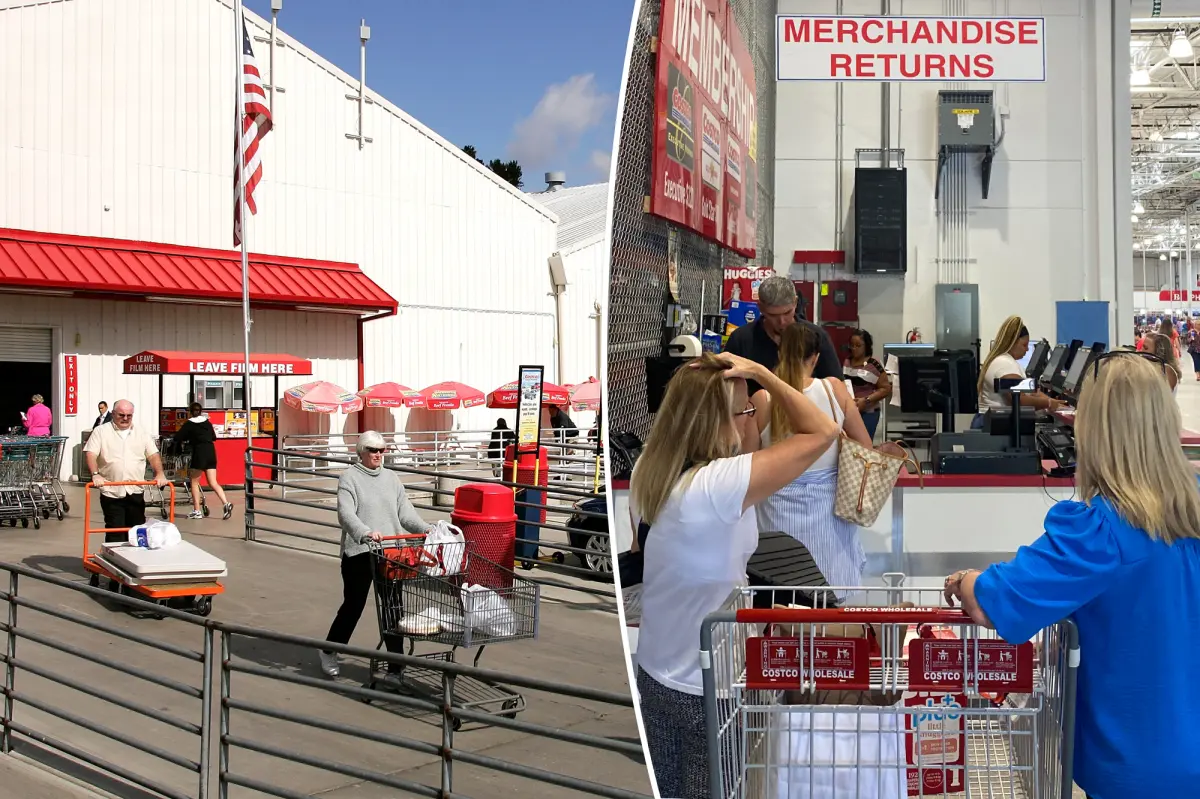
There’s a moment every Costco member knows all too well. You bought something on impulse—maybe a towering patio heater, a bulk box of protein bars your family decided it hated, or a 65-inch television you justified for months—and now it’s just sitting there, gathering guilt. The good news is that Costco has built its entire brand around making this moment painless. Their return policy is famously liberal, allowing shoppers to bring things back with no time limits and, in most cases, no receipt needed. You can even cancel your membership at any point, which is practically unheard of in the membership retail world. It feels almost too good to be true, and for regular shoppers, it often is. You walk in, hand over the offending item, get your money back, and walk out feeling like you somehow won at capitalism. But here’s the question we rarely stop to ask: where does all that unwanted stuff actually go? It’s not like every returned item can simply be put back on the shelf, and it’s not like Costco can just throw it all in the trash—not when it’s still worth something. The real answer is far more complicated, and it involves a hidden ecosystem of liquidation auctions, strict reseller rules, and a whole lot of visual inspection that wouldn’t exactly fill you with confidence.
Behind the familiar, cavernous aisles of your neighborhood Costco lies a less glamorous operation designed to deal with the never-ending flood of returned goods. According to recent reporting, much of this merchandise ends up in Costco’s Returns Depot, a sort of purgatory for products that cannot be resold in their original condition. From there, Costco taps into a company called B-Stock, a wholesale liquidation platform that also helps retail giants like Target and Walmart unload their unwanted inventory. Think of B-Stock as an auction house for corporate America, a place where pallets and truckloads of returned, open-box, or overstocked goods are sold to the highest bidder. The range of merchandise is staggering: apparel, electronics, major appliances, furniture, toys, food, sporting goods, and just about anything else that might have ever appeared on a Costco floor. And contrary to what you might expect, this isn’t only about visibly damaged or used items. Overstock products—goods that simply didn’t sell as quickly as anticipated or were ordered in too great a quantity—also wind up in these liquidation sales. So while a regular member might see a clean, orderly store with neatly stacked shelves, there’s an entire parallel marketplace churning behind the scenes, where Costco quietly cuts its losses and retailers with a taste for salvage build their inventories.
If you’re imagining that you could log onto B-Stock and snag a discounted Costco TV for your living room, think again. This is not a secret shopping paradise for the average consumer. The rules are intentionally strict, designed to keep the process professional and the goods out of the hands of casual bargain hunters. U.S. buyers must provide valid state-specific resale certificates, which effectively proves they are legitimate businesses licensed to buy goods for resale. International buyers face an even higher bar, having to show proof of business registration. In other words, you need to be an actual retailer or merchant with paperwork in order before you can even think about bidding. But the restrictions don’t stop there. The items themselves are graded by Costco’s Returns Depot, yet the grading process is surprisingly superficial. Products are assessed visually, not tested for functionality. An item in its original packaging might earn a nice, clean “A” grade, while something with visible damage or missing parts gets a “D.” There’s no middle-ground promise that a “B” grade laptop actually powers on, or that a “C” grade espresso machine brews a decent cup. You’re essentially buying sight unseen, trusting only a visual once-over that could easily miss a fatal flaw. And then there is perhaps the strangest rule of all: items purchased at Costco’s liquidation sales cannot be resold outside a five-mile radius from where the item was originally sold. That unusual geographic restriction seems designed to protect Costco’s own local market, preventing a reseller from undercutting a nearby store while still allowing them to move goods in a different area. For anyone willing to navigate these rules, there is money to be made, but it’s a far cry from the carefree, no-questions-asked return experience that everyday Costco members enjoy.
For all its famous generosity, though, Costco’s patience does have a limit, and that limit is most often reached when shoppers try to turn the store into a short-term rental service. Consumer advocates and retail insiders have long reported that Costco tracks return histories, and the company is not shy about flagging members suspected of abusing the policy. The exact threshold for getting banned is unclear, but it absolutely happens—Costco can and will revoke a membership if a shopper’s return patterns look excessive. And it’s not just some abstract corporate policy; it’s a response to very real, very absurd behavior. Warehouse employees have complained for years about customers returning mattresses years after purchase, patio furniture right after summer fades, Christmas trees that are more dead than alive once the holidays end, and massive televisions the very day after the Super Bowl. You can almost picture the employee at the returns desk, smiling through gritted teeth as yet another half-broken inflatable Santa Claus comes sliding across the counter in January. These are not exactly people in need of a refund; they are people treating the store’s goodwill as a personal playground. And while Costco is famously reluctant to embarrass its customers, the tracking system is real. If you make a habit of buying and returning the same kind of high-ticket item season after season, eventually the algorithm will notice, and that beloved membership card might suddenly lose its value.
At the same time, it’s worth remembering that Costco’s return policy is not actually as limitless as it sounds. There is a popular myth that you can return anything, anytime, no questions asked—but the fine print tells a different story. Most electronics, including TVs, laptops, tablets, cell phones, smart watches, projectors, and major appliances, are subject to a 90-day return window. That means if you buy a new refrigerator in January and decide by May that you hate the color, you are probably out of luck. The 90-day limitation is a crucial caveat that many shoppers overlook, and it’s precisely because these high-ticket items are the ones people tend to abuse most. Beyond that, there is a whole list of products that are simply non-returnable, no matter how fresh your receipt is. Airline and event tickets, gift cards, shop cards, precious metals like gold bars and silver coins, cigarettes, and alcohol in some states, and any custom-installed products all fall outside the generous return umbrella. So while Costco’s policy might look like an open door, it’s actually more of a gated entry with some pretty serious restrictions hidden behind the marketing. For the average shopper, this means you can absolutely bring back that bulk bag of avocados that went bad too quickly, but you can’t treat the store as a forever-warranty on your entire electronic life. The real lesson here is that even the world’s most customer-friendly retailer has to draw a line somewhere, especially when the cost of abuse gets passed down to everyone else in the form of stricter policies, higher prices, or more hoops to jump through.
In the end, Costco’s return policy is less a simple promise and more a reflection of the complicated relationship between retail generosity and human nature. The same liberal policy that makes you feel warm and fuzzy inside is also the reason there’s a giant warehouse full of unopened, half-broken, and just-barely-used items waiting to be auctioned off to the highest bidder. It’s why some seller with a resale certificate and a pickup truck can turn someone else’s impulse buy into a livelihood, and why Costco has to employ an entire secondary system to manage the chaos. The next time you’re standing in line at the returns desk, surrounded by customers clutching questionable merchandise, it might be worth pausing to appreciate the invisible machinery grinding away behind the scenes. That dead Christmas tree, that three-year-old mattress, that slightly-too-heavy gold bar—they all have a place to go, and it’s not the trash bin. But they also serve as a reminder that any policy, no matter how well-intentioned, can be stretched to its breaking point by people who want to take more than they give. Costco has found a way to balance generosity with survival, but it’s a fragile balance, one that relies on most of us behaving reasonably most of the time. So go ahead and return that thing you don’t need. Just know that the store, the reseller, and the next buyer are all part of a strange, sprawling cycle—one where your unwanted stuff gets a second life, long after it leaves your hands.