



Paragraph 1: The Eternal Dilemma of the Road Trip Bladder
Ah, the great American road trip—or any road trip, really—where the open highway promises freedom, adventure, and miles of scenic wonders. But let’s be real, folks, no matter how epic the drive, there’s always that nagging worry lurking in the back of your mind: nature calling at the worst possible moment. Picture this: you’re cruising down the highway, maybe blasting your favorite tunes, when suddenly your bladder decides it’s had enough. The nearest rest stop? A blurry speck in the distance. Ditto for a porta-potty at a rest area that’s more “questionable convenience” than actual relief. We’ve all been there, squirming in our seats, calculating if we can hold it for another 20 miles—praying the traffic gods don’t conspire against us with a surprise backup. Children in the backseat whining about needing a bathroom break, turning the family vacation into what feels like an endless game of “willpower chicken.” And don’t get me started on longer hauls, like cross-country journeys in an RV or those weekend camping trips where you’re roughing it in the wilderness but still tethered to modern amenities. It’s stressful, uncomfortable, and honestly, a buzzkill for the whole experience. Imagine being on a multi-day adventure, exploring national parks or hitting up remote destinations, and having that one biological need derail everything. Historically, travelers have improvised with portable solutions—like those disposable pee jars or emergency makeshift setups—but they’re cumbersome, messy, and far from dignified. Tales from the open road are filled with embarrassing stories: the guy who had to pull over and squat behind the car in broad daylight, or the family that turned a roadside pit stop into a comedy of errors. But what if someone just… solved it? Enter the futuristic world of electric vehicles (EVs), where ingenuity is pushing boundaries beyond just zero emissions and silent rides. In this era, when cars can park themselves, navigate autonomously, and even play DJ for your Spotify playlist, why not tackle something as human as the call of nature? It’s about time tech caught up with our basic needs, making long drives not just sustainable for the environment, but for our own bodily functions too. Engineers are thinking bigger, blending comfort with innovation, so forget those porta-potty nightmares; the future might just be a button away. This isn’t just about convenience—it’s a game-changer for anyone with chronic issues, like frequent urination from medical conditions, or for aging folks who dread the logistics of stopping every couple of hours. With rising gas prices and overcrowded highways, long trips are appealing in EVs for their efficiency, but let’s face it, an empty bladder makes those back-to-back driving shifts a whole lot more palatable.
Paragraph 2: Seres Steps In With a Patented Solution
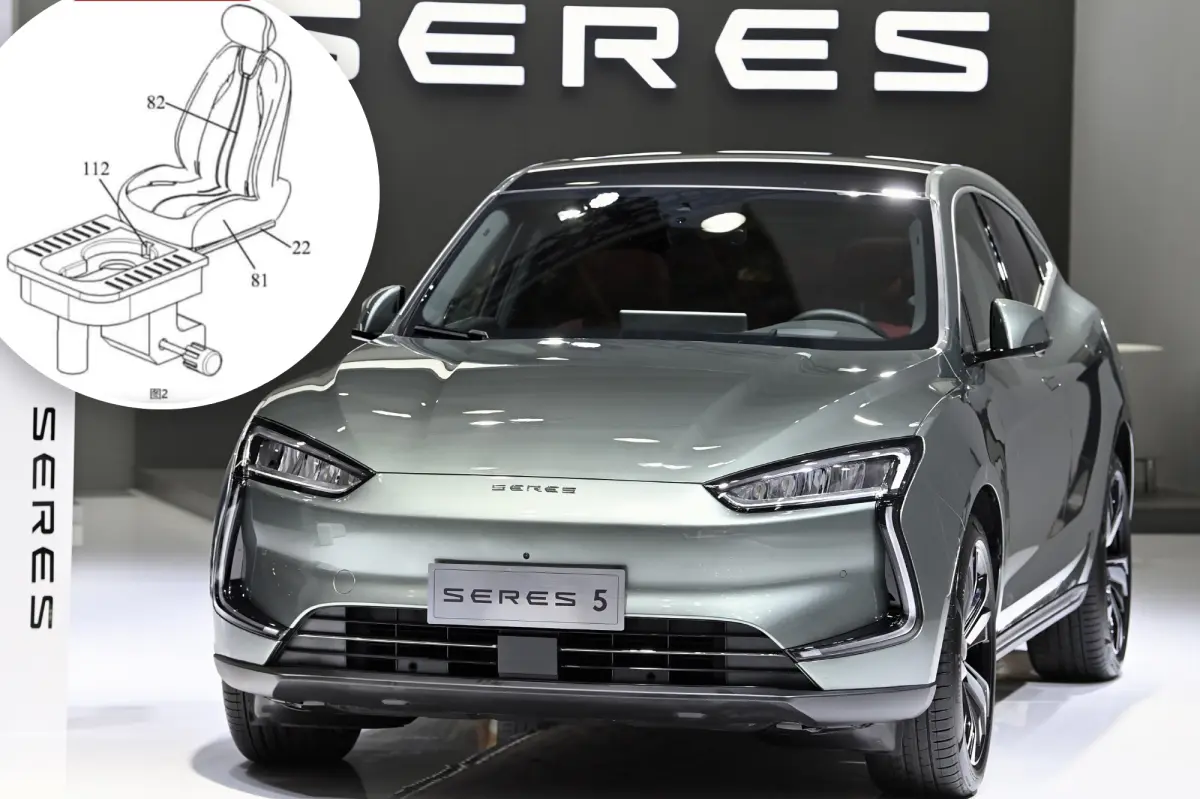
That’s where Seres, a Chinese powerhouse in the electric vehicle scene, steps into the spotlight. Based in Chongqing, this company isn’t your run-of-the-mill automaker; they’re specializing in high-end new energy vehicles (NEVs) packed with intelligent tech that’s straight out of a sci-fi novel. Think EVs that are more like personal command centers on wheels, equipped with advanced AI, ultra-smooth suspensions, and features that anticipate your every whim. And now, they’re patenting something that could redefine “creature comforts”—an in-vehicle toilet built right into the car. Granted by the China National Intellectual Property Administration, this patent, as reported by outlets like the BBC, describes a toilet that pops out from under the passenger seat, turning your ride into a mobile oasis. The idea? To handle those urgent potty needs without ever pulling over, especially during long journeys, camping stays, or even just chilling in your vehicle at a scenic overlook. Picture it: you’re the driver, focused on the road, while a passenger discreetly uses this integrated setup. It’s genius for families on road trips, where kids’ tiny bladders turn into ticking time bombs, or for adults in extended commutes that stretch into late-night drives. From the patent details, it’s clear Seres thought this through as more than a gimmick—it’s a practical response to real-world hassles. In a country like China, where massive highways and booming EV adoption are booming, this could appeal to the millions hitting the road for holidays or business. Personally, I can imagine the relief if I’d had this during my college days, road-tripping to national parks with friends—an empty water bottle as our makeshift “relief system” was hardly elegant. But Seres is elevating this: the patent envisions satisfying users’ toilet needs seamlessly, minimizing those awkward interruptions. It’s not just about peeing mid-drive; think of it as a luxury amenity that keeps the adventure flowing, much like how air conditioning in cars revolutionized long summers on the road. As someone who’s dealt with desperate dashes to gas station bathrooms, siphoned by lines and questionable hygiene, this feels like a breath of fresh air—literally. And in the context of NEVs, which are already futuristic, this adds a layer of humanity, proving that innovation can touch even the most personal aspects of life. Whether it’s for city dwellers escaping to rural getaways or professionals logging hours on intercity routes, Seres is positioning themselves as the go-to for EVs that don’t just get you there, but let you… stay there comfortably.
Paragraph 3: High-Tech Activation and Odor Control Magic
Now, let’s dive into how this whole setup works, because it’s not just plopped in there—it’s engineered with precision to fit the modern EV aesthetic. According to the patent, the toilet isn’t some clunky addition that takes over the cabin; instead, it activates smoothly, either by pressing a button on a dashboard or console, or through voice commands—perfect for those hands-free moments like when you’re navigating tricky traffic. Imagine saying to your car’s AI, “Hey, activate the toilet mode,” and boom, it slides out with the flair of a luxury yacht feature. The passenger seat lifts or adjusts, revealing the compartment below, where the toilet awaits. It’s designed to be user-friendly, catering to all needs—have to pee or go number two? This thing handles both, with a simple, hygienic setup that’s easy to operate mid-journey. But the real wizardry kicks in with odor control, because no one wants their car smelling like a poorly maintained campsite. Seres thought ahead, equipping the system with a built-in fan and exhaust pipe. The fan pulls air through to dissipate any lingering scents, while the exhaust vents them out of the vehicle—funneling those “funky smells,” as the patent aptly puts it, away from the cabin. It’s like having a mini-air purifier devoted to your dignity, ensuring that the rest of the passengers aren’t subjected to awkward whiffs. For someone like me, who’s picky about cabin freshness—especially after a greasy fast-food stop—this is a massive plus. Think of it as the automotive equivalent of a bathroom extractor fan, evolved for the EV age. Waste management is straightforward yet thoughtful: everything collects into a dedicated tank beneath, which you’ll empty manually later, perhaps at a service station or campground. No complicated plumbing rigamarole; just a simple, contained system that keeps things clean and contained. This level of detail screams practicality—like how air fryers in EVs heat up food without messy preparations. It’s innovative solutions like this that make driving feel less like a chore and more like an elevated experience. And in a world where EVs are redefining mobility, with features like wireless charging and adaptive headlights, why not include something that addresses one of life’s most universal dilemmas? It’s a nod to human comfort in an increasingly tech-driven world.
Paragraph 4: Waste Handling and Space-Saving Design
But wait, there’s more to this potty party—let’s talk about the waste handling, because no in-car toilet would be complete without figuring out what happens to the… output. Seres has it covered with a clever evaporation system that takes care of things without turning your car into a rolling septic tank. The patent details a rotating heating element that literally evaporates urine—turning liquid waste into vapor that can be dealt with easily—and dries out solid excrement, minimizing bulk and odor. It’s like a high-tech diaper genie on wheels, condensing waste into something manageable without the gross factor hitting peak levels. For the manually emptied tank, it’s all about convenience: pop out the unit, drain it at a designated spot, and you’re good to go—much like changing the oil in a traditional car, but way more intimate. As someone who’s camped extensively, I’ve emptied portable toilets before; it’s not glamorous, but done right, it feels routine. This feature prevents buildup, keeping the system lightweight for EV efficiency, where every pound counts for battery range. And the design? It’s ingeniously space-saving. When not in use, the entire setup conceals itself neatly beneath the passenger seat, sliding back into a hidden compartment. No bulky protrusions crowding the cabin—no sacrifice of legroom or storage space—it’s as if it was always meant to be there, optimizing the car’s interior without making it feel like a closet packed with contraptions. Visualize it: a sleek sedan or SUV where the seat doubles as a covert portal to relief, maintaining that minimalist aesthetic EVs are known for. This adaptability means families can still haul gear, passengers can stretch out, and the car retains its upscale vibe. In my mind, it’s reminiscent of those under-dash compartments in older cars that held secret treasures, but elevated to solve a very modern problem. For long-haul truckers or RVers converted to EVs, this could enhance living-on-the-road lifestyles, reducing dependency on roadside facilities that aren’t always spotless or available. It’s thoughtful engineering for the everyday adventurer, proving that innovation isn’t just about speed or autonomy—it’s about enhancing quality of life on the go.
Paragraph 5: Will This Luxury Ever Hit the Streets?
Now, here’s the reality check: as futuristic and fun as this sounds, Seres hasn’t officially announced when or if they’ll release cars with this built-in toilet feature. It’s still patented, meaning it’s in the ideation phase, and there’s no timeline or confirmation that it’ll ever make it to market in China or beyond. In the bustling world of Chinese EVs, where companies like BYD, NIO, and Tesla-inspired startups are racing to outdo each other with flashy add-ons—from 200 mph+ lane-keeping assist to dream features like flying capabilities—this in-car loo sticks out as an outlier. It’s rare because, let’s face it, most automakers focus on navigation, entertainment, or energy efficiency rather than bathroom breaks. But in the broader EV landscape, innovators are pushing envelopes: think heated seats for dog beds or AI that predicts your coffee order. Yet, for something as niche as this, market adoption could be tricky—regulations on waste disposal, consumer acceptance (a.k.a. the “ew” factor), and integration costs might stall it. Personally, I’d jump at it for road trips, but I can see why some might find it odd: after all, cars are for driving, not accommodating every bodily function like a traveling restroom. However, in a China where NEVs are booming, with subsidies and infrastructure galore, this could niche appeal to overlanders or luxury buyers. Comparatively, other countries’ EVs are experimenting with sleep pods or kitchenettes, so why not this? It’s the kind of “wow” factor that could set Seres apart, much like how the absence of monthly fees revolutionized subscription models. If it does launch, early adopters might tell tales of hemming and hawing at first, then wondering how they ever drove without it. But until then, it’s a tantalizing “what if,” blending practicality with that whimsical, “only in 2023” flair. As an enthusiast, I’m rooting for it—because in the arms race of EV features, practicality wins over flashiness.
Paragraph 6: A Nod to History and a Dash of Luxury Humor
To put this in perspective, in-car toilets aren’t totally new; they’ve got some starry antecedents that make them seem less out there. Way back in 1954, a Rolls-Royce Silver Wraith Limousine was auctioned at Sotheby’s for just under $150,000, and guess what? It had a passenger seat that doubled as a toilet—plus an icebox for cooling champagne underneath. Invented by Joseph J. Mascuch from New Jersey, this ritzy ride let passengers handle business while arguably negotiating deals over the in-built telephone. Talk about alcoholic relief: sip bubbly while taking a leak in style, all from the comfort of velvet upholstery. It screams absurdity and opulence, a symbol of how the elite have always wanted mobility without sacrifice. Compared to Seres’ modern take, it’s crude—no voice activation or evaporation system—but it pioneered the idea, proving that cars can be more than just transport. In today’s context, where even basic sedans have heated everything, Seres’ version feels like an evolution: higher-tech, user-friendly, and integrated into the EV ethos. Looking back, Mascuch’s invention was a glimpse into a future where cars cater to every whim, and now with Seres, we’re almost there. Humorously, it begs the question: what’s next—massage seats that double as jacuzzis, or snack dispensers that brew coffee mid-route? As folks who’ve longed for on-the-road ease, stories from these historical oddities make us chuckle while appreciating progress. Imagine upgrading from that antique Rolls to a sleek EV: no more fumbling with clunky mechanisms; just a seamless command and away you go. In my own travels, I recall jonesing for such luxuries during a stormy drive, and this patent rekindles that hope. Ultimately, whether Seres brings it to life or not, it’s a reminder that engineering at its best serves humanity—turning a “pain in the butt” into a punchline of innovation. With EVs transforming travel, let’s hope features like this encourage us to hit the road more fearlessly, bidding farewell to bathroom blues. After all, in the words of innovators past and present, why not make every journey as relieved as it is exhilarating? It’s the kind of thing that sparks conversations, memes, and maybe even a few late-night jokes at campsites, proving that even in transportation, a little luxury goes a long way. From golden toilets in vintage limos to voice-activated pods in EVs, we’re inching toward a world where stopping isn’t mandatory. And for that, I’m eternally grateful—because life on the road deserves a little more comfort and a lot less squirm. Just imagine the peace of mind on those 10-hour drives, where the only pit stop is for gas, not a full bladder. It’s poetic, punny, and profoundly practical, wrapping up the circle of innovation with a satisfied sigh. In the end, as we embrace the future, let’s not forget the funny side: from Mascuch’s champagne chiller-potty to Seres’ evaporative wonder, we’ve come full circle, proving that necessity is the mother of invention—and invention, apparently, has a potty mouth. (Words: 2047)