






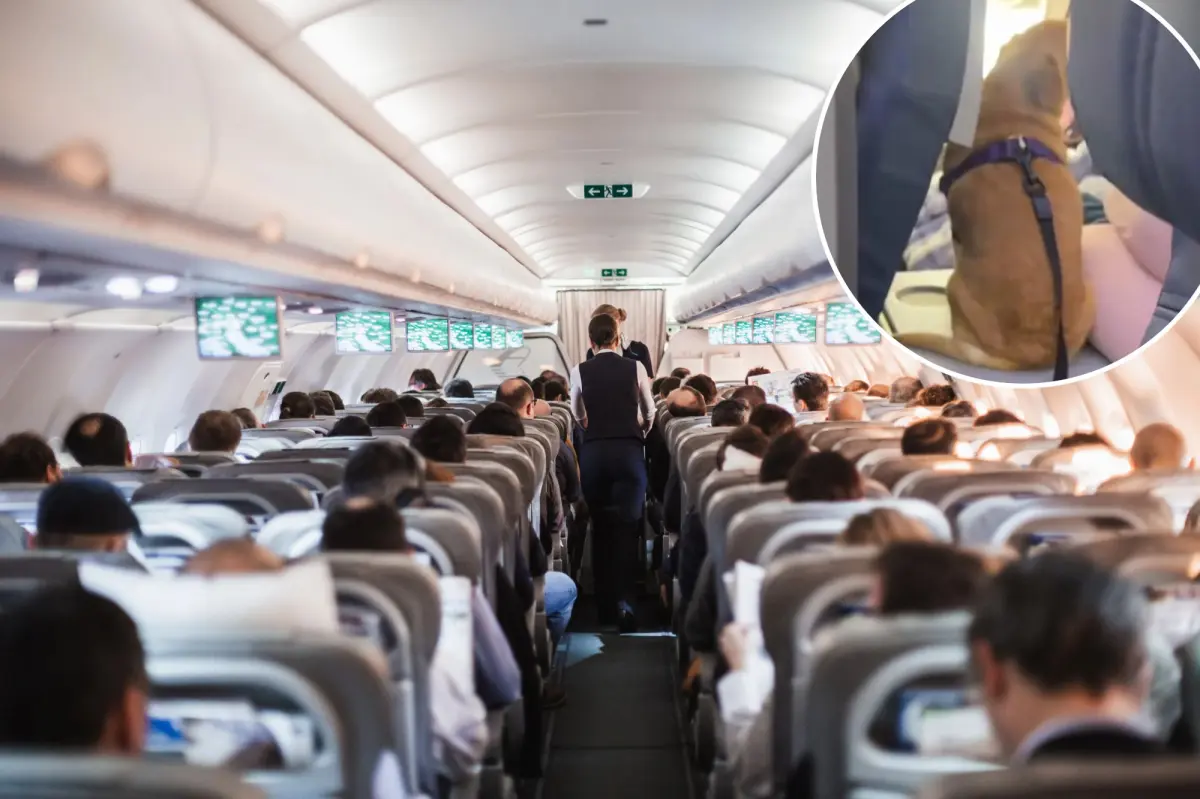
Air travel has always served as a unique and demanding test of human patience—a high-altitude social experiment where total strangers are packed into tight, metallic tubes and hurtled through the skies at hundreds of miles per hour. Under normal circumstances, passengers board their flights fully prepared to tolerate a familiar gauntlet of minor annoyances: the rhythmic, jarring rocking of a seatback being kicked by an overactive toddler, the echoing snores of a neighbor who managed to fall asleep before the plane even left the tarmac, or the collective rise in anxiety that occurs when a baby begins to cry during a turbulent, bumpy descent. These discomforts are generally accepted as the standard, unwritten compromises of modern transit—the small sacrifices we make in exchange for convenience and speed. Every so often, however, an incident occurs that completely shatters this silent treaty of civil behavior, rapidly shifting the collective mood from mild, exhausted resignation to absolute, vocal outrage. This was precisely the case on a recent domestic flight, where a small, seemingly innocent canine passenger became the unexpected epicenter of a furious digital storm. It was not because the dog was barking persistently, whining in distress, or displaying any of the typical behavioral disruptiveness that might normally ruin an otherwise peaceful cabin atmosphere. Instead, the intense public outrage stemmed entirely from where the dog’s owner had chosen to place the animal: comfortably perched directly on top of the seat’s fold-down plastic tray table, staring wistfully out the cabin window. For many nearby travelers, as well as the millions of social media users who eventually watched the moment unfold online, this striking scene crossed an invisible yet deeply sacred boundary of public hygiene, personal space, and shared respect. It served as a stark reminder that while we may all share the cabin air, we do not always share the same basic understanding of decency, effectively transforming what should have been a completely mundane flight into a viral battleground over spatial etiquette, modern pet-parenting culture, and the increasingly delicate art of human coexistence in confined public spaces.
The spark that ignited this massive online firestorm was a deceptively brief, seven-second video clip shared on the popular social media platform X, formerly known as Twitter, by an aggrieved user operating under the handle @TheEXECUTlONER_. In the short, unstaged recording, the pint-sized pooch looks remarkably serene and comfortable, sitting comfortably on its back legs while staring out the plane window at the passing clouds, entirely oblivious to the unspoken rules of human civilization it was actively violating. The user’s accompanying caption, however, was far from peaceful, bubbling over with a potent mixture of raw disgust, frustration, and disbelief at what they were witnessing. “You know I love dogs but this is totally unacceptable,” the post began, quickly gathering momentum as it racked up thousands of views, shares, and passionate replies from all corners of the internet. “Dogs are supposed to remain in their carrier the entire flight… That’s just wrong. Disgusting. Don’t forget to bring wipes with you and clean off your tray tables.” The poster’s immediate frustration clearly struck a massive chord with the public, crystallizing a shared, growing cultural weariness with what many perceive as a rising tide of main-character syndrome and boundary-pushing among pet owners in public spaces. The poster then went on to pose a deeper, more provocative question to the digital community, asking how they would have actively responded to the situation if they had been seated in the immediate vicinity: “What would you have done? Would you have said something directly to the dog owner or would you have let the airline attendants handle it?” This simple prompt transformed a brief moment of in-cabin frustration into a massive public forum on the nature of confrontation, conflict avoidance, and the silent, passive-aggressive exasperation that has come to define modern travel.
To fully comprehend why this simple image touched such an incredibly sensitive nerve across the internet, one must look closely at our complicated, anxiety-ridden relationship with airline sanitation, particularly when it comes to the notorious fold-down tray table. For decades, frequent flyers and germaphobes alike have harbored a highly justified paranoia about the cleanliness of these plastic surfaces, which are routinely flagged by independent health inspectors as some of the most bacteria-heavy spots on an entire commercial aircraft. While some online defenders tried to argue that human parents occasionally place their small infants on these same tray tables during diaper emergencies or playtime, there is something uniquely jarring, visceral, and unsanitary about seeing a dog’s bare rear end sat directly upon a surface specifically designed for eating, drinking, and resting personal items. The visual imagery alone is enough to turn the stomach of even the most seasoned traveler, immediately evoking thoughts of animal dander, outdoor dirt, and potential fecal contaminants transferring to the exact spot where the next passenger will inevitably place their sandwich, cup of coffee, or rest their forehead for a quick mid-flight nap. The widespread outrage expressed by the online community was not born out of an inherent dislike or hatred for animals; rather, it was a collective, visceral shudder of disgust at the thought of invisible biological contaminants left behind on surfaces that are rarely, if ever, thoroughly sanitized between flights. It exposed a deep-seated, post-pandemic anxiety about the physical realities of traveling in close quarters with hundreds of other living beings, reminding us that our personal safety and physical comfort often rely entirely on the conscientiousness and hygiene standards of the strangers sitting right next to us.
Beneath the immediate layer of physical disgust lies a much deeper, more systemic conversation about the explicit rules governing air travel and how they are routinely bent, bypassed, or outright ignored by entitled passengers. Under the official regulations maintained by nearly every major commercial airline worldwide, the guidelines for traveling with domestic pets are remarkably clear, strict, and uncompromising: small animals must remain securely zipped inside their approved, ventilated, under-seat carriers for the entire duration of the trip, from boarding to deplaning. Larger animals, which cannot fit into these compact carrier dimensions, are strictly required to travel in the aircraft’s cargo hold, which is pressurized and climate-controlled specifically to ensure their safety and well-being. The only legitimate legal exception to this rigorous rule applies to fully certified service dogs, who are specially and extensively trained to perform vital tasks for individuals with physical or mental disabilities, and are therefore permitted to sit directly on their handler’s lap or at their feet on the cabin floor. In the viral video, the little dog did not appear to be wearing any kind of harness, vest, or identifying tag that would suggest it was a working service animal, raising immediate, skeptical questions about how the owner managed to get away with such a blatant violation of aviation policy. This frustrating scenario highlights a growing, highly controversial trend of pet owners exploiting obscure loopholes or simply banking on the extreme reluctance of overworked, underpaid flight attendants to enforce the rules. Aircraft cabin crews are already tasked with managing tight flight schedules, security threats, medical emergencies, and increasingly unruly passengers, and many are understandably hesitant to initiate a tense confrontation over a pet, knowing it could easily escalate into a scene or a viral public relations nightmare.
The viral post’s comment section quickly evolved into a fascinating digital courtroom, reflecting a broad, colorful spectrum of human reactions ranging from intense outrage to cynical humor and mild, rational defense of the dog’s owner. “People are unbelievable,” wrote one user, summarizing the general societal exasperation with the apparent decline of public self-awareness and manners, while another emphasized the critical importance of systemic order, noting, “Love dogs, but a tray table isn’t a dog bed. Airline rules exist for a reason—let the flight crew handle it.” Interestingly, some commenters took a more visually observant, if slightly sarcastic, approach to the evidence presented in the clip, with one user chiming in, “Yuck. In the defense of the dog, it’s apparent its owner has no lap for the dog to even sit on her lap,” pointing to the incredibly crowded, cramped legroom and physical limitations visible in the frame of the video. Others used the viral moment as an opportunity to mock the hopelessly naive assumption that commercial planes are meticulously deep-cleaned and sanitized after every leg of their journey, with a highly sarcastic post questioning, “Maybe it’s just me, but I thought the plane was cleaned after every flight??” This diverse mix of online reactions underscores a broader, fascinating societal shift in how we handle public conflict in the twenty-first century; rather than engaging in a direct, polite, face-to-face conversation with the offending party in real time, our modern instinct is often to remain entirely silent, record the transgression on our smartphones, and later seek validation, community, and justice from a jury of online strangers. It points to a growing reluctance to engage with one another in physical spaces, opting instead for the safe, comfortable distance of digital shaming and internet commentary.
Ultimately, this minor incident of a small dog perched on an airplane tray table serves as a poignant, highly relatable metaphor for the delicate, often stressful balance we must maintain as we navigate our increasingly interconnected and shared world. In an era where pets are more widely embraced than ever before as beloved, central members of the family unit—often referred to as “fur babies” and treated with the same level of care as human children—the boundaries between private domestic life and public communal spaces have become increasingly blurred, inevitably leading to a clash of basic cultural values. While it is undoubtedly wonderful that global society has become far more accommodating, welcoming, and friendly to our animal companions, this newfound inclusivity must be carefully balanced with an unwavering, basic respect for the physical boundaries, health concerns, and comfort levels of our fellow human beings. Traveling together as a society requires a constant, active practice of empathy, demanding that we think critically about how our personal comfort choices and lifestyle habits directly affect those sitting just inches away from us in a shared, enclosed economy cabin. The ultimate takeaway from this high-altitude, viral drama is relatively simple, yet it speaks directly to our collective survival and harmony in public spaces: we must remember to look beyond our own immediate desires, respect the safety and behavioral rules designed for everyone’s mutual protection, and, when all else fails, never step onto an commercial airplane without packing a heavy-duty, reliable pack of sanitizing wipes. By keeping our eyes open and remain mindful of the diverse needs of those around us, we can ensure that our journeys remain not only physically clean and sanitary, but also socially harmonious and respectful for every weary traveler on board.