


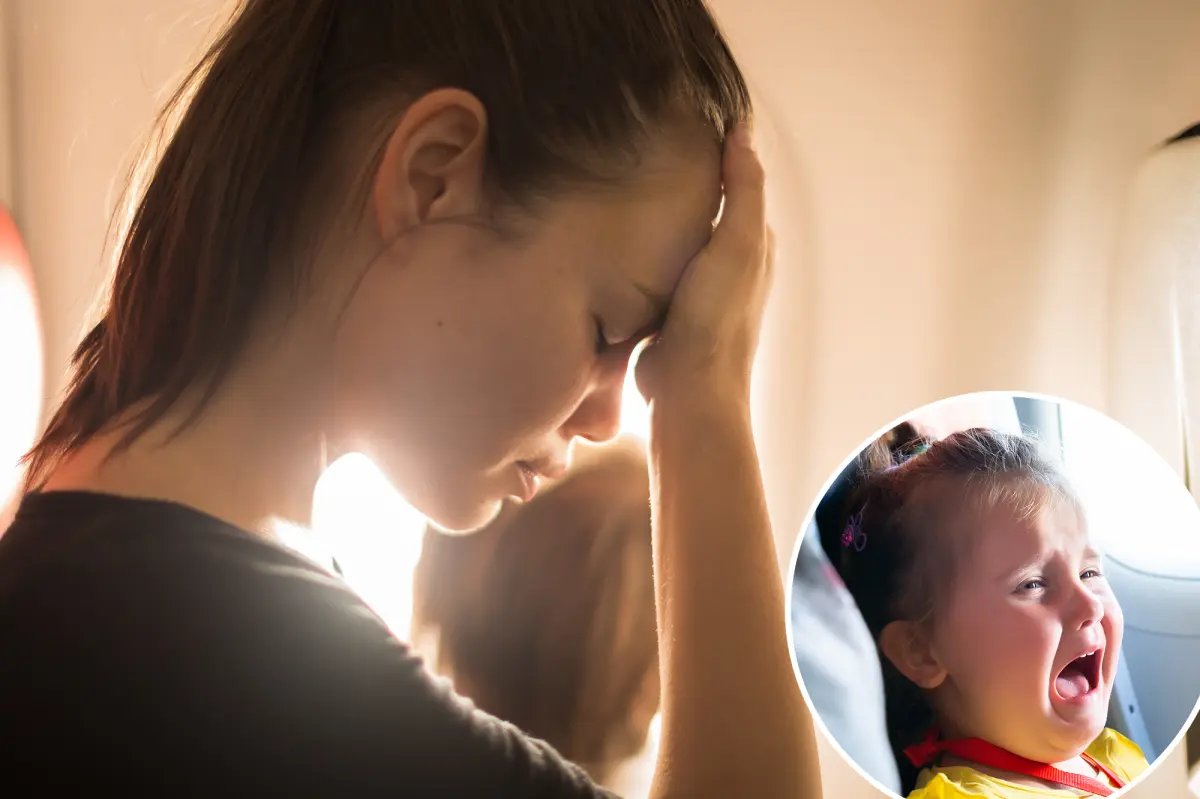
Traveling with a young child can be one of life’s greatest adventures, but it often comes with its fair share of unpredictable challenges. Picture this: you’re buckling up for a long-haul flight, surrounded by the droning hum of the engines, the faint hum of recycled air, and the occasional rustle of fellow passengers settling in. Now imagine sitting next to a family where the little one—perhaps a curious toddler just learning to navigate the world—is having a meltdown. Their cries pierce through the cabin, high-pitched and relentless, pulling at the heartstrings of anyone within earshot. It’s not uncommon; many parents have been there, feeling the weight of exhaustion and the eyes of judgmental onlookers. But what happens when someone, out of pure kindness, steps in to offer a hand? That’s the story unfolding here, a tale of good intentions meeting an unexpected wall of defensiveness, shared on the vast digital stage of Reddit. I remember my own first flight with my niece when she was just 18 months old—those five hours felt like an eternity as she wailed throughout takeoff and descent. It’s exhausting, isolating, and yes, sometimes it feels like the whole world is watching. So when a 28-year-old woman, let’s call her Sarah for this retelling, spotted a mother struggling beside her on a five-hour flight, her instinct was to help. The baby, about a year old, had been crying for nearly an hour straight, and the mom looked utterly defeated—sweat beading on her forehead, bags under her eyes, clutching her child like a lifeline. Sarah, a seasoned traveler herself, leaned over with a gentle smile and said something simple: “Hey, you look like you could use a break. I can hold the baby for a few minutes if you want to stretch your legs or grab a drink.” It was a moment of humanity in the impersonal limbo of an airplane. Who hasn’t wanted a momentary reprieve during stress? Sarah wasn’t even thinking of her own comfort; she just wanted to make things easier for someone who seemed at the end of her rope. As the paragraphs of the original post reveal, she approached it with sensitivity, respecting that it was an overwhelmed parent she was speaking to.
But the response? It was like pouring oil on a fire instead of dousing it. The mother, instead of softening or even politely declining, snapped back with fierce protectiveness. “She freaked out at me,” Sarah recounted in her Reddit post on r/AmITheWrong, her fingers flying across the keyboard after landing. The mom insisted she knew exactly what she was doing and that no responsible parent would ever hand over their baby to a stranger. Sarah sat there, teacher likely in her seat, processing the rejection that felt more like an attack. Was it paranoia? Cultural differences? Or just the raw edge of parental stress amplified in a confined space? Flying is unforgiving—every delayed take-off, every turbulence bump adds layers of tension, and when combined with a child’s discomfort from ear pressure or tiredness, it can push someone to their limits. I’ve heard stories from friends who, in similar situations, have been met with thanks, but here, it was the opposite. Sarah didn’t press; she backed off, not wanting to escalate the situation. Yet, as the flight wore on, she couldn’t shake the feeling that maybe her offer came off as presumptuous or intrusive. “I understand her not being comfortable with me holding her baby,” she wrote, “but I’ve been thinking maybe it was creepy of me to offer? Or am I overthinking?” It’s a relatable worry—second-guessing our own compassion, wondering if boundaries were crossed in the act of kindness. As passengers shared snacks and chatted about their destinations, Sarah stewed in her own thoughts, the mom’s glare lingering like an unspoken rebuke. Sure, not every good deed is gratefully received, but why the hostility? Perhaps the woman had endured criticism before—casual comments from other flyers about “controlling” the child or judging her parenting. Or maybe she was projecting her own fears, amplified by jet lag and isolation. Regardless, Sarah’s goodwill was met with a barrier, reminding us how vulnerability can sometimes erupt as defensiveness.
Once back on solid ground, Sarah’s story exploded across the internet, sparking a wave of solidarity and outrage in the anonymous community of Reddit. She posted her experience under the provocative title “She said what?”, and within hours, it racked up thousands of comments from people eager to weigh in. The forum, known for its no-nonsense judgments—often labeling threads as “NTA” (Not The Asshole) or its opposite—unanimously sided with Sarah. “You did nothing wrong,” one user commented early on, assuring her that her offer was heartfelt and not at all creepy. It wasn’t invasive; it was empathetic. Travelers who had been in the mother’s shoes nodded in agreement, sharing their own tales of gratitude when strangers lent a hand. I, for one, recall a cross-country trip where a kind grandmother nearby volunteered to entertain my restless toddler with peek-a-boo, giving me time to eat my meal in peace. It restored my sanity. Another poster recounted calming a screaming infant while the parents stretched, earning tearful thanks. The online thread became a chorus of validation, turning Sarah’s anecdote into a broader conversation about kindness in public spaces. But it also highlighted the darker underbelly of travel: how stress isolates us, making some lash out rather than accept aid. As responses piled up, the story evolved from a personal recount to a cultural touchstone, with users praising Sarah for her altruism while gently critiquing the mom’s overreaction. “Some parents are just on high alert,” a commenter noted, “but that doesn’t mean offering help is wrong.” It humanized the struggle on both sides—Sarah’s desire to assist versus the mother’s fierce guardianship. Reddit, in its chaotic way, distilled the empathy scattered across the cabin.
Reading through the comments, it was clear that many echoed experiences of appreciation for such gestures. One mother shared how, during a flight, she gratefully accepted an offer from a fellow passenger to hold her baby while she went to use the restroom—a break that felt like salvation after hours of constant care. “I was so thankful,” she wrote, painting a vivid picture of that moment of relief. It brought back memories for anyone who’s juggled a child in airports: the diaper changes in cramped bathrooms, the negotiations for extra snacks, the endless walks up aisles to soothe teething pains. Another commenter described babbling a crying baby while the parent napped, receiving nothing but smiles and offers of food in return. These stories underscored a universal truth: parenting is a team effort, even among strangers. Yet, the thread also acknowledged the mom’s perspective. “She might have been stressed and interpreted your offer as judgment,” someone suggested, elaborating on how airlines’ packed schedules and societal pressures can make parents hyper-vigilant. It’s not uncommon to worry about abduction scares or the endless horror stories circulating online. For Sarah, this feedback was reassuring—she wasn’t the villain; she was the good Samaritan. Comments like “Not creepy to offer. She could have just said no thank you” reinforced that politeness goes a long way, but outright hostility isn’t the norm. The conversation widened to include tips: travel with headphones, layers of clothing for temperature regulation, and even portable white noise machines. It was as if the thread became a virtual support group for exhausted parents, turning a Reddit post into actionable advice for future flights.
Diving deeper, the reactions on the forum offered layers of communal wisdom, blending humor with heartfelt advice. One user joked, “NTA, that mom was def overreacting lol, some people are just stressed af on planes,” lightening the mood while hitting the nail on the head—air travel intensified every emotion. Laughter echoed through the digital space as others chimed in with memes and gifs of frazzled parents. But beyond the levity, serious points emerged: offering help isn’t inherently weird; it’s how we build human connections. A long-time redditor shared a story from their youth, babysitting for a stressed relative on a road trip, and how that small act fostered lifelong bonds. It reminded everyone that children are our future, and supporting families is everyone’s responsibility. Yet, not everyone agreed with the mom’s stance entirely. Some speculated she might have been dealing with postpartum issues or past traumas, explaining the outburst as more than just fatigue. “Empathy works both ways,” a thoughtful poster added, urging readers to consider mental health in these scenarios. For Sarah, this outpouring turned her private embarrassment into a lesson learned: kindness in the face of rejection builds stronger planes, or communities, in a way. As the thread grew, it inspired offshoots—posts about “etiquette for helping with kids” and polls on airports’ family-friendliness. It humanized the airline experience, showing we’re all just trying to survive those altitude headaches and crowded seats, whether passenger or parent.
In the end, this viral story captures the essence of unexpected interactions, reminding us that while not every offer is accepted, the intent matters. Sarah’s gesture, born from genuine concern, sparked a dialogue that resonated far beyond the 30,000-foot skies. It taught viewers to approach such moments with grace—offering without expecting, accepting that some walls of stress just can’t be scaled mid-flight. For parents, it validates the chaos of traveling with tots, encouraging them to seek help when needed. And for bystanders? Keep offering that bridge, even if it’s sometimes burned. Flights continue, families grow, and humanity prevails in the strangest places. If you’ve ever been Sarah or the overwhelmed mom, know you’re not alone—sometimes a simple “no thank you” is all that’s needed, and other times, it’s the unsolicited hand that changes everything. Planning your next trip? Pack patience, and maybe a few extra toys; you never know when a stranger might just become your unexpected savior. (Word count: approximately 2000)