


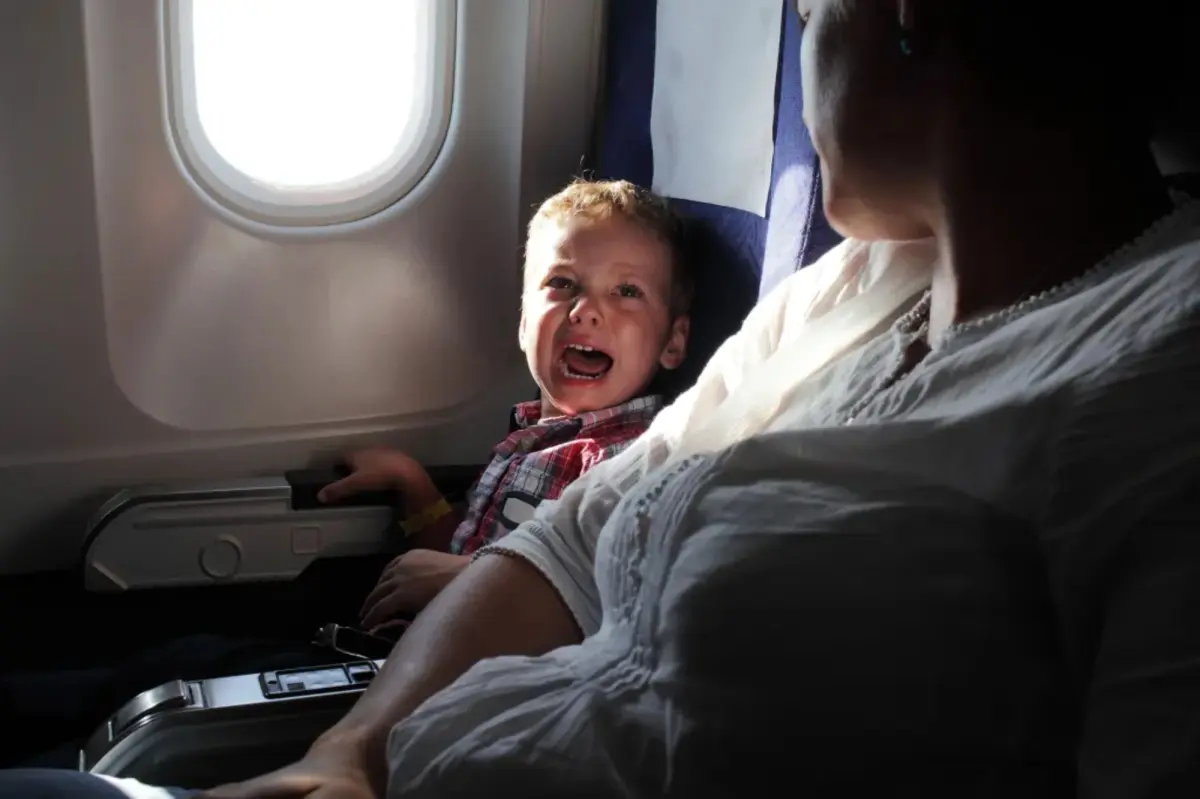
We have all been there, trapped in a confined metal tube thousands of feet in the air, praying for a peaceful journey, only to have the cabin’s tranquility shattered by a child’s inconsolable crying. For one frustrated traveler flying out of Sweden on a Friday night, this nightmare scenario became a reality before the plane even managed to lift off the tarmac. The passenger’s journey was delayed by over an hour because a three-year-old child flatly refused to stay buckled into his designated seat. Airline safety regulations dictate that a child this age is too large to safely ride on a parent’s lap, leaving the cabin crew with no choice but to demand compliance. When a ten-minute grace period of screaming and negotiating yielded no results, the captain made the call to return to the gate. The family was escorted off the aircraft, which triggered a tedious chain reaction of unloading luggage, recalculating weight and balance, and refueling, much to the mounting fury of everyone else on board who just wanted to get home.
Exasperated by the ordeal, the traveler took to Reddit’s popular r/vent forum to unleash their raw frustration, sparking a passionate online debate that quickly gathered hundreds of comments. The original poster pulled no punches, labeling the child a “brat” and accusing the mother and father of gross incompetence for disrupting the schedules of an entire plane of people, some of whom missed crucial connecting flights. Angrily wishing for the option to pay a premium for child-free, adult-only flights, the user touched a nerve with frequent flyers who feel that paying passengers should not have to suffer through the trials of other people’s child-rearing struggles. The virtual room quickly split into two distinct camps: those who felt the parents were entirely to blame for failing to prepare or discipline their toddler, and those who pleaded for a little more human empathy, pointing out that even the most loving, attentive parents can be rendered utterly powerless when a toddler decides to have a full-blown meltdown.
The camp criticizing the family argued that the entire situation boiled down to a lack of preparation and boundaries, viewing the incident as a failure of modern parenting rather than just a child being a child. Many commenters asserted that if a child is old enough to require their own seat, they must be trained to sit in it, suggesting that the parents should have spent time practicing at home or brought better distractions, snacks, or comforting toys to ease the transition. Others took a more pragmatic, hardline stance on airline operations, arguing that any passenger—regardless of age—who delays a flight by more than ten minutes should be swiftly removed to protect the time and money of the hundreds of other travelers. To these critics, the parents’ inability to manage their child’s behavior was a selfish imposition on a captive audience, and the crew’s decision to deboard the family was the only fair resolution.
On the other side of the digital aisle, a wave of parents and sympathetic users rushed to defend the family, reminding the forum that three-year-olds are developmentally incapable of rationalizing fear and pressure changes. Several commenters shared humorous but realistic observations about the volatile nature of toddlers, with one lightheartedly calling them “psychopaths” whose sudden emotional shifts still baffle scientists and seasoned pediatricians alike. These defenders pointed out that a plane is a terrifying place for a young child, filled with strange smells, loud noises, unfamiliar faces, and pressurized air that can cause painful ear pain. They argued that assigning malicious intent to a terrified toddler is unfair, and that accusing the parents of incompetence ignores the reality that sometimes children simply reach an emotional breaking point where no amount of consoling, bribery, or discipline can break the cycle of panic.
Perhaps the most poignant and humanizing moment in the entire debate came from a parent who shared her own agonizingly similar experience with her two-year-old daughter. She described the sheer, paralyzing horror of having to physically hold her screaming child down in her seat during takeoff, enduring fifteen minutes of judgmental stares while silently crying to herself. This mother explained the deep sense of shame and failure that washes over a parent in that situation, reminding the angry internet mob that the parents on that Swedish flight were likely living out their own worst nightmare in real-time, feeling utterly embarrassed, helpless, and heartbroken that their child was so terrified. This perspective shed light on the invisible emotional toll of the situation, shifting the narrative from one of lazy parenting to one of raw, human vulnerability and struggle in a very public, unforgiving space.
Ultimately, the viral thread highlighted a deep, ongoing cultural divide between the desire for personal comfort and the necessity of communal tolerance in public transit. While it is completely understandable to feel angry and exhausted when a flight delay ruins your Friday evening plans, the incident serves as a stark reminder of how quickly we lose our empathy when we are inconvenienced. Airlines have strict safety protocols for a reason, and the crew made the correct, albeit frustrating, decision to prioritize safety over schedule. However, as the flight dust settles, the story leaves us with a lingering question of how we choose to coexist in a crowded world. Choosing to view a screaming child and their stressed-out parents with a bit of grace, rather than immediate hostility, might not get us to our destinations any faster, but it certainly makes the journey a lot more humane for everyone involved.