


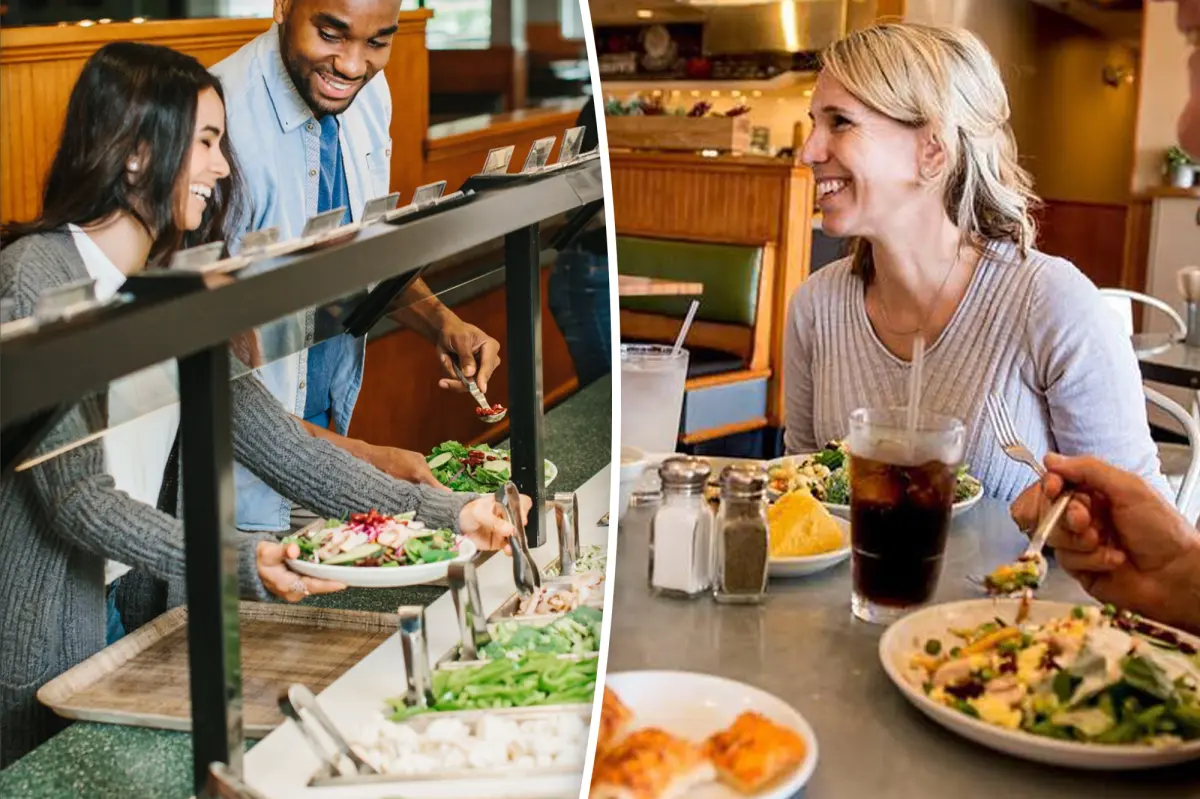
For a certain generation of Southern Californians, the name Souplantation isn’t just a restaurant; it’s a memory, a ritual, a place where birthdays and Sunday afternoons unfolded in glorious, all-you-can-eat abundance. When the chain vanished abruptly in 2020, it left a hole that no homemade salad could quite fill. The news that Souplantation is plotting a return to California in 2027 has therefore triggered something close to civic joy. There is, of course, a deep nostalgia behind this: the gleam of the salad bar under warm lights, the soft clatter of soup ladles, the forbidden joy of returning for a second plate of warm breadsticks, the quiet pride of stacking a plate high with beets and pasta salad and croutons. It was more than a buffet; it was a low-stakes celebration. For six years, fans have mourned that experience. Many have held onto hope, posting old photographs and trading memories online. Others have found substitutes, but none quite matched the exact feeling of walking into a Souplantation, grabbing a chilled bowl, and surveying the endless possibilities. So when the company finally confirmed that it would return to the Golden State, with the first location planned for Fountain Valley in Orange County, it felt less like a corporate announcement and more like a homecoming announcement. The beloved chain, born in San Diego in 1978, is coming back to its roots. And the timing, for those who have spent years craving their favorite muffins and soups, cannot come soon enough. The long wait has only deepened the devotion. There’s something almost improbable about a buffet-style restaurant making a comeback in an era of fast-casual minimalism and contactless everything. Yet Souplantation’s return proves that some culinary experiences cannot be replicated or replaced by apps. It was never just about the food, though the food was wonderful. It was about the slow, generous, unhurried act of feeding yourself and the people you love. And in 2027, Californians will finally be able to do it all over again.
But here is the complication: while Souplantation was gone, another place quietly took its seat. Soup ’n Fresh, a strikingly similar concept, has moved into several former Souplantation locations across Southern California, and it has become a phenomenon in its own right. Customers line up for hours, sometimes up to two hours, just to get through the doors. The parking lots are full, the Instagram accounts are devoted, and the lines snake around the block. In many ways, Soup ’n Fresh has become exactly what Souplantation used to be: a beloved community gathering place with bottomless soup and salad, warm baked goods, and an old-fashioned sense of abundance. The most humbling twist for the returning original is that some diners insist the “copycat” is not just as good as Souplantation — it’s better. On Reddit, one enthusiastic customer described the experience: “It’s SO good….my mom and I went and waited in line for a little over an hour and a half. WORTH IT!” That kind of word-of-mouth is hard to beat. It speaks to a genuine emotional connection, not just a passing trend. For many, Soup ’n Fresh feels like a resurrection, a way to recapture a lost pleasure without having to wait for a corporate resurrection. It is perhaps the greatest compliment to the original concept that someone else could build an empire on the same formula: endless soup, endless salad, and the simple joy of making your own plate, your own way. Yet it also creates a tricky problem for Souplantation. When it returns in 2027, it may find that its old place in the hearts of California diners has been partially occupied. Loyalty is a powerful thing, but habit is just as powerful. The customers who spent those long hours waiting at Soup ’n Fresh have formed new rituals, new memories, new favorites. They may still love Souplantation, but they also love the place that kept the dream alive. That means the homecoming won’t be a simple victory lap; it will be a competition. And with Soup ’n Fresh entrenched and beloved, Souplantation will have to prove, once again, that the original still has the magic. The good news? If the passion on both sides is any indication, there is more than enough appetite to go around. But it will be fascinating to watch how this culinary rivalry unfolds.
The official news of Souplantation’s return came with all the coyness of a seasoned entertainer. On Oct. 5, Sweet Tomatoes, the sister brand under which the chain operated outside California, posted a sunny social media video featuring a “Welcome to California” sign and the tantalizing caption: “Stay tuned…” For fans, that was enough to send their hearts racing. Then came the confirmation: Souplantation would officially return to California in 2027, with its first restaurant slated for Fountain Valley in Orange County. A representative for Sweet Tomatoes told Eater LA, “We are thrilled to be coming back to California, where the love and demand for Souplantation has never faded. We can’t wait to welcome back so many familiar faces and create new memories with our guests when we reopen in 2027.” The statement was careful, polished, and full of warmth. It acknowledged what the company clearly understands: Souplantation has never been just a chain. It’s a cultural touchstone. The choice of Fountain Valley is also meaningful. Orange County has long been a stronghold of Souplantation loyalists, and the location will serve as a test of whether the brand can rebuild its former footprint. But the announcement also raises many questions. Will it be exactly the same? Will the menu include the old classics? Will there be the same muffins, the same soups, the same soft-serve ice cream? The company hasn’t provided many details, and that’s perhaps intentional. It wants to build anticipation. It wants people to talk, to speculate, to remember. And it is working. The announcement has already generated waves of nostalgia and excitement online. Fans are sharing their favorite Souplantation memories, from trips with grandparents to post-soccer-game feasts, and many have promised to be first in line when the doors finally open. The wait until 2027 will be long, but for a community that has already waited six years, it feels manageable. There is something almost romantic about the idea of a beloved institution returning after a long absence, like an old friend who has finally found their way home. And if the emotional response is any measure, that first day back in Fountain Valley will feel less like a restaurant opening and more like a reunion.
To understand why this comeback means so much, it helps to remember where Souplantation came from. The chain was founded in San Diego in 1978, at a time when the idea of an all-you-can-eat salad bar felt fresh, abundant, and thoroughly Californian. Over the years, it grew into a sprawling suburban empire, with 97 locations across the country. In California, it was known as Souplantation; elsewhere, it operated under the name Sweet Tomatoes. For decades, it was a beloved institution, a place where families could feed everyone without breaking the bank, where seniors could gather for lunch, and where children could learn the art of crafting the perfect salad. But the restaurant industry was already changing before the pandemic. In 2016, the company went through Chapter 11 bankruptcy and was acquired by a private investment firm, Perpetual Capital Partners. It survived, but the margins were thin and the challenges were growing. Then came Covid-19. In a single week, the buffet business collapsed. Robert Allbritton, chairman of Perpetual Capital Partners, described the sudden unraveling to the San Diego Union-Tribune: “We went from 100 percent to 70 to 30 to 10 percent that fast, before the restaurants closed down and the company ran out of money in one week.” It was a stunningly quick demise for a chain that had seemed so durable. The pandemic did not simply close the restaurants; it made the entire concept seem dangerous, even obsolete. The shared spoons, the open salad bar, the communal soup pots — all of it suddenly felt like a public health risk. Souplantation was not alone in this. Buffets across the country suffered. But Souplantation was perhaps the most loved, and its loss was felt most keenly. The company closed all its locations and appeared to be gone for good. The beloved soups and muffins became memories. And in the years that followed, as the world slowly reopened, Souplantation remained closed. There were no grand plans, no rescue missions. It seemed like the end of a long, delicious era. But time has a way of healing old wounds, and nostalgia has a way of making old favorites even more precious. The pandemic receded, the buffet fears gradually faded, and the craving for Souplantation never did. Now, against all odds, the chain is preparing for a second act. It’s a story of resilience, but also a reminder that some things — like a perfect bowl of tomato soup and a warm cornbread muffin — are worth waiting for.
Still, the road back is not without obstacles. The restaurant landscape has changed dramatically since 2020. Delivery apps, ghost kitchens, and fast-casual concepts have reshaped how people eat. The idea of an all-you-can-eat buffet may feel like a relic to some, even a novelty to younger diners who never experienced Souplantation the first time. Then there is Soup ’n Fresh, the upstart that has spent years cultivating its own fan base in the very spaces Souplantation once occupied. For any restaurant, coming back after six years would be a challenge. Coming back to face a beloved, established competitor with nearly the same menu and concept is even harder. Some of the old Souplantation faithful have already transferred their allegiance, or at least their habits, to Soup ’n Fresh. And while some may switch back out of nostalgia, others will hesitate. The memories of Souplantation are powerful, but the reality of Soup ’n Fresh is immediate, accessible, and proven. It will also take time for Souplantation to rebuild its supply chain, find locations, train staff, and recreate the exact experience that made it special. There is a risk that the 2027 relaunch could feel different, perhaps too polished or too corporate. But there is also a chance that Souplantation will lean into what made it original: the unfussy, generous, welcoming spirit that turned a simple meal into an event. If the company can capture that again, it may not need to win over everyone. It just needs to reconnect with the people who never stopped loving it. And those people, the ones who have waited six years and counting, are perhaps the most loyal customers in the world. They are the ones who will drive from across the state, wait in line, and cry a little when they see the salad bar again. They are the ones who kept the dream alive, posting old photos, sharing memories, and never letting the brand fade away. For them, the return is not just a business opportunity; it’s a promise kept. The challenge is real, but so is the love. And in the restaurant world, love is not a bad ingredient to start with.
In the end, the return of Souplantation is about more than soup and salad. It’s about the human need for ritual, comfort, and shared experiences. It’s about the pleasure of walking into a brightly lit room and knowing that, for one meal, the possibilities are endless. It’s about watching your mother pile her plate with beets and cottage cheese, your father make a second trip for clam chowder, your child discover the joy of soft serve for the first time. These are the moments that cannot be delivered to a doorstep or replicated by an app. They have to be lived, in person, together. Souplantation understood this perhaps better than any other chain. It didn’t sell just food; it sold an experience of generosity. The salad bar was not a buffet; it was a landscape. The soup station was not a line; it was a journey. And the muffins? They were small, warm celebrations. That is why the news of the 2027 return has touched such a deep nerve. It offers a chance not just to eat, but to go back in time, to recapture a version of ourselves that existed before the world changed. It also offers a chance to introduce a new generation to a tradition that many feared was lost forever. When Souplantation opens its doors in Fountain Valley, there will be grandparents who remember the original San Diego location, parents who grew up on Sunday trips to the nearest branch, and children who are about to discover that a plate of salad can feel like a treasure. There will be long lines, no doubt, and perhaps a few tears. There will be people who say it’s not quite the same, and people who say it’s even better. But mostly, there will be gratitude. Gratitude that a beloved institution survived the unthinkable. Gratitude that the memories were strong enough to bring it back. And gratitude that, in a fast-changing world, some things — the simple joy of an all-you-can-eat bowl of soup, the endless crunch of fresh vegetables, the warm, buttery promise of a breadstick — are still worth celebrating. Welcome home, Souplantation. The table has been waiting.