


Finding Balance in the Chaos of Remote Learning
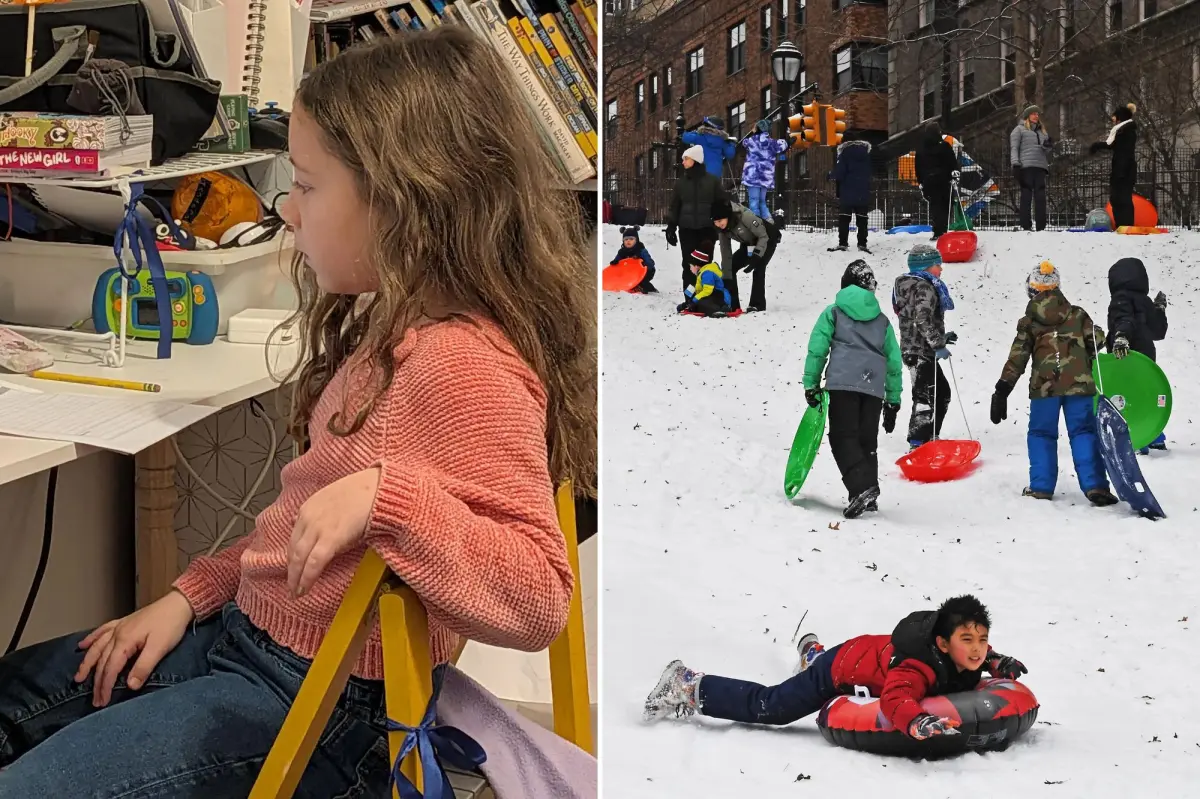
In the early hours of a snow day, our family’s playroom desk transformed into a sacred altar of childhood treasures. By 8:30 a.m., my second grader had meticulously arranged her talismans: a Labubu knockoff, karaoke microphone, half a geode, carefully selected Baby-Sitters Club books, the last remaining LEGO house from a complex set, and an assortment of Polly Pockets. This ritual marked her preparation for remote school—what we once called “Zoom school” during the height of COVID when my older daughter, now in 8th grade, attended hybrid classes. Like many parents who navigated the pandemic years with school-aged children, I carry lingering trauma from that period of juggling work, parenting, and endless virtual meetings. Yet somehow, like the way mothers often forget the pain of childbirth, I had managed to suppress memories of just how sanity-testing those days were, bouncing between everyone’s competing demands. By 9:23 a.m., I was already texting a friend: “Is it too early to drink?”
The morning unfolded in a chaotic symphony of interruptions that felt eerily familiar. My husband disappeared into an important meeting. Both children struggled to log in to their respective systems. Apps refused to update properly. Someone was always being “too loud.” The dog decided to make breakfast out of our Tupperware collection. Batteries died at the most inconvenient moments. Pencils mysteriously became unsharpened right when needed. And hovering above it all was the constant refrain: “Is it snack time yet?” Our historic 130-year-old brownstone, charming as it may be, was never designed to accommodate four family members simultaneously engaged in different conversations on different screens. Nor was it built with the bodega-sized snack storage my children seemed to require for their survival. By 11 a.m., I was still in pajama pants, flailing around like Steve Martin in “Cheaper by the Dozen,” trying to meet everyone’s needs at once while maintaining some semblance of professionalism for my own work calls.
Despite the chaos, the day offered unexpected moments of joy. The children’s desks were finally cleared of months of accumulated clutter—without a single argument, no less. I was spared the treacherous journey of walking my youngest to school through snow and ice. The usual squabbles over television rights or accusations of “breathing too loudly” were temporarily suspended. Most precious was the rare glimpse into their school lives that parents seldom witness—overhearing their teachers interact with such remarkable patience and kindness. My youngest’s teacher greeted her students with a warm “Good morning, my loves!” and managed to remind them not to draw on the screen six times without raising her voice. Meanwhile, my second grader sat at her desk sipping water from a mug, pencil in hand and math worksheets before her, resembling a miniature accountant taking her work very seriously. Whatever these teachers are paid, it could never be enough for the grace they bring to virtual classrooms filled with distractible children.
The COVID-era trauma, however, lingers just beneath the surface. Our oldest was in second grade when the world shut down. We formed a pod with neighbors who had our toddler’s best friend, taking turns supervising backyard play while we juggled meetings and helped with math homework at the picnic table. Someone needed something almost every single minute of every day. Now, although the existential fear of a global pandemic has receded, the stress patterns remain embedded in our family dynamics. On this snow day, I found myself remembering the desperate craving for self-care, privacy, and the simple luxury of being left completely alone in peace. Both my husband and I were working on important projects—my marketing presentation and his healthcare policy work related to the state budget—leaving us irritable and short-tempered. I had to remind everyone, myself included, that this was an exercise in patience for the entire family.
I remain ambivalent about the transition from traditional snow days to remote learning days. If they had simply canceled school, I could have parked the kids in front of the television for a couple of hours before taking them sledding on our own schedule. Several parents in our school community seemed to take this approach anyway—logging in for morning sessions before quietly disappearing for afternoon sledding adventures. With good attendance records, does missing half a day of remote instruction really matter? In our household, the remote school experience was mostly successful. The girls stayed engaged with structured activities and even completed meaningful work—which seemed valuable given the numerous days off already scheduled in the coming weeks. Elementary school ran more smoothly than middle school; my eighth-grader’s homeroom teacher called in sick without notifying students, classes were rescheduled without clear communication, and I exchanged more emails with an assistant principal that morning than I had since September. We were fortunate in many ways—each child had her own iPad, unlike families in our parent chat who borrowed non-functioning school devices and couldn’t log in at all.
By 1:00 p.m., however, we surrendered to reality. The children had begun fighting, the scheduled Zoom sessions had concluded, and the sledding hill beckoned with its promise of fresh air and physical activity. We had tried our best to maintain the structure of a school day, but eventually, the natural rhythms of a snow day prevailed. Looking back at this experience, I found myself wondering in amazement how we managed to sustain this mode of learning for over a year during the pandemic. The constant interruptions, technological frustrations, and relentless demands for snacks would test anyone’s patience. As we bundled up to head outdoors, I mentally added two items to my shopping list: more snacks (always more snacks) and a very good bottle of bourbon. Some days, especially unexpected remote learning days, require both sustenance and solace to navigate the beautiful chaos of raising children in this digital age.