



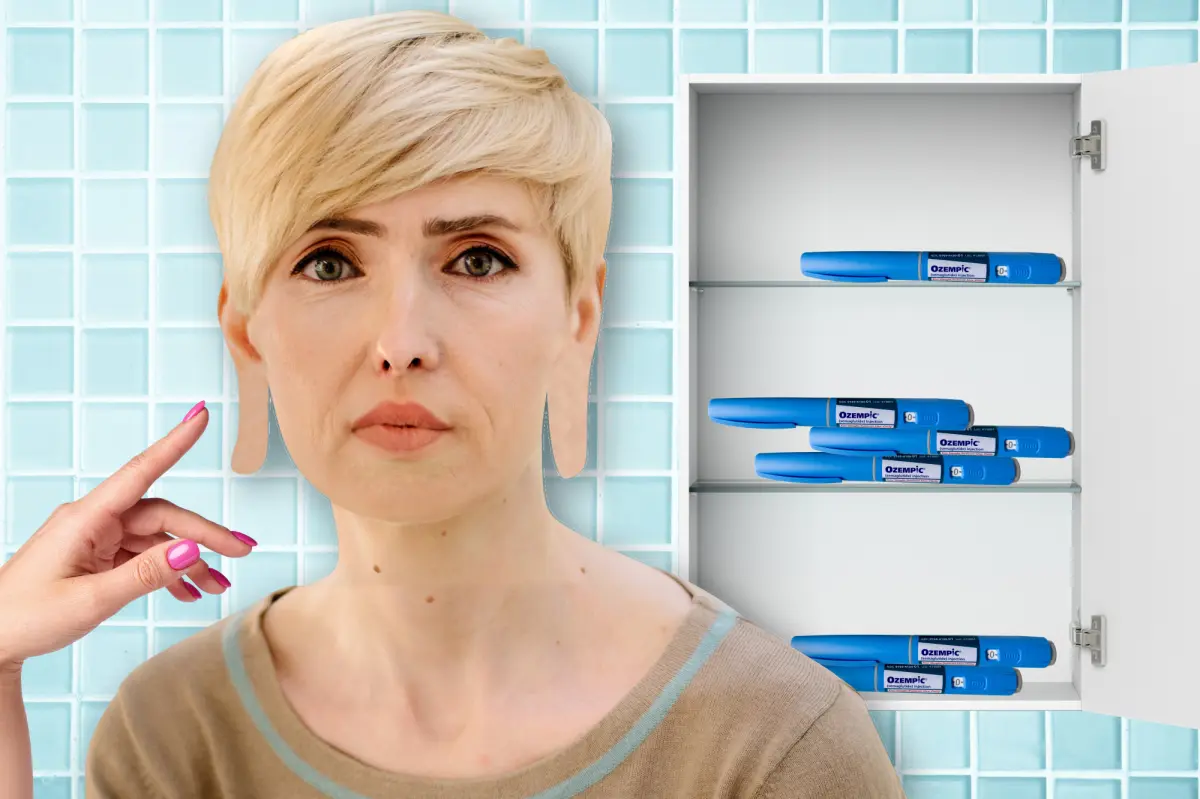
The journey of profound weight loss is often celebrated as a triumphant narrative of reclaiming personal health, bodily vitality, and a newfound sense of everyday confidence, but the physical reality of dropping dozens of pounds in a brief window of time can bring about a quiet caravan of unexpected anatomical surprises. For many patients utilizing highly effective GLP-1 receptor agonists—the class of blockbuster weight-loss medications that includes household names like Ozempic and Mounjaro—the immense joy of watching the numbers steadily drop on the scale is occasionally met by a baffling post-weight-loss landscape in the mirror. While the general public has become well-acquainted with terms like “Ozempic face” or “Ozempic butt,” which describe the sudden, dramatic sagging of skin where fat once provided structured support, a far more delicate and overlooked feature is now taking center stage in plastic surgery offices: the humble human earlobe. It is a slow, quiet realization that often begins on an ordinary morning, much like it did for Stephanie L., a patient who successfully shed forty-five pounds with the help of Ozempic only to find her favorite earrings suddenly pulling her skin downward in an unappealing, heavy slant. Looking closer in her magnifying mirror, she realized her ears had lost their youthful plumpness, transforming what once seemed like a negligible, permanent feature into a conspicuous symbol of rapid aging that she could not ignore. What Stephanie experienced is far from an isolated vanity crisis; rather, it is the latest frontier in cosmetic refinement, as patients realize that true rejuvenation is deeply rooted in the minutiae of the human body, where even a slight loss of volume can disrupt a person’s entire sense of physical harmony and self-confidence.
To understand why earlobes are suddenly dropping, thinning, and deflating, one must look at the structural mechanics of human skin and fat distribution, particularly when subjected to the rapid metabolic shifts induced by modern GLP-1 therapies. When a person sheds significant weight quickly, the skin, which has been stretched over subcutaneous fat deposits for years, simply does not have the elasticity to snap back overnight to accommodate its newly diminished cellular frame, leading to excess folds and a deflated appearance across the entire body. Dr. Luis Macias, a double-board-certified plastic surgeon and the visionary founder of Aesthetic MdR in Los Angeles, California, has observed a distinct and undeniable rise in ear restoration procedures directly matching the cultural boom of GLP-1 medications. He explains that while patients enter their weight-loss journeys with focused thoughts on trimming their waists, leaning out their jawlines, or sculpting their thighs, they rarely anticipate the systemic nature of fat loss, which ruthlessly strips volume from every single corner of the body, including the delicate cartilaginous structures of the ears. As the natural cushioning inside the lobes vanishes, the ears structurally lengthen and thin out, essentially accelerating the physical signs of aging and giving the face an overall drooping, tired silhouette that belies the vibrant, healthy energy the patient feels inside. This biological phenomenon has turned what was once a rare, niche cosmetic adjustment into a highly sought-after corrective procedure for people seeking to harmonize their outward appearance with their internal vitality.
Historically, the concept of cosmetic earlobe enhancement would have been met with skepticism or outright confusion, yet in today’s visually driven, selfie-conscious culture, the focus on this small facial feature makes perfect dermatological and emotional sense. Dr. Michael Cohen, a respected board-certified plastic surgeon and the founder of Belcara Health in Baltimore, Maryland, notes that twenty-five years ago, the idea of beautifying the earlobes was virtually nonexistent in standard clinical practice, but the contemporary obsession with jewelry and personal styling has drastically shifted patient priorities. For many, ears are not merely sensory organs but prime real estate for self-expression, framed beautifully by dazzling gemstones, elegant studs, and statement earrings that draw the eye directly to the jawline and neck. When the structural integrity of the lobe degrades, favorite pieces of jewelry no longer sit flush against the skin; instead, they droop forward, twist awkwardly, or stretch the piercing hole into a distressed, vertical line that makes the wearer feel self-conscious and aged. This structural shift not only ruins the aesthetic appeal of fine jewelry but also poses a practical frustration, as earrings slip out easily or hang in ways that feel physically uncomfortable, transforming a daily ritual of adornment into a source of anxiety. Consequently, plumping up this subtle zone is no longer viewed as an excessive luxury, but rather as an essential, foundational step in reclaiming the clean, youthful lines that let a person’s personal style shine through unimpeded.
To address this complex mix of structural sagging and aesthetic frustration, plastic surgeons have developed a flexible, highly effective spectrum of interventions tailored to the specific anatomical needs and budget of each patient. For those seeking an immediate, non-invasive remedy, hyaluronic acid dermal fillers serve as an ideal “quick fix” that yields instant gratification with minimal downtime. Dr. Cohen emphasizes that unlike highly active areas of the face like the lips or cheeks, the earlobe remains uniquely stationary and free from constant muscular movement, meaning that injected dermal fillers break down at a much slower rate and can offer remarkably long-lasting results. However, when rapid weight loss has left behind an abundance of empty, stretched-out skin, simple fillers may not be enough to restore the ideal shape, prompting surgeons to recommend more permanent, surgical interventions such as earlobe reduction or fat grafting. Earlobe reduction, typically performed under simple local anesthesia, allows surgeons to physically reshape, trim, and tighten the dangling tissue, creating a smaller, rounder, and far more youthful contour, though patients must wait about six weeks before re-piercing the newly sculpted lobe. Alternatively, fat grafting offers a natural, organic approach by harvesting a patient’s own fat cells from areas like the abdomen or thighs via minor liposuction and meticulously purifying them before injection, while patients lacking viable body fat can benefit from innovative off-the-shelf synthetic materials or sterile cadaver fat to achieve a similarly soft, beautifully plumped, and youthful look.
The physical and emotional transformation of undergoing these procedures is profoundly illustrated by patients like Stephanie, who initially tried to brush off her growing dissatisfaction before realizing how deeply her deflated ears were impacting her daily confidence. After consulting with Dr. Macias to explore her options, she opted for a comprehensive, highly durable approach that combined a precise earlobe reduction with a customized fat grafting procedure, utilizing her own purified thigh fat to ensure natural, lifetime results. At a total investment of $9,500, the combined procedures represented a significant financial and personal commitment, yet the actual physical recovery proved to be remarkably mild, characterized by only a few days of light soreness that easily gave way to a seamless healing process. Today, Stephanie describes herself as absolutely thrilled with her decision, experiencing a profound wave of relief and renewed self-esteem whenever she wears her hair in a simple ponytail or chooses a pair of statement earrings that now sit perfectly in place. For Stephanie, the true value of the procedure went far beyond simple vanity; it was about regaining a sense of physical wholeness, erasing the unintended cosmetic side effects of her weight-loss journey, and finally feeling like her outer appearance truly matched the youthful, healthy, and energized woman she had worked so hard to become.
This pursuit of aesthetic alignment is echoed by sixty-one-year-old Anne Bickford, who embarked on a similar journey of self-reclamation after losing forty pounds with the assistance of Mounjaro. While a surgical facelift had successfully rejuvenated her facial contours, Anne found that her loose, deflated earlobes remained a stubborn, telltale sign of aging that disrupted the overall harmony of her appearance every time she caught her reflection in the mirror. To address this lingering concern without undergoing further major surgery, she visited Dr. Cohen for a quick, targeted application of hyaluronic acid filler costing approximately $850, which instantly restored the youthful volume, symmetry, and roundness she feared she had lost forever. The results were so natural and flattering that Anne began confidently wearing her hair tucked behind her ears, drawing compliments not just from family but from close friends, including a medical doctor who immediately noticed how exceptionally beautiful her earrings looked on her newly rejuvenated lobes. This positive reinforcement ultimately inspired her friend to seek out the same subtle treatment, demonstrating how a small, deliberate act of self-care can ripple through a community, transforming our collective understanding of aging from an inevitable decline into an empowering journey of preservation, confidence, and quiet, beautiful transformation.